Heat transfer fluids are used in heating and cooling systems. The most commonly used heat transfer fluids are water and antifreeze – a special ethylene glycol or propylene glycol liquid with additives that reduce metal corrosion, polymerisation, oxidation, scale formation and foaming.
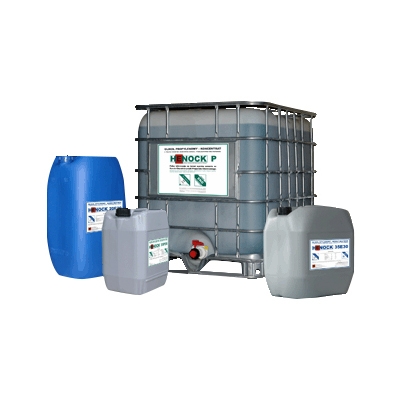
HENOCK heat transfer fluid
HENOCK heat transfer fluid – a wide range of glycol products that can be used in heating, cooling and industrial applications. HENOCK offers high efficiency and contains multi-component inhibitor additives that reduce corrosion, prevent scale formation, turbidity and bacterial growth, and stabilise the heat transfer fluid. The heat transfer fluid parameters exceed the ASTM 1384-05 corrosion test standards, ensuring high corrosion protection.
The formula of HENOCK inhibited heat transfer fluid is based on patented organic acid technology (OAT), which contains no amines, phosphates, nitrites, silicates or borax. HENOCK products contain a patented blend of biocidal preservatives that delays biological fouling. When the heat transfer fluid is filled into a clean system, HENOCK heat transfer fluid will prevent clogging of the internal surface of the heat exchanger, maintaining heat transfer efficiency and reducing system downtime.
The video shows a 14-day corrosion comparison between standard glycol (on the left) and HENOCK heat transfer fluid.
Three groups of fluids are available:
1. HENOCK E – ethylene glycol-based heat transfer fluid
| Grade | Freezing temperature | Price EUR/l |
|---|---|---|
| 20E15 | -15°C, 33.6% | 0,99 |
| 20E20 | -20°C, 40.3% | 1,12 |
| 35E30 | -30°C, 52.1% | 1,65 |
| 35E35 | -35°C, 56.6% | 1,80 |
2. HENOCK P – propylene glycol-based heat transfer fluid
| Grade | Freezing temperature | Price EUR/l |
|---|---|---|
| 20P15 | -15°C, 35.7% | 1,10 |
| 20P20 | -20°C, 42.0% | 1,40 |
| 35P30 | -30°C, 52.5% | 1,70 |
| 35P35 | -35°C, 56.2% | 1,90 |
Prices are shown with 21% VAT
ASTM D1384-05 corrosion test results table (metal mass loss, mg)
| Metal | HENOCK E | HENOCK P | Water | Ethylene glycol + water |
|---|---|---|---|---|
| Aluminium | 27,7 | 0,6 | 110 | 165 |
| Cast iron | 0,4 | 1,8 | 450 | 1190 |
| Ferrous metal | 0,1 | 0,3 | 212 | 974 |
| Brass | 4,0 | 2,0 | 5 | 11 |
| Solder | 0,8 | 0,3 | 99 | 1780 |
| Copper | 1,2 | 2,0 | 2 | 4 |