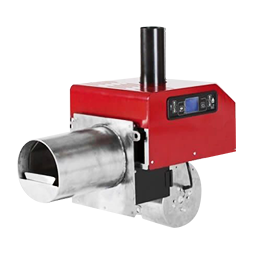
Pellet burners are automatic devices that use wood pellets as fuel. A pellet burner is designed for connection to existing heating boilers or as part of a new pellet heating boiler package. Burners provide fully automatic heating, saving you time. Pellets are fed from the hopper via a conveyor to the burner in a set amount to provide the current output with the required fuel quantity.
Pellet burners are equipped with an automatic ignition function – an electric coil heats the heating surface or air causing the pellets to ignite; output adjustment capability – depending on the burner's instantaneous output, the fuel feed volume changes; combustion process control provided by a photo sensor; fresh air supply fan output adjustment depending on instantaneous output; safety equipment – protection against burner overheating, protection against backfire to the hopper, protection against boiler overheating. In the event of a power cut, the burner operation is halted – the few handfuls of fuel in the combustion chamber burn out and combustion stops.
It is possible to connect a room thermostat to the burner, allowing room temperature to be controlled without going to the heating boiler. It is possible to set a weekly operating schedule – the economy temperature level and the normal temperature.
For certain models, remote control via internet and smartphone is also possible. You can monitor the heating process, set the desired heating and hot water temperatures, see pellet consumption and the remaining amount of pellets in the tank, monitor boiler operating status, as well as view the last 30 days of operation history. In the event of burner shutdown, see the reason or receive a text message about the problem.
A pellet burner can be installed on practically any heating boiler – the main requirement is that the pellet burner size matches the firebox door size. An appropriate hole is made in the boiler front door into which the pellet burner is fixed. For boilers from different manufacturers, the burner installation process differs – in some it is installed in the lower door, in others the middle, in others the upper, and in some models at the side, or the boiler must be placed on a special combustion chamber with the flame entering the boiler from below. Pellet burner installation usually does not take a long time – a burner can be installed on an existing heating boiler within a couple of hours. Moreover, the boiler does not need to be disconnected from the heating system.
A pellet burner can be installed on the existing door or replacement boiler doors can be purchased, thereby retaining the option of firing the boiler with a different fuel type in the future. When installing a pellet burner, it is not possible to simultaneously fire the boiler with pellets and, for example, firewood, as the wood flame can overheat the burner. In such cases, before changing fuel, the burner must be dismantled.
To ensure pellet burner operation, a pellet conveyor – an auger – is required, controlled by the burner automation and feeding the required amount of pellets from the pellet tank to the pellet burner. The auger can be of various lengths. Inside it is a spiral – a screw conveyor – by means of which pellets are transported from the pellet tank to the burner. The auger is operated by a control panel connected to the auger electric motor. The auger operating time and pauses depend on the selected and set pellet burner output on the control panel.
Pellet tanks come in various sizes. They are usually chosen based on the heated area, the desired operating time without tank refilling, the boiler output and the size of the room where the heating system is installed. The larger the tank you choose, the less frequently pellets will need to be refilled. The heating boiler should preferably be cleaned once a week regardless of the pellet tank size. More frequent boiler cleaning maintains a higher efficiency coefficient – deposits on the boiler walls act as thermal insulation.
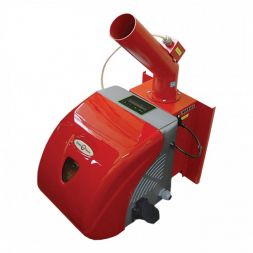
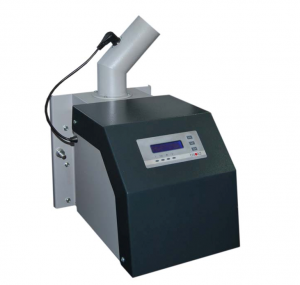
-granulu-degli_small.jpg)