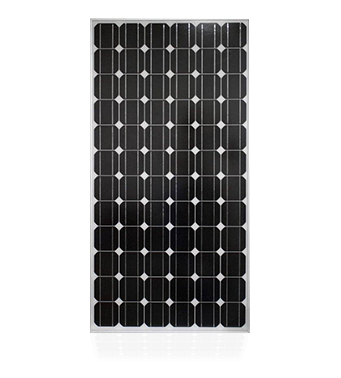
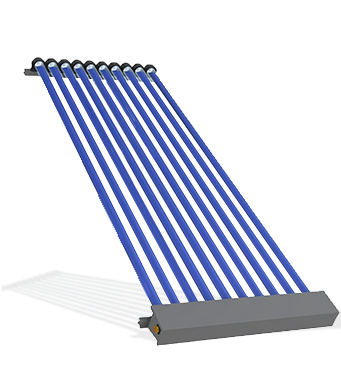
Solar panels are devices that convert the sunlight falling on them into electricity (solar batteries) or hot water (solar collectors). Both of these systems are available on the Latvian market.
Solar energy is a universal free renewable energy source that can be used to produce electricity and hot water. This energy is clean and free of pollution and can be used practically anywhere – summer houses, homes, offices and elsewhere. The potential for using solar energy is enormous; the radiation received by the Earth exceeds the world's energy demand by thousands of times. In recent years, demand for solar energy has grown and has attracted great interest due to rising energy resource prices.
According to data from the European Commission's Joint Research Centre's Photovoltaic Geographical Information System (PVGIS), the average global radiation yield in Latvia is 1000–1200 kWh per square metre.
COMMODUS offers solar panels and solar collectors, system components, as well as ready-made solar panel system packages. Ready-made system packages help you better understand what such systems consist of, what the total installation costs are, and allow you to purchase them more cheaply.
Solar batteries mainly consist of silicon photovoltaic cells, which are essentially large semiconductor diodes. The most popular solar batteries on the market are manufactured using monocrystalline or polycrystalline silicon technology.
Monocrystalline silicon production technology was developed first. Monocrystalline solar batteries are relatively more expensive, as their production requires the use of very pure monocrystalline silicon. The production process is technologically complex, but monocrystalline solar batteries have a very high efficiency coefficient.
Polycrystalline silicon solar batteries have lower production costs, but their efficiency coefficient is a couple of percent lower than that of monocrystalline solar batteries.
The output of a single solar battery panel ranges from 150W to 300W. Depending on the output required, systems with multiple batteries are formed – usually systems of at least several kW (1kW (kilowatt) = 1000W (watts)).
Solar batteries are placed on building roofs, facades or on the ground. An inverter is installed inside the building, which converts the direct current generated by the solar batteries into alternating current for self-consumption and for feeding surplus energy into the shared electricity grid.
The generated energy can not only be fed into the shared grid, but can also be stored in special batteries during daylight hours, for use during the dark hours of the day or during power supply interruptions from the grid.
COMMODUS offers solar batteries, system components, as well as ready-made solar battery system packages. Ready-made system packages help you better understand what such systems consist of, what the total installation costs are, and allow you to purchase them more cheaply.
Our range includes equipment from various brands and series. See descriptions, outputs and prices in the relevant sections:
The main component of a solar collector system is the collector, which is usually placed on the roof of a building, less often on a facade or on the ground. Inside the building there is a hot water boiler, a pump station and a control unit. Operating parameters are set in the control unit. The circulation pump switches on when the collector has warmed up and has a higher temperature than the storage boiler or the system to which heat is being transferred. Solar collectors are connected to the hot water boiler and pump station using two flexible stainless steel or copper pipes, the diameter of which corresponds to the output of the solar panels.
The main element in any solar collector system is the radiation absorber, which largely determines the collector's performance, durability and efficiency. The collector's structural design and the materials used also play an important role. Thicker thermal insulation allows the collectors to be used at lower temperatures with high efficiency.
COMMODUS offers solar collectors, system components, as well as ready-made solar collector system packages. Ready-made system packages help you better understand what such systems consist of, what the total installation costs are, and to do it more cheaply.
Our range includes equipment from various brands and series. See descriptions, outputs and prices in the relevant sections:
Solar energy is an inexhaustible source of energy that continuously radiates onto the earth during daylight hours. It is environmentally clean and does not create additional waste or emissions into nature. It can be captured anywhere on earth and used practically anywhere – in summer houses, homes, offices, etc. for the production of electricity and hot water. Efficient solar energy collection occurs on sunny days. On cloudy days, the available solar energy will be lower.
In recent years, demand for the use of solar energy has increased thanks to rising energy resource prices and falling prices of solar energy collection equipment. Solar energy has the potential to become the most important energy source.
Solar energy is a very safe energy source from an investment perspective, as its disappearance is not predicted in the foreseeable future, and this type of energy will become the main energy source thanks to its potential and advantages. It is important that solar batteries or solar collectors have practically no maintenance and servicing costs.
The intensity of solar radiation depends on geographic location, season and climatic weather conditions. Solar energy can also be used when the sun is not shining at all, as global radiation consists of direct and diffuse radiation. In Latvia, the annual solar energy radiation on a horizontal surface is 1000-1200 kWh/m2, depending on geographic location. The average annual solar radiation in Riga is higher than in Berlin (Germany), where solar energy production is a very popular energy source.
The number of users of solar energy systems is increasing every year. People choose the solutions most suitable for them to prepare hot water or produce electricity. By the 2014 summer season, SIA Commodus had carried out approximately 80 solar system installations of varying complexity and equipment deliveries on the territory of Latvia.
If solar energy is cheaper and much more sustainable than the coal-powered power plants currently in use, why haven't we made the switch? Unfortunately, one culprit is the enormous clouds that sometimes cover solar energy equipment for anything from days to weeks. Active solutions are being sought for these and other problems, many of which have already been incorporated into modern solar technologies. How solar panels and solar towers work – you'll find answers to these questions in this short video animation.