Air Conditioners: A Complete Guide to Choosing the Right System in 2026
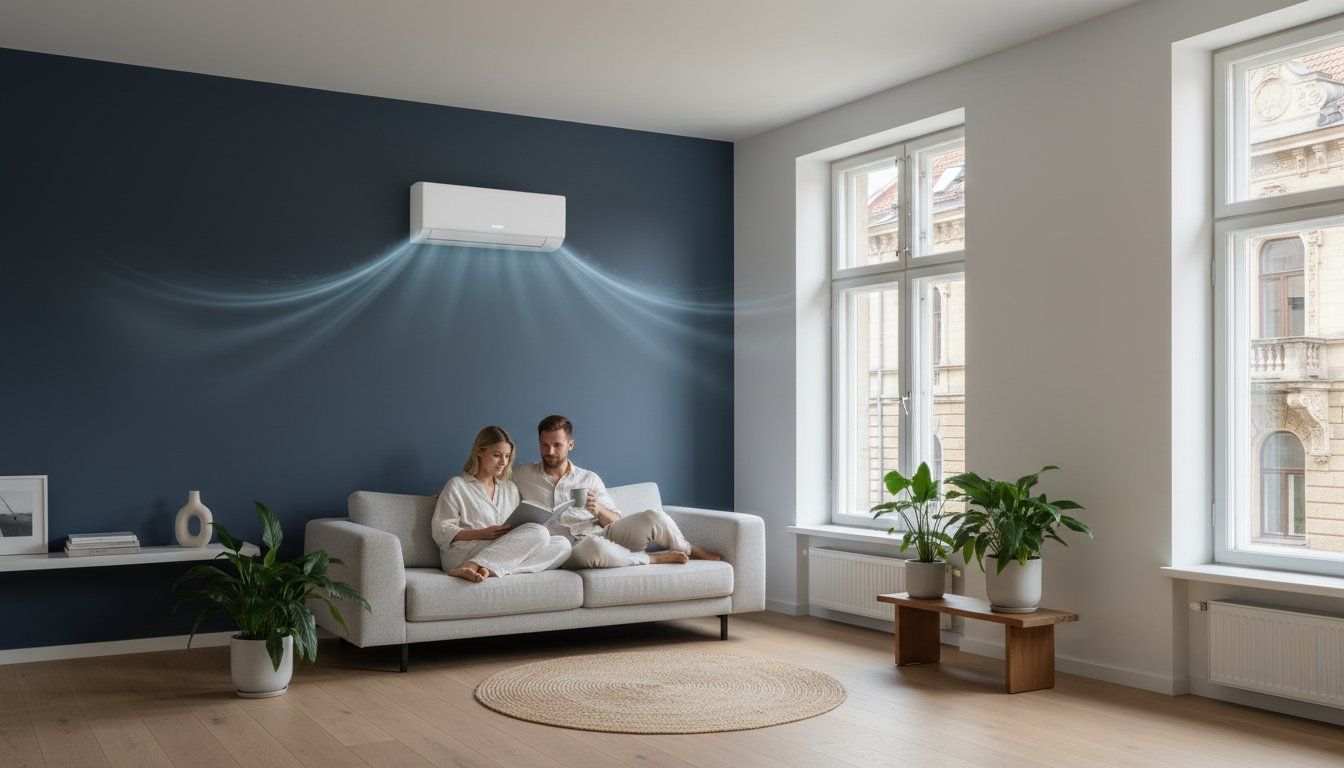
Would you believe that comfort in your home on the hottest summer days can cost less than a morning coffee, provided the system is chosen wisely? Many people in Latvia still worry that modern air conditioners merely consume unnecessary electricity and create constant noise that disturbs sleep. We understand these concerns because, in our daily work, we have seen hundreds of cases where an unsuitable unit becomes an expensive and noisy interior feature instead of providing the expected relief.
Our team is here to work alongside you and remove any uncertainty surrounding complex technical specifications. In this article, we will explain everything you need to know about the latest trends for 2026 so that you can make an informed and economically sound decision. You will learn how to choose a system with a noise level no higher than 19 decibels, calculate the correct capacity for your floor area and understand the key difference between an air conditioner and a heat pump. We will cover the entire process from the first consultation to professional installation, ensuring an ideal indoor climate while keeping your bills under control.
Key takeaways
- Learn how to choose between split and multi-split systems to provide a healthy indoor climate and clean air in every room of your home.
- Find out how to calculate the required cooling capacity accurately and why modern air conditioners with inverter technology are the best investment in your comfort.
- Understand why professional installation is decisive for the unit's service life and what practical preparation should be completed before certified installers arrive.
- Discover how the Commodus team's experience and personal approach will help you choose an energy-efficient climate-control solution with a complete service warranty.
What are air conditioners and why are they needed in a modern home?
A modern home is difficult to imagine without intelligent solutions that support our wellbeing every day. While an air-conditioning system was once regarded as a luxury intended only for sweltering July afternoons, the technological standards of 2026 present a very different picture. Today's air conditioners have become complete climate-control centres. Their primary function is not only to reduce temperature but also to maintain the correct humidity level and remove fine particles from the air, creating a healthy environment for the whole family.
The evolution from a basic cooling box to an intelligent system has been rapid. Modern units are equipped with artificial-intelligence sensors that can detect where people are in the room and direct the airflow so that it does not create an unpleasant draught. This smart approach makes the system feel unobtrusive and natural. In our daily work, we increasingly see customers choosing these systems as a long-term investment in their health and comfort rather than merely a temporary escape from the heat.
There is an important distinction between ordinary cooling and the air-to-air heat pump function during the transitional seasons. In Latvia's variable weather, when temperatures fall sharply on spring and autumn evenings, heat pump mode can warm rooms quickly and energy-efficiently. It is an economically sound solution that allows us to work together towards greater comfort without having to start the main heating system. This flexibility is the principal reason why air conditioners are becoming standard in every new project.
How does an air conditioner affect quality of life?
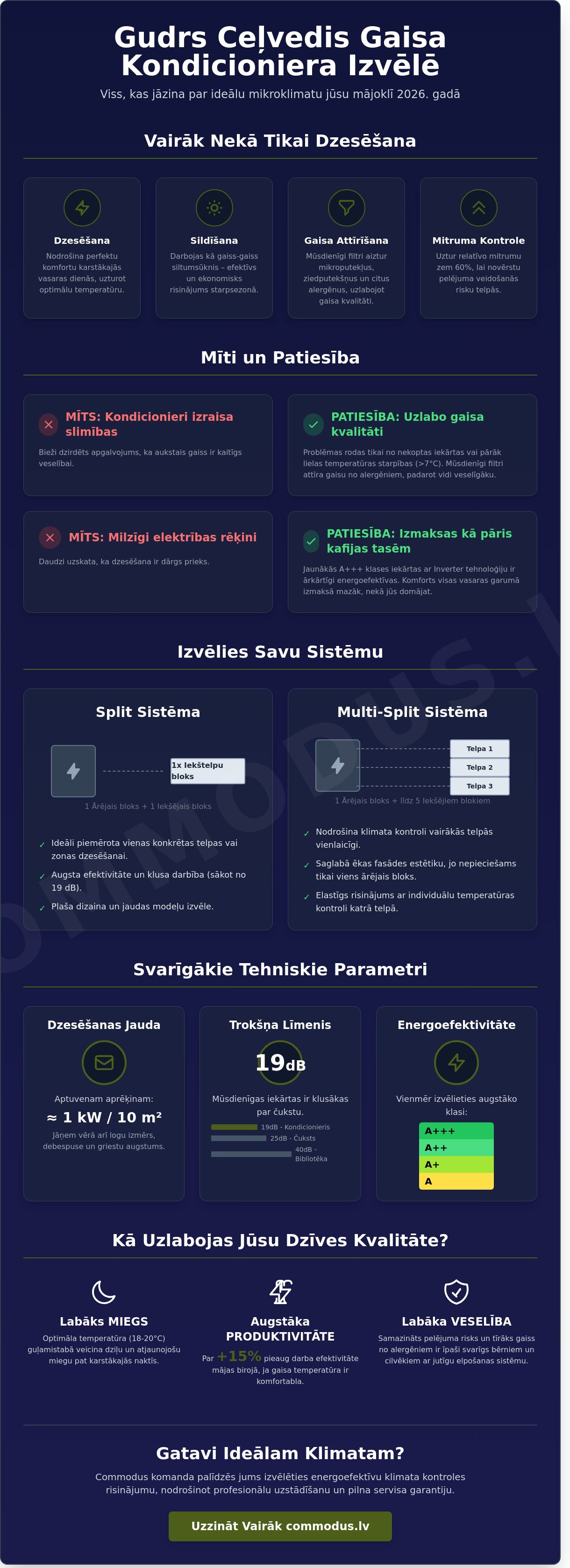
Good-quality sleep is fundamental to good health, but it is difficult to achieve when the bedroom temperature exceeds 24°C. The optimum environment for rest is approximately 18–20°C, which only a dependable cooling system can maintain on hot summer nights. Productivity in a home office can also increase by at least 15% when the air is fresh and the temperature comfortable. In addition, the unit helps keep relative humidity below 60%, which is essential for reducing the risk of mould in rooms with high moisture levels.
Myths and facts about air conditioning
A common myth is that air conditioners cause illness. In reality, health problems arise only when a unit is not maintained regularly or when the temperature difference between indoors and outdoors exceeds 7°C. Modern filtration systems effectively remove pollen and other allergens from the air, making the environment safer even for people with asthma. The belief that air conditioning consumes excessive energy is also outdated. The latest A+++ units operate so efficiently that their monthly running cost can be comparable to a couple of coffees in the city centre, while providing immeasurable long-term comfort.
Types of air conditioner: Which system is right for you?
When choosing the most suitable cooling solution, the first step is to understand the characteristics of your space and your requirements. No single model is suitable for everyone, which is why the Commodus team helps customers navigate the extensive range available. Modern air conditioners are no longer simply boxes mounted on a wall; they are intelligent assistants that maintain a comfortable indoor climate and adapt to your lifestyle.
Split systems, consisting of one indoor and one outdoor unit, are the most popular choice in Latvian households. If several rooms need cooling but you want only one unit on the façade, a multi-split system is usually the more suitable solution. It allows up to five indoor units to be connected to one powerful outdoor module while preserving the building's appearance. For larger areas or commercial premises where visual neutrality is important, cassette or ducted air conditioners are often selected and concealed completely above suspended ceilings.
Advantages and disadvantages of split systems
This system has earned trust through its efficiency and quiet operation. Modern units achieve high energy-efficiency ratings, substantially reducing electricity bills during the hottest summer months. Indoor units operate very discreetly, often remaining below 19–22 dB, which is quieter than a whisper. Manufacturers offer classic white, matt black and even silver casings, allowing the unit to blend harmoniously into the interior.
However, the installation requirements must be considered. Installation involves drilling through the wall and routing refrigerant pipes, work that may only be carried out by certified specialists. Buildings of cultural or historical value, and new developments with strict façade requirements, may require approval from the building authority or property manager. This process can take between two and four weeks, so planning should begin well before the first heatwave.
When should you choose a portable air conditioner?
Portable air conditioners are useful where permanent installation is not possible. This is often the case in rented flats or summer houses where major alterations are undesirable. The main advantage is immediate use: unpack the unit, connect it to the electricity supply and enjoy cooler air the same day.
Two factors are particularly important for comfort. First, the noise level is usually higher than with split systems, reaching 50–65 dB because the compressor is located indoors. Second, an exhaust hose must be routed through a window or a dedicated seal. Without this hose, the unit cannot cool effectively because the extracted heat remains in the room. If you are unsure which system suits your home, our specialists will perform accurate calculations and help you find the most suitable solution for your individual circumstances.
Technical specifications: How can you understand what you are buying?
When selecting a unit, the range of figures and abbreviations can appear confusing. Let us begin with the key parameter: cooling capacity. For a standard Latvian home with 2.5-metre ceilings, we recommend allowing approximately 1 kW of capacity for every 10 square metres. A 35 m² living room will therefore generally require a unit with approximately 3.5 kW of cooling capacity. An accurate calculation prevents the system from operating under excessive load, which would shorten its service life and waste electricity.
Inverter technology is no longer merely an optional extra; it is essential for anyone planning a long-term investment. Under European Union ecodesign regulations, the market in 2026 is dominated by high-efficiency inverter systems. Unlike older models, modern air conditioners do not switch off completely but reduce their operating speed to maintain an even temperature. This prevents sudden blasts of cold air and reduces electricity consumption by approximately 30–45%.
Noise level is another critical parameter, particularly for a bedroom. We recommend models whose indoor-unit noise level in night mode does not exceed 19–21 dB. For comparison, rustling leaves produce approximately 20 dB, so such a unit will not disturb even a light sleeper. A higher level, usually around 30–35 dB, is acceptable in living areas.
Energy-efficiency labels and their effect on running costs
The difference between an A-rated and an A+++ unit becomes visible in your expenses after the first intensive season. Although cheaper A-rated units may initially appear attractive, A+++ models consume approximately 20% less energy, representing a significant saving when electricity prices fluctuate. SEER indicates how efficiently the unit cools throughout the season under varying outdoor conditions. To make comparison easier, the international energy-efficiency rating provides a dependable guide. SCOP is the main indicator describing a heat pump's seasonal efficiency in heating mode.
Smart functions and controls
Modern air conditioners have become part of the smart home. Wi-Fi control through a mobile application allows you to set the preferred temperature while travelling home from work, so pleasant coolness awaits on arrival. Comfort, however, is not measured only in degrees: air-cleaning filters such as HEPA or plasma filters, combined with an ionisation function, actively combat dust mites and bacteria. Many models offered by Commodus include motion sensors and Eco modes. If no movement is detected for 20 minutes, the unit automatically switches to an economical setting rather than cooling an empty room.
Air conditioner installation and maintenance
To ensure that air conditioners operate efficiently for many years, installation should never be entrusted to an unqualified installer. Latvian regulations and manufacturers' warranty conditions require installation by certified specialists holding the appropriate F-gas qualification. This is not merely bureaucracy; it is an important safety guarantee. Incorrect refrigerant charging or poor-quality connections can cause the system to fail during its first season. The Commodus team approaches every project as if it were our own home, working alongside you to create a pleasant indoor climate.
Preparation begins with choosing the correct location. The indoor unit should not be installed directly above a bed or desk, where cold airflow could cause discomfort. The outdoor unit requires unrestricted air circulation and access for servicing. Efficiency also falls if the distance between the units exceeds the manufacturer's permitted limit, which is normally between 15 and 30 metres depending on the model and capacity.
Installation process step by step
The process begins by drilling an opening through the wall for the services, normally using a 55 mm diamond drill to avoid damaging the façade finish. Once the pipes and cables have been routed, the most important stage follows: evacuating the system with a vacuum pump. This takes at least 20 minutes and is essential for removing moisture and air. If this step is omitted, the compressor may fail after only a few years. Finally, condensate drainage is arranged. Gravity drainage is used wherever possible, while more complex layouts require a dedicated pump that quietly removes the excess liquid.
How can you maintain an air conditioner yourself?
Regular maintenance is the key to clean air and low electricity bills. Dust filters beneath the indoor unit cover should be cleaned every 2–4 weeks, particularly in homes with pets. They can simply be rinsed under lukewarm water. Homeowners should also inspect the outdoor unit occasionally to ensure that autumn leaves or spring poplar fluff have not accumulated and blocked the heat exchanger.
- Unpleasant smell: If the unit produces a mouldy odour, antibacterial cleaning is required.
- Reduced capacity: If the unit no longer cools as effectively as before, there may be a refrigerant leak.
- Unusual noises: Rattling or strong vibration may indicate a mechanical fault or loose mounting.
Remember that professional maintenance once a year is required to preserve the unit's two- to five-year warranty. The technician will test the system for leaks, clean the condensate tray and verify that all electrical connections are safe. If the unit is no longer performing at full capacity, it is better to act immediately rather than wait for the hottest day of summer.
Contact us to arrange servicing or learn more about how high-quality air conditioners work and how they should be maintained.
Commodus solutions: Quality and a personal approach
Commodus began operating in Latvia in 2010 and, over these 14 years, has become one of the country's leading climate-control specialists. We are not simply equipment retailers. Our team works together to provide every customer with a complete service cycle, from the initial free consultation and site survey to professional installation and regular warranty maintenance in the years that follow. We believe that providing high-quality indoor air is a long-term investment in health and wellbeing.
When selecting equipment, we favour internationally recognised, energy-efficient brands such as Midea. These modern air conditioners and heat pumps are specifically adapted to the variable weather of Northern Europe and Latvia. They operate efficiently in severe frost as well as on scorching summer days while consuming minimal electricity. Every project is a unique challenge for our team. Whether it is a small city-centre flat or a spacious rural house, we seek a solution that is technically correct and visually discreet.
Why do customers trust Commodus experts?
Our greatest strength is our qualified specialists, who care not only about the equipment but also about order and cleanliness at the site. We do not leave a mess after completing the work. Customers appreciate our transparent pricing policy: detailed calculations and a clear quotation are provided before work begins, so there are no unpleasant surprises on the final invoice. We remain available and responsive after installation, with advice and support continuing for years because our relationships are built on trust.
- Experienced specialists with certified installation expertise.
- An honest approach and technical processes explained clearly.
- Responsive service and rapid answers to any questions.
- Only proven equipment suited to the Latvian climate.
Begin your journey towards comfort today
Taking the first step towards a better indoor climate is straightforward. We invite you to request a free site survey, during which our specialist will assess all technical details in person and recommend the best solution. If you would first like to understand which air conditioners or heat pumps may suit your budget, use the heating and cooling calculators available on our website. They provide an initial indication of the required capacity and potential cost.
Contact us by email or telephone. We respond quickly to customer enquiries and explain everything in clear language without unnecessary complexity. The Commodus team is ready to help you create a comfortable, warm and clean environment that is pleasant to live in every day. Your peace of mind and long-term comfort are our priorities.
Invest in comfort and energy efficiency today
Improving the climate in your home is not a temporary luxury but a forward-looking investment in everyday wellbeing and health. When choosing the most suitable system, consideration should be given not only to cooling capacity but also to long-term efficiency. Modern air conditioners with an A+++ energy-efficiency rating can significantly reduce electricity costs while maintaining an ideal temperature even on the hottest summer days. Correct system selection and professional installation are essential if the unit is to operate reliably for years without unnecessary technical problems.
For more than 15 years, the Commodus team has helped households and businesses throughout Latvia find the best engineering solutions. Our certified installers ensure that every detail is considered and that the system operates correctly from the first day. We believe that every project, regardless of size, requires a personal approach and honest service. We are ready to work alongside you to bring calm, comfort and freshness to your home in every season. Choose dependable experience.
Contact Commodus specialists and receive a personalised offer!
We will help you create an environment that you will enjoy returning to every day and where every breath feels genuinely refreshing.
Frequently asked questions
How much does air conditioner installation cost?
Standard air conditioner installation in Latvia usually costs between EUR 250 and EUR 450. The final amount depends on the distance between the indoor and outdoor units, the required installation materials and the wall construction. Costs increase if a lifting platform or complex drilling is required. Our specialists always begin with an accurate quotation so that the customer knows the total cost before work starts.
Can air conditioners be used to heat a home in winter?
Yes. Modern air conditioners are efficient heat pumps capable of heating rooms fully even when the outdoor temperature falls to -25°C. This is one of the most economical forms of heating because the unit can provide up to four times more heat energy than the electricity it consumes. It is an excellent solution during spring and autumn when the central heating has not yet been switched on but a warm and comfortable home is still needed.
How often should an air conditioner be serviced?
Professional servicing should be carried out at least once a year, preferably in spring before the cooling season. If the unit is also used for heating in winter, servicing is recommended twice a year. Regular filter cleaning and system checks prevent bacterial accumulation and can extend the unit's service life by approximately 30%. Preventive maintenance is the best way to avoid unnecessary future expenditure and ensure peace of mind.
What capacity should be chosen for a 20-square-metre room?
A standard 20 m² room with ceilings up to 2.7 metres generally requires a unit with a cooling capacity of approximately 2–2.5 kW. Window orientation and the number of electrical appliances in the room must also be considered. An undersized system will operate at maximum load, while an excessively powerful air conditioner will switch on and off too frequently, wasting energy and reducing comfort.
Can an air conditioner be installed in a flat without approval?
No. Installing an outdoor air-conditioning unit on a building façade in Latvia must be approved by the local building authority and the joint owners of the building. Under the Apartment Property Law, the façade is jointly owned, so approval from at least 51% of the owners is required. Completing the approval process protects against fines and orders to remove the equipment if objections are raised to the visual alteration.
How much electricity does an air conditioner use each month?
An air conditioner typically consumes approximately 20–50 kWh of electricity per month when used for cooling during the hottest parts of the day. Modern inverter units are highly economical and may consume roughly as much electricity as an ordinary refrigerator. The actual cost depends on the selected indoor temperature, the difference from the outdoor temperature and the quality of the building's insulation.
What is the difference between an air conditioner and an evaporative air cooler?
The main difference is the operating principle. Air conditioners use refrigerant to remove heat from the room, while evaporative coolers operate by evaporating water. An air conditioner can reduce the temperature by 10°C or more and control humidity. An evaporative cooler only makes the air feel slightly fresher and substantially increases humidity, which can create a stuffy feeling in hot weather; the two technologies are therefore not comparable in efficiency.
Can an air conditioner help with allergies?
Yes. High-quality air conditioners are equipped with multi-stage filters capable of capturing up to 99% of dust, pollen and other allergens. HEPA and plasma filters help remove microscopic particles, creating a healthier environment for people with respiratory sensitivities. A regularly maintained unit can keep indoor air cleaner than outdoor air, particularly in city centres or during the flowering season when opening windows is undesirable.
Comments