Conditioner drips water into the room: what to do and how to eliminate the cause?
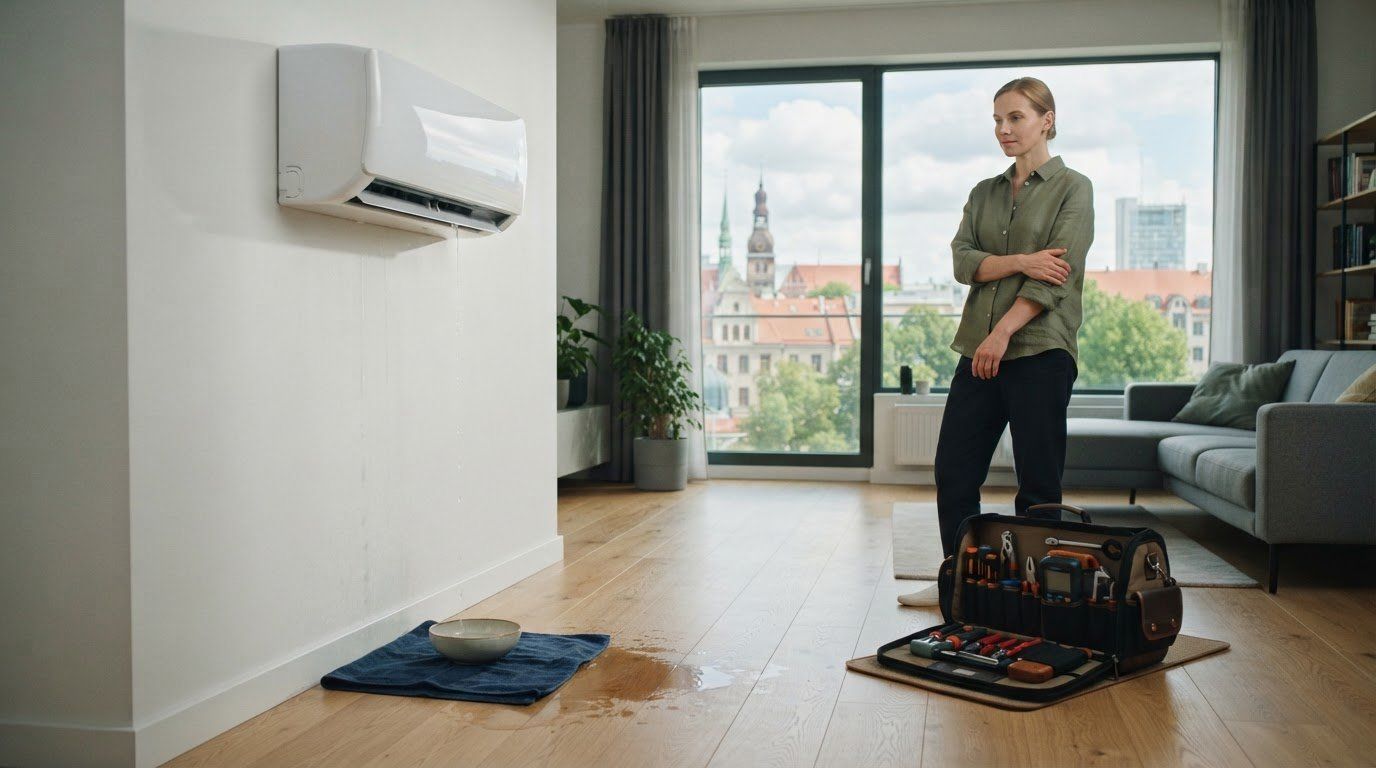
Do some water drops from the conditioner mean that the appliance needs immediate repair? If the conditioner drips water into the room, concerns about the wet floor, walls or furniture are understandable. First, limit leakage: turn off the conditioner, stay under the drip place the dish or towel and dry the water. If it comes to the electricity connection or equipment, do not continue to use it. Do not interfere with the wet electrical parts.
Often the reason for dripping is a disturbed discharge of condensate or a dirty filter, but it may also be a problem with the applause or other technical problems. In this article you will find out what to check for yourself safely how to spot a situation when cleaning the filter is not enough, and when to switch off and check the device for a specialist. Act in a sequential manner: protect the room first, then find out the possible cause of the leak.
Conditioner drips water into the room: what to do right away?
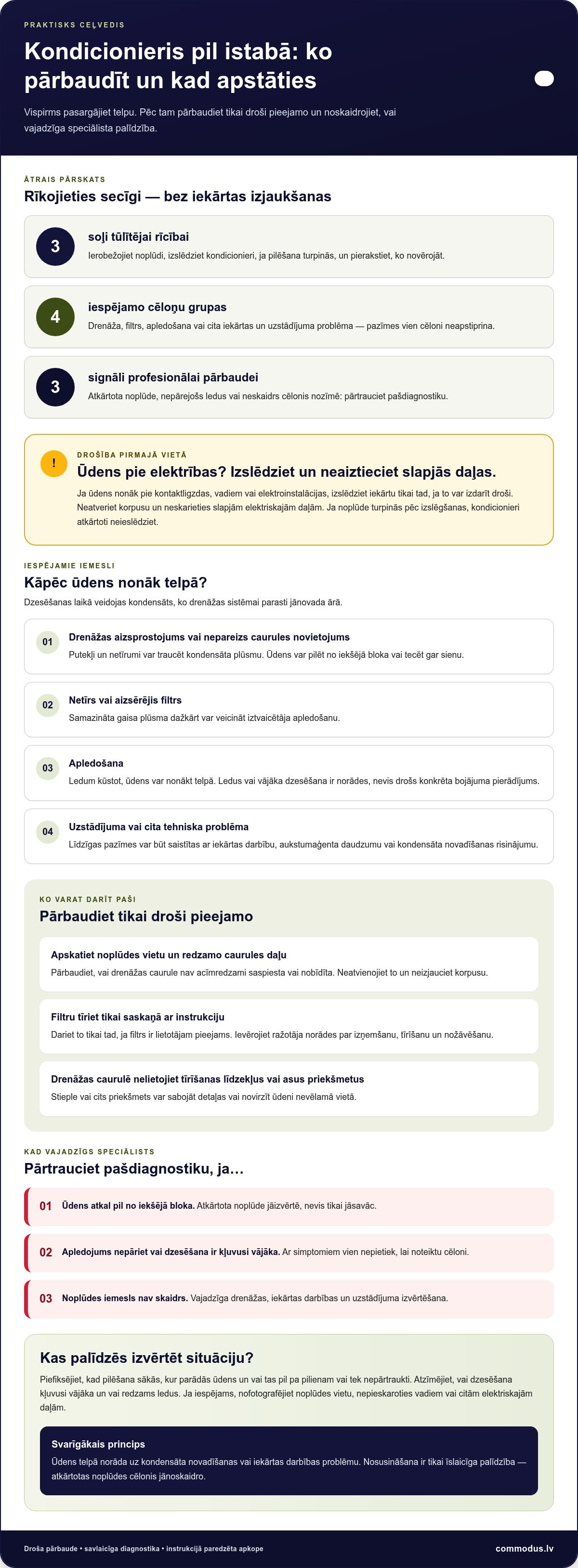
First, assess where the water appears and how fast it drips. If the conditioner drips water into the room, place the water under the leak dish and dry the water to protect the floor and furniture. If dripping continues, turn off the unit by a remote control switch, if it is safely available. Do not open the housing and do not try to reach the internal details.
During cooling, the humidity from the room turns into condensate, which is usually passed through the drainage pipe. You can find out more about the main activity of the air conditioning in the article How Air Conditioner worksIf the water reaches the room, it is not enough to collect it. Also, record the conditions in which the leak began.
Which signs should be recorded before testing?
Check whether dripping started during cooling, immediately after switching on or after the device has been switched off. Check whether water appears at the inner block, along the wall or at the pipe, and whether it drips or runs continuously. Note whether cooling has become weaker or the ice on the device is visible. If possible, take a picture of the leakage site without touching wires or other electrical parts. This information will help to assess the situation more accurately.
When should you stop using the conditioning immediately?
If water flows to the socket, wires or wiring, immediately turn off the conditioner if it can be done safely. Do not touch the wet electrical parts, open the housing and touch the inside parts of the device. If the leak continues or resumes after the switch off, do not reactivate the device. First, you need to find out why the water enters the room.
Why is the conditioner drip water into the room?
During cooling, the inner block of the conditioner forms condensate: humidity from the room air settles on a cold surface. Usually water is drained out through the drain canal and pipe instead of the room. If the conditioner drips water into the room, there may be a problem with discharge or equipment not functioning properly. One feature alone is not enough to reliably determine the cause of the damage.
Condensate discharge and drainage disorders
Often the possible cause is obstruction in the drainage system. Dust and dirt can accumulate in the discharge pipe, so water is no longer away from the intended path and starts dripping from the internal block or along the wall. The water flow can also be disturbed by the wrong position of the pipe. Only those parts that are visible and safely accessible. If the test has to remove the housing or dismantle the equipment, entrust it to the specialist.
Filter, freezing or mounting problem
The clogged filter can reduce air flow and sometimes contribute to the icing of the evaporator. When the ice melts, the water can enter the room. Visible ice, weaker cooling or water dripping are useful indications, but they themselves do not confirm a specific cause. Similar signs may also be associated with the amount of refrigerant or other equipment malfunction.
If the problem recurs after the filter check or the device shows ice, do not draw conclusions only after the symptoms. Both the conditioner itself and its location and solution for condensate discharge should be evaluated. The water supply is a problem of discharge or operation, which is a cause to be identified. For deeper inspection and maintenance requires specialist evaluation.
What should you do to check for yourself and when to call a specialist?
Only perform simple tests at your home that do not require opening of the hull or access to the internal parts of the machine. If the conditioner drips water into the room and drips continue, first turn off the machine. Then look at the place where the water appears and check the visible part of the drainage pipe. Make sure it is not obviously compressed or dislodged, but do not disconnect the pipe.
Safe testing sequence at home
Only remove and clean the filter if it is user-accessible and the instructions for the equipment provide for it. Follow the instructions for removal and cleaning, and for drying the filter if instructed. Do not use the detergent in the condensate tube and do not try to release it with wire or other sharp object. This may damage the parts or divert water to an unwanted place.
Signs of the need for professional diagnostics
If the water drips from the internal block again, the ice-cream does not disappear or the cause of the leakage is unclear, stop self-diagnosis and turn off the conditioner. System check is required, as the problem may be in the drain, in the operation of the equipment or in its setting. Tell the specialist when drip started, where the water appears and how the conditioner worked before it. This information helps to evaluate the equipment and conditions in general, rather than just one sign.
If you are considering a facility that provides both cooling and heating, please see: Air-air heat pump solutions.
How to prevent re-drip of conditioner and restore comfort?
Water collection only protects the room for short periods. If the conditioner re-fills the water in the room, it must be found why the condensate does not enter the intended discharge site or why the equipment does not work properly. If the cause remains unsolved, drip may continue even after the room is drained.
What can you expect from a professional examination?
The specialist evaluates where and when water appears, examines the discharge of condensate and the condition of the filter, and examines the operation and setting of the device. This helps to distinguish the drainage interference from possible problems related to icing or other malfunction of the device. The necessary works depend on the identified cause, therefore they cannot be reliably determined without evaluating the system.
Record when leakage starts and whether you notice ice, lower cooling or unusual water flow before it starts. These details will help the specialist to understand the situation better. If you are considering another solution for cooling and heating the room, get to know Alpicair air-air heat pumps.
How to reduce the risk of recurrence of dripping?
Follow the manufacturer's instructions for filter inspection and user maintenance. Do not disassemble the equipment and soil the hard parts of the drainage. If the leak is repeated, do not restart the conditioner until the cause is ascertained and eliminated. Regular, the instructions provide maintenance and timely reaction to unusual operations help to protect the room from re-degrading.
Commodus sells and installs air conditioners, as well as offers consultations, design, assembly and maintenance. Find Commodus air conditioning solutions.
Restores conditioning, starting with prevention of cause
If the conditioner drips water into the room, first protect the room and turn off the equipment if dripping continues or the water reaches the electricity. You can check the filter according to the manufacturer's instructions, but assign the disassembly of the drainage system or internal parts of the equipment to the specialist. Repeated leakage, ice or an unclear cause is a signal that professional examination is required.
The collection of water solves only the immediate inconvenience. To avoid repetition of dripping, it is necessary to evaluate the discharge of condensate, the condition of the filter, the operation and setting of the equipment. Commodus sells and installs air conditioning, as well as offers consultations, design, assembly and maintenance to customers throughout Latvia. Find Commodus air conditioning solutions and choose the next step for your room.
Frequently Asked Questions
Why does a conditioner get water into the room?
If the conditioner drips water into the room, the frequent cause is the impaired discharge of the condensate, such as the obstruction of the drainage pipe. The loading can also be facilitated by a dirty filter that impairs the air flow, or the plating of the equipment. Another problem of operation or setting is possible. After one symptom alone, the cause cannot be reliably determined, so pay attention to when and where the water appears.
Can you continue to use a conditioner if it drips water?
If dripping continues, switch off conditioners, especially if water approaches the socket, wires or other electrical equipment. Do not touch wet electrical parts and do not open the body of the device. If leakage continues after the switch off or the reason for it is unclear, do not re-activate the conditioner. First, you need to find out why the water gets into the room.
Can the conditioner filter be cleaned by itself if water is dripping into the room?
Yes, you can check and clean the filter yourself if it is user-accessible and the instructions of the equipment allow it. Before work, turn off the conditioning and follow the manufacturer's instructions for removing and cleaning the filter. Filter maintenance can help if it is dirty, but it does not solve all causes of leakage. Do not break the body and touch the internal details.
What if the conditioner drips water after cleaning?
If, after cleaning the filter, the water continues to drip or leak quickly, turn off the device and attract the specialist. Write down when driping begins, where the water appears and whether you notice icing or changes in cooling. This information helps to evaluate the system operation and the discharge of condensate. Do not try to clean deeper parts of the pipe yourself or to break the machine.
Can air conditioner water drip be prevented without a specialist?
Sometimes you can eliminate a simple reason by cleaning the filter that is available to the user according to instructions and making sure that the visible part of the discharge pipe is not compressed. Do not disconnect the pipe, pour cleaning agents into it and do not use sharp objects. If dripping recurs, visible ice or cause is not clear, a professional system check is required.
Comments