Heating systems for repair and audit in Latvia
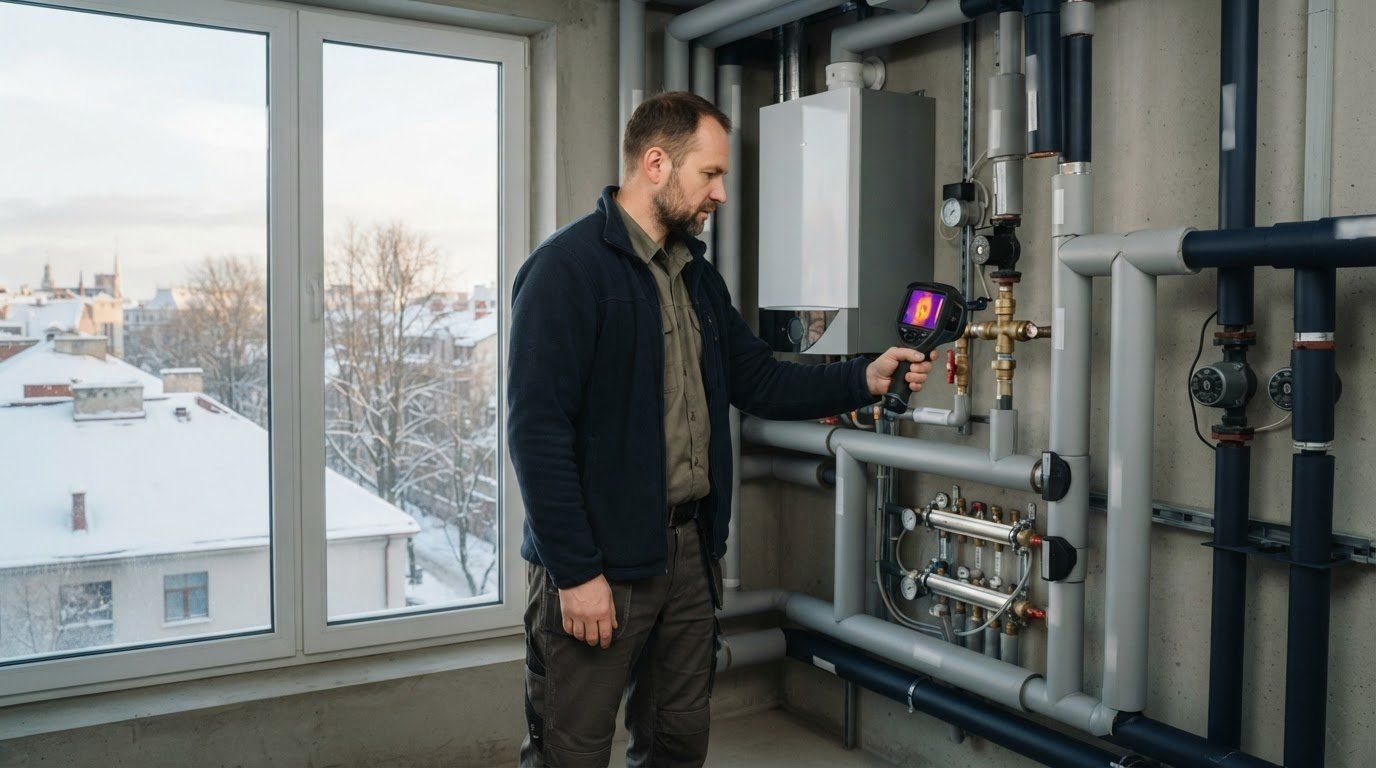
The diagnostics of heating system help to understand why rooms heat unevenly, energy consumption or audible noises are increasing. heating systems the available parts, if its total useful rated power is greater than 70 kilowatts. An early check helps to assess the need for repair, audit or further monitoring.
If the radiators heat unevenly, the boiler often turns on and turns off or the room fails to maintain a pleasant temperature, it may seem that a particular component is responsible. However, the problem may also be due to system regulation, deposition or in difficult to detect damage. In this article you will find out which signs to notice when to consider the audit or repair of the heating system and how specialists look for hidden defects.
Let's look at what can be assessed visually, how professional examination is going on and what conditions affect its volume and costs. Let's also look at the thermal design: thermographic examination of the heating system optimally perform during the heating season when the outdoor temperature is below +5 °C. This will help you to understand what to expect from the survey and how to prepare for the conversation on the most suitable solution.
Test acts for boilers and heating systems
The aim of the test is to evaluate the operation of the equipment and find where the system loses efficiency. In Latvia an independent expert checks the available parts of the heating or ventilation system if the total useful rated power exceeds 70 kilowatts.
Diagnostics for gas, pellet and heat pumps
The gas boiler test focuses on the operation of the burner and the combustion process, the pellet boiler is checked for supply and combustion units, but the heat pump evaluates its operating parameters and management. The efficiency and power of the boiler is compared to the heating demand of the building. By choosing a diagnostic master, make sure that he has been trained and certified in the Latvian Association of Heat, Gas and Water Technology Engineers.
Maintenance and diagnostic regularity
Maintenance and diagnostic regularity are determined by the type of equipment, manufacturer's instructions, age and malfunction. Noting uneven heat, unusual noise or increasing consumption, the test shall not be delayed until the next scheduled maintenance.
Diagnostic costs in Latvia
The diagnostic costs depend on the type of system, the number of equipment, access to and the required measurement. Visual inspection and checking with measuring instruments may require different workload. Before starting work, check whether the estimate includes measurements and an inspection act, and whether damage prevention is provided separately.
Test of heating system
The test starts with inspection of the boiler, radiators, pipes and controls, and then makes the necessary measurements. Depending on the system and possible failure, a thermometer, manometer, combustion analyser or thermal camera can be used.
Heating system audit and repair
Heating audit helps to determine whether the problem is caused by a boiler, distribution system or its regulation. The test evaluates the operation of the equipment, the distribution and consumption of heat to determine where regulation or repair is needed. The audit also serves when the system is operating, but the space heats unevenly or the heating costs seem disproportionate.
The heating system built by another performer can be checked and repaired. First, it is important to determine the cause of the damage, not to change the parts immediately. For example, a cool radiator may indicate air in the system, deposition or incorrect flow distribution. Each of these causes requires a different solution.
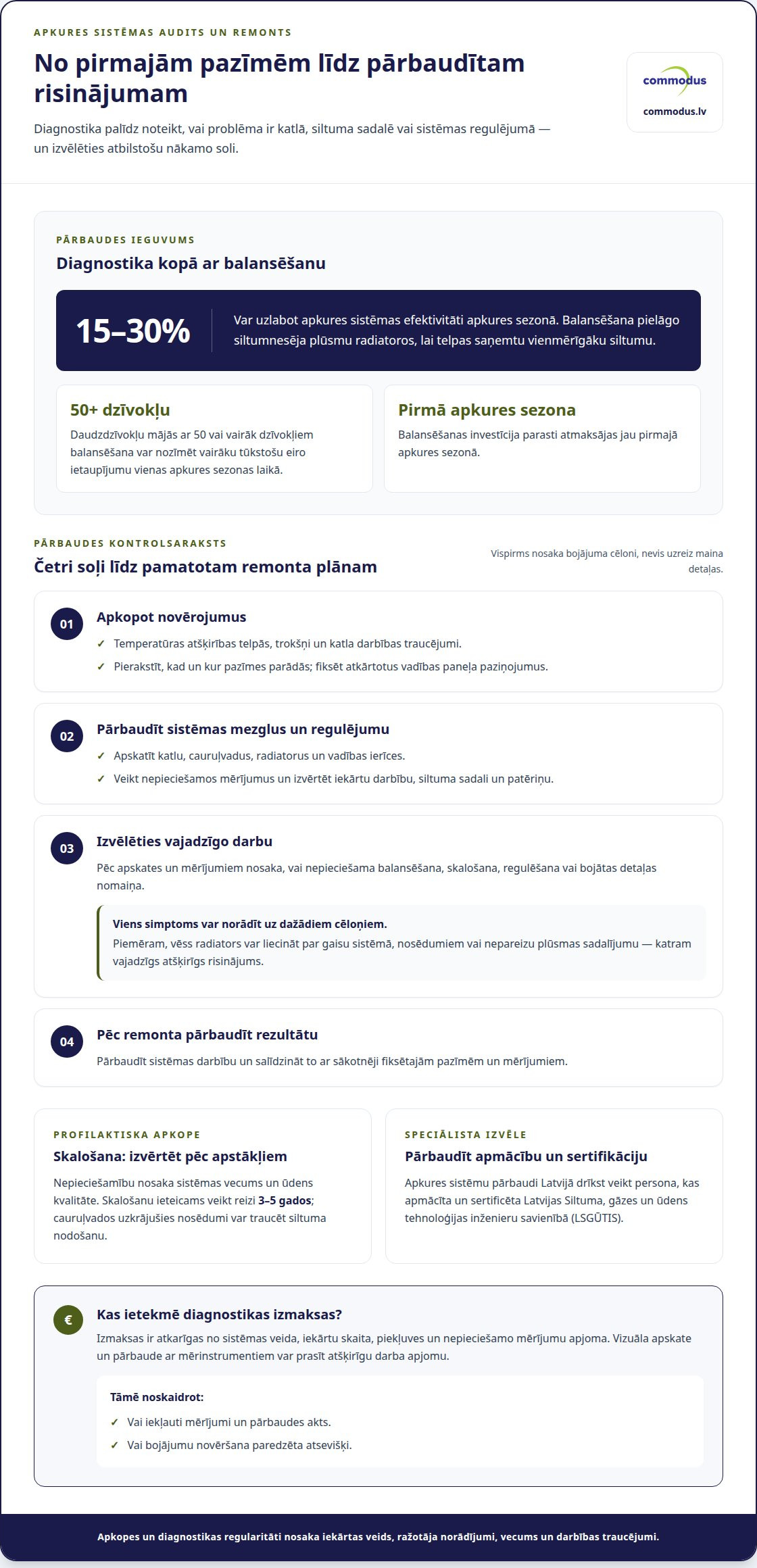
The diagnostics together with balancing can improve the efficiency of the heating system by 15-30 percent during the heating season. Balancing adjusts the heat transfer flow to radiators to get more even heat. In apartment houses with 50 or more apartments it can mean several thousand euros savings during one heating season. Balancing investment usually pays off already in the first heating season.
The repair plan is based on the results of the survey and measurement. The order of works helps to understand what to solve first:
- Collect complaints about temperature, noise and boiler operation.
- Check nodes, pipes, radiators and system adjustment.
- Determine whether balancing, rinsing, adjusting or replacement of damaged component is necessary.
- After repair check the system operation and compare the result.
The need for rinsing is determined by the age of the system and the quality of the water; it is recommended to perform it every 3-5 years. If the sludge is accumulated in the pipelines, it may interfere with the heat transfer. Early maintenance helps to maintain the system's performance, control energy consumption and reduces the risk of unplanned damage.
In Latvia, the testing of heating and air conditioning systems is allowed by a person trained and certified in the Latvian Association of Heat, Gas and Water Technology Engineers (LSGATIS). Before ordering the test it is worth verifying such training and certification to choose an appropriate specialist for the evaluation of the heating or air conditioning system.
Timely heating system service can improve system performance, help maintain low energy consumption, prevent emergency situations and prolong system lifetime. These benefits include both system operation and energy consumption, and prevention of emergency situations and longer service life. Therefore, service is important not only to prevent a specific fault, but also to maintain system performance and low energy consumption.
Signs of heating problems
The first changes are often noticeable on a daily basis. For example, one room keeps heat, while another cools, although the door is open. Write down which rooms and during which day you observe it. Such data helps to distinguish the problem of a single radiator from uneven distribution of heat throughout the house.
Also, consider how long the space heats after heating is switched on. If the usual mode changes and the boiler lasts longer, write down time and control panel readings. The repeated error code is specific information to pass to the specialist. Do not try to determine the damaged part by code alone, as the same message may be associated with different circumstances.
- The wetness of the feet at or below the pipe joints.
- Rush spots on the radiator valve or pipe.
- Unusual vibration occurring during the operation of the boiler.
- Control panel notifications repeated after unsetting.
- Temperature change of the room after changing the thermostat setting.
Visual changes are taken by recording the space and the date. For example, a wet compound that becomes wet once it is wiped back is not just a cosmetic defect. Also, look at the floor near the boiler and the visible pipe. If you notice dripping or increasing moisture, fix the site and do not touch the affected node.
For the diagnostics of the heating system, prepare a short description: when the sign started, where it appears and whether it recurs. Specify, for example, whether the control panel error disappears after restarting or returns to the next operation. Add photos and write down thermostat settings. These observations help to compare system performance with the problem you described during the test.
Inspection of fire-fighting and hidden damage
The diagnostics of the heating system include the inspection of the object, inspection of available nodes and evaluation of energy efficiency. It helps to detect both visible defects and damage that need to be looked for more carefully.
Search for visible defects and hidden damage
Before preparing the estimate, the expert shall inspect the object and check the system. First, evaluate the available pipes, connections, radiators and the surrounding area of the boiler. Then compare the observations with the problems you have identified, such as the moisture traces or uneven warming of the rooms. Hidden damage may be located in the structure or floor, so the test method is adapted to the possible site of damage.
The thermal inspection shows the difference in surface temperature and can help you to see the wrong heat distribution. It is optimal to perform during the heating season when the outdoor temperature is below +5 °C. During the test, the specialist can compare the heat picture shown in the picture with the layout of the room and the layout of the heating elements.
Scope of diagnostic work
The survey shall evaluate the state of the system, the available parts and the energy efficiency. The expert shall check whether the observed feature could be related to the damage to the pipeline, heat failure or the operational problem of the installation. Results help to identify which nodes to check in depth and which works to include in the estimate.
Before monitoring, prepare a list of observations and specify the problem location. Check that the humidity appeared in which the radiator does not heat or where the temperature difference is observed. Photos and space plan can help link the signs to specific nodes. After checking, discuss the repair and order of works that have been identified so that each intended step is clear.
The records may indicate which sites have not been examined and which signs have yet to be evaluated. This helps to discuss whether the works are in line with the findings and do not consider the possible site of damage as a confirmed fact. If access to the node is limited, please explain how this affects the scope of the further examination and the work to be included in the estimates.
When discussing the proposed works, please clearly indicate which items are related to the specific defect and which are intended to improve the system. If there are several solutions, please see what observations justify each option and what additional works might be needed. This helps to assess the offer, understand the order of the works and decide on the way forward based on the information obtained from the survey.
Commodus: Air conditioning
Commodus offers heating equipment to consider if diagnostics show that the existing boiler needs to be changed or the heating solution reviewed. The choice depends on the heating demand of the building, the existing systems and available fuel. The offer includes pellet boilers, wood boilers, gas condensing boilers and solar collectors.
The conclusions of the survey help you to understand whether regulation and repair are sufficient or to evaluate other equipment. Check the Comemodus offer and assess which heating solution fits your home.
Visit the Commodus siteto get acquainted with the offer.
Take the next step towards a well thought-out solution
Heating system diagnostics help to make the next decision, not to mention which part is damaged. Once you know the state of the system and the needs of the building, you can compare the repair with the replacement of the heating equipment.
If you are considering other heating, Commodus offers air-water, air-air and ground heat pumps. The most appropriate solution depends on the building and existing heating system, so diagnostic conclusions can be a useful basis for discussing future choices.
Contact Commodus on diagnostics and discuss what the next step would be for your home. A clear evaluation helps you to move towards comfortable heating with confidence.
Frequently Asked Questions
What are the most common problems and causes of the heating system?
The most common problems are uneven heat supply, frequent boiler activation and control errors. If several radiators in one branch remain cool, possibly disturbed flow or incorrectly adjusted system. If the boiler often ceases operation, check its settings and heating demand. Write down if the problem affects one room or the whole building to help narrow the range of possible causes.
What signs do we have to make of the urgent diagnosis of the heating system?
The active water leak, rapid pressure drop or repeated boiler failure notifications should be checked urgently. Also, if the heating suddenly stops and the temperature in the building is falling sharply. Do not open the boiler body and do not try to repair the equipment manually. Write down the control panel notification and the leak point to convey this information to the specialist.
What rules and requirements apply in Latvia to inspections of heating equipment?
In Latvia, if the total useful rated capacity of a heating system or combined heating and ventilation system exceeds 70 kilowatts, an independent expert shall check the available parts of the system. The boiler shall be tested in accordance with standard LVS EN 15378:2009, while the test acts shall be prepared using the acts provided for in Annexes D and K thereto.
Comments