Automation of heating system with phone and internet module
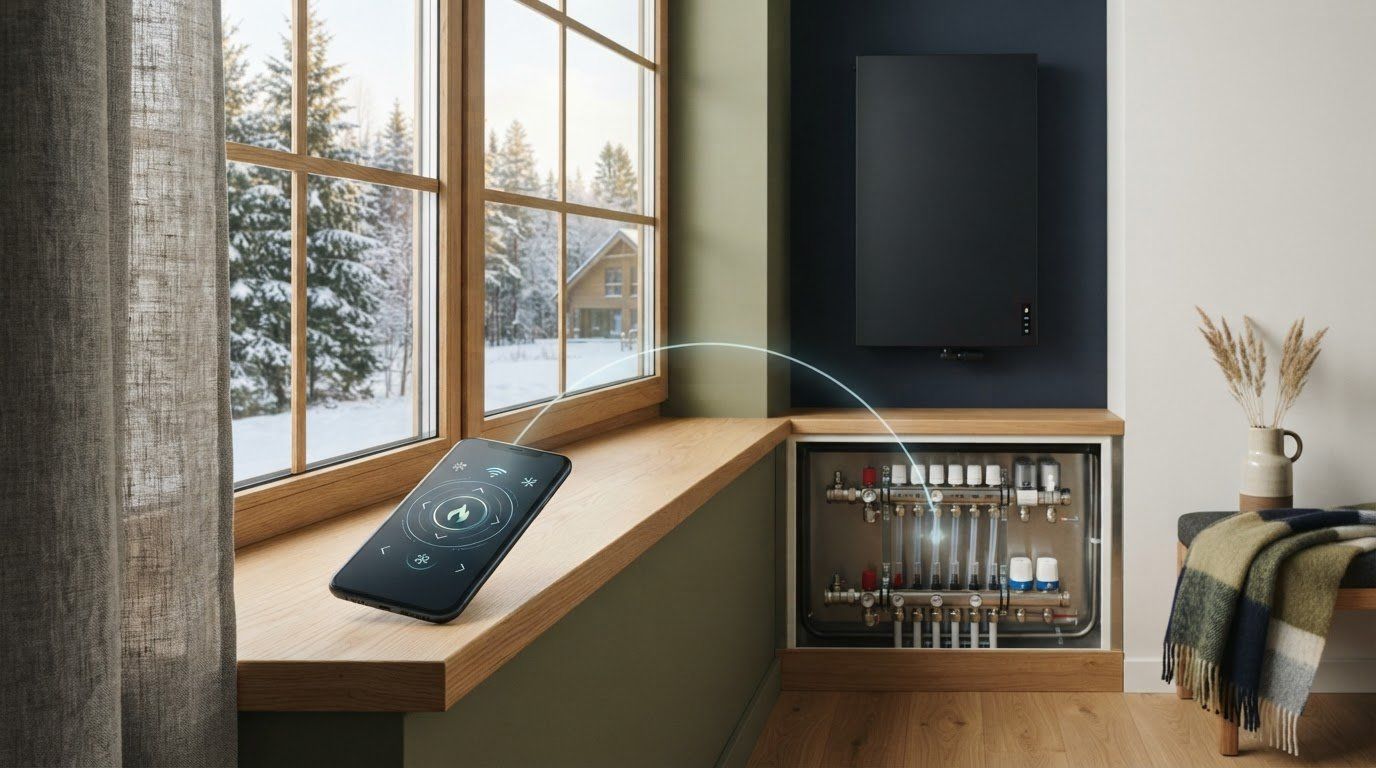
Heating does not need to be conducted only by the feeling: an automated system adapts the heat supply to the set temperature and outdoor conditions. Automation of the heating system allows setting a different temperature in each room, but if the system is connected to the Internet and registered online, heating can also be controlled by the phone. Automatic regulation of the heat transferr in the heat unit depending on the outdoor temperature can reduce energy consumption by about 15-20%.
If the house is too cool or the heating works when the premises are empty, it is understandable to look for more comfortable and smarter management. Automation allows to adjust the heating mode to the daily rhythm so that the settings do not need to be changed manually.
In this article you will find out how the system regulates the temperature, what can be done with the internet module and phone, and how smarter management can help save energy. Let's also look at what needs to be considered when choosing a management solution suitable for the building and its occupants' habits.
Use of smartphone and tablet for remote control
Heating can also be controlled by a phone or tablet outside the home, for example, by adjusting the temperature of the rooms before returning. The app facilitates daily management, but safe installation is as important as convenient access to settings.
In Latvia the control system should be installed according to the instructions of the equipment manufacturer, respecting the principles of safe electrical installation and ensuring proper connection to the heating equipment. For example, the Internet module should be connected so that it does not interfere with the operation of the boiler, radiators or other heating elements.
Internet and mobile management
Mobile app allows you to view and change the settings of an internet-connected heating system on your phone or tablet. To control you must be connected to the Internet and registered online. If your daily plans change, the temperature regime can be adjusted in the app without being located at the boiler. The pellet heating can be controlled on the Internet or in a mobile app, and an automated system can also report a damage or unplanned drop in temperature.
Heat storage control
The storage of heat is a heat storage that can be used for heating later. It helps to reconcile heat production with consumption, for example, by storing heat in the water storage tank and then supplying it to radiators. The automation of wood boilers depends on the specific heating system. Therefore, when choosing a control solution, both the type of boiler and how the system accumulates and distributes heat should be taken into account.
Weather-specific heating management
The control system, which depends on the weather, adjusts the heat transfer to the outdoor temperature. When the heat transfer is cooler outside, the control system increases the heat supply; it reduces it in warmer weather. This automatic regulation of the building's heat unit can reduce energy consumption by about 15-20%. This can help save fuel consumption while maintaining the comfort level in the rooms. The system settings must meet the heating characteristics of the building so that the radiators get the necessary heat, rather than running under a constant mode.
How is the heating system regulated?
The heat pump, gas boiler or pellet boiler is automatized by connecting its control unit with temperature controls and sensors. During installation, control is adapted to the operation of the unit and to the heating arcs of the premises. Compatibility with the smart home platform depends on the connection solutions supported by the control unit.
Principle of automatic adjustment
Automatic adjustment compares the temperature of the sensors to the set and adjusts the heat supply accordingly. It can also prepare warm water at the set temperature and turn on or off the heating of the building depending on the outdoor conditions. The heating control used by the room regulators can reduce the number of interruptions and restarts of the heating system by 30%. This helps to maintain a more even temperature.
Impact of the setting of the regulator
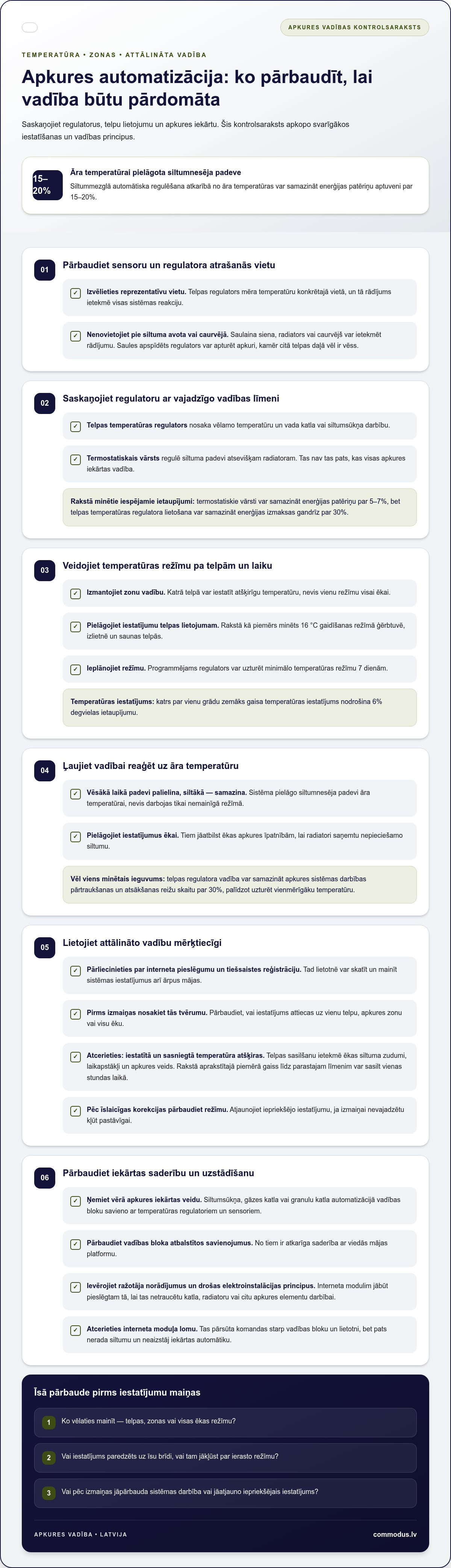
The room regulator measures the temperature at a specific location, so its location affects the response of the whole system. If the regulator is located near a sunny wall, radiator or tube, its display may not reflect the total heat in the room. For example, a solar-monised regulator may stop heating while the outside of the room is still cool. Choose a representative location instead of placing it near the heat source.
Temperature regulators and thermostats
The temperature control of the room determines the desired temperature and directs the operation of the boiler or heat pump, while the thermostatic valve controls the heat supply to a separate radiator. The use of the thermostatic valves can reduce energy consumption by 5-7%. The use of the room temperature regulator can reduce energy costs by almost 30%. Each one degree lower air temperature setting provides 6% fuel savings.
Temperature control of rooms and zones
Zone management allows setting a different temperature in each room, not one mode for the whole building. For example, in standby mode, in the dressing room, in the sink and sauna rooms you can maintain 16 °C, but in other rooms you can choose a different setting. Programmable regulator can maintain the minimum temperature for 7 days.
Heating remote control with phone and internet module
The Internet module provides communication between the heating unit control unit and the app. It transmits control commands, but does not create heat itself and does not replace the boiler or heat pump automation. Therefore, you should perceive remote control as the management of the system settings, not as a separate heating unit. For example, the modified setting in the app works together with the control logic of the unit and connected heating circles.
The first is the goal, but the second depends on the heat loss of the building, weather and heating. Therefore, the change in the app does not mean that the room will immediately become warmer. In the example described, the air of the room before the return of the population can warm up to the normal level within one hour. This shows why the management time should be adjusted to the reaction of the building and the system.
If you change the setting for a short time, think about how the system will return to the normal mode. For example, after a one-off adjustment, restore the previous setting to not become permanent. Before changing, check whether it applies to one room, heating area or the whole building. This helps to avoid unexpected effects on other premises.
Remote control does not replace physical inspection and regular maintenance of the heating unit. Application teams change the system management, but the performance of the unit is also determined by its technical condition. If after changing the setting, the temperature increase in the room is still cool, it does not always remove the cause. Carefully using control and following the operation of the device, you can distinguish between the setting problem and the situation requiring technical attention.
You can also control your heating system by phone if you are far from the building. Remote control is useful if each team is conscious: before sending it, you can assess what you want to change and whether the correction is intended for a short time or for the usual mode. If you are not sure about the effect of the change, clearly define your intention and then check if the setting fits. This makes your phone a convenient control tool, rather than a reason to change the system without a specific purpose.
While outside the building, select a team that meets the specific needs and think about how it will match your daily use. Remote access allows you to act without being at the control unit, but does not determine by itself what setting you want to choose. Keep a simple and understandable approach: change what you need and keep in mind the planned operating mode. Thus, remote control will be linked to your needs and the heating settings you choose.
How to choose smart thermostat and heating control system?
Start with the heating demand of the building and the heating habits of the residents. These factors help determine whether one common control or separate temperature settings for different rooms are needed. If the space is used differently during the day, the area adjustment allows adjusting the heating for the use of each room. Choose a solution compatible with the specific heating equipment and its management.
Also, assess what tasks you want to entrust to the thermostat. A simple room regulator keeps the set temperature, but a programmable solution allows you to adjust the modes to the daily rhythm. The automated system can operate autonomously for a day, week, month or year.
- Type of heating: the control must be appropriate to the operation of the heat pump, boiler or other installation.
- Room use: Separate settings are useful if the modes of the bedroom and living quarters are different.
- Remote access: if important management on your phone requires internet connection and online registration.
If you are considering a climate-specific thermostat, note that it costs about 5-6 times more than a conventional thermostat. Such control uses outdoor temperature to correct the heating activity. Its importance depends on the building's heat demand and the existing system. Compare features to your own needs, instead of choosing the most complex management mode automatically.
After renovation of the building, it may not be enough to change the heating curve only. Heat loss changes affect heating performance, so once the work is completed, evaluate the temperature of the premises and system response. For example, if improved building heat resistance, the previous settings may no longer match the new heat demand.
Before modernising the heating system, you should determine the heating demand of the building and assess the heating habits of the residents. To convert this assessment into a specific choice, you should note which rooms and moments for heating to adapt to daily use.
Before deciding which conditions are mandatory and which functions would be only additional convenience. For example, consider whether simple common management or the possibility to adjust the regime to different premises is more important. When priorities are clear, compare solutions according to whether they correspond to actual use and intended changes. Thus, choice will be based on the needs of the building and the population, not on the number of functions.
Commodus: Air-to-water heat pumps
Commodus offers air-water heat pumps if you want to evaluate the heating solution for your home. Such a heat pump may be suitable if you plan a new heating system or consider the modernization of the existing one. Check CTC air-water heat pumpsto get acquainted with this solution.
The most suitable solution depends on the building and your needs, so the heating management is worth planning with the chosen equipment. To discuss the heating solution, contact Commodus or visit commodus.lv.
Take the next step wisely
To make the automation of the heating system fit your daily routine, write down what you want to improve: temperature stability, control comfort or adjustment of the heating mode. A clear goal helps to compare solutions according to their practical meaning in your home, not by the number of functions.
Also, consider how heating is used in different seasons and whose premises raise the most questions. These comments can serve as a basis for the next choice. Look at the possibilities of heating solutions and assess which direction you intend to take.
A clear goal helps to take the next step without any unnecessary rush. A reasonable choice begins with the needs of the dwelling, and even small changes in daily management can make heating more convenient.
Frequently Asked Questions
What is the automation of the heating system and how does it work?
The engine can be driven by combustion and fuel supply in a boiler. During the ignition cycle, the transporter delivers the pellets into the burner, the heater ignites them, and the fan delivers the air. The flame sensor detects the ignition of the pellet and the boiler moves into the normal heat production mode. The control screen can view sensor data and change the boiler settings.
What heating automation options are available in Latvia?
In Latvia, automation is also different according to how much fuel is required for daily work. The boiler can operate in automatic mode, however, it still needs monitoring: the pellet residue must be followed and the ash container should be periodically emptied. The boiler must be installed manually. Therefore, when choosing a suitable solution, take into account not only the convenience of the control, but also the maintenance and fuel replenishment.
How to automate radiator heating and control temperature by space?
The thermostatic valve of the radiator regulates the heat transfer through the specific radiator. This allows the heat output of the individual room to be affected, rather than changing the heating settings of the entire building. The thermal valve installation can increase the radiator heat output by approximately 15%. Therefore, the control of the radiator is worth evaluating together with the space heat needs and the operation of the existing heating system.
How much can savings be made in heating costs through automation?
Savings are best valued by the amount of energy or fuel consumed, rather than just by the amount of the bill. The bill can also be influenced by the energy tariff, so it is not enough to determine whether the heating system consumes less. Compare consumption during similar heating periods and write down how changed settings and house usage habits. This will help you to understand which management changes reduce consumption directly in your home.
Comments