Certified heat pump installer for housing in Latvia
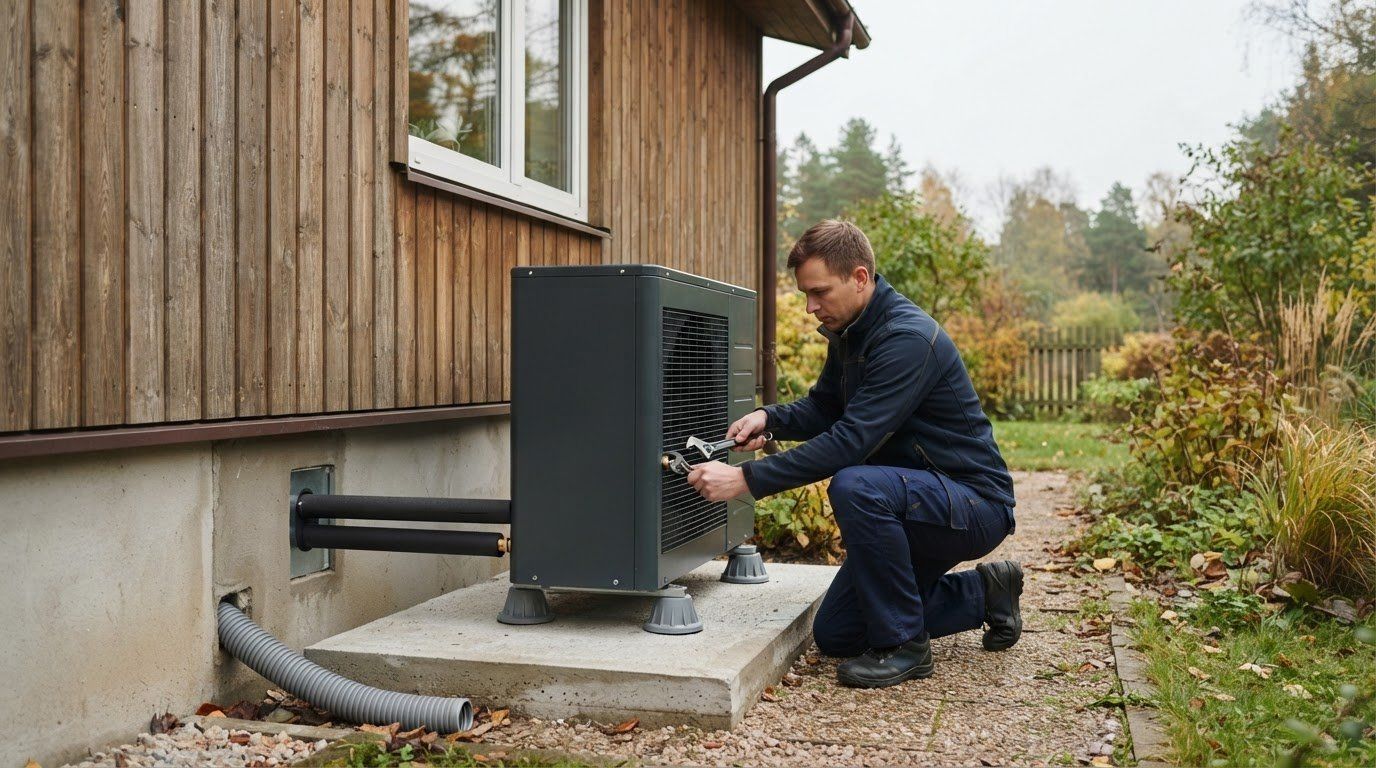
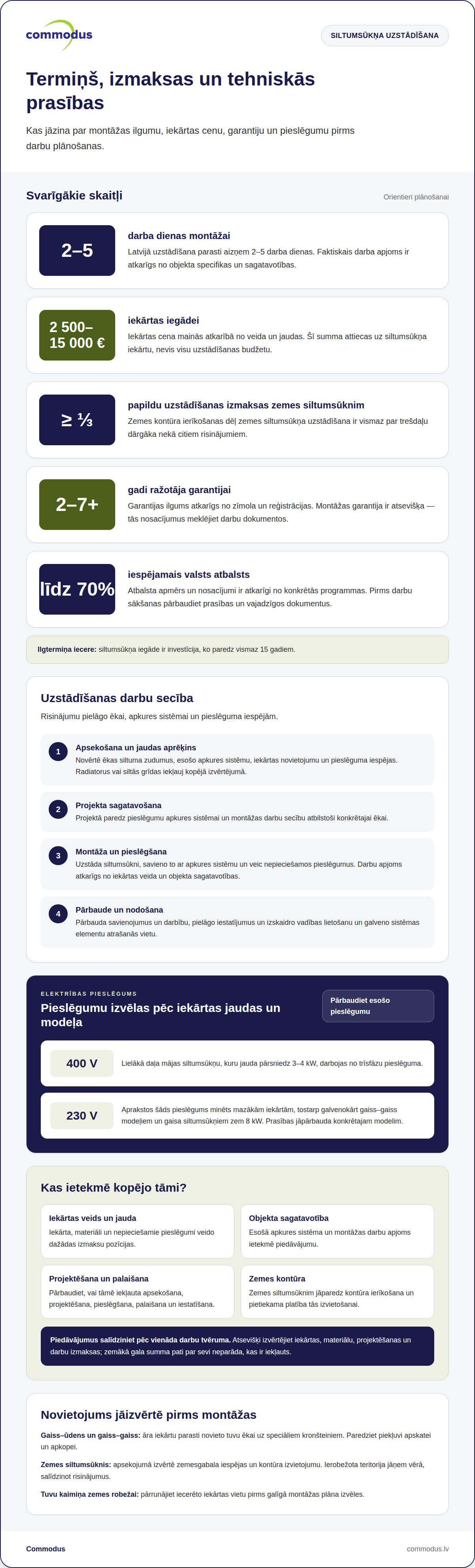
The correct installation of the heat pump starts with the building survey and calculation of the required capacity, but continues with the design, installation and putting into service of the solution. A certified heat pump installer also assesses the location and connection of the equipment to ensure that the system meets the housing conditions. In Latvia, the installation usually takes 2-5 working days, but the amount of work is determined by the nature of the object.
The choice of heat pump is not just a comparison of power. It is also important for the heating system, outdoor installation and home electricity connection. Therefore, before making a decision, it is important to understand the order and cost of works. The total costs depend on the type and capacity of the installation, the preparation and the amount of the installation; they are determined at the request of the estimate. In this article you will find out what is included in the survey and design, how the installation and the system is checked, how the installation is evaluated and the electricity connection is made and which factors make up the total cost. This review will help you understand what to expect at each stage and prepare for conversation with the specialist.
Survey, design, assembly and commissioning
Installation starts with evaluation of the building and calculation of the appropriate capacity. Then followed by design, assembly and verification of system operation.
Survey and project preparation
The survey evaluates the heat loss of the building, the existing heating system and possible location of the installation. This helps to determine the capacity and connection solution for the house. The project provides for connection of the equipment to the system and the order of the installation works. If the house has radiators or heated floors, they are included in the overall assessment.
Assembly and connection of equipment
The installation of the heat pump is performed by a heat pump, connects it to the heating system and performs the necessary connections. The precise amount of work depends on the type of equipment and the readiness of the object. The installation service of the heat pumps may also include the preparation of the start-up of the equipment. The need for a F-gas certificate is related to whether the specialist performs the work with a fluorinated refrigerant. In Latvia such specialists are sought by heating, ventilation and air conditioning installation companies that offer the works.
Putting into service and guarantee
After installation check the system connections and operation, and adjust the settings for the intended heating. At the time of transfer, discuss how to use the management daily and where the main elements of the system are located. The warranty of the equipment manufacturer may vary from 2 to 7 years or longer depending on the brand and registration. The terms of the installation guarantee are separate: they are specified in the work documents, so evaluate both guarantees.
Comparison of the estimate of the assembly and the offers
The estimated amount of the project is based on the number of projects and the amount of works. When comparing offers, check that each includes survey, design, connection, launching and documentation. How to choose a certified heat pump installer? Assess the appropriate qualification, scope of the works and clearly identified cost items, not just the final amount.
Purchase and installation costs of heat pump
The total budget is made up of equipment, design and installation works. The installation of the heat pump is a separate cost item and its volume is influenced by the type of equipment, capacity, existing heating system and necessary connections. The ground heating pump must also provide for the installation of a land loop, so the installation of the heat pump is at least one third more expensive than other solutions.
What certificates and qualifications are required for the heat pump installer in Latvia? Qualification must be in accordance with the installation work, especially if they are related to a refrigerant. F-gas certificate is essential if the specialist performs handling of fluorinated greenhouse gases.
What is included in the heat pump installation price? The price may include installation, connection of the equipment to the heating system, start up and set up. Please specify separately the costs of the equipment, materials, design and works. The total costs are determined by the project and the volume of the works.
How to check the validity of the heat pump installer certificate? Check the type, validity and scope of the certificate, then compare it with the planned work. If you have any uncertainties, contact the authority that issued the certificate. This can explain whether the document is relevant to the specific specialist and the work to be done.
How to apply for state support for installation of heat pump in Latvia? Start with the current support program and study the required documents. Support can reach up to 70% of the total costs, but the application steps and eligibility depend on the program.
The most common risks are the choice only according to the lowest amount and unclearly defined works. Compare whether the offers contain the same set of works and whether the cost items are divided. Check the air-water heat pump solution, to include a specific type of equipment in the comparison.
These amounts are useful for the initial comparison of different types of equipment, but also for the price indicated.
Please note that the heat pump installation can pay between 2500 and 15 000 euros depending on its capacity and type. Therefore compare the same type of equipment and the corresponding capacity, and check that each offer clearly separates the installation itself from the other costs indicated in the estimate. This approach makes it possible to understand whether the choice of the equipment or the proposed work set makes the difference before making a budget decision.
Location of the heat pump installation and electricity connection
The location of the external installation and the electricity connection are assessed before installation. These decisions affect both the installation solution and the connection of the installation to the home heating system. The location of the building, access to the installation and distance to the neighbouring land border must be taken into account.
Air-water and air-air heat pump outdoors are usually placed close to the building on special brackets instead of fastening to the facade. By choosing the site, provide access to view and maintenance. If the plant is close to the neighbouring land border, discuss the idea with your neighbours before installation. This allows you to discuss the choice of location in advance.
The ground heat pump needs sufficient space for the construction of the land contour. The survey evaluates the possibilities of the land plot and the planned contour layout. If the area is limited, this should be taken into account when comparing the ground heat pump with other heating solutions.
The electricity connection is selected according to the requirements of the specific heat pump capacity and model. Most of the domestic heat pumps with a capacity exceeding 3-4 kW are operated from a 400 V three-phase connection. For smaller equipment, including mainly air-air models and air-water pumps below 8 kW, 230 V connection is mentioned in the descriptions. Therefore, the electrical requirements of the equipment are compared to the existing connection of the dwelling instead of accepting one option for all models.
Before planning your work, prepare information about the electricity connection of the house and the location of the equipment you want. For example, please indicate whether you are considering an outdoor block near the side wall or the contour of the ground in the yard. This information will help to assess whether the location and connection are suitable for the particular house.
If the area of the intended outdoor block is close to the border of the neighbouring land, discuss the installation plan with your neighbours. Explain where the installation is planned to be located on the side of the house and why this site seems appropriate. Talk about the plan before choosing the final installation plan, so that both parties can comment on the site. If you are considering a different location, compare the options, maintaining convenient access to the installation and predicting how the connection will reach the chosen location.
Before the conversation prepare a brief explanation of the planned location and its connection to the heating system of the house. If the final location is not yet selected, discuss possible options instead of presenting the original plan as permanent.
Heat pump installation and service experience
The quality of installation is not only assessed after the installation has started. It is important that the specialist understands the operation of the heating system and is able to explain its daily maintenance. The air-water heat pump works together with the outdoor equipment and the heating loop of the house. Therefore, experience in working with such systems helps to assess how the installation solutions will affect their future use.
Find out how the equipment is checked after the installation and what information you will receive at the end of the work. It is useful to understand the explanation of the control settings, system operation and maintenance of the parts to be checked. The specialist can show where the heating filters and expansion bowl are located and explain the meaning of these elements. After handing over to the owner of the house, it will be clearer what to pay attention to in everyday life.
The daily heating pump service shall be checked for the temperature filters, the anti-pressure expansion vessel and the temperature of the radiator of the outdoor unit. These test points have different functions and locations. The filters influence the water flow in the heating system, the expansion vessel helps to maintain its stable operation, but the radiator cleanliness is important for the exchange of air in the outdoor unit. The maintenance arrangements shall be adapted to the particular installation and its instructions for use.
The history of the service helps to understand how the system has worked in different circumstances. Keep installation documents, installation settings and information about the checks performed. If the heating habits or the use of the dwelling change, these data help the specialist to evaluate the system's performance. Also note the changes observed, such as unusual noise or differences in heating mode.
When choosing a heating solution, compare the requirements of the equipment with planned maintenance and house usage habits. For example, the air-water system has an outdoor unit and a connection to the heating of the house, so you have to understand the maintenance of both parts. Check the air-water heat pump solutionTo get to know the choice of this type of equipment. Ask a specialist about the details to be checked and their location.
Commodus: Air-to-water heat pumps
Commodus helps to evaluate the air-water heat pump solution suitable for the home, starting with consultation and design and continuing with installation and maintenance. This solution can be suitable if you want to connect the heat pump to the home heating system. The evaluation takes into account the specifics of the building, the existing heating and the equipment location.
If you compare different solutions, Commodus also offers air-air and ground heat pumps, as well as air conditioning. During the consultation you can discuss design and assembly issues and get information about your home. This will help you to choose the next step, taking into account the specific needs, not just the name of the equipment.
If you plan to install a heat pump, contact Kommodus or visit commodus.lv.
Take the next step with a clear intention
Before choosing what you want to achieve at home, think about: a more even heat, other heating solution, or the possibility of combining several systems. This will help you to focus on the important and not just the technical parameters of the equipment. When choosing a certified heat pump installer, it is important to understand how the solution is suitable for the needs of the house and for everyday use.
Commodus offers air-water, air-air and ground heat pumps. Each type requires a different approach, so you will find information about your building and current heating. There is no need for a complex technical description. Start with your intention and questions about solutions. Then you can discuss which option fits your housing situation.
Talk about your heat pump's intentions with Commodus and move towards a suitable solution step by step.
Comments