Connecting a Heat Pump to Radiators: A Complete Guide to Efficient Heating Modernisation
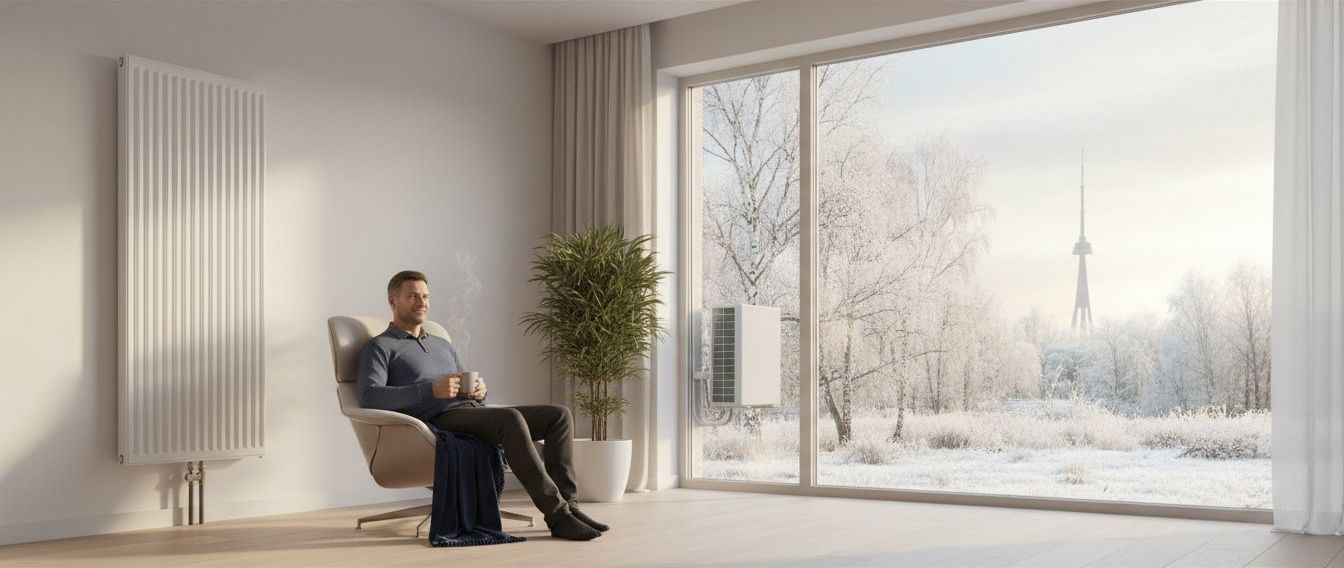
Do you really need to tear up every floor and invest thousands in rebuilding work before your home can finally be warm and your heating bills fall by as much as 70%? At Commodus, we see every day that many homeowners have entirely reasonable concerns. Fear of insufficient heat during a harsh winter and complicated technical calculations often become barriers on the path towards a more modern home. You are not alone in having these doubts, because nobody wants to risk their family's comfort when frost begins to bite outside.
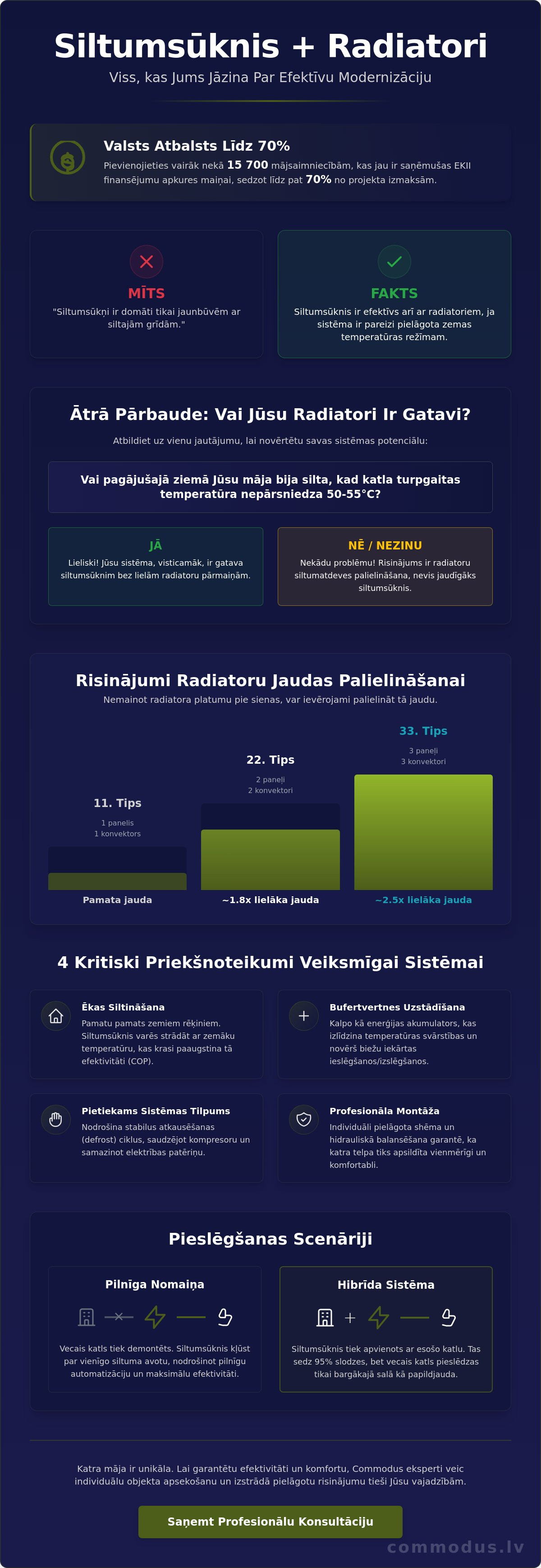
Connecting a heat pump to radiators is not merely a technical process; it is a considered step towards peace of mind and financial independence. By May 2026, more than 15,700 households had already used EKII funding, which can cover up to 70% of the costs of replacing old heating boilers with efficient equipment. In this guide, we explain clearly how to integrate a heat pump correctly into an existing system so that your home remains comfortable without expensive floor reconstruction. You will learn exactly which improvements your radiators may need and how to achieve maximum efficiency so that, together, we can keep moving this energy-efficiency project forward.
Key takeaways
- Heat pumps are not intended only for underfloor heating; learn how low-temperature heating can also deliver high efficiency with a radiator system.
- Correctly connecting a heat pump to radiators makes it possible to create a hybrid system that intelligently combines the new unit with your existing gas or pellet boiler.
- Find out why installing a buffer tank and accurately adjusting the heating curve are decisive factors in preventing system overload and unnecessary expenditure.
- Understand which technical prerequisites, such as pipe flow capacity and hydraulic balancing, ensure even heat in every room.
- Learn why a professional site survey and an individually designed connection scheme are the safest route to effective heating modernisation anywhere in Latvia.
Can a heat pump heat a home with radiators efficiently?
Many of our customers initially doubt whether a heat pump can provide enough heat without underfloor heating. The short answer is yes: it is entirely possible. The belief that this technology is suitable only for new buildings with underfloor heating is outdated and does not reflect the capabilities of modern equipment. The key is not the unit itself, but how the heat pump is connected to the radiators and how accurately the initial calculations are performed. At Commodus, we have modernised hundreds of homes where the existing radiators continue to perform reliably and provide comfort even when outdoor temperatures fall below -20°C.
To understand how this works, we need to look at the physics. Traditional wood-burning or gas boilers usually operate at high temperatures, such as 90/70°C, making the radiators hot but the system less efficient. A heat pump, by contrast, performs best in a low-temperature regime of around 55/45°C or even lower. Once you understand the operating principles of a heat pump, it becomes clear that a higher coefficient of performance, or COP, is achieved at lower temperatures. By adapting the system intelligently, you gain full automation and greater independence from fuel prices without sacrificing the warmth of your home.
Why does a radiator heat differently from underfloor heating?
A radiator behaves differently in a low-temperature system. At 80°C, convection and the rapid upward movement of hot air dominate, whereas at 45°C the share of radiant heat increases. This creates a more pleasant and healthier form of warmth that circulates less dust around the room. However, the rule of a larger surface area then applies. Because the water is cooler, the radiator must be physically larger to release the required amount of energy into the room. In modern systems, 'hot radiators' are no longer the measure of efficiency; the true measure is a stable and consistent room temperature throughout the day and night.
When are existing radiators suitable for a heat pump?
Before starting work, we recommend a simple self-check. If your home remained warm last winter when the boiler flow temperature did not exceed 50°C, your existing system is probably ready for the change. Older systems were often designed with a considerable reserve, which is beneficial when switching to a heat pump. If rooms remain cool, however, the solution is usually not a more powerful heat pump but a different radiator type. Replacing an old Type 11 radiator with a Type 22 or Type 33 model, for example, can double the heat-emitting surface without changing the radiator's width on the wall. A heat-loss calculation is a critical stage that Commodus carries out at every property to ensure the selected unit is precisely matched to the characteristics of the home.
Technical prerequisites for modernising a radiator system
Connecting a heat pump to radiators begins with an energy audit of the building, or at least a critical assessment of its thermal insulation. Even the most advanced unit cannot deliver low running costs if heat escapes uncontrollably through an uninsulated roof or old windows. Under Latvian Building Standard LBN 002-19, the thermal performance of the building envelope is the foundation of any heating-system conversion. If the house is insulated, the heat pump can operate at a lower flow temperature, directly improving the COP and reducing monthly bills.
Many experts point out that preparatory work is decisive for successful heating modernisation, because your comfort will depend on the hydraulics of the system. One of the most important factors is the total system volume. A heat pump needs enough water to complete defrost cycles without switching on additional electric heating elements. If the radiator system contains too little water, the unit will start and stop more frequently, shortening compressor life and increasing consumption. It is also important to replace old radiator thermostats with modern low-resistance valves that do not restrict free circulation.
Options for increasing radiator output
If calculations show that the existing radiators cannot heat a room adequately at a water temperature of 45°C, the entire system does not need to be replaced immediately. Often, replacing just a few radiators in the largest rooms, such as the living room, is sufficient. We recommend Type 33 radiators with three panels and three convectors. They occupy the same wall width but are deeper and provide substantially higher heat output. Another option is fan convectors, or low-temperature radiators with built-in fans, which provide efficient heat exchange and can even offer cooling during hot summer months.
Hydraulic preparation of the system
Connecting a heat pump to radiators requires a higher water flow rate than an old wood-burning boiler. If your home has narrow plastic pipes, they may become a bottleneck that prevents heat from reaching the furthest rooms. Older gravity systems with large metal pipes can actually be advantageous because they provide excellent thermal inertia, although they require thorough flushing and the installation of circulation-pump groups. Hydraulic balancing with dedicated valves allows the system to be adjusted so that every radiator receives exactly the amount of heat it needs, preventing one room from overheating while another remains cold. If you are unsure whether your system is ready, our specialists at commodus.lv will be pleased to carry out the necessary measurements so that together we can move the modernisation project forward successfully.
Heat pump connection diagrams and scenarios
When selecting the most suitable connection arrangement, the Commodus team always views your home as a single integrated system. There is no one correct solution for everyone because every situation is unique. A monovalent system is most commonly used in newer, energy-efficient buildings. This means that the heat pump is the sole heat source for both space heating and domestic hot-water production throughout the year. In older homes where insulation has only been partly improved, a bivalent or hybrid system is generally the more sensible choice. In this case, the heat pump is connected to the radiators while the existing gas or pellet boiler is retained as a backup heat source.
The technical connection can be implemented in two ways: a direct connection or a connection through a heat exchanger. A direct connection is simpler and less expensive, but it requires the radiator system to be perfectly clean. A heat-exchanger connection fully separates the heat pump's internal circuit from the water in the radiator system, protecting the equipment from deposits in the old system. Although this solution slightly reduces efficiency, it significantly extends the unit's service life and provides additional protection.
Hybrid system: when should the old boiler be retained?
The bivalence point is the outdoor temperature, usually between -7°C and -15°C, at which the heat pump begins to lack sufficient capacity and the old boiler starts assisting. This type of system optimisation avoids the need to purchase an oversized and expensive heat pump that would operate at only half capacity for most of the year. At Commodus, we carefully configure the controls so that both heat sources work in coordination. This gives you peace of mind that the home will remain warm even on the coldest January night, while the system automatically selects the most economical operating mode according to the outdoor temperature.
Step by step: cleaning the system before installation
Many people forget that deposits, rust and magnetic particles have accumulated in old radiators over many years. If a new heat pump is connected to a dirty system, its fine heat exchanger can become blocked within a few months. It is like pouring clean water into a muddy bucket. Before every installation, we therefore carry out a thorough chemical flush of the system. Special inhibitors are then added to the heating fluid to prevent further corrosion and bacterial growth.
Installing a magnetic dirt separator is essential for protecting the heart of the system: the circulation pump and heat exchanger. This filter captures even the finest metal particles that may form inside the radiators. These steps may seem time-consuming, but they are what ensure that your investment will serve you for decades. Together, we can bring the heating-modernisation project to a successful conclusion while avoiding expensive mistakes and unnecessary stress.
Critical mistakes and system optimisation
One of the biggest mistakes made by inexperienced installers or DIY enthusiasts is omitting the buffer tank. Connecting a heat pump to radiators without this component in Latvia's climate is like driving a car without shock absorbers: it is possible, but the consequences will be expensive and unpleasant. Unlike underfloor heating, which contains hundreds of litres of water and has considerable thermal inertia in the concrete, a radiator system contains relatively little water. This means that the system lacks an 'energy reserve', which is especially important during defrosting. The increase in the fixed component of electricity distribution tariffs announced by the Public Utilities Commission for 2026—between EUR 0.20 and EUR 1.26 per month for households, depending on connection capacity—makes every saved kilowatt-hour from a correctly optimised system even more important.
Buffer tank: protecting the radiators during defrosting
What actually happens during a defrost cycle? When the outdoor temperature is around zero and the air is humid, frost can form on the heat pump's outdoor unit. To remove it, the unit briefly reverses its operating direction and draws heat from the home's heating circuit. If the system contains only radiators and no buffer tank, the water in them cools extremely quickly. This causes noticeable temperature fluctuations in the rooms, and the heat pump may have to switch on its electric immersion heaters to complete the cycle. Commodus recommends installing a buffer tank with a capacity of at least 15 to 20 litres for every kilowatt of heat pump output. This ensures an even heat flow, prevents unnecessary compressor cycling and significantly extends the unit's service life.
Configuring the heating curve for maximum savings
Many users make the mistake of setting a constant flow temperature, such as 50°C. This is inefficient. The heat pump controls should be configured to operate according to a heating curve. This allows the unit to understand that when the outdoor temperature is +5°C, 35°C may be sufficient in the radiators, while at -20°C the flow temperature may need to rise to 55°C. During the first month of operation, we encourage customers to monitor the system and make small adjustments. If the rooms are too warm when the outdoor temperature is around zero, the curve should be lowered. Accurate adjustment of this kind can reduce consumption by a further 10 to 15% without compromising comfort.
Finally, do not forget system balancing. If one radiator is hot while another is cold, the heat pump will waste energy trying to force heat through an incorrectly adjusted system. If you want to be certain that your heating modernisation will avoid these mistakes, arrange a professional site survey with our specialists. We will help you make technically sound decisions that provide long-term peace of mind.
Professional installation and support from the Commodus team
Connecting a heat pump to radiators is a technically complex process in which every detail affects both your comfort and your finances over the next twenty years. At Commodus, we believe that changing a heating system is not merely a matter of installing equipment; it is a joint project in which we become your partner. Our internal culture is based on a practical, solution-oriented approach, and we do not shy away from challenges, whether the task is to modernise a small rural home or a large residence. 'Pulling together' means that we take full responsibility for the technical implementation so that you can enjoy warmth and peace of mind without unnecessary concerns.
Our specialists carry out individual site surveys throughout Latvia, ensuring that every project is adapted to the specific characteristics of the building. We do not rely on rough estimates; we use precise data and engineering calculations. Professional installation guarantees that the unit will operate in its optimum mode and avoids the problems described above, such as incorrect hydraulic integration or insufficient system inertia. After the work is completed, we provide full warranty and post-warranty service, because a reliable specialist remains available even after the equipment has been operating for many years.
Our approach: from consultation to a warm home
Every project begins with a detailed assessment of the existing radiator system. We check the radiator types, their output at low operating temperatures and the flow capacity of the pipework. Our certified specialists modernise complex systems every day, so we know precisely how to integrate a new heat pump so that it works harmoniously with the architecture of your home. Transparent costing is a point of principle for us: you receive a clear overview of every expense, with no hidden surprises halfway through the work. This creates a secure and reassuring atmosphere from the very first meeting.
State support for heat pumps in 2026
In May 2026, highly advantageous state-support programmes remain available, making heating modernisation more accessible than ever. The Emission Allowance Auction Instrument (EKII) programme for households is open until 31 December 2029 and can cover up to 70% of eligible costs for replacing fossil-fuel equipment. More than 15,700 households have already received support, using more than EUR 59 million in funding. In addition, new funding of EUR 26.8 million was approved from 17 February 2026, widening the group of eligible recipients.
At Commodus, we help customers not only to choose the right equipment but also to prepare all documentation required for receiving support, so that bureaucracy does not become an obstacle to their goal. Book a free consultation and discover the potential of your home! Our experts will calculate the potential savings and prepare an individual proposal based on your needs and the current conditions of the state-support programmes.
Take the first step towards a warmer and less expensive future
Connecting a heat pump to radiators is no longer merely a theoretical option; it is a proven reality for more than 15,700 Latvian households that have chosen to modernise their heating systems since 2022. Remember that success depends not on having the hottest radiators, but on accurate calculations, hydraulic balancing and a correctly sized buffer tank. Together with connecting the heat pump to the radiators, these elements ensure that your home remains comfortable even during the harshest winter while reducing costs by 50 to 70% compared with fossil fuels.
With more than 15 years of experience in the Latvian market, the Commodus team is ready to become your trusted partner throughout this transition. Our certified installation team will take care of everything, from the site survey to assistance with obtaining state co-financing. Contact the Commodus experts and receive an individually tailored heating solution! There is no reason to wait for the next heating season and another period of high bills when you can begin enjoying greater comfort now. We are here to bring this modernisation project to a successful conclusion together with you.
Frequently asked questions about heating modernisation
Can a heat pump really heat radiators to 70°C?
Modern high-temperature heat pumps can reach 70 to 75°C, but this is usually unnecessary and uneconomical in everyday operation. Standard air-to-water units operate most efficiently at temperatures up to 55°C. If your radiator system has been calculated correctly, this temperature is fully sufficient to keep the home warm even when the outdoor temperature falls below -15°C.
How large should the buffer tank be if I have only radiators?
We recommend allowing at least 15 to 20 litres of buffer volume for every kilowatt of heat pump output. An 8 kW heat pump therefore requires a tank of approximately 120 to 160 litres. This volume is essential for providing enough energy reserve for defrost cycles and preventing the compressor from starting and stopping too frequently, which directly affects the service life of the equipment.
Must all radiators be replaced before installing a heat pump?
No. Replacing every radiator is generally unnecessary unless they are physically worn out or heavily blocked. Connecting a heat pump to radiators often requires only partial improvements, such as replacing smaller radiators with more powerful Type 33 models in rooms with the greatest heat loss. Our experience shows that the existing system is sufficient in around 85% of cases, provided it is correctly flushed and hydraulically balanced.
How does a heat pump affect bills compared with a pellet boiler?
A heat pump usually reduces heating costs by 20 to 30% compared with pellet heating, taking account of current fuel prices and equipment efficiency. Another benefit is full automation: you no longer need to spend time buying and carrying pellets or cleaning the burner. This is an investment in your free time and comfort, which has immeasurable value in everyday life.
How long does it take for connecting a heat pump to an existing system to pay for itself?
The average payback period is 5 to 8 years, but state-support programmes can shorten it considerably. With the EKII programme covering up to 70% of equipment-purchase costs, the investment can often pay for itself within the first 3 to 4 years. By May 2026, more than 15,700 homeowners in Latvia had already used this opportunity and confirmed the long-term financial benefits of the solution.
Can a heat pump work together with my wood-burning stove or fireplace?
Yes. A hybrid system of this kind is an excellent solution that provides additional security. The heat pump will automatically reduce its output or temporarily switch off when it detects heat from a lit fireplace or stove. This can save even more electricity and provides an alternative heat source in emergencies without sacrificing the automation and comfort of the overall system.
What happens if it is -25°C outside and I have only radiators?
At -25°C, the heat pump will continue operating, although its efficiency, or COP, will decrease. At such times, built-in electric heating elements or the backup boiler in a hybrid system will start automatically to maintain the required radiator temperature. Commodus specialists always configure the system so that the home remains warm regardless of how low the temperature falls.
Why does a heat pump start to 'breathe', or perform a defrost cycle, and how does this affect the radiators?
Defrosting is a natural process during which the heat pump removes frost from the outdoor-unit heat exchanger over a period of 5 to 10 minutes. During this time, the unit briefly draws heat from the heating system. If the system has a correctly sized buffer tank, the radiator temperature does not change and you will not even notice the process indoors. Without a buffer tank, the radiators may become cooler, reducing the overall level of comfort.
Comments