Costs of installing a heating system in a new building: how to plan the budget?
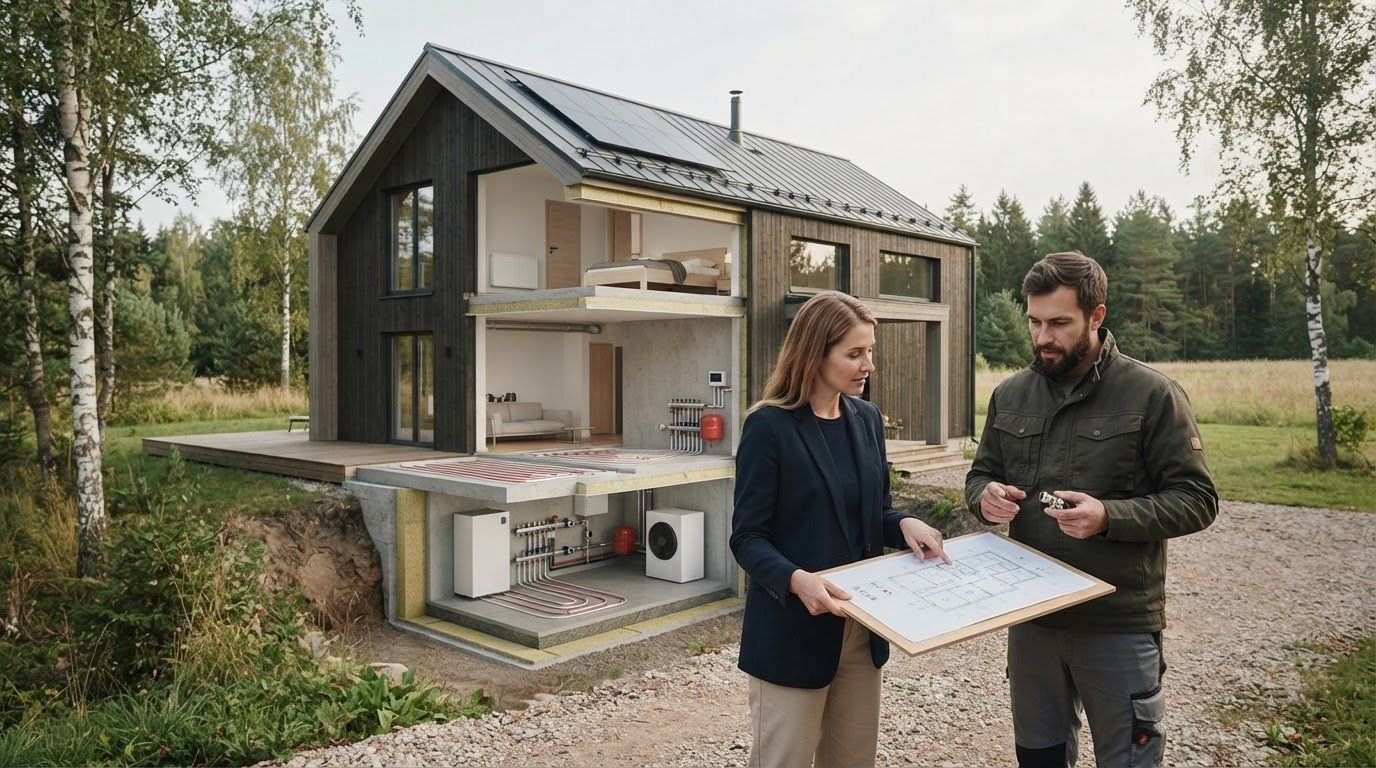
The heating budget is not limited to the price of the heat source. The costs of installing the heating system in a new building are all the solution: the installation, the heat distribution, the management, the design and assembly. Therefore, two offers with a similar total may include the installation of different equipment and the amount of works. The lowest initial price does not necessarily mean that the entire system required for the new building is included.
When planning heating for a new house, first find out what will be included in the estimate and what data has been used in the choice of solution. The budget is influenced by the estimated heat losses, design and choice between the heated floors, radiators or a combination of both. In this article, you will find out how to split the estimate by position, compare air-water and ground heat pumps with the pellet boiler and notice possible additional works.
Costs of installing a heating system in a new building: who makes the budget?
One universal amount does not fit all new buildings. The costs of installing a heating system in a new building depend on the chosen heat source, heat distribution method, materials and works included in the installation. When comparing offers, evaluate each item and its scope, and not just the total price of the installation or the total amount of the offer.
Heating is part of a wider set of building engineering systems. Heating, ventilation and air conditioning (HVAC) systems In the new structure, timely coordination helps to plan connections, location of equipment and the operation of systems in general.
Which items should be included in the full heating estimate?
For a transparent assessment of the estimate, each item must be named separately.
- Heat source: e.g. air-water or ground heat pump, pellet boiler or other solution, as well as equipment assembly.
- Heat distribution: warm floors, radiators or a combination of both, as well as the necessary materials and components.
- Assembly works: installation, connection and system adjustment of the appliance, if included in the offer.
- Management elements: components intended to regulate the heating system.
Please consider design and site surveying as separate estimates positions if they are not included in the description of the common service. Check what result is provided under each heading: for example, whether only the installation, installation with installation or full solution with heat distribution is indicated. This can also compare public price ranges if they clearly indicate the type of installation, the price current and the works included.
Why do two new buildings have different estimates?
The building area is one of the introduction data, but it does not define the necessary heating system on its own. Calculation of heat losses helps to assess the heating needs of the building, but the layout of the premises shows how the heat is divided into different zones. It also varies depending on the source of heat and the way it is distributed, because the warm floors and radiators require different composition, layout and material volume. Therefore, the estimate of one house cannot be directly attributed to another new building.
The costs of a full heating system consist of a heat source, a heat distribution suitable for the needs of the building, materials, control elements, design and the amount of assembly works.
How does the new building project affect the choice and costs of the heating system?
The heating solution should not be selected only according to the square meter of the house. The calculated heat loss of the building, the layout of the premises and the way the building will be used are important. This data helps to determine the needs of the system, while the layout allows to reconcile the heat distribution with other engineering systems. Therefore, the costs of installing the heating system in a new building are best assessed on the basis of a project rather than a general calculation of the area.
What does the building's data determine in the design of heating?
The area is one of the input data, but it is not enough to determine the specific capacity of the installation or the system assembly. The layout of the premises, calculation of the heat loss of the building and intended heat distribution should be taken into account. The location of the heated floors pipes is planned together with the space solution, but radiators in the project are expected to have their location and connections. The new building heating project links the calculations and planning of the building with the system assembly and order of works.
How does a heat source change the system assembly?
The air-water heat pump, ground heat pump and pellet boiler have different system requirements. Therefore, the necessary equipment, connections and the volume of assembly work are changed. The solution of the ground heat pump also needs to take into account the part of the ground heat production, while the pellet boiler must provide for the appropriate installation of its system. The air-water heat pump is one of the options to be considered for the new building, and its suitability is determined by the particular home project. air-water heat pump solution can be found in the context of new constructions.
Timely coordination of engineering systems helps to plan the location of connections and the order of works before the construction stages overlap. It allows you to see earlier where the requirements of different systems need to be harmonised and how this affects the overall volume of works. in the context of construction of new housing. Justification for the choice of the specific new building by its calculation and design.

How to compare offers of heating systems for new building?
To compare offers fairly, first match the scope of the works included in them. If one offers only the equipment, but the other includes design, heat distribution and assembly, the lower total does not mean a more advantageous solution. Use one table and write down for each offer which is included separately and which is not intended.
- Position: Equipment; Offer A: Type, assembly; Offer B: Type, assembly
- Heading: Design; Offer A: Included or not; Offer B: Included or not
- Heading: Heat distribution; Offer A: Floors, radiators, materials; Offer B: Floors, radiators, materials
- Position: Assembly; Offer A: Work volume and connections; Offer B: Work volume and connections
- Position: Transfer; Offer A: Regulatory and scope of transfer work; Offer B: Adjustment and scope of transfer work
How to determine whether tenders include the same works?
Check that the equipment, materials and assembly are listed separately. In comparison, include design, control elements and system adjustment, instead of assuming that they are included in the total amount. If one option provides for warm floors, but the other radiators, mark it as a different solution. Such installations are not directly comparable only at price.
How to use public price ranges
First, check the date of the price source, the type of equipment and whether the amount includes assembly. The price of individual equipment or parts of the boiler is not comparable to the price of a complete new heating system. Also, two similar price ranges may relate to different volumes of works. Use public prices as an initial guide, but assess the costs of installing a heating system in a new building according to an estimate of the total amount of works and supplies of the particular project.
Talk about a new building heating solution with Commodus teamto ensure that the supply positions meet the project needs.
How to plan the heating of the new building and prepare for the precise offer?
To get a suitable offer for a new building, follow the following steps: collect the building data, determine the desired way to distribute heat, compare suitable heat sources and specify what works are included in the offer. The more specific information is available at the beginning, the easier it is to assess the system as a whole and understand what the costs of installing a heating system are from.
What data should be prepared for the evaluation of the heating project?
Prepare the building's layout and surface area, as well as available information on communications and intended heat distribution. Check if the premises are designed to have heated floors, radiators or a combination of both. If you are considering a ground heat pump, include the available information about the proposed solution for the heat of the land.
- Design and area of the building.
- The planned way of distributing heat and space.
- Information available on communications and their planned connection points.
- Questions about everyday use and desired heating solution.
How does Commodus help to move from design to system?
Commodus advises, designs, supplies equipment, installs and serves heating systems. By combining these stages, the project decisions can be linked to the scope of the installation works and evaluate how the heat source fits into the overall solution of the new building. CTC Air-Water Heat pump solutionstaking into account their home project and the intended heat distribution.
The plans and questions prepared are a good starting point for the conversation. You do not have to select a particular machine in advance. Talk to Kommodus about the new building heating solutionto assess the project-specific framework step by step.
Take the next step towards smart heating
When the plan becomes a concrete solution, it becomes easier to understand how the costs of installing a heating system in a new building fit into the overall construction plan and the choices of which need to be clarified. Start with the information available about the building and clearly define your needs.
The budget can be planned in stages. First, determine the desired level of comfort and the scope of the system, then evaluate the source and distribution of heat according to the building's project. Compare offers that show the same equipment, materials, design and assembly. This will help to make a decision based on your new building needs, not just the general example or initial price.
The team advises, designs, installs and serves heating systems. Talk about heating solution for your new building with Commodus and start planning the system based on the data of the project.
Frequently Asked Questions
How much does it cost to install a heating system in a new building?
The cost of installing a heating system in a new building depends on the calculation of the building, the heat source and heat distribution chosen, as well as the scope of the design and assembly works. When comparing the public price, check the source and the date of publication, as well as whether only the installation, installation or the complete system are specified.
What is the main part of the heating system that usually makes up the new building?
It is determined by the specific project and the setup of the chosen system. In one sense, the largest position can be formed by a heat source, in another an essential part can be formed by the construction or assembly of the heat distribution. Therefore, compare the separate equipment, design, materials, heat distribution and assembly, rather than assume that the cost allocation for all new buildings is the same.
Is it more advantageous to choose a heat pump or a boiler for a new building?
There is no one option that would be the most advantageous for each new building. Compare the heat pump and the pellet boiler based on the building calculations, the design of the heat distribution and the scope of equivalent equipment and assembly. Also, consider daily use and the requirements of each system. Comparable offers with the same assumptions make it possible to understand more clearly how the solutions and their initial costs differ.
When should the installation of a heating system be planned in the new building?
The heating solution is coordinated with the building design, not to postpone until the communication and selection of premises is already fixed. Then the heat source, distribution and connection points can be assessed together. For example, warm floors can be linked to the layout of the premises, but the layout of the equipment is envisaged alongside other engineering systems. Timely planning helps to determine the volume of works and compare offers.
Does the cost of installing the heating system include design and assembly?
This depends on the specific offer. Review the positions and find out if the price includes only the equipment or consulting, design, materials, heat distribution and assembly. When comparing offers, check for each job whether it is included in the total amount or indicated separately. This will make sure that the same amount of work is compared.
Comments