Energy efficient radiators: how to choose the most suitable housing?

The most powerful radiator will not always be the most suitable for your home. Energy efficient radiators work effectively if their power meets the space's heat needs and is compatible with the heating system. Therefore, the choice of a comparison is not enough only of size, material or appearance. First, find out what heat source, what connection is available and what temperature mode the system is operating.
In this article, you will find out how to compare the types of radiators, assess the required power and choose appropriate management. Let's also look at the compatibility with the heating system, including when the house has or is planned to have an air-water heat pump. This sequence helps to make a wise decision without relying solely on the price or appearance of the radiator.
What does an energy efficient radiator mean for everyday heating?
A efficient radiator is able to deliver the necessary heat to the room every day, taking into account the possibilities of the heating system. Energy efficient radiators are not only those made of a particular material or are larger than others. It is important that their heat output is suitable for the needs of the room and the system operating temperature.
The efficiency of the radiator is determined by its heat output compliance with the space's heat needs, the temperature of the heating system and the possibilities of heat adjustment.
The radiator transfers heat produced in the heating system to the room, but the overall consumption is also influenced by the heat loss of the building, the operation of the heating unit and the habits of the residents. Therefore, the replacement of the radiator does not guarantee smaller heating bills in itself.
What conditions affect the radiator's heat output?
Radiator power must meet the heat needs of the room. If the room loses more heat, it needs more heating power. The condition of the heating, windows and dimensions of the room will influence these needs, so the same radiator will not always be suitable for different rooms. It is also important to compare the technical data of the heating system at the temperature conditions in which it will be used.
Is a more efficient radiator automatically reducing heating consumption?
No. The result also depends on temperature regulation and heating habits. For example, Thermostatic radiator valve controls the flow of water into the radiator according to the temperature of the room. However, such control does not prevent the heat loss of the building. When selecting the radiator, take into account both the room and the heating system and its control.
Types of radar and control: what to compare before choice?
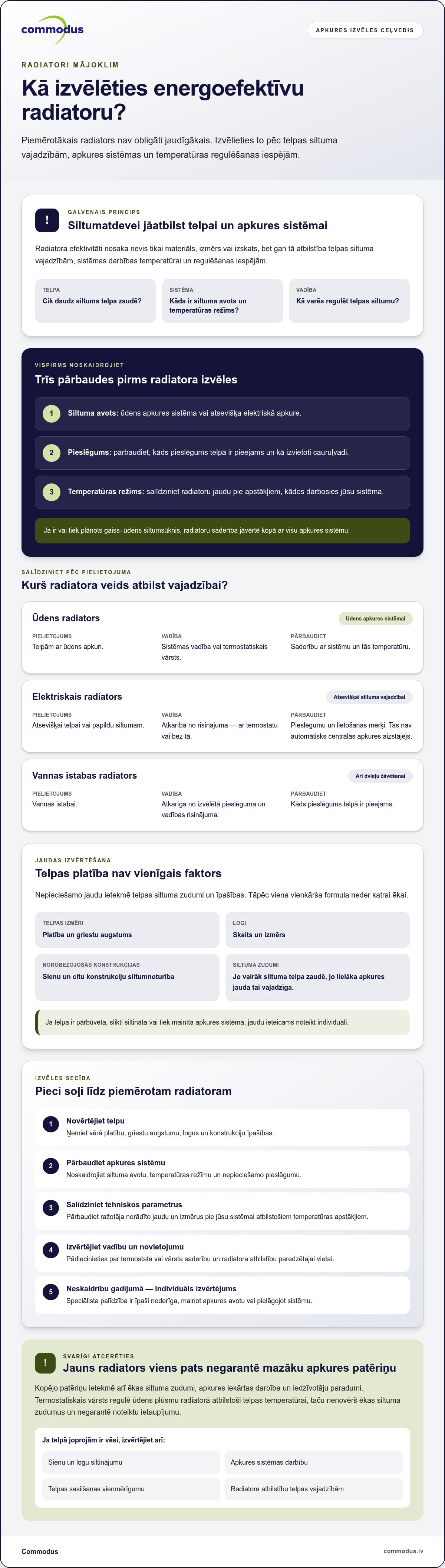
First, find out how the radiator will be connected and used for what purpose. The water radiator works within the heating system, but the electric radiator is heated separately from the water heating circuit. The bathroom radiator can also serve to dry towels. Compare the type of radiator, connection and control options to understand which solution fits the space. Energy efficient radiators are not one universal solution for all needs.
- Type: Water radiator; Suitable for: Rooms with water heating system; Management: System control, thermostatic valve; What to consider: Compatibility with the system and its operating temperature must be checked.
- Type: Electric radiator; Suitable for: Separate room or extra heat needs; Management: Depending on the solution, with or without thermostat; What to consider: This is not an automatic central heating substitute; the connection and the purpose of use should be evaluated.
- Type: Bathroom radiator; Suitable for: Bathroom, including towel drying; Management: Depending on the connection and control chosen; What to consider: Before choosing to find out what connection to the room is available.
Water radiator or electric radiator?
If the house has a water heating system, start with its requirements, not the appearance of the radiator. The electric radiator can be useful in a room where separate heating is required, but it works differently and is not a substitute for the entire home heating system. Select the radiator according to its intended use and connection.
Why is temperature regulation important?
Thermostat helps set the desired room temperature, but the thermostatic valve regulates the water flow in the radiator. Appropriate control helps to control comfort, but does not guarantee certain savings in itself. If heating is provided or is planned to provide air-water heat pump, the compatibility of radiators must be assessed together with the whole system. Air-to-water heat pumps.
How to choose an energy efficient radiator for space and heating system?
Start with room needs and heating system options, not just the size or price of the radiator. Check that the radiator power and connection match the specific conditions. Then compare the technical parameters and control options. If there is no data on the space or system, ask the specialist to help check the choice.
- Appreciate the space. Consider the area, ceiling height, windows and the characteristics of the boundaries.
- Check the heating system. Check the heat source, system temperature and radiator connection.
- Compare the characteristics of the radiator. Check the power and dimensions specified by the manufacturer, paying attention to the temperature conditions in which the power is determined.
- Consider the management. Make sure that the thermostat or valve is suitable for the radiator and fits with the heating system.
- If in doubt, contact a specialist. This is particularly useful when changing the heating source or adjusting the system.
How to determine the power needed for the radiator?
Capacity is determined by the properties of the room and not just its area. The calculation should take into account the height of the ceiling, the number and size of windows, as well as the heat resistance of walls and other building envelopes. Therefore, one simple formula is not suitable for each building. If the room is rebuilt, poorly insulated or the heating system is changed, it is recommended to determine the necessary capacity individually.
What to check in radiator data and installation site?
Compare the power indicated by the manufacturer at the temperature conditions that correspond to your heating system. Check that the radiator will fit in the space provided and that its connection will correspond to the pipe layout. Also find the compatibility of control elements. To understand which energy efficient radiators will suit your home, discuss the needs of the space and design of the heating system with the specialists of Commodus. If you are considering changing the heat source, please see: air-water heat pumps solutions and assess the suitability of radiators together with the system.
When is the change of the radiator not the whole solution?
If the room is still cool, a new radiator will not always solve the problem. Heat can flow through insufficiently insulated walls or windows, or the heating system may not work according to the needs of the room. Energy efficient radiators help if they are suitable for the room and system, but other conditions must be taken into account.
Pay attention to whether the space heats unevenly, the radiator heats, but the room is still too cool, or the temperature is difficult to regulate. These signs do not indicate a single specific defect, but may be a reason to evaluate the heating wider, rather than immediately change the radiator.
When should the whole heating system be checked?
If you are considering an air-water heat pump, check that existing radiators meet the operating conditions of the planned system. For this solution and system evaluation you can: discuss the suitability of the air-water heat pump with Commodus specialists.
How to prepare for consultation on the selection of radiator?
To provide more specific advice, prepare information on space space and height, windows, existing heating solution and radiator connection. Also, a photo of the radiator label or technical data, if available. Before comparison, find out the parameters of each variant as they may differ. Commodus offers advice and design of heating systems to allow the selection of the radiator to be assessed together with the needs of the system.
Choose a radiator that fits with the entire heating system
A suitable radiator is chosen according to the heat needs of the room, not just size or material. Check its capacity at the temperature conditions, the type of connection and the compatibility of control of the heating system. This approach helps to choose a solution that meets the needs of the room and the everyday comfort.
The change of the radiator alone does not solve the heat loss of the building or the problems of the heating system. If the space heats unevenly or remains cool, consider the whole of the whole: heat source, radiators, control and properties of the room. Energy efficient radiators are part of smart heating, not a separate solution for all problems.
If you are not sure about the capacity, connection or compatibility, Commodus offers heating equipment, system design and installation, maintenance, professional advice and technical support to customers in Latvia.
Discuss your heating solution with Commodus and take the next step towards suitable heating for your home.
Frequently Asked Questions about Radiators
Is an energy-efficient radiator reducing heating consumption?
The change of the radiator can improve the comfort and temperature control, but does not guarantee less consumption in itself. The result is influenced by the insulation and windows of the building, the heating system settings, radiator power and usage habits. Before choosing compare the space's thermal needs with the system's capabilities. Universal savings percentage cannot be determined because conditions vary from home to home.
What radiator should the heat pump choose?
Select a radiator with capacity that meets the requirements of the room and temperature regime of the particular heat pump system. The suitability cannot be determined by the type or size of the radiator. Compare the manufacturer's technical data in the conditions under which the heating will work and check the compatibility of the connection. If there is no information about the system or radiator, ask the specialist to evaluate the solution before buying.
How to calculate the required radiator power?
The capacity calculation should take into account not only the space of the room, but also the ceiling height, windows, insulation and building structures. Therefore, a simplified calculation can be only the starting point, not the exact answer for each dwelling. Compare the space data with the radiator power indicated by the manufacturer and check that it corresponds to the heating system operating conditions.
Does the thermostatic valve make the radiator more energy efficient?
The thermal valve regulates the water flow in the radiator according to the temperature of the room, helping to control the heat supply and comfort. However, this does not guarantee a certain energy savings in itself. Check that the valve is compatible with the radiator and heating system. In some cases, the installation may require adjustments, so discuss the uncertainties with the specialist.
How much does energy efficient radiator cost in Latvia?
The price of the radiator depends on its type, size, power, material and assembly, so comparison without a specific model can be misleading. Prices can change, so find out the current price at the seller. When comparing offers, check whether the price includes control elements, installation or other necessary works.
Comments