Errors in choosing the heating system: How to avoid expensive misunderstandings in the house
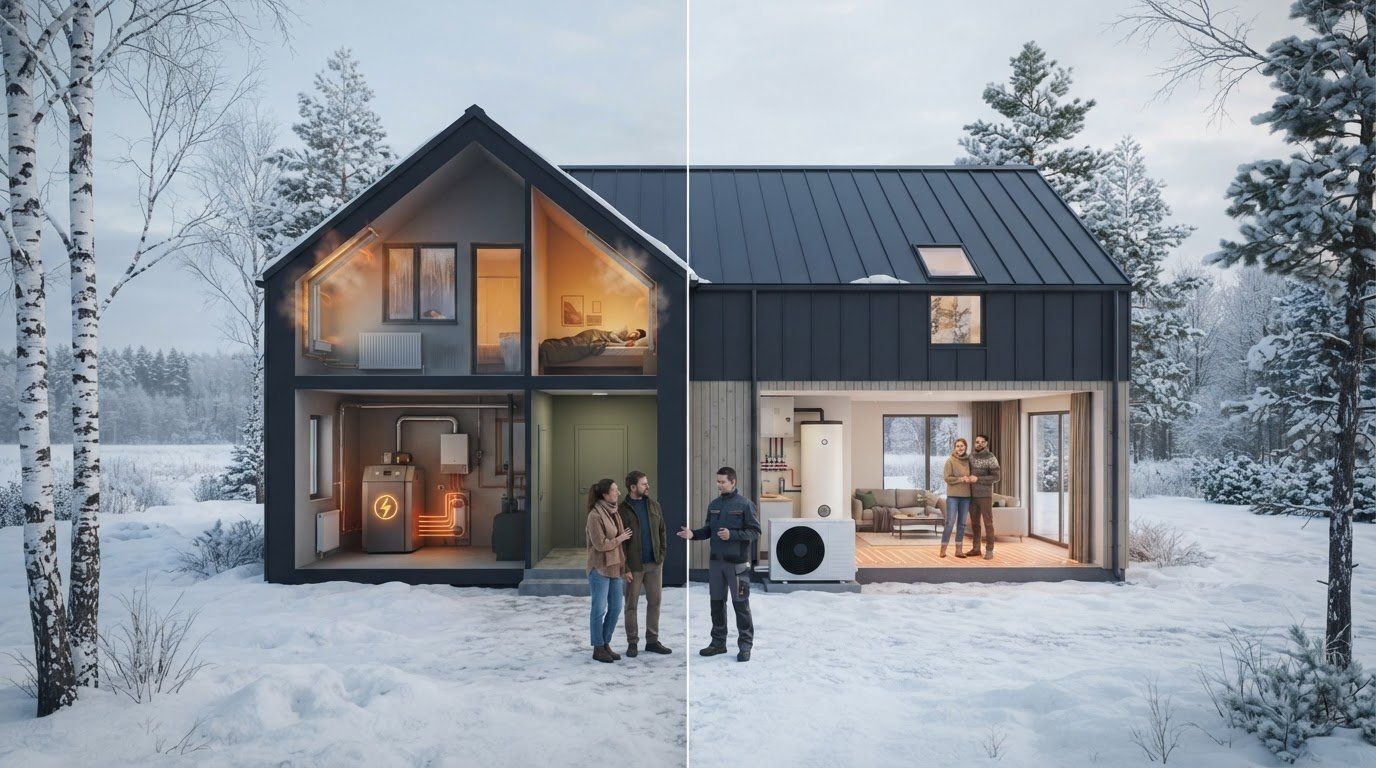
Did you know that a more powerful boiler does not necessarily mean warmer housing and lower costs? On the contrary, one of the most expensive mistakes is the purchase of the plant with a reserve, based on the above mentioned, rather than the real waste of the building heat. By increasing energy tariffs, mistakes in choosing the heating system can turn into thousands of euros in overpaid bills and unexpected repairs costs in the first seasons.
Each owner wants to feel confident about his contribution, but the conflicting information in forums and complex technical parameters often leads to unnecessary confusion. In this article you will learn the most common mistakes in choosing the heating system and learn the right approach to providing energy efficient heat in your house. We will consider the most typical stumbling stones, step by step, from erroneous power calculations to inappropriate heat transferrs, helping to make a wise and long-term decision.
Why do mistakes in choosing a heating system cause expensive losses?
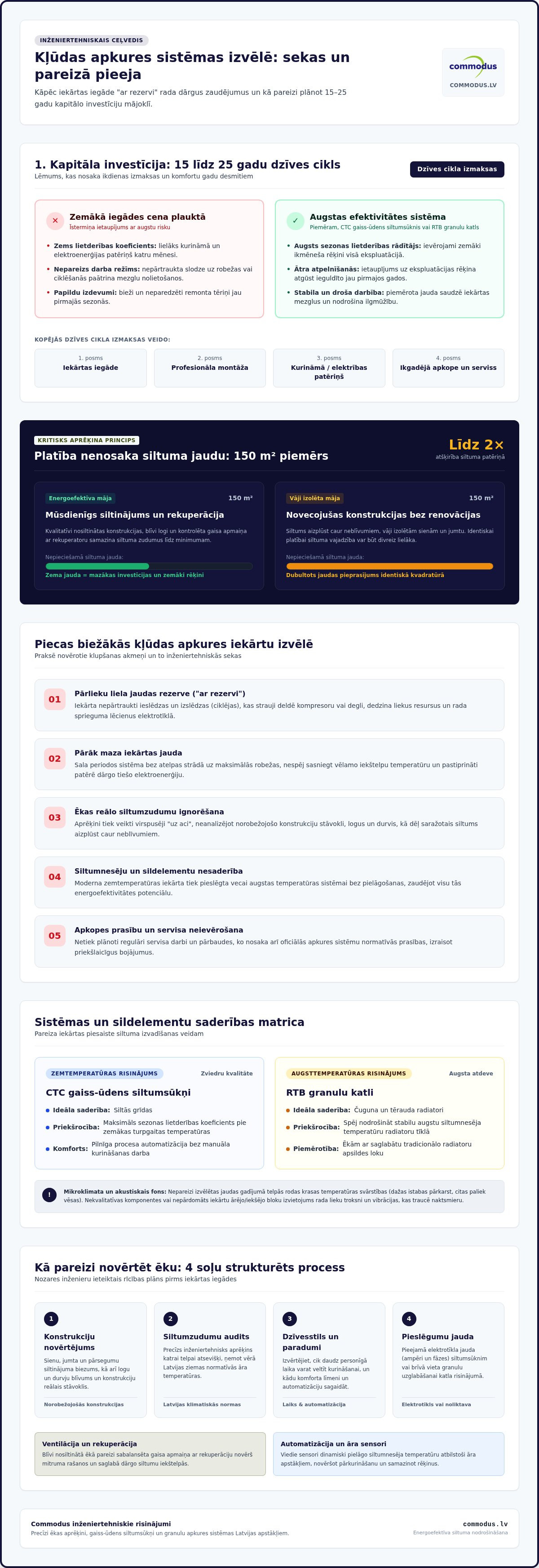
The housing heating installation is not a normal household purchase that can be easily replaced after a few years by another model. It is a capital investment for at least 15 to 25 years, which determines the quality of everyday life and the feeling of security. For this reason, mistakes in choosing the heating system quickly turn into serious financial losses that are harshly reflected in each subsequent heating bill.
If the decision is made looking only at the cheapest purchase price on the shelf, then it is necessary to overpay for the fuel and electricity consumed. In addition, an unsuitable equipment is constantly working on the border or clashing in the wrong mode. This speeds up the wear-out of the nodes and requires regular additional investments in repairs.
Purchase price per long-term operating cost
Low purchase price almost always means low energy efficiency and more expensive daily operation. central heating system economically working, the decisive indicator is its efficiency throughout the season. Energy efficient equipment, such as Swedish CTC air-water heat pumps or modern pellet boilers require more start-up investment, but their high efficiency leads to significantly lower monthly bills. This saving has already been fully recovering the invested funds in the first years.
Loss of microclimate and comfort due to wrong choice
Financial loss is not the only risk. Errors in choosing the heating system also undermine the everyday well-being of the home and the population. Due to inaccurately calculated power, the room is subject to extreme temperature fluctuations: individual rooms overheat while in others the uncomfortable coolness remains. Equally, acoustic background is an important aspect. Insufficient components or incorrectly placed external and internal units of equipment create unnecessary noise and vibrations, which interferes with peaceful rest and rest in the private house.
Five most common errors in the choice of heating equipment and power
As daily practice shows, the most expensive mistakes in choosing the heating system begin with the assumption that the power can be determined "to the eye" according to the total area of the building. Two houses with identical 150 m2 area of heat needs may vary even twice depending on the insulation, window area and ventilation type. Based on the superficial data only, the resulting system will rarely work properly.
In practice, the following critical errors are most frequently observed:
- Overcapacity reserve: cause the equipment to continuously start and shut off (cycle) which rapidly degrades the compressor or burner and burns excess resources.
- Too low capacity: in island periods the plant works at the border, is unable to reach the desired temperature and consumes the expensive direct electricity.
- Disclaimer of building heat loss: the real state of the structures is not taken into account, which leads to heat passing through non-densitys.
- Incompatibilities between heat transmissions: Modern subtemperature equipment is connected to an old system, losing all its potential.
- Failure to comply with maintenance requirements: regular service works are not planned, which is also determined by official checks on heating systems requirements.
Inaccurate capacity calculation and its consequences
The precise calculation must be based on engineering data, not on the above mentioned. Too powerful a solution creates unnecessary jumps in electricity, while a low-power machine will operate without a break in the maximum load. Therefore, the first step is to calculate the detailed heat loss for each space separately.
System incompatibilities with radiators or warm floors
For low-temperature heat transferrs, such as warm floors, modern is the most suitable CTC air-water heat pumps. In contrast, in buildings where cast iron radiators are preserved, more efficient heat output and the required high temperature is ensured RTboiler (5616)To understand the most appropriate solution for your home, look into the guide on air-water heat pumps for housing.
If you are not sure about the correct parameters, Commodus engineers will help to make accurate calculations of the building and to find the most suitable equipment for long-term work.
How to correctly evaluate the building and choose the most suitable solution
In order to avoid costly mistakes in choosing the heating system, the decision-making process should be structured. Experienced industry professionals recommend following four basic steps:
- Assessment of structures: thickness of insulation of walls, roof and covers, and density of windows and doors.
- Heat loss audit: detailed engineering calculation taking into account Latvian winter regulatory outdoor temperatures.
- Lifestyle and habits: assess how much time you can spend on heating and what level of comfort you expect.
- Connection capacity: the available electricity capacity (amples and phases) or space for storing fuel.
The role of heat resistance and ventilation of the building in heating capacity
A high-qualityly insulated building requires much less heating capacity and a more compact installation, which significantly reduces initial investment. However, in a modern, dense dwelling heat resistance is not possible without proper air exchange. To prevent moisture generation and to maintain heat, it is necessary to properly balanced ventilation and recuperation. Explore the practical benefits of our roadmap on the importance of: for a recovery system for fresh air.
Heating management and automation options for everyday comfort
Modern automation helps to prevent operational errors when choosing and using the heating system. Smart sensors react to outdoor air fluctuations and adjust heat transfer temperature without overconsumption of energy resources. In turn, remote control in the app allows to lower the temperature during hours of work or absence, providing real monthly savings.
To choose the most technically suitable equipment for your home and correctly calculate the capacity, register engineer's advice with Kommodus specialists Today.
Why professional design and assembly eliminates errors in the long term
Even the most advanced and expensive equipment loses its value if its installation is carried out without an accurate engineering project. Certified engineers already calculate the hydraulic resistance and flow rate during the drawing stage. This guarantees that the system will operate without noise and pump overload. Commodus specialists with more than 15 years of experience provide a full cycle throughout the country, from building audit to installation and regular service.
Danger of self- or sub-standard assembly
Efforts to save on the expense of assembly often end with emergency situations in the middle of the heating season. Such ill-considered errors in choosing the heating system and its installers cause direct damage:
- Incorrectly selected pipe diameter increases hydraulic resistance, causing premature wear of circulators.
- Errors in refuelling or vacuuming the track may irreversibly damage the expensive heat pump compressor.
- The efficiency of the ground heat pumps is directly determined by correctly calculated and qualitatively built boreholeswhich may not be entrusted to random performers.
Preservation of warranty and official service support
As the official representative of the CTC Swedish heat pumps and RTB pellet boilers in Latvia, Kommodus masters emphasize that the manufacturer's warranty is valid only if the installation is performed by certified professionals with an official handover act. Unauthorized master's intervention cancels the factory's obligations and leaves the owner with one of the defects. Moreover, annual preventive maintenance maintains the energy efficiency factor set by the factory, guaranteeing the installation a long working life without unpleasant surprises.
Take the next step towards a well - thought-out and warm home
Accurate assessment of the building's heat loss, alignment of the equipment with radiators or warm floors and high-quality installation are three main cornerstones that guarantee true cosiness. The most common errors in choosing the heating system in the long term cause significant losses, but can be completely avoided if the decision is made on a technical basis and engineering calculations based on not guessing.
To make every euro invested work for you, trust knowledgeable specialists in the field. The team of Kommodus certified engineers and technicians has more than 15 years of experience in installing heating and cooling systems throughout Latvia. As the official representative of CTC and RTB brands we provide full service from the initial plan to the start-up and regular prevention of the equipment.
Choose tested values that will give you a pleasant microclimate, low operating costs and complete peace of mind for years. Apply for heating engineer's consultation Kommodus and take care of safe heat in your home today!
Frequently Asked Questions
What are the most common errors in selecting a heat pump for private homes?
The most frequent errors in choosing a heating system with a heat pump are the inappropriate choice of type for the specifics of the building and the failure to assess the real power connections. Also, the owners often forget about the impact of the noise level and place the outdoor block right at the bedroom window. This results in unnecessary acoustic discomfort, although the correct choice of the location and the assembly of vibration dampers completely eliminates this problem from the very beginning.
Why not choose the boiler capacity only by space space?
The area reflects only the size of the floor of the room, but does not take into account the height of the ceiling, insulation of the building and glazing area. Modern low-consumption building and a house built in Soviet years with an equal area of 150 m2 will have a radically different thermal needs. If the capacity is only determined by square meters, the equipment will either not be able to heat the premises in cold days or will regularly recede due to excess capacity.
Can the heat pump operate effectively with existing old radiators?
The heat pump can operate with old radiators, but its seasonal efficiency will be lower than with warm floors. Traditional radiators are designed for higher forward temperatures, usually around 60-70 °C, which makes the heat pump spend more electricity. To maintain high efficiency, specialists recommend replacing the radiators with more modern models with higher heat output or gradually constructing low temperature heat transfer solutions.
What happens if a house is fitted with a very powerful heating system?
The equipment quickly reaches the set temperature and immediately switches off, creating a continuous turn-on and turn-off cycle. Such errors in selecting the heating system cause unnecessary electricity peaks and accelerates the wear of the compressor or burner. The service life of the unit decreases several times, but the operating costs increase as the system never works in its optimal energy efficiency mode.
Why is the recovery system important together with a new heating equipment?
Recuperation provides continuous fresh air flow, while recovering up to 80-90% of the heat in the room. In an energy efficient, densely insulated house without mechanical ventilation, humidity and CO2. By ventilation the rooms through windows, valuable heat simply leaks into the atmosphere. The recuperator helps the heating system work with a lower load, maintaining an ideal microclimate and reducing total heating bills.
Comments