Ground heat pump reviews: What to expect in Latvia's climate in 2026?
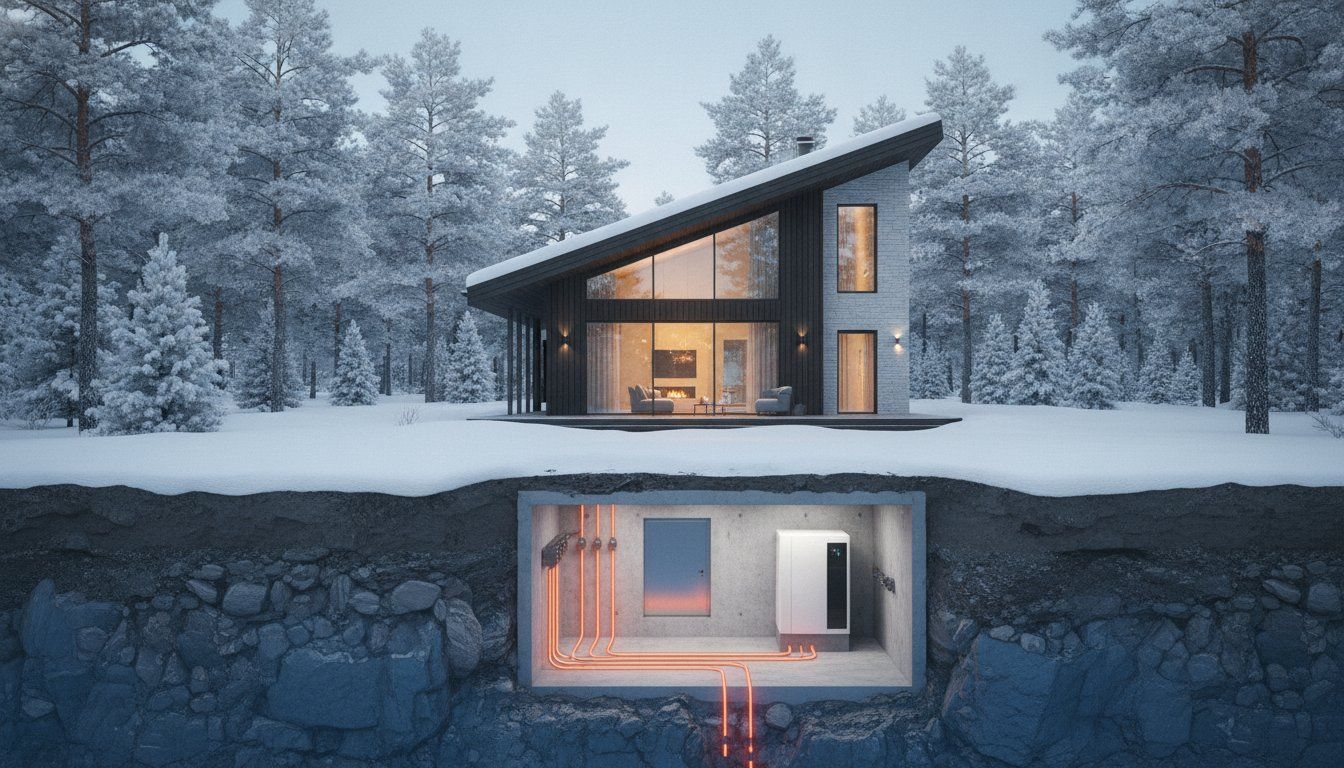
Did you know that even in the harshest winter of Latvia, when the thermometer column falls below -25 degrees, the land only keeps a few metres of stable and safe heat? It is a source of energy given by nature, which many house owners still fear to use because of gardening, so the feedback from the ground heat pump is often the first to be sought by prudent builders. We fully understand your doubts, because the initial investment is serious and every owner wants to be sure that the investment will pay off with predictable bills.
In this article we have gathered the most current information to help you understand what to expect from this technology in 2026. We not only analyse technical efficiency, but share our real user experience about how the system behaves in critical weather conditions. You will learn how modern borehole technologies protect your property and why this solution is still an unrivaled leader in energy efficiency compared to other heating alternatives.
Our goal is to provide a clear and fair view of both the sustainability of the system in the 20-year period and the current state support programmes. Let's explore together why stable heating, regardless of the outdoor temperature, is a goal for every Latvian home, where personal comfort and smart management are valued in the long term.
Why is the ground heat pump still the efficiency leader in Latvia?
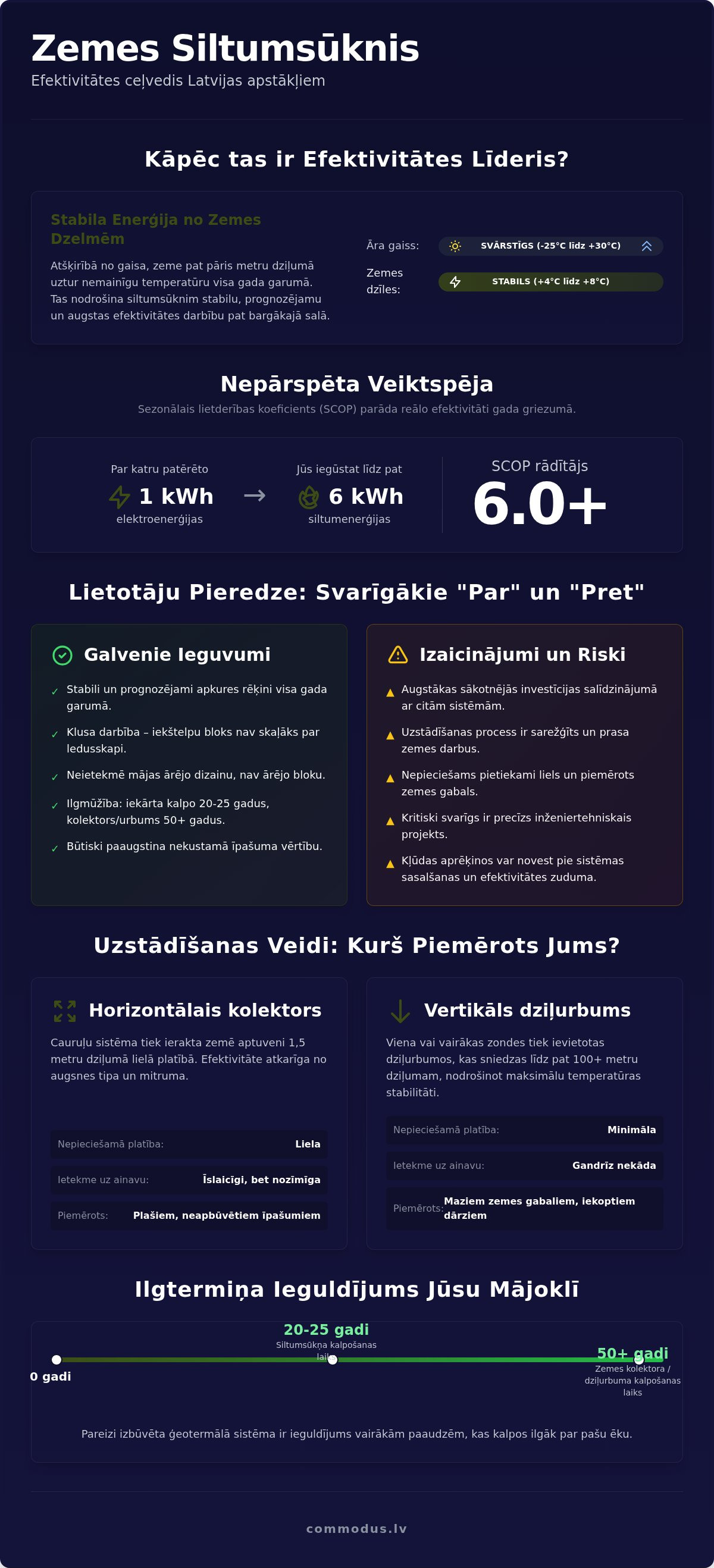
The heat pump or geothermal heating is a solution that uses the constant temperature of the earth's depths to heat it. Unlike systems that take energy from the fluctuating outdoor air, the ground at a depth of 1.5 metres or at a depth of 1.5 metres retains stable heat even when the surface is ripped by harsh frost. Ground heat pump reviews usually get the highest rating, directly in terms of reliability and low costs in the long term.
The efficiency index or COP ground systems is considerably higher. The latest generation models are able to reach the seasonal efficiency ratio (SCOP) even above 6.0. This means that you get six times more heat from one kilowatt of electricity you consume. How the Ground Heat Pump works Technically, it is determined its ability to work under constant conditions without consuming excess energy for defrosting cycles typical of air heat pumps. In Latvia, in climate where winters may be unpredictable, this predictability is irreplaceable.
System longevity is another important factor highlighted by engineers and experienced users. Properly installed equipment, for example, from trusted manufacturers as CTC heat pumps, served for 20 to 25 years. boreholes or the ground collectors perform their function for half a century. It is a long-term investment that not only reduces monthly bills, but also significantly builds the value of real estate.
How does the ground heat pump differ from other heating systems?
The main difference compared to air-water systems is the efficiency constant. While the air heat pump's capacity falls at -20 degrees, the ground equipment continues to work with full return. It is an ideal choice for larger houses or places with high heat demand. Sometimes the owners choose hybrid solutions, combining the heat pump with pellet boilers, but modern geothermal systems most often completely replace the need for additional fuel. Ground heat pump reviews often emphasizes the peace of mind, knowing that the house will be warm regardless of the weather.
Ground heat pump reviews: Real pros and cons by user experience
Analysis of the real Ground heat pump reviewsWhile neighbors with air heat pumps on the January island observe the rapid cutting of the power meter, land system owners enjoy stable and predictable bills. The system works almost imperceptibly. It is quiet and hot water is sufficient even for large families, because capacity is not dependent on fluctuations in outdoor temperatures.
However, the road to this comfort requires patience. The biggest challenge is the installation process. If you choose a horizontal collector, you have to consider that the garden will temporarily remind the building site. The initial investments are higher than for other heating systems, but Data from the International Energy Agency shows that this technology is the most effective way to reduce the carbon footprint of buildings and ensure energy independence. If you don't want to dig the entire yard, boreholes is a great alternative that requires minimal space and fully preserves the garden landscape.
The most common errors that damage the user's experience
Negative feedback usually does not come from technology, but from incorrect planning. One of the most critical errors is the insufficient collector length or calculation of the flawed borehole. If more heat is taken from the ground than it can give away, soil around the pipes freezes, and system efficiency is rapidly decreasing. This usually happens when the system is installed without a engineering project, relying only on approximate guesses.
Another stumbling stone is an attempt to save on automation. Modern Ground heat pump reviews shows that precisely the precise setting and adjustment allows the low running costs that everyone so eagerly craves. Before making a final decision, it is worth consult experienced engineerswhich will help to assess the suitability of your plot for the solution.
Key factors determining system performance and quality of feedback
The soil of Latvia is very diverse, and it is geological conditions that determine how efficient your heating will work. Wet clay drives heat much better than dry sand, so the length of the horizontal collector should always be adapted to the specific place. US Department of Energy explainsthat geothermal systems are suitable for all climates, but the specific nature of the local soil directly affects the amount of initial investment. If the engineer does not take soil moisture into account, Ground heat pump reviews may subsequently be negative due to insufficient capacity.
It is important to remember that "more" does not always mean "better." Too powerful heat pump will work jerky, often turning on and off, which unnecessarily wears the compressor. The smart approach is to look at the house as a single system. For example, qualitatively ventilation with the recuperation function helps to keep the heat generated indoors, allowing the heat pump to work in a more lenient and more economical mode.
The advantages of boreholes and technical solutions
The boreholes are the best choice for small plots or properties with a well-groomed landscape. Unlike the horizontal collector, a vertical probe at a depth of 100 meters reaches a completely stable temperature, which does not change from the time of the year. This ensures a constant high COP rate throughout the year, giving the owner predictability by the user Ground heat pump reviews highlights the main benefit compared to air heat pumps.
Warm floors - ideal partner for the ground heat pump
The heat pump is able to heat water only up to +35 degrees, which is much more economical than heating radiators. The correct insulation of the building in this process serves as a safety cushion, protecting against excessive heat losses and guaranteeing that the system will serve the promised 20 years and more without any unnecessary effort.
If you plan construction and want to calculate exactly your plot, contact our engineersTo develop a technical project that is the most suitable for your house.
Why choose Commodus for the installation of a ground heat pump?
The choice of heat pump is one of the most important decisions in your home life cycle, so it is essential to trust a partner who understands not only the technique, but also your needs. The Commodus team is not just the machine vendors. We are engineering developers who care that each project is energy efficient and serves for decades. We believe in a personal approach where the customer is an equal partner and together we push this vanity to achieve the best result.
We provide a full service cycle starting from the precise engineering design up to the start of the system and regular maintenance. Only use world-famous brands, such as Swedish CTC heat pumps, which is particularly adapted to the harsh northern climate and stands out with high durability. It guarantees that your Ground heat pump reviews will only receive from neighbours and friends more positive thanks to the stability and quiet functioning of the system.
State aid and recovery calculation
2026 is a great time for the transition to renewable energy, as state aid programmes have become even more accessible with a new EUR 26.8 million fund to subsidise heat pumps. The EQF programme offers up to EUR 4700 grants for the replacement of fossil fuel boilers, while Altum co-financing can cover up to 70 to 80 percent of the costs if the building reaches at least class C energy efficiency. We help to arrange all the necessary documentation to make the funding as simple and understandable as possible.
Long-term warranty and service throughout Latvia
Our work does not end with the installation of the equipment. The Technical Team of Kommodus provides support throughout Latvia, maintaining a wide range of spare parts for immediate response if necessary. Regular maintenance is the key to maintaining the efficiency of the system for 20 years and more, so we remind and take care of it in your place. Our masters are knowledgeable and reliable professionals who associate with dynamics and positive attitude, giving you peace of mind about the warmth of the house at any time of the day.
Your path to energy independence starts today
The ground heat pump is not just a heating system, it is a strategic contribution to your home value and personal peace of mind for the next 20 years. Ground heat pump reviewsThe most beneficial benefits are stability and predictable low bills even in the coldest winter months. Proper system planning and use of the 2026 state aid programmes allow making this modern technology more affordable than ever.
Our certified editing specialists provide full service from the precise engineering design to regular maintenance of the equipment. We take responsibility for each detail so that you and your family can enjoy cosiness without unnecessary care about weather outside the window.
Get an individual offer of a ground heat pump from Kommodus experts and take the first step towards modern and sustainable heating. Together we will create a solution that will serve reliably and warm the heart for many years to come.
Frequently asked questions about ground heat pumps
How much does the average cost of installing a ground heat pump in Latvia?
The cost of installing a ground heat pump in Latvia usually varies from 13 000 to 18 000 euro for a house of 150 square meters. This amount includes the installation itself, assembly works and construction of a ground collector or borehole. The final price depends on the capacity of the chosen model and the geological conditions in your property. It is important to remember that the state support programmes can significantly reduce this initial investment by making the system more accessible to a wider population.
Can the ground heat pump provide heating also in very cold winters?
Yes, the ground heat pump is one of the most reliable systems in harsh weather conditions. The ground keeps a constant temperature at a few metres depth, so the plant can operate with high efficiency even if the outside is minus 25 degrees. The user's ground heat pump reviews show that the owners value this stability. Unlike air heat pumps, the capacity does not shrink to a large island, guaranteeing heat and hot water without additional heating.
What is the average payback time of the ground heat pump?
The average payback period in Latvia is usually between seven and twelve years. It depends directly on the fuel you used in the past and how much national co-financing it has managed to attract. Considering that the system's lifetime exceeds 20 years, you will enjoy the most of the lifetimes of the system, which will be net savings. Low maintenance costs and high energy efficiency make this one of the smartest long-term investments in real estate and personal independence.
Can the ground heat pump be installed in an existing, renovated house?
Installation in renovated houses is entirely possible and even recommended if the building is high-qualityly insulated. The main condition is free space for the ground collector or the possibility to carry out a borehole. If the garden is already tended, we recommend choosing the boreholes as they require minimal space and do not damage the existing landscape. In such projects it is essential to make precise power calculations so that the existing heating system can effectively cooperate with the new heat source.
What is the difference between the horizontal collector and the borehole?
Horizontal collector is buried at a depth of about 1.5 meters and occupies a large area of land, so it is a cheaper solution for large properties. In contrast, the boreholes extend up to 100 meters and more, except for only a few square meters of garden area. The boreholes provide even more stable temperatures, as the heat of the ground depths is not subject to seasonal fluctuations.
Comments