Heat Pump for a 200m2 House: How to Choose the Right Output and Solution in 2026?
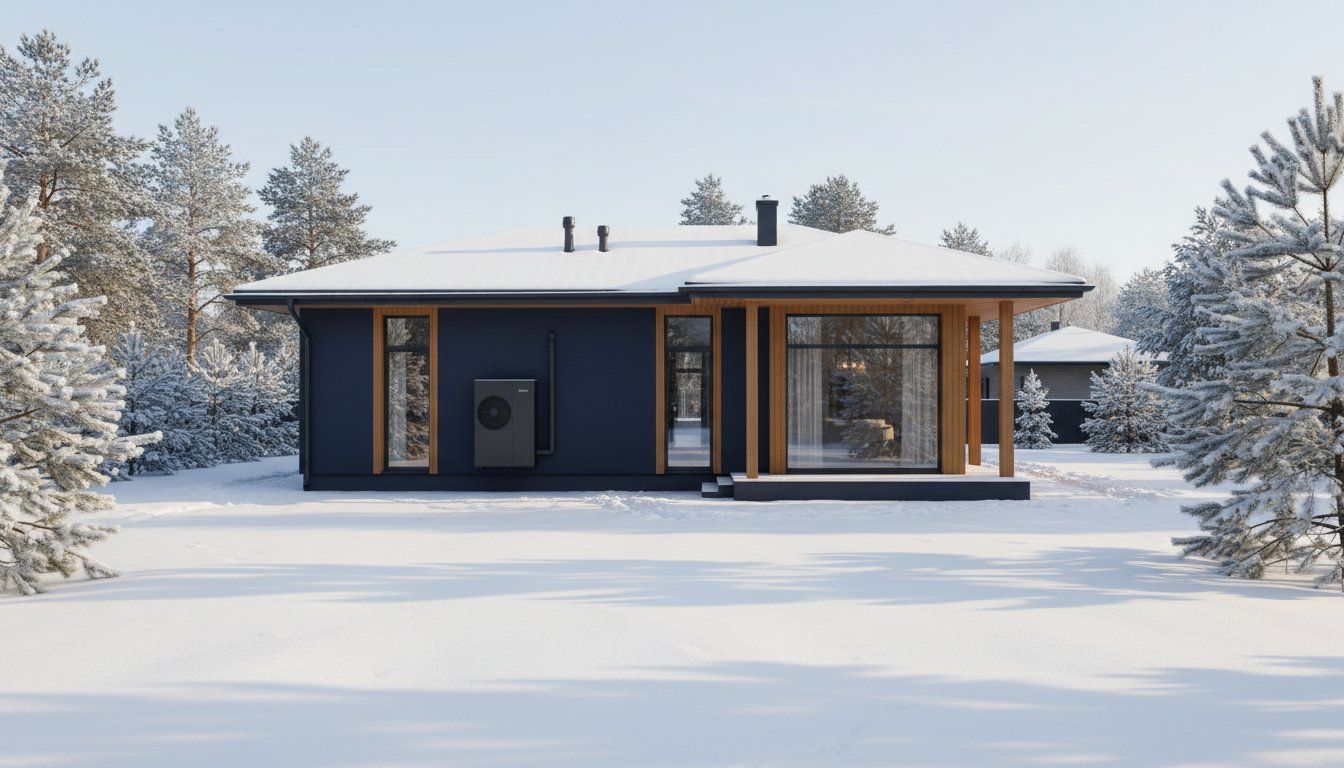
Do you believe that one wrong choice in output calculations can turn your dream home into an expensive refrigerator in the depths of January frost? When looking for the most suitable heat pump for a 200m2 house, most homeowners are justifiably afraid of insufficient output during heavy frost or astronomical electricity bills in winter months. We are here to tackle this challenge together and help you precisely calculate the required kW output while making maximum use of state support, which in 2026 is more accessible than ever before.
In this article you will find out why in January 2026 a 200m2 house with a ground source heat pump could have had a bill of around €288, while an air-to-water system in similar conditions reached €478. We will help you navigate the EKII-6 programme, where support for air-to-water heat pumps reaches up to €4,700, and prepare you for a decision that will provide warmth and peace of mind for many years to come. We will look at both system efficiency and practical steps for managing complex documentation, so that you end up in safe and experienced hands.
Key Takeaways
- Find out why the output required for a 200m2 house differs significantly between new builds and renovated buildings, and why "over-insuring" on output can unnecessarily increase the cost of your system.
- Evaluate whether in your case an air-to-water or ground source heat pump will be the most effective solution for a 200m2 house, comparing installation speed and stability at extreme temperatures.
- Discover how to successfully apply for state support of up to €4,700 in 2026 to significantly reduce the initial investment in modern heating.
- Familiarise yourself with the advantages of modern technologies, such as EVI compressors and smart controls, which ensure comfort and low electricity bills in the long term.
Why is 200m2 of Floor Area Only the Starting Point When Choosing a Heat Pump?
200 square metres is a magic number in the Latvian private home segment. It is the size at which spaciousness and family comfort usually meet, yet from an engineering perspective this area serves only as an initial reference point. What is a heat pump? Essentially it is a smart system that transfers energy from the surrounding environment to your home rather than producing it from scratch. Therefore the unit's efficiency is directly dependent on how much heat your house "gives away" to the outside through walls, windows and the roof. Two visually identical 200m2 houses may require drastically different solutions, as one may be an energy-efficient new build while the other is, for example, a renovated brick building with historic character.
We at the Commodus team often see homeowners trying to "over-insure" themselves by choosing a more powerful unit than necessary. This approach is just as harmful as insufficient output. An overly powerful heat pump for a 200m2 house will cause so-called cycling. This means the compressor will switch on and off too frequently because it generates too much heat in a short time. This not only wastes electricity unnecessarily but also accelerates the wear of expensive components. The only safe path is a precise heat loss calculation expressed in kilowatts (kW). This is our joint task, to work together towards a result in which the unit operates in its optimal zone, ensuring a long service life and low bills.
Heat Loss Factors for 200m2 of Floor Area
Floor area does not heat a house; energy that replaces losses does. If your home has high ceilings, for example above three metres, the heated air volume is significantly larger than in standard projects. Likewise, large panoramic windows, however beautiful they may be, lose heat faster than insulated walls. In a modern 200m2 home in 2026, a heat recovery system is almost mandatory, as it can return up to 85% of the heat that would otherwise escape through ventilation. Do not forget the building's orientation either. A house in an open field exposed to strong Latvian winds will require more energy than an identical building sheltered from the wind by a forest or neighbouring development.
The Myth of the "Universal 11kW" Heat Pump
In many shops, an 11kW system is presented as the standard for this floor area, but this is merely a generalisation. If your 200m2 home is built to passive house principles, an 8kW unit may be perfectly sufficient. On the other hand, in an older renovated building with radiator heating, even 14kW may not be enough when the outdoor temperature drops to -25°C. The key is to find the right balance. The bivalence point is the outdoor air temperature at which the heat pump's output matches the building's heat losses and below which the unit requires an additional heating element. Our specialists will help determine this point so that the electric heaters switch on only in rare cases, preserving your peace of mind and your wallet.
Required Output Calculation: From New Build to Renovated House
It is no secret that two houses with an identical 200m2 floor area can have radically different energy needs. If one is an A-class new build completed in 2024 and the other is a 1990s brick building, the heat demand can differ by as much as twice. When planning heating, we at Commodus always remind our clients that a heat pump for a 200m2 house is not just a room heater. It is also your source of domestic hot water. For a family of 4-6 people, hot water preparation requires a significant portion of energy, so approximately 1.5 to 2 kW should be added to the room heating output in the calculations to ensure comfort during morning showers.
Scenario A: New Energy-Efficient House
Modern new builds are dominated by underfloor heating. This is the ideal partner for a heat pump, as it works at low temperatures, usually around 30 or 35 degrees. In such an environment, an inverter-type heat pump for a 200m2 house typically falls in the 6-9 kW range. An inverter is smart: it does not switch on and off like a regular switch but instead reduces its speed when the desired heat has been reached. It is like driving with cruise control, maintaining a steady speed and saving fuel.
Scenario B: Renovated House with Radiators
If you plan to keep the existing radiators, you need to account for the fact that they require a higher flow temperature. This is where high-temperature heat pumps or hybrid solutions come in. In a hybrid system, the heat pump does the main work while the old gas or pellet boiler only connects during extreme cold. However, if possible, we recommend replacing the smaller radiators with larger ones. This allows the system to work more efficiently and saves thousands on electricity bills in the long run, as the heat pump does not have to expend enormous power to achieve a high temperature.
For historic buildings without serious insulation, a heat pump alone may not be the most cost-effective solution. In such cases, we work together with the client to find the optimal path, because without wall and attic insulation a heat pump can consume too much energy. However modern the technology, it needs attention. Proper heat pump maintenance and upkeep is the key to system longevity. It is nothing complicated, but regular filter cleaning and pressure checks will help avoid unpleasant surprises right in the middle of the heating season. If you are unsure about your home's heat losses, our heating calculator or a specialist consultation will help put an end to doubt and choose the most suitable solution.
Air-to-Water or Ground Source Heat Pump: Which Solution is More Advantageous for 200m2?
When choosing which heat pump is most suitable for a 200m2 house, we at the Commodus team first encourage you to evaluate not only today's budget but also your plot's possibilities. Air-to-water systems are the absolute leader in terms of installation speed. They require no extensive excavation work and are usually ready to operate within a couple of days. A ground source heat pump, on the other hand, is like a long-term investment. It provides enviable stability even when Latvia's winter surprises us with -25°C frost. For this floor area, a ground source heat pump will require either a horizontal collector covering approximately 400 to 600 square metres or vertical boreholes that do not take up garden space but require a larger initial investment.
One of the biggest benefits that competitors often forget to mention is the cooling function. In 200m2 homes with large glazed areas, summer heat can become unbearable. A ground source heat pump here offers passive cooling. It uses the coolness of the earth to cool rooms, consuming only as much electricity as the circulation pump requires. This is incomparably cheaper and more pleasant than a classic air conditioner that creates draughts and noise. Air-to-water units can also cool rooms, but they do so in active mode using the compressor, which is slightly more expensive but still effective.
Operating Costs and Payback Period
When comparing systems, look at SCOP (seasonal coefficient of performance) rather than just the momentary COP figure. SCOP more accurately shows how efficiently the unit will work throughout the year, taking into account variable weather conditions. Although installing a ground source heat pump requires greater resources, its lower operating costs and longer service life often pay off within 7 to 10 years. Furthermore, since state support for heat pumps is available until the end of 2029, the initial financial burden becomes considerably lighter. By combining either of these systems with solar panels, you practically become an independent energy producer, which is especially important for a 200m2 house with greater overall consumption.
Installation Specifics in Latvian Conditions
The outdoor unit of an air-to-water system generates a small amount of noise, so we always carefully plan its placement so as not to disturb either you or your neighbours. Earthworks for a horizontal collector will temporarily alter your garden landscape, but after the lawn has been restored no trace will remain of the engineering infrastructure below. In terms of maintenance, both systems require only a preventive inspection once a year. Our technicians are like trusted family doctors for your heating system. They will ensure that the heat pump for a 200m2 house is operating with maximum efficiency before the first frosts arrive. We believe that a personal approach and regular servicing are the only way to guarantee your comfort for decades.

A Practical Guide: Technical Parameters and State Support in 2026
Once you have chosen between a ground source or air-to-water system, it is time to look "under the hood". A heat pump for a 200m2 house is a serious piece of engineering equipment whose efficiency is determined not by the colour of the casing but by the internal technology. The market standard in 2026 is high, so do not let yourself be deceived by cheap models lacking functions that are critically important for Latvia's climate. We at the Commodus team always emphasise that correctly chosen parameters are what provide peace of mind in those moments when the thermometer outside drops rapidly.
Technologies to Pay Attention To
EVI (Enhanced Vapor Injection) technology is like a secret weapon for your heating system. It is an additional steam injection system in the compressor that allows the heat pump to maintain high efficiency even at -25°C. Without this function, the unit in heavy frost can become a plain electric heater that runs up bills. Likewise in 2026, smart control is no longer an extra. Wi-Fi integration allows you to monitor the system's operation from your phone, while a "Smart Home" connection helps automatically adjust the temperature during times when electricity exchange prices are at their lowest. Do not forget about noise levels either. Quality units do not exceed 35 to 45 dB, which is comparable to a quiet whisper.
How to Receive State Co-Financing for a Heat Pump?
State support in 2026 has become a solid springboard for many families. The currently active EKII-6 programme offers homeowners an impressive support intensity of 70% of the unit's price. A heat pump for a 200m2 house usually requires a unit with output above 9 kW, and in such a case the maximum support for air-to-water systems reaches €4,700. The application deadline is set until 31 December 2029, but funding is allocated on a first-come, first-served basis, so it is better to act in good time.
To qualify for support, the unit must meet certain efficiency classes and the house must have at least a "D" energy efficiency rating. The most common mistake that leads to co-financing being refused is incorrectly prepared documentation or installation carried out by a non-certified specialist. The state requires that installation be carried out by a company with the appropriate certification, as this guarantees system safety and compliance with environmental requirements. We help our clients manage the entire process, from the initial energy audit to the acceptance and handover certificate, so that you receive every cent of support you are entitled to. If you want to find out whether your chosen unit qualifies for support, we recommend applying for a free consultation with our specialists.
Commodus Service: How We Help Push the Challenge From Project to Warmth
Our philosophy is simple: we do not just sell equipment, we provide climate and peace of mind for your family. A heat pump for a 200m2 house is an investment for at least 15 to 20 years, so we do not view it as a one-off transaction. This is a long-term story in which we are your partners from the first draft right through to the system's full life cycle. Unlike many market players who disappear immediately after installation is complete, we stay by your side to ensure that your heating works just as efficiently as it did on day one.
What does a heat pump's life look like after 5 or 10 years? This is a question clients rarely ask but it is critically important. After the first five years, a quality heat pump requires a thorough node inspection to eliminate micro-leaks and optimise the software according to your actual consumption. After 10 years we carry out preventive diagnostics of circulation pumps and sensors. Our experience with hundreds of 200m2 sites throughout Latvia shows that regular professional maintenance extends a unit's life by at least 30% compared to systems left to run without attention.
Our Team and Experience
Behind every successful project stand our engineers, who in their free time are themselves active doers and nature enthusiasts. This personal touch helps us better understand your everyday needs. A site inspection with us is not just a formality. We measure every room, assess the existing insulation and carry out output calculations so that the heat pump for a 200m2 house is neither too large nor too small. Warranty and post-warranty maintenance is our promise that you will never be left in the cold, because our service team is ready to provide support in any situation.
Why Choose Commodus?
We work only with the world's leading brands whose technical construction we know down to the last detail. This allows us to offer solutions that best suit Latvia's variable weather conditions and high humidity levels. In addition to technical work, we also take on the burden of bureaucracy. Preparing documentation for receiving state support through the EKII or Altum programmes is often the most complex stage, but our experience allows us to make this process smooth and understandable. We believe that working together is the only way to achieve an excellent result and long-term comfort.
If you are planning to modernise your home's heating or build in 2026, do not put off the decision until the last moment. Contact our experts for a free consultation and find the most energy-efficient solution for your home today.
Your Path to a Warm and Energy-Efficient Home Begins With the Right Choice
When choosing the most suitable solution, it is clear that a heat pump for a 200m2 house is not merely a technical purchase but a long-term investment in your family's comfort. We have seen that correct output determination depends on the building's energy efficiency class and hot water consumption, not just square metres. Remember that in 2026 state support still covers a significant portion of the investment, as long as you entrust the work to certified specialists who understand all the nuances of the bureaucracy and know how to navigate it successfully.
The Commodus team with more than 15 years of experience in heating system installation is ready to help you manage the entire process from the first calculation to a finished system. We provide not only assistance in obtaining state support through Altum or EKII programmes, but also a full service warranty and technical maintenance throughout Latvia. Our goal is to create a system that works impeccably for decades, allowing you to enjoy warmth without unnecessary concerns about bills or unit operation.
Receive an individual heat pump offer for your 200m2 house and take the first step towards independent and environmentally friendly heating. We are here to tackle this challenge together and ensure the very best climate in your home!
Frequently Asked Questions About Heat Pumps for 200m2 Houses
Is an 11kW Heat Pump Sufficient for a 200m2 House?
11kW output is often an optimal middle ground, but it is not a universal formula for every building. A new A-class energy efficiency house may be perfectly served by a 7 to 9 kW unit, while an older renovated building with radiators may find 11kW to be the bare minimum. The precise required output is determined by a heat loss calculation that our engineers carry out before a project begins, so that the heat pump for a 200m2 house operates efficiently and without unnecessary cycling.
How Much Does Heat Pump Installation for a 200m2 House Cost in 2026?
The total investment depends on the type of system chosen and the necessary preparatory work. Air-to-water heat pump installation (unit plus fitting) in 2026 typically ranges from €5,500 to €11,000. A ground source heat pump system, which also includes earthworks or boreholes, requires a larger investment ranging from €11,000 to €17,000. It should be noted that these costs can be significantly reduced by obtaining state co-financing.
Can a Heat Pump Provide Hot Water for a Large Family?
Yes, a heat pump can fully provide hot water for a family of even 4 to 6 people if the system is correctly planned. In such a case we install a boiler with an increased heat exchanger surface area and a volume of 200 to 300 litres. The unit works in priority mode, first preparing the water and only then continuing to heat the rooms, which guarantees comfort for all household members even during the morning rush.
How Large Does the Ground Collector Need to Be for Heating a 200m2 House?
The area required for a horizontal ground collector is usually 2 to 3 times larger than the heated room area, so approximately 400 to 600 square metres of free land. If your plot is smaller or already landscaped with garden plantings, we recommend choosing vertical boreholes. These do not take up garden space and provide even more stable efficiency, as the temperature at depth remains constant throughout the year.
Will a Heat Pump Work with Existing Cast Iron Radiators?
Technically this is possible, but cast iron radiators are not the most efficient solution in combination with a heat pump. They require a high flow temperature, which causes the unit to consume more electricity. If you plan to keep the existing radiators, we recommend either choosing a special high-temperature heat pump or considering replacing the radiators with modern low-temperature models, which will significantly reduce your monthly bills.
What is the Average Electricity Consumption for a 200m2 House with a Heat Pump?
Electricity consumption is closely linked to the home's thermal insulation and outdoor temperature fluctuations. According to January 2026 data, for a 200m2 house with a ground source heat pump, total consumption was approximately 1,659 kWh per month. For an air-to-water system in similar conditions, consumption reached approximately 1,983 kWh. These figures include not only room heating and hot water preparation but also the operation of all household appliances.
Is it Possible to Receive Altum Support if the House Already Has Gas Heating?
Yes, state support programmes such as EKII-6 are specifically designed to encourage the transition from fossil fuels to renewable resources. Replacing a gas heating boiler with a modern heat pump is one of the main conditions for receiving up to 70% support on the equipment purchase price. We at the Commodus team help our clients navigate the bureaucratic maze, preparing all the necessary documentation for submitting the application.
How Often Does a Heat Pump Require Technical Maintenance?
Technical maintenance should be carried out once a year, and it is best to schedule this before the start of the heating season. During maintenance our specialists clean the filters, check system pressure, analyse operating parameters and verify the correct operation of valves and pumps. Regular servicing is critically important to maintain the manufacturer's warranty and ensure that the heat pump for a 200m2 house serves as long and efficiently as possible without unexpected surprises in the middle of winter.
Comments