Heat Pump: A Complete Guide and Comparison for Efficient Heating in 2026
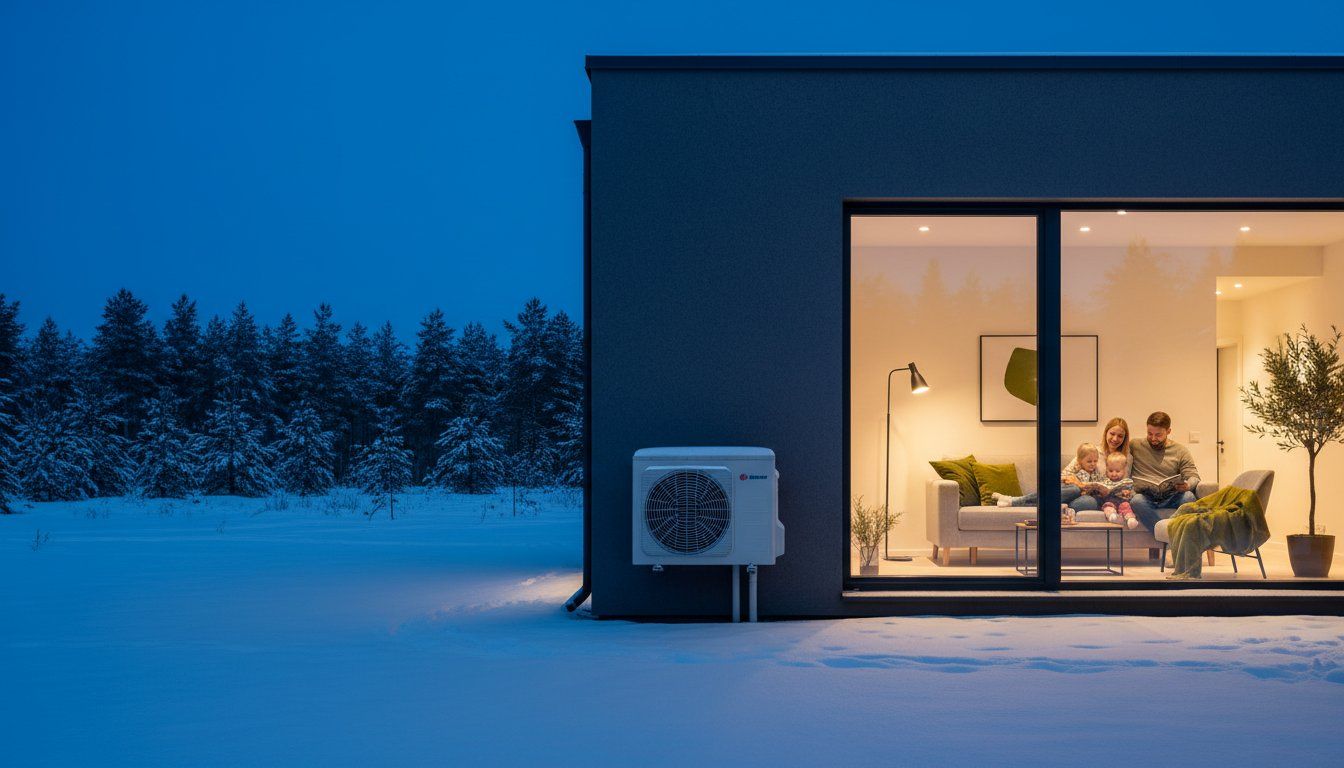
Do you really believe that a heat pump can keep your home warm when the temperature in a Latvian winter drops below -25°C? Many homeowners still doubt whether modern technology is ready for our harsh conditions, especially when they see the substantial initial investment required. At Commodus, we understand that these concerns are justified. Nobody wants to push the cart alone into the unknown, risking their family's comfort or becoming buried under complex paperwork in order to obtain state support.
You will probably agree that every homeowner has the same goal: low monthly bills and a warm home regardless of what is happening outside. In this article, we promise to help you choose the most suitable solution by comparing equipment efficiency and the real benefits specifically in Latvia's climate. We will analyse the best models for 2026, dispel myths about loss of capacity during severe frost and provide a clear action plan for obtaining a fully automated heating system without unnecessary stress or bureaucratic obstacles.
Key takeaways
- Learn how modern technology provides efficient home heating even at -25°C and what SCOP values actually mean for your monthly bills.
- Compare operating costs and find out why a heat pump in 2026 is a more economical and cleaner choice than a pellet boiler or fossil fuels.
- Get a clear action plan for obtaining state support through Altum or EKII programmes and significantly reducing your initial investment.
- Discover a full-service approach, from professional design to precise installation, that ensures maximum comfort and long-term system reliability.
The heat pump as the modern heating standard: What is it?
The heating sector has changed dramatically in recent years. In 2026, a heat pump is no longer discussed as an exotic technology of the future; it has become the principal standard for every energy-efficient home in Latvia. The Commodus team has been helping households choose the most suitable solutions for more than 15 years. During this time, we have learned that working alongside the customer means more than merely installing equipment; it also means providing a sense of security and technical support for decades. Our experience shows that switching to renewable energy is the only logical way to avoid unpredictable fluctuations in fossil-fuel prices.
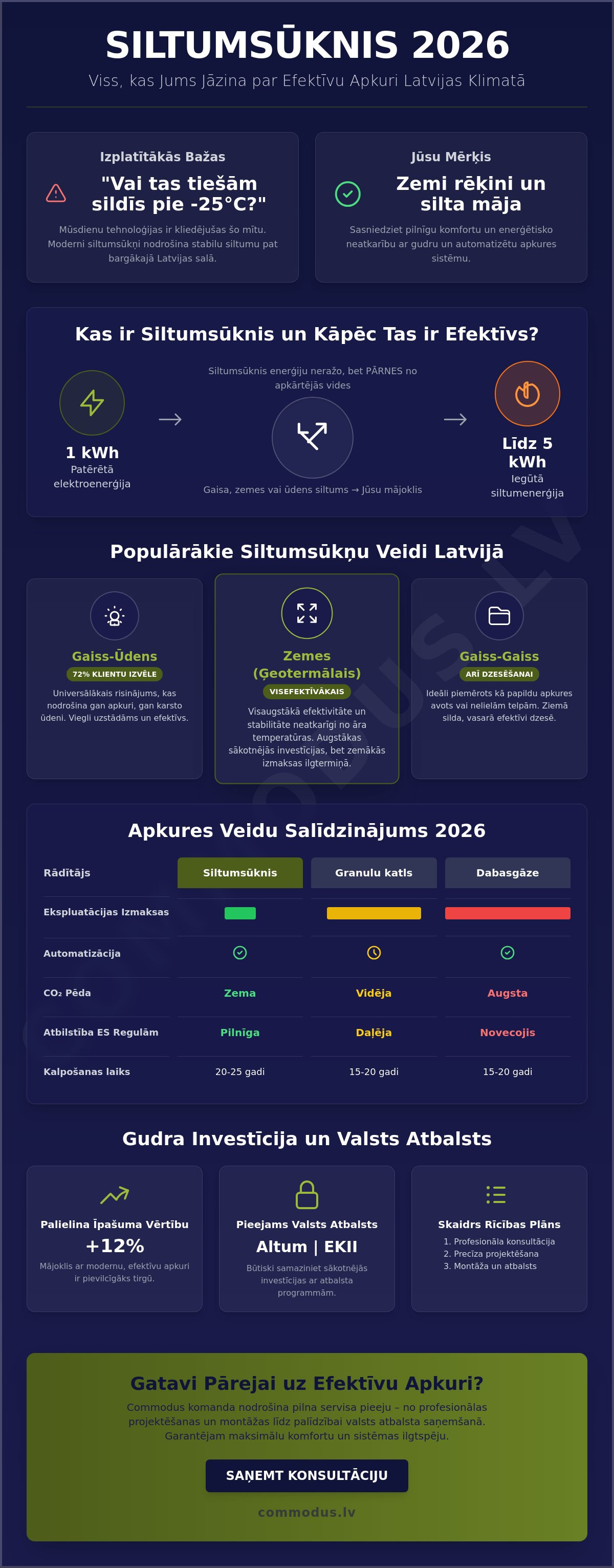
In essence, What is a heat pump? It is an intelligent engineering device that does not generate heat by burning resources, but instead efficiently transfers energy from the environment — air, ground or water — into your home's heating system. Compared with natural gas or pellets, a heat pump can produce up to five times more heat energy for every kilowatt of electricity consumed. This is possible because the laws of thermodynamics allow energy to be extracted even when outdoor temperatures are below zero.
By 2026, European Union regulations and carbon-emission taxation requirements have made fossil fuels an economically unattractive choice. The installation of new gas boilers is being restricted in many places, which is why a heat pump has become the primary choice for both new builds and renovation projects. It is not merely a method of heating; it is an investment in independence from imported resources and global market disruptions.
The most popular types of heat pump in Latvia
When choosing the most suitable system, it is important to understand the characteristics of the local climate. Three solutions are used most often in Latvia:
- Air-to-water: This is the most versatile option and is selected by approximately 72% of our customers. It is relatively easy to install and provides both space heating and domestic hot water using energy from the outdoor air.
- Air-to-air: Ideal as an additional heat source or for smaller spaces. The system works much like an air conditioner, providing heat in winter and efficient cooling in summer.
- Ground-source heat pumps: Although the initial investment is higher because earthworks are required, this system provides the highest coefficient of performance (COP), even at temperatures of -30°C.
Why is a heat pump a 'smart' investment?
Installing a heat pump increases the market value of a property by an average of 12%. It is a long-term investment, as a high-quality unit can last 20 or even 25 years. You no longer need to plan fuel purchases at the beginning of the season or clean chimneys; the system operates fully automatically. Modern units also offer passive cooling during the summer months, providing year-round comfort without the need to install additional air conditioners. Reducing CO2 emissions ensures compliance with current EU directives and protects you against possible future taxes on environmentally harmful heating.
Efficiency during a Latvian winter: Does it really provide enough heat?
Many Latvian homeowners still believe the myth that an air-to-water heat pump becomes an expensive decorative item when the temperature falls to -25°C. That is not true. Technology has advanced significantly, and 2026 models operate reliably even in severe frost, providing comfort without unnecessary stress. The main figure to consider is SCOP. COP indicates efficiency at a specific operating point, while SCOP shows the average performance over an entire season. The International Energy Agency report confirms that heat pumps are the most energy-efficient solution even in colder regions because they can produce three to five times more heat than the electricity they consume.
Inverter technology works in a similar way to cruise control in a car. Instead of repeatedly switching on and off at full capacity, the heat pump adapts and operates steadily. This not only protects the equipment but also helps maintain a stable indoor temperature without fluctuations. However, even the best unit will be ineffective if it is selected incorrectly. Professional system design is more important than the unit itself, because an error in capacity calculations can lead to excessive bills or insufficient heating.
Monobloc versus split system: Which should you choose?
The main advantage of a monobloc unit is simpler installation. The entire system is housed in a single outdoor casing, so no refrigerant work is required indoors. It is an excellent solution when indoor space is limited. A split system, by contrast, is more efficient when there is a greater distance between the units because heat losses through the pipework are minimal. The choice often depends on the house layout and the space available on the ground or wall.
Thermal inertia and defrost cycles
When the weather is cold and damp, frost can form on the outdoor unit. The heat pump resolves this with an automatic defrost cycle that temporarily reverses its operation. At this point, the thermal inertia of the system is important so that the indoor temperature does not fall. The bivalence point is a safety margin in system capacity, defining the outdoor temperature at which an additional heating element begins assisting the heat pump. To find out which solution would suit your home, try our heating calculator, which will help you assess the required capacity.
- SCOP value: The higher it is, the lower your electricity bill will be over the heating season.
- Low temperatures: High-quality units retain their heating capacity even at -25°C.
- Design: A correctly selected bivalence point prevents excessive system consumption.
The major comparison: Heat pumps versus other heating systems
When selecting a heating system, people often ask whether a modern heat pump genuinely outperforms established solutions such as pellet boilers or wood heating. In practice, the greatest difference lies in comfort and cleanliness. A pellet-boiler owner spends an average of 30 to 50 hours a year cleaning ash, servicing the burner and adding fuel. A heat pump operates completely autonomously, requires no physical intervention and keeps the plant room clean.
The economic benefit becomes clear when calculating the cost of each kWh of heat produced. Pellet-heating costs fluctuate with seasonal prices, whereas with a heat pump achieving an average SCOP of 4.0, every unit of electricity consumed produces four units of heat. Heat pump operating principles confirm that this technology does not generate heat from nothing, but efficiently transfers energy from the environment, making it a leader in efficiency. Under Latvian conditions, the investment usually pays back within six to eight years when state-support programmes are used.
- Heat pump: 0 hours of monthly maintenance, high cleanliness and complete automation.
- Pellet boiler: regular cleaning, a fuel-storage area and ash disposal are required.
- Compatibility: modern heat pumps operate efficiently with both underfloor heating at 35°C and radiators at up to 65°C.
Heat pumps and solar panels: The ideal combination
This combination represents the highest level of energy independence. Under the net settlement system, electricity generated in summer can be 'stored' in the grid and used for heating during the winter months. Smart controls allow the system to raise the indoor temperature automatically by a few degrees precisely when the solar panels are generating maximum power. This turns the structure of your home into a type of thermal battery and reduces heating bills to a minimum. Our experience shows that this synergy is the fastest-growing solution in new-build projects.
Modernising an existing heating system
Many people fear that a heat pump will not work with old cast-iron radiators. In reality, high-temperature heat pumps have been designed specifically for such situations. If the building insulation is still insufficient, a hybrid system is an excellent solution. You retain the existing wood or gas boiler as a backup for exceptionally cold winter nights while benefiting from heat-pump efficiency for 90% of the time. This approach not only improves comfort but also provides reassurance that the home will always remain warm regardless of weather conditions or energy prices. At Commodus, we work alongside you to find the technically correct solution for your building.
Planning, installation and state support in 2026
An efficient heating system begins not in a shop, but at the drawing board or during the first consultation. In 2026, building energy-efficiency requirements have become even stricter, making accurate planning essential. The process normally takes four to eight weeks. It begins with a heat-loss calculation for the house and ends with the first sensation of warm flooring beneath your feet. At Commodus, we believe that the customer should feel secure at every stage, which is why we provide the complete cycle from system design to commissioning.
Before installation begins, the available electrical capacity must be checked. A modern heat pump usually requires a three-phase electrical supply. For a unit with a capacity of up to 10 kW, 16 A or 20 A circuit protection will be sufficient in most cases. However, if an electric vehicle charger and an induction hob will operate at the same time, an electrical-capacity audit should be carried out before purchasing the unit. This prevents unpleasant surprises when the first frost arrives and the system begins operating at full capacity.
How can you obtain state support for a heat pump?
In 2026, Altum and EKII support programmes aimed at replacing fossil-fuel boilers remain available. Depending on the conditions of the selected programme, support may cover as much as 50% or 70% of eligible costs. The main criteria are that the building has been commissioned and that the new heat pump provides a high seasonal coefficient of performance (SCOP). Paperwork often appears complicated, but we effectively carry the burden for you. Commodus specialists help prepare all necessary reports and applications so that obtaining funding is as straightforward as possible.
Technical details of heat pump installation
When installing an air-to-water system, the most important consideration is the location of the outdoor unit. It must be positioned where airflow is unrestricted and the noise will not disturb either the occupants or neighbours. Models for 2026 are quieter, but vibration isolation remains essential. If a ground-source heat pump is selected, drilling boreholes must be taken into account. Under Latvian geological conditions, a single borehole usually reaches a depth of approximately 100 metres, providing a stable temperature throughout the year.
- Check that the installer is certified to work with refrigerants and F-gases.
- Ask how often warranty maintenance is required and what remote-control options are available.
- Make sure the installation quotation includes all materials, not only the unit itself.
Completing the documentation does not end when the invoice is paid. The system must be commissioned and the changes registered in the Construction Information System (BIS). This is important not only for receiving state support but also for home insurance and future resale value. Our experience shows that correct paperwork saves more money in the long term than the cheapest installation offer on the market.
Ready to switch to efficient heating? Book a free consultation with Commodus experts and we will help you choose the most suitable solution for your home.
Why choose Commodus for your heating system?
When deciding which heat pump will heat your home most effectively in 2026, technical specifications are only one part of the equation. The people who install and maintain the system are just as important. The Commodus team are not merely salespeople; we are practical specialists who genuinely care about every project. We provide a complete service cycle covering everything from detailed engineering design and equipment supply to professional installation and regular maintenance. This means you do not need to spend time finding several different contractors, as we take full responsibility for the final result.
Our specialists work throughout Latvia and provide prompt warranty and post-warranty service. If questions arise or a preventive inspection is required, our technicians respond quickly because we understand how important uninterrupted heating is in the home. The Commodus approach is based on honesty. We never recommend the most expensive unit simply to make a sale. Instead, we carefully assess the building's insulation, area and requirements to select the most technically appropriate and economically justified solution. This individual approach saves money both at the installation stage and throughout system operation.
More than installation: Our values
Transparency is at the heart of our work, which is why we provide practical tools for informed decision-making. We recommend using our heating calculator to obtain accurate estimates of the required investment and future costs. We believe that personal service distinguishes us from large corporations. Our customers meet specific project managers and technicians, creating a relationship based on trust. We are not a company that disappears after the invoice has been paid; we remain a partner who helps you understand the new system and can still be contacted years later.
Our team consists of energetic people who enjoy moving projects forwards and finding solutions even in the most complex situations. Whether the work is carried out in a compact city flat or a large rural property, we maintain the highest quality standards. This solution-oriented mindset and practical spirit are our main driving forces, enabling us to provide peace of mind to hundreds of families throughout Latvia.
Next steps towards a warm home
For your chosen heat pump to operate at maximum efficiency, everything begins with a correct assessment. Book a free site survey anywhere in Latvia. Our expert will visit you, assess the technical condition of the building and provide practical recommendations for selecting the most suitable heating system. After the visit, we will prepare a personalised quotation within 24 hours so that you can make a decision without unnecessary delay.
We are here to help you switch to modern, environmentally friendly and economical heating. Contact Commodus experts today! and we will begin improving the energy efficiency of your home.
Begin your transition to smart heating today
Choosing modern heating is a strategic decision that provides security and independence for many years. In Latvia's energy sector, 2026 marks a turning point when the heat pump becomes the principal choice for both new projects and renovated buildings. State-support mechanisms remain active and significantly reduce the initial investment. The Commodus team has worked in this field for more than 15 years and has accumulated unique expertise that allows us to find the best solution for every situation. We are an official representative of the world's leading brands and therefore provide a complete service cycle, including design, professional installation and subsequent system maintenance. Our experience shows that precise data are the foundation of successful cooperation and predictable monthly bills. We work alongside you to ensure maximum home comfort and long-term peace of mind. There is no need to spend time deciphering complicated technical terminology when a reliable and knowledgeable partner is beside you.
Calculate your heating costs with the Commodus calculator!
Use our experience to make a well-considered decision that will warm both your home and your heart.
Frequently asked questions about heat pumps
Can a heat pump fully replace wood or pellet heating?
Yes. A modern heat pump can fully replace a solid-fuel boiler and provide autonomous heating even at -25°C. You no longer need to arrange firewood supplies or clean ash every day, because the system operates automatically and maintains an even temperature throughout the home. Our experience shows that 95% of customers switching from pellets value the time savings and cleanliness of the house most highly.
How noisy is a heat pump outdoor unit, and will it disturb the neighbours?
The noise level of modern units measured at a distance of three metres usually does not exceed 35 to 45 decibels, which is comparable to a quiet whisper or a refrigerator. If the correct distance from neighbouring windows is observed and high-quality anti-vibration mounts are used, the noise will not disturb anyone. We will help identify the optimum position beside the house so that both you and nearby residents can enjoy peace and quiet.
What are the average annual heat pump maintenance costs?
Standard maintenance should be carried out once a year to preserve the manufacturer's warranty and ensure maximum system efficiency. A specialist checks the refrigerant pressure, cleans the heat exchangers and verifies the operation of the electronics, which usually takes approximately one to two hours. Timely inspection of the heat pump reduces risks and helps maintain a high COP, which directly affects the size of your winter electricity bills.
Does a heat pump require a three-phase electrical connection?
Most units with a capacity above 6 or 8 kW require a three-phase connection so that the load is distributed evenly across the phases. A single-phase supply may be sufficient for smaller homes, but this must always be checked against the property's total electrical capacity. Before installation, we inspect the parameters of your existing connection to ensure that the system operates reliably and does not trip the circuit breakers when you switch on the kettle.
How long does a heat pump usually take to pay for itself?
The average payback period is five to ten years, depending on the selected model and the efficiency of the previous heating system. When state-support programmes are used, this period may be reduced by 30% or even 50%. A heat pump is a long-term investment in comfort that increases the market value of the property immediately after installation and commissioning.
Can I install a heat pump myself to save money?
Self-installation is not recommended and may be unlawful because work involving refrigerants requires a special certificate. If installation is not performed by a certified specialist, the manufacturer's warranty is immediately invalidated, which can result in substantial losses if technical faults arise. Our team carries out this work every day, so professional heat-pump installation takes only one to two days and ensures safe operation for years.
Which heat pump is most suitable for an older renovated house?
A high-temperature air-to-water heat pump is generally the best choice for a renovated building because it can heat radiator water to 65°C or even 75°C. If the house has been insulated properly, the system will operate even more efficiently and consume less electricity. It is essential to calculate heat losses accurately after the renovation has been completed so that the selected capacity matches the building's new energy performance and the radiator area.
Is state support also available for air-to-air heat pumps?
Under current support programmes such as Altum or EKII projects, air-to-air systems are usually not subsidised because the emphasis is placed on water-based central heating. State support is mainly intended for the installation of air-to-water or ground-source heat pumps to replace old fossil-fuel boilers. Nevertheless, every heat pump is a valuable investment, and we will help prepare all necessary documents for an application under the relevant programme.
Comments