Heat pump loop installation: key steps and tips
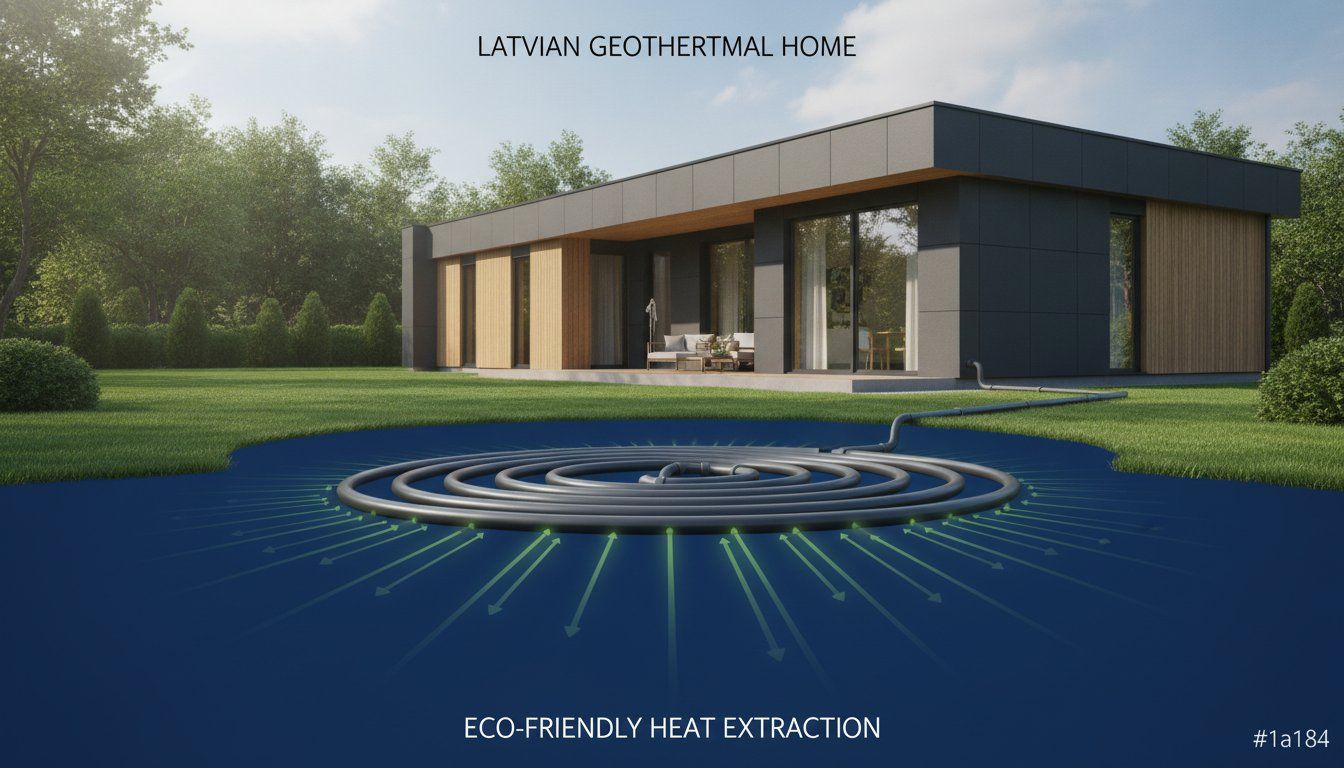
Did you know that your homeland is like a huge, natural energy bank that can keep the house warm even the coldest night in January? Many landlords hesitate to choose a ground heat pump because they fear that the contour could freeze in winter or that the garden landscape will be irreparably damaged during digging. We fully understand these concerns, because the changing weather conditions and harsh winters in Latvia require a particularly precise approach so that the heating system works smoothly and economically.
In this article we will explain in detail: how to correctly construct a heat pump circuitby turning the technical unknown into a clear and easy-to-understand action plan. You will understand how much land is actually needed for your project and what materials ensure the stable operation of the system for decades, making this a valuable 50-year investment in your property. We will look at all the essential steps of construction, from precise planning to pipe laying, providing you with the necessary knowledge and peace of mind about the warmth of the house, even if outside the thermometer column falls to -25°C mark.
What is the ground contour of the heat pump and how does it work?
The earth's contour is not just a simple plastic tube buried in the garden. It is a closed, carefully thought-out system that circulates a special heat transferor, or ice-free liquid. To better understand, which is the ground heat pump and why it is so effective, imagine your yard as a huge solar power battery. Throughout the summer, the earth absorbs the heat of the sun, and even in the coldest winter, this accumulated energy does not disappear anywhere. It stays right there a few meters deep, waiting for the contour to bring it to your house.
Exact knowledge of it, how to correctly construct a heat pump circuit, distinguishing a mediocre system from a highly effective one. The closer and more precise the contact between pipes and soil, the better the heat exchange takes place. This directly affects the efficiency of the system or COP. If the contour is built qualitatively, the compressor needs to consume very little electricity in order to 'point out' the heat from the ground and convert it into a cozy temperature in your radiators or warm floors. It is an investment that will work for you for 50 years or more without additional care or repairs.
Advantages of the Earth contour compared to other systems
In the climate of Latvia, the land contour is one of the most stable solutions. While temperatures can change rapidly, the earth is a reliable ally. Here are the main reasons why to choose exactly this system:
- Incredible stability. 1.2 to 1.5 metres deep ground temperature remains between +4 and +8 degrees in Latvia even in January. This provides a steady heat supply regardless of the storm or snow behind the window.
- Efficiency at -20°C. Unlike air heat pumps, whose efficiency is reduced on a harsh island, the ground system continues to operate at full capacity as its heat source is in a safe heat below freezing level.
- Free cooling in summer. Using natural cooling, you can cool the house by operating only the circulator. It consumes as little electricity as one ordinary bulb.
In cases where the garden area is limited and it is not possible to build a horizontal contour, a great alternative is Roasted iron pyrites. They operate on a similar principle, only energy is obtained from a vertical probe, which falls deep into the earth's layers, keeping the garden landscape intact.
Horizontal collector or borehole: Which solution is more appropriate?
The choice between the horizontal collector and the borehole is the first big step in planning an efficient heating system. If you own a large lawn without large trees, underground communications or planned structures, the horizontal contour will be the most economically advantageous option. The main condition here is sufficient free space. We usually calculate that the required area of land is about 2 to 3 times the house's heating area. For example, a house of 150 square metres will require at least 300 to 450 square metres of free land, where no construction or pavement is planned to allow the sun to charge the soil freely in summer.
The soil composition determines directly: how to correctly construct a heat pump circuit at the site. In wet, clayy soil heat exchange is much more efficient than in dry sand. This means that the clay engraved contour can be up to 30% shorter to obtain the same amount of energy as a longer tube on a sandy base. Miscellaneous Geothermal Heat Pump Systems the types allow for adaptation to almost any geological situation, but the precise calculation is critical to the system's 'not tiring' in the middle of the heating season and to ensure a stable temperature.
Specifics of geothermal boreholes in Latvia
When the land area is limited or the garden is well-maintained, the geothermal borehole becomes the best choice. Unlike the horizontal collector, the well only covers a few square meters above the ground. In depth, the temperature is consistently higher and more stable, which ensures maximum efficiency of the system throughout winter. Vertical probes are durable and require minimal interference in the existing landscape, keeping your garden intact.
Although the drilling costs are initially higher, it is an investment that pays off through even lower bills and peace of mind in the long term. If you are considering this solution, it is advisable to learn more about the professional installation of boreholes, because this process requires the coordination of specific techniques and authorisations with local authorities and services. Our experience shows that wells are the safest way to guarantee heat at any minuses without worrying about the limitations of the land area.
Step by Step: How to properly construct a contour of the earth?
Before an excavator enters your yard, precise planning is critical. Not only existing underground communications, but also large trees, should be taken into account. Their root system may over time not only make digging difficult, but also affect heat exchange, therefore it is advisable to plan the contour at least a few meters away from large plantations. Knowledge of it, how to correctly construct a heat pump circuit, begins with proper trench preparation. The optimal depth in Latvia is 1.2 to 1.5 metres. It is deep enough to avoid freezing the top layer and at the same time allows the ground to warm up sufficiently in summer.
There must be no error in the investment of pipes by placing the circles too close to each other. The distance between parallel pipes shall be at least 1 metre. If they are located closer, the soil between them will be over-cooled, forming an ice block that will significantly reduce the system's COP. When the pipes are invested, it is mandatory to perform hydraulic inspection and complete de-icing before the trenches are filled. Only after you are convinced of the stability of pressure can you continue to work.
Material selection: the role of PE-RC tubes
We insist on the use of PE-RC pipes in our projects. Unlike ordinary polyethylene tubes, PE-RC material is particularly resistant to scratches and spot loads. This is essential, since even a small stone that pushes on the tube over time can create a gap in the normal material. The correct heat transferor, or glycol concentration, is also important. It must be prepared so that the liquid does not freeze even at -15 degrees to ensure the safety and longevity of the system.
Trenching and sealing
The first and most important step in the pre-conception process is the creation of sand's funnel around the pipe. The sand must be compacted in such a way that there are no air pockets around the pipe because the air is a bad heat conductor. Under no circumstances shall construction debris, large stones or pieces of wood be used to fill trenches. Such impurities can not only damage the contour but also impair the heat flow from the ground to the heat transferor. If you want to be sure of the energy potential of your garden, look at our solutions in section on installation of professional boreholes construction of contours.

The most common errors in contour design and how to avoid them
Even the most advanced heat pump will not be able to provide the expected savings if its 'baseline' or ground contour is built with mistakes. Our experience shows that knowledge of it, how to correctly construct a heat pump circuit, is often replaced by a desire to save on material or ground work which is later costly. One of the most critical errors is insufficient contour length. If there are not enough pipes, the system in the middle of winter simply 'is hungry'. This means that the land can no longer return the required heat, the heat pump efficiency (COP) is falling sharply, and your electricity bills are growing unexpectedly.
The same dangerous mistake is too small a distance between the tube rims. If they are more dense than the recommended one metre distance, the soil between the pipes during the heating season is too cool and does not recover in summer. As a result, a "lifeless freezing" effect can develop in the garden, where the grass begins to germinate much later in spring, because the land under it is still icey. Also, the hydraulics of the system cannot be forgotten. Air bubbles due to incorrect defrosting can completely block the flow of heat from the ground to the heat pump, causing the equipment to work under excessive pressure. Commodus specialists eliminate these problems at the root, performing accurate heat balance calculations and ensuring professional assembly.
Why is a professional project mandatory?
Each piece of land is unique, therefore the calculation of heat production must be made on the basis of the heat loss of the particular house and the specific soil type of your property. Only an individual approach guarantees that the system will also work effectively on the harshest island. If you realize, however, that extensive landwork in your landscaped garden is not desirable, a great and effective alternative is CTC air-water heat pumpswhich does not require contour construction and provides excellent comfort.
We believe that true peace of mind is provided by quality and smart solutions that serve for decades. So before you start your own work, contact Commodus experts. We will help to prepare an accurate contour calculation and provide personal advice so that your new heating system is safe, stable and warm support for your family for many years.
Keep your home warm for decades
The ground heat pump is one of the smartest investments you can make for your property. The main thing is to remember that the system's efficiency is based on three basic pillars: precise geological calculations, high quality PE-RC materials and pedantical assembly works. Known how to correctly construct a heat pump circuit, you will avoid excessive electricity consumption and ensure stable heating even in the most severe winters of Latvia, when the thermometer column falls well below zero.
Commodus team with more than 15 years of experience in building engineering systems is ready to become your trusted partner in this process. We provide a full service cycle from detailed design to regular maintenance, creating energy efficient solutions that are fully adapted to our local climate. Our goal is to provide you not only with technical equipment, but also with true peace of mind and comfort through professional work.
Get free consultation and accurate contour calculation from Kommodus experts!
Start planning your energy efficient future today. We will help to transform your yard's energy into a cozy and stable heat that will warm your family for many years to come.
Frequently asked questions about the construction of the land contour
How deep is it necessary to dig the contour of the ground heat pump in Latvia?
The optimal depth for the construction of the land contour in Latvian climate is 1.2 to 1.5 meters. This depth has been chosen reasonably because it is located safely below the average freezing level of the soil, providing a stable temperature during the heating season, but at the same time allowing the land to warm up sufficiently in summer from solar energy and rain water.
If the contour is dug into shallow, the system can freeze in winter, while excessive depth will prevent the soil from restoring its heat resources during the warm months. It is this balance that ensures the high efficiency of the system over many years.
Can the earth's contour affect the growth of garden plants and trees?
Properly designed ground contour does not affect the growth of lawns, flower beds or small shrubs, however, a safe distance from large trees must be observed. The strong root system of trees can mechanically damage the pipes over time or make it difficult to maintain them, therefore it is recommended to keep a distance of at least 2 to 3 metres from large plantations.
The grass above the contour will feel great because the temperature changes at a depth of 1.2 metres are too small to affect the root of plants in the upper soil layer. Your garden will retain its greenery while an invisible and quiet heating system will work under it.
What is the required land area size for a 10 kW heat pump?
On average, the surface area of the 10 kW power heat pump for the horizontal collector is between 400 and 600 square metres. The exact size always depends on the composition of the soil, because wet clay heat exchanger is more efficient and requires smaller contour length than dry sand.
It is essential to understand: how to correctly construct a heat pump circuitto maximise the use of the available area. If there are fewer free lands, specialists may recommend denser pipe placement with special calculations or choose geothermal borehole as an alternative solution.
Can the land contour be constructed under a paved square or a driveway?
The earth's contour is not recommended to be constructed under paved areas or invadable roads, as such dense surfaces block natural solar thermal and moisture access to the soil. This significantly hampers ground charging during the summer months, which is critical for the long-term efficiency of the whole system.
In cases where no other solution exists, only separate transit sections may be placed under the pavement, with careful isolation. This helps to avoid risks of deformity of the pavement caused by local freezing of the soil around the pipes at the peak of the heating season.
How often should the heat transferor (glycol) be changed in the earth's contour?
A qualitative heat transferor, or glycol mixture, usually serves 10 to 15 years in the earth's contour and often even longer without the need for replacement. More important than a complete fluid exchange is a regular check of the system every few years, during which specialists control the freezing temperature and pH of the liquid.
Known how to correctly construct a heat pump circuit and keep it in working order, you protect the heat exchanger from corrosion risks. Regular prevention is the easiest way to ensure that the system works at full capacity and that the heat transferor performs its functions smoothly.
Comments