How to air the radiators: safe instructions step by step
Is the most difficult thing to air the radiator? If the radiator heats unevenly or stays cool, the air in the system can be one of the reasons. Therefore, the question of how to air the radiators is completely in place. However, do not hurry: hot water can flow through the valve, so before work prepares and follows a safe sequence.
In this guide you will learn how to find a bleed valve to prepare and carefully open it. Then you can check whether the radiator is heating more evenly and whether the heating system works as usual. Let's also look at the signs of a recurring or wider problem. In this case, it will be clear when the heating specialist is not enough and necessary.
How to recognize that the radiator needs to be extinguished?
Defrosting helps to remove air stored in the heating system from the radiator, which may interfere with the smooth distribution of heat. Radiators For example, the upper part of a cool radiator or the sound of bubbling may be indicative of air. The cool bottom may point to another circulation problem. None of these signs are in themselves a reliable diagnosis.
In brief: if the radiator heats unevenly or hears a slump and bubbling in it, the air may be one of the reasons. These signs themselves do not confirm the diagnosis.
What signs may be of air in the radiator?
Look for whether the radiator is warm in one part, but elsewhere it is cool, and whether the sounds of the scoop or bubbling come from it. Compare it with the usual, not the conclusion of one observation. If the radiator is cool at the top, the air can be one of the reasons, but other disturbances may also occur. If you wonder how to light the radiators, first make sure that the signs relate to the radiator, not to the whole home.
When can uneven heat be caused by something else?
If one radiator is cool, but the others are heated as usual, the reason may also be a thermostatic valve or circulatory disturbance. Check that the valve is not closed or set to low temperature and compare the operation of other radiators. If cold is the whole house or several radiators, the problem may affect the wider operation of the heating system instead of one radiator.
If you are not sure about the system's management, consult the instructions for use. In case of repeated or wider problems, do not rely on the cooling alone, because the cause may need to be evaluated by a specialist.
What should be prepared before the radiator is extinguished?
Before starting work, find out where the radiator bleed valve is located and how it is to be opened. It is usually located at the top of the radiator, but the location and type of valve may vary. Check the instructions of the heating equipment and the radiator manufacturer to understand how to handle the system directly. when and why to delight radiators, explains also Latvijas Avīze.
The necessary preparation depends on the specific valve and heating system.
What supplies are needed?
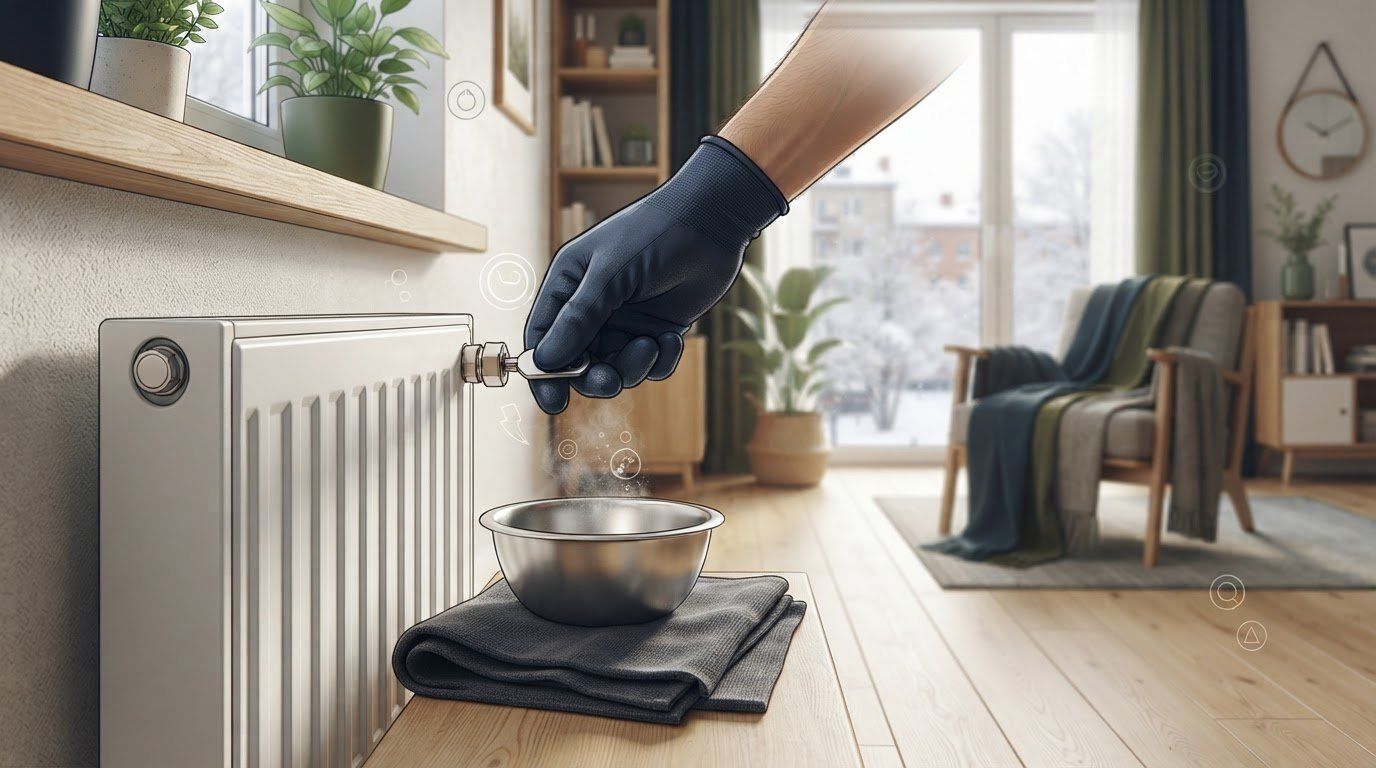
Prepare a small dish, soaking cloth and radiator air bleeding key or a suitable tool for the valve. Keep the dish just below the valve, but the cloth is used to collect drops and protect the surfaces nearby. Before working make sure that the valve is recognisable and has no visible damage. If you can't determine which element is the bleed valve, do not hurry to cut it.
How to reduce the risk of scalding and leakage?
The radiator can have hot water, so work carefully and the valve opens slowly without force. Do not unscrew the radiator connections or other parts. If the valve does not move, it seems damaged or starts to heat, stop working instead of trying to release it with more force. Also, if you cannot reliably determine how to open it. If you are still learning how to delight the radiators, first select the manufacturer's instructions and prepare the accessories.
How to light the radiator step by step?
If you want to understand how to air the radiators, start with the instructions of the particular radiator or heating device. Valves and systems differ, so there is no one universal turn or setting. If you can't determine how to use the valve, do not continue the work.
How to open and close the bleed valve?
- Check the instructions. Check how the bleed valve must be opened and in what condition the heating equipment must be in. If the instructions specify a specific sequence, follow it.
- Place the container. Stay under the valve and hold a cloth at your hand to collect drops of water.
- Open the valve slowly. Use a suitable key or tool and rotate the valve only as necessary. Do not unscrew it completely and use force. If an audible air leak allows it to cool while noticing that water does not leak.
- Close the valve carefully. When water starts to leak from the valve, close it according to the manufacturer's instructions. If water flows along the valve or leaks, close it gently as possible and stop working. Do not force the valve.
What do you need to check after the lights are gone?
After work, make sure that the valve is closed and there is no leak around it. When the radiator is working again, check that it warms more evenly. If the heating system is closed, check the pressure and, if necessary, adjust it only according to the instructions of the equipment. Knowing how to degass the radiators, it is also important to follow the indications of your system. If you are not sure about the indications or the problem recurs, stop self-correcting and ask the heating specialist to evaluate the system.
What if the radiator does not still warm after the air is removed?
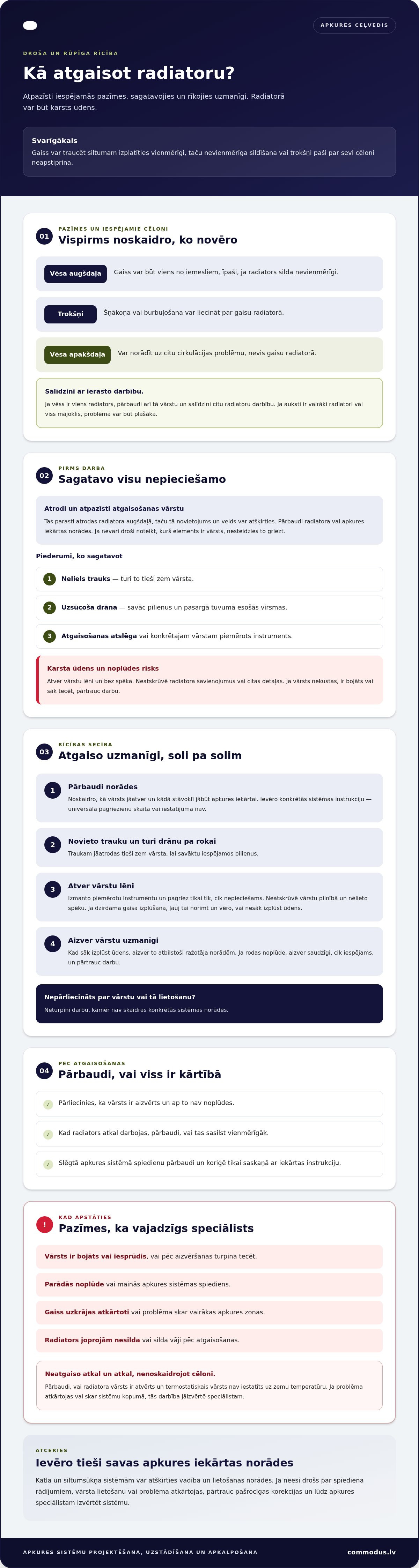
If the radiator is still cold or heated weak after cooling, it does not open the valve again and again before you have assessed whether the problem affects only this radiator or heating system more widely. Check that other radiators and heating areas are operating normally. If there are several cold radiators, the cause may not be in the same radiator.
When is the test sufficient and when is the specialist needed?
You can first see if the radiator valve is open and if the thermostatic valve is not accidentally set to a low setting. However, stop working and turn to a specialist if:
- The bleed valve shall be damaged, trapped or continue to heat after closing;
- leakage or changing heating system pressure occurs;
- air in the radiator accumulates repeatedly or the problem affects several heating zones.
In such cases, re-defrosting may not solve the underlying cause. If the problem concerns the whole system, its performance should be assessed as a whole, rather than limited to testing one radiator.
How is the air bleeding of radiators related to the type of heating system?
The boiler and heat pump systems may differ in the management and instructions for use. Therefore, even if you know how to air the radiators, you will follow the instructions of your heating equipment. Pressure check or adjust only in the manner indicated in the instructions. air-water heat pump information.
Commodus designs, installs and serves heating systems. If the radiator problem recurs or affects the system as a whole, professional evaluation of the heating solution can help to determine the most appropriate next steps.
Act safely and evaluate the heating system in general
If the radiator is heated unevenly or by bubbling it, the air can be one of the reasons, but these signs are not approved by themselves. Before the test is carried out, prepare the dish and cloth and open the bleed valve slowly, only as necessary. Then make sure that the radiator is heated more evenly and the valve does not flow.
Now you know how to de-light radiators, but remember: repeated air accumulation, damaged valve, leak or several cold heating zones may indicate a wider problem of the system. In such cases, no re-adjustments without instructions and ask the specialist to evaluate the heating system.
Commodus offers the design and installation of heating systems, as well as maintenance and support of heating equipment. If you want to get acquainted with available solutions, See Commodus heating solutionsTake care of both the operation of the radiator and your safety.
Frequently Asked Questions about Defrosting Radiators
Is the radiator allowed to air while the heating is in operation?
Not always, because the procedure for air bleeding depends on the heating equipment and system. Before the work sample manufacturer's instructions and make sure you can safely access the valve. Note that hot water can flow out of it. If the instructions are not clear, whether the heating must be switched off or the equipment must be cooled, not starting the air bleeding and consulting a heating specialist.
How do you know if there's air in the radiator?
The air may be one of the reasons if the radiator heats unevenly or it hears bubbling and slump. However, these signs alone do not confirm that the air is at fault. Check that the cool is only one radiator or more rooms, and see whether the thermostatic valve is not closed. If the entire house is not warmed, the cause may be wider heating system.
How long is the radiator to be lit?
Unified duration of air bleeding is not applicable to all radiators and heating systems. If you want to understand how to de-light the radiators in your home, open the valve slowly and follow the instructions of the particular equipment instead of trying to observe a certain number of minutes or turns. If the valve fails, leaks or is not sure when to stop work, close the valve if you can do it safely and ask for specialist help.
Should the heating system pressure be checked after the radiator is extinguished?
In a closed heating system, a pressure check may be necessary, but only in accordance with the instructions of the particular installation. Do not use a universal pressure value and do not add to the system if you do not know how to do so. If the pressure changes repeatedly or you are not sure about the reading, do not make any adjustments to your hand and contact the heating specialist.
What if the radiator is still cold after the airing?
Check that the thermostatic valve is not closed and does not warm only one radiator. If it is still cold, do not open the bleed valve repeatedly for no clear reason. Even if you know how to de-light the radiators, the problem may be caused by malfunction of the valve, circulation or the entire heating system. If noticeable leakage, the disturbance recurs or cold is in several zones, stop self-executing and consult a specialist.
Comments