Installation and regulation of the thermostat: a practical guide to housing
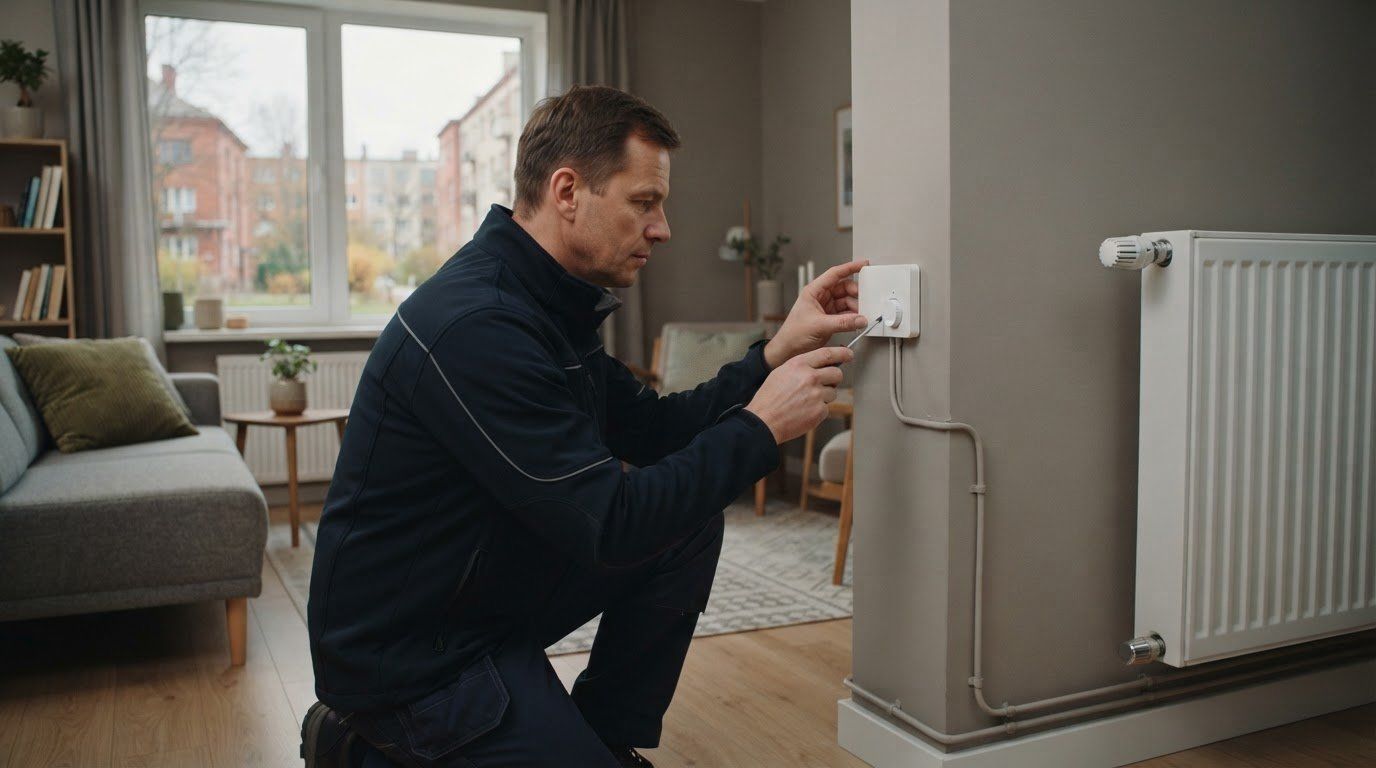
Why does a thermostat show one temperature, but isn't as warm as you would like? Often, the problem isn't in the device itself. It can be influenced by the location, setting and compatibility of the thermostat with the heating system. Therefore, the installation and adjustment of the thermostat begins with a simple but important question: what should this device manage?
In order to be pleasant and to have heating to respond to room temperature, not just the temperature indication, it is worth understanding how the system works in general. In this guide you will find out where to place the thermostat, how to control the radiator and the wall thermostat, and which settings affect daily comfort.
Why does the location and installation of the thermostat affect heating comfort?
The room thermostat measures ambient air temperature and compares it to the set value. It then transfers the heating system demand to increase, reduce or temporarily stop the heat supply. However, the sensor measures the conditions directly at the device, not in the whole room. If the thermostat is cooler or warmer than in the place where you are staying, the heating can work differently than you expect.
The thermostat controls the heating by the sensor's measured temperature, so its position influences the extent to which the reading corresponds to the conditions of the room. More insight is given Definition and principles of operation of thermostat.
How does the thermostat affect the temperature of the room?
The temperature set is the desired limit, not the guarantee that the room will be warm at any moment. If the temperature set is higher than the sensor reading, the thermostat requires heat. Heating equipment or zone reacts according to system management and the temperature of the room changes gradually. Therefore, both the thermostat reading and the way the heating distributes the heat into the dwelling should be taken into account.
What places can distort the temperature reading?
Select a location where the sensor reflects the temperature of the room as closely as possible. The indicator can be affected by:
- a gas-tight housing at a temperature of 20 °C or more;
- direct sunlight, which warms the sensor faster than the rest of the room;
- household appliances that emit heat and produce a higher temperature locally;
- furniture or curtains which cover the sensor and prevent the air exchange around it;
- a wall with a surface which may be cooler than the air of the room.
For example, a solar-monitor can read higher temperatures and reduce heating demand, although the other side of the room is still cool. Therefore, the installation and adjustment of the thermostat must be considered together with the heating system: the setting will only help if the sensor is located in a suitable location and the system is able to react appropriately.
How to choose a thermostat for your heating system?
First, find out what the thermostat will manage: a separate radiator, a warm floor area, a boiler or a heat pump. The appearance and convenience of the device is only part of the choice. It is important that the mode of control and connection match the specific heating equipment and its instructions. In the Latvian market, the prices of simple mechanical or electronic thermostats are about 50-70 €, but they vary depending on the type of device and manufacturer.
What is the difference between a mechanical and an electronic thermostat?
The mechanical thermostat is usually set with a swivel control, so the control is direct and simple. An electronic model can have a screen and additional settings, such as the possibility of creating a temperature schedule. This allows you to plan a different mode when nobody usually stays in the home and the comfort temperature for the time of return. Functions vary, so evaluate the options of the model, rather than just relying on the designation √electronic √.
The choice of the thermostat is determined by both the required control functions and compatibility with the heating equipment. The boiler or heat pump may have a certain control mode and connection requirements. Therefore, the thermostat should not be selected only by screen or programming options. The installation and adjustment of the thermostat must be coordinated with the instructions of the equipment and the operation of the whole system.
What should be taken into account for the thermostat at the heat pump or at the warm floor?
In the case of a heat pump, the control shall comply with the principle of operation of the installation. Air-to-water heat pump guide You will learn more about the operation of this heating solution. Also, the choice of the sensor for warm floors depends on the control solution: the room air sensor measures the air temperature, while the floor sensor reads the floor temperature. If both systems have a different task, each has to meet the manufacturer's instructions.
If you plan a heating solution or want to evaluate its management, Get to know air-water heat pumps solutions and evaluate the system together with Commodus specialists.

How to properly install a thermostat and choose its location?
To control the heating of the thermostat according to the needs of the room, first evaluate the system and not immediately start to install. Find out which equipment or zone it will manage and select the location where the measurement describes the space to be heated. Then read the instructions of the thermostat and heating equipment. The type of connection and management requirements may vary, so one scheme will not be suitable for all solutions.
How to choose the thermostat position in the room?
Choose an unobstructed space in a room whose temperature is representative of the zone under thermostat regulation. If the device is located behind the curtain or furniture, air movement around the sensor may be limited. However, a hallway or rarely used space may not reflect the conditions in the living area. Avoid the space near the window or door, direct sunlight and heat-emitting techniques. After installation, check that the reading and the heat response change according to the setting.
When should a thermostat be connected to a heating specialist?
If the connection requirements are not clear, the thermostat is designed for a boiler or heat pump or system with several controlled areas, connect and evaluate the solution to a heating specialist. Note both the thermostat instructions and the conditions of control of the particular installation. Do not use a random connection scheme, as requirements for different models and heating systems may differ. After the installation, check whether the system reacts in the prescribed way.
The Commodus team designs, calculates, installs and serves heating systems. If necessary, evaluate the heating management, Contact Commodus specialists.
How to regulate the thermostat and act if heating does not respond?
If there is no comfort in the room, do not start by accidentally changing your settings. First check the thermostat reading and operation mode, then follow the user manual of the model. Control options vary depending on the device and its connection to the heating system.
How to adjust temperature and daily regime?
Set the desired temperature and check for active other mode or pre-set schedule that changes the assigned value. If the thermostat allows to create daily mode, adjust it to the daily home rhythm following the guide. Change the settings gradually and watch the heating response. Frequent and rapid temperature changes make it difficult to assess whether the new settings have improved comfort.
Why can a thermostat not match the feeling of space?
Check that the sensor is not warmed by the sun or by nearby household appliances, or is not blown by a pipe and is not covered by a curtain or furniture. These conditions may affect the measurement, so the thermostat reading may differ from the temperature sensation in another part of the room. Also, make sure you look at the control of the space or area you need, rather than the setting of another area.
If the mode and set temperature are checked but the heating still does not react, the problem may not be related to everyday settings. Do not change connections manually: the device or control diagnostics must take into account the manufacturer's instructions and the operation of the whole system. The installation and regulation of the thermostat is only one stage, the heating comfort is also affected by the overall management of the system.
If the non-conformity persists or the compatibility of the thermostat with the equipment is not clear, Commodus specialists can help to evaluate the heating system as a whole and advise on its design and installation.
Take the next step to smart heating management
If the operation of the thermostat still raises questions, evaluate not only the device itself, but also the heating solution in general. Installation and regulation of the thermostat will be more thoughtful if management meets the needs of the house and the operation of the particular system.
The team advises on heating systems, as well as they are designed, calculated, installed and serviced. Practical experience in heating projects of various sizes helps to evaluate both the comfort of individual rooms and the solution for the whole housing. Start with your needs and a clear understanding of the existing system.
Talk to the specialists of the heating systemto make the next step in the housing situation.
Frequently asked questions about thermostats
Can the thermostat be installed at any boiler?
No, compatibility depends on the thermostat model and the control requirements of the boiler. Before choosing compare the instructions of the two devices, in particular the mode of control and the intended use. The thermostat name or the general connection scheme is not enough to conclude that it will be useful. If the instructions do not provide a clear answer, evaluate the heating solution in general.
Where to place the thermostat in the room?
Choose an unobstructed space that describes the normal temperature of the space or zone that the device will regulate. If the thermostat controls the heating of the living room, the position in another room may not reflect the comfort required. Avoid the proximity of direct sunlight, scoop and heat-emitting technique. After installation, check that the display of the device matches the conditions of the space.
Can the thermostat be connected by itself?
You cannot generalize it because the connection depends on the thermostat model and heating equipment. Read the instructions of both manufacturers and follow the requirements specified therein. Do not use the scheme just because it is designed for a similar-looking device. If the indications are unclear or there is no certainty about the system's compatibility, attract a heating specialist. Thus, installation and regulation of the thermostat is assessed in the context of a particular system.
Why does the thermostat show the correct temperature, but the room is not comfortable?
The indicator can be accurate directly to the sensor, but not reflect the conditions in another part of the room. Check that the device is not warmed by the sun or by nearby machinery or cooled by a drain. Also make sure that the thermostat is not hidden and regulates the space or area required. If the discomfort persists, evaluate not only the temperature measurement, but also the functioning of the heating system.
Can one thermostat control the heat pump and the warm floor?
The answer depends on the heat pump, the heat pump, the heat floor control solution and the manufacturers' instructions. Find out if the device is designed for the equipment and if the function of the floor sensor is required. The indoor air sensor and floor sensor measure different conditions, so their tasks are not interchangeable. In case of uncertainty, evaluate the system together with a specialist.
Comments