Low pressure in heating system: how to determine optimal level
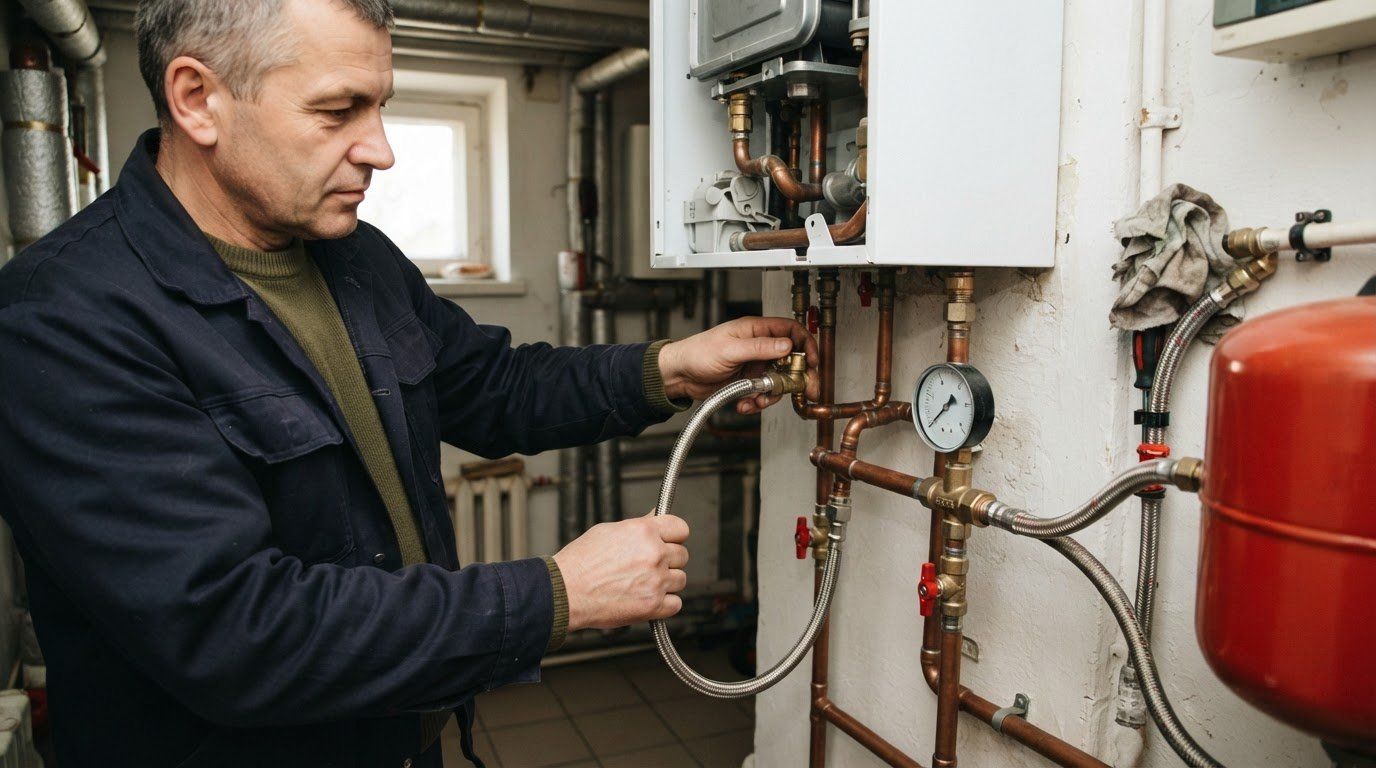
Low pressure in the heating system is usually when the closed system gauge shows less than 1 bar; the recommended pressure is usually 1-2 bar. However, the same reading is not suitable for each house: the optimal value also depends on the height of the system and its specifications. Therefore, not only the number of the gauge is important, but also whether the pressure remains stable.
If the pressure falls or the radiators heat unevenly, the concerns are understandable. Water replenishment alone is not always sufficient because the cause may be air in the system, leak or expansion tank malfunctions.
In this article you will find out how to determine the pressure applied to your heating system, what to check in the expansion tank and how to properly fill and delight the system. Let's also see how the height of the system affects the initial pressure required and how to recognise situations where refilling does not solve the problem.
What air pressure or back pressure should be in the expansion tank?
The backpressure of the expansion tank is determined by the specific system, rather than selecting one number for all homes. Usually it is set at least 1 bar and at least 0.3 bar below the pressure of the cold heating system at the tank's connection. For example, if the cold system shows 1.2 bar, the back pressure of the tank may be around 1 bar. If the system shows 1.5 bar, the back pressure for example is 1.3 bar.
The expansion tank compensates for the increase in water volume by heating it and helps to stabilise the pressure. Its membrane separates water and air compartments. If the air pressure decreases or the membrane is damaged, the manometer reading can fluctuate rapidly, the water warms or cools. If water leaks out of the air valve, the membrane will no longer separate the compartments and the tank must be replaced.
The back pressure is checked by a manometer when the boiler is turned off and the water side of the tank is not under pressure. Therefore, the tank is first disconnected from the heating system or otherwise safely released from the water pressure. If the air compartment is under pressure, it is inflated to the required value.
The difference in height of about 10 metres corresponds to a change in static pressure of 1 bar. Therefore, a tank placed 2 metres above the lowest element of the system will require a different setting from the tank at the lowest point. In such a case, its back pressure may be up to 1.1 bar.
When checking the cause of the pressure decrease, check the boiler, pipes, connections and radiators. Moisture, dripping, rust or water traces at the safety valve can indicate water loss. When heat transfer heat is heated, the expansion tank must take the excess volume and return it to the system when water cools. In practice, the water reserve is taken to the extent of 10-30% of the tank volume. If the losses recur after filling, the water replenishment is not sufficient to eliminate the cause.
What is the optimal pressure in the heating system?
The pressure of 1-2 bar is usually applied in a closed heating system, but the precise indication is determined by the height of the building and the construction of the system. In the central heating system of a apartment building, the pressure can be 3-5 bar during operation, so it cannot be compared to the indication of a private house.
Loss of water leakage and pressure
Water leakage means loss of the heat transmission, which gradually reduces the manometer reading in a closed system. Even a small leak at the pipe, valve or connection can recur and become more noticeable over time.
For example, a discharge of 0,5-1 litre per day during a month can reduce the pressure by 0.3-0.5 bar. See boiler, radiator connections, pipes and collectors in search of moisture, dripping, rust traces or sludge. If the discharge pipe of the safety valve is moist, the valve can not fully close. Low pressure in the heating system that recurs after replenishment indicates that you need to look for the cause of loss, not just supplement water.
Prevention of leakage and air into the system
To prevent leakage and air accumulation, a source of water loss must be found and air removed from the heating circuit. The air can interfere with the flow of water, cause bubbling sounds and cause uneven heating of radiators.
First compare the manometer reading in a cold and warm system. The difference of about 0.5 bar is a sign worth watching together with the radiator operation and leak signs. Radiator airs are released when the circulation pump is turned off, then check the pressure and, if necessary, the water is supplemented slowly. Frequent addition is not a solution because it does not prevent water loss.
If pipes, joints and valves look dry, leakage may be hidden in the floor, wall or behind trim. In such a situation, the pressure loss can be determined by professional acoustic or tracer gas diagnostics that help localize damage up to a few tens of centimeters. If the manometer continues to fall or the safety valve skips water, a system check is required, rather than refilling.
Heating system filling and radiator air bleeding
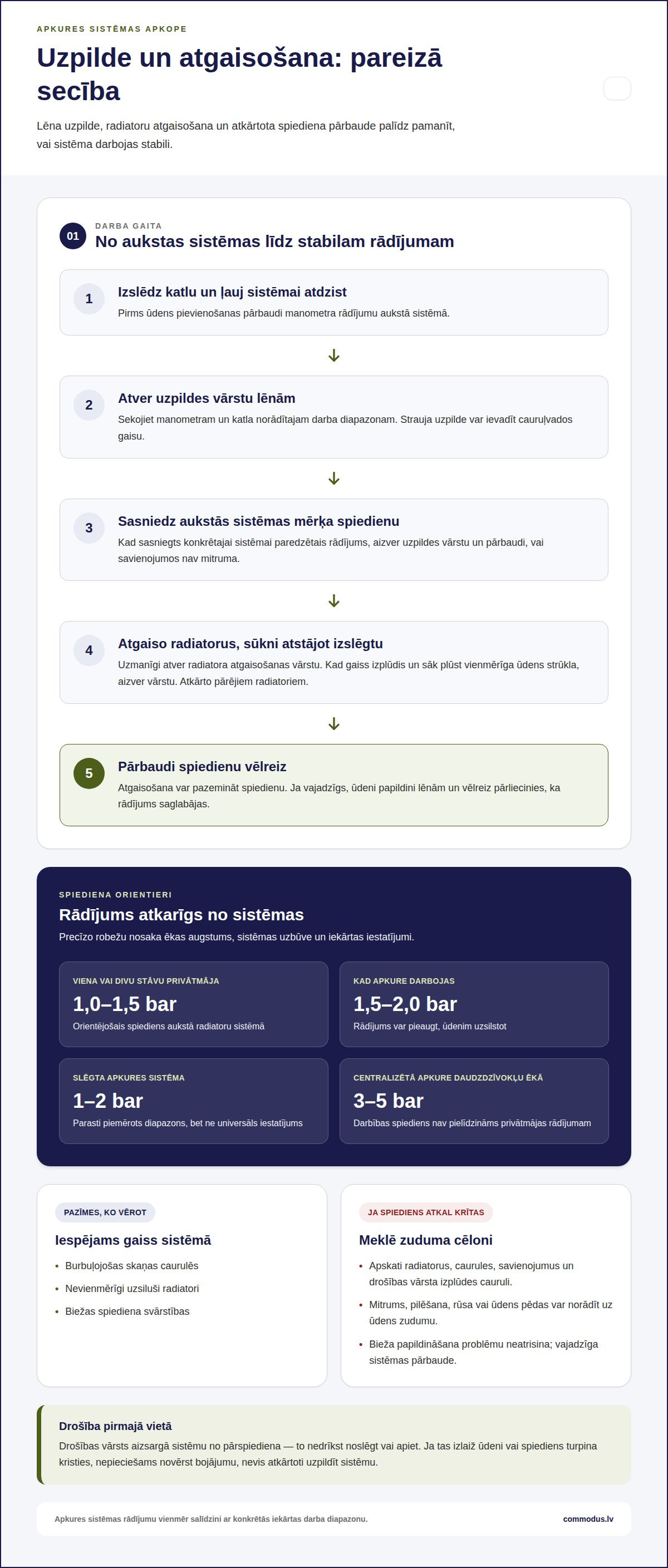
The closed heating system is filled slowly, while following the manometer and the specified work range of the boiler. In a one- or two-storey private house radiator system, the temperature-indicating pressure is 1,0-1,5 bar. When the heating works, the reading can be 1.5-2.0 bar. The exact limit is determined by the settings of the particular system.
- Turn off the boiler and let the system cool. Check the manometer before adding water.
- Slowly open the filling valve and observe the pressure reading. Rapid filling can inject air into the pipes.
- At the cold pressure prescribed for the system, close the valve. Check that the connections have no moisture.
After filling, air air can interfere with the flow of water and create uneven heat. Leave the circulator off and carefully open the radiator bleed valve. When the air is leaking and the water jet starts to flow, close the valve. After air bleeding all the radiators, check the manometer again. Air bleeding can reduce the pressure of the system, so, if necessary, replenish the water slowly.
Check also automatic air-discharging devices at the pump or collector. Water foot or dripping at the body may indicate damage. The air-discharging unit may release water and contribute to pressure loss, so this problem should not be confused with normal air accumulation in the radiator.
If the pressure falls again after filling, repeated addition of water does not eliminate the cause. Check the radiators, pipe connections and the discharge pipe of the safety valve. The safety valve protects the system from excess pressure, so it must not be closed or bypassed. If visible leakage or automatic air bleeding continues to drip, the damage must be prevented.
The air in the heating system may be shown in bubbling sound pipes, unevenly heated radiators and frequent pressure variations. If these signs appear together, it is worth checking the radiators and system's operation, rather than assuming that the problem is only in low pressure. In the example described in the article, the next, higher radiator has a pressure of approximately 0.6 bar. This is a specific example.
Automatic air-dischargers in the heating system can start dripping or juging over time, so their condition must be checked, especially at the pump or collector. Visual water traces may indicate that the air-discharger is damaged; in this case it must be replaced by a new one, rather than a normal accumulation of air in the radiator. In one heating system described in the forum, its pressure was 1.9 bar. This individual example does not in itself determine the pressure required in another system, therefore compare the reading to the working range of the heating equipment and see if it remains.
Determination of initial and maximum pressure of the heating system
The initial pressure shall be determined by the height of the system, but the maximum limit shall be determined by the permissible values of the boiler and the safety valve. These are different: the initial pressure shall provide sufficient pressure in the cold system, while the maximum limit shall not be exceeded during the operation of the system.
The initial pressure must be at least 0,3 bar greater than the static pressure and must not be lower than 1 bar. For example, if the static pressure is 1 bar, the initial reading shall be at least 1.3 bar.
This helps to understand why the same manometer reading does not fit each building. Radiator height, pipe length and water volume in the system influence the required pressure and circulation. If the pressure is too low, water can not effectively reach the highest points of the system. In turn, too high pressure increases the load of the boiler, pipes and connections.
The maximum system pressure calculation is 10% lower than the cooling pressure of the safety valve. At the same time, the limit specified by the boiler manufacturer is respected. For example, if the maximum pressure indicated by the boiler is 3 bar, the system settings should not be chosen ignoring this limitation. The safety valve protects the heating system from excess pressure, but it does not replace the correct initial pressure calculation.
Practically compare the reading of the cold system manometer with the calculated initial pressure, then watch how it changes when the boiler is warmed up. If the pressure is repeatedly approaching the maximum limit or is falling rapidly, check the expansion tank setting, the safety valve and possible water loss signs. The circulating pump does not correct the pressure it has chosen in itself. Knowing the initial pressure and maximum limit, it is possible to assess whether the fluctuations are due to water heating or system problems.
In an open heating system the maximum static pressure is about 1.52 bar, so such a system cannot be assessed by the same settings as a closed system. In a centralised heating system, the recommended pressure in an apartment building in the off position is 2.0 - 4,0 bar. These differences emphasize that the reading must be linked to the type of system and the height of the building, rather than the one general number.
In the example discussed in the article, the minimum pressure of a cold heating system at the lowest element is 1.6 bar, but the recommended range at the lowest element is between 1.6 bar and about 2.5 bar. The pressure range of two- to three-storey private house heating system is between 1.5 and 2 atmospheres. The temperature of the heating system for buildings with four or more floors is between 2.5 and 4 atmospheres.
Commodus: Air conditioning
Commodus offers air conditioning, pellet boilers, solar panels and solar collectors. If the pressure problem makes you consider changing the heating unit or home energy solutions, first find out the cause of the pressure fluctuations. A new machine does not in itself prevent leakage, damaged expansion tank or valve problem.
A boiler of pellets may be relevant if you plan to change the type of heating, while solar collectors and panel kits are other home energy solutions. Air conditioning helps to regulate the room microclimate, but does not stabilise the pressure of the heating system. Choose a solution that meets the specific needs.
Visit commodus.lv to get acquainted with Commodus offer.
Choose a heating solution by thinking about the next step
If the low pressure in the heating system recurs, the next step is not automatic replacement of the boiler. First, distinguish between preventing damage to the existing system and the desire to transform the heating of the house. This helps to clearly define the need and understand whether a specific failure needs to be prevented or a new installation needs to be assessed.
If you are considering changing the heating system, Commodus offers air-water, air-air and ground heat pumps. An appropriate solution is assessed taking into account the type of heating of the building, existing equipment and housing needs. Before the conversation write down what is a concern in the current system and what result you want to achieve. This will help discuss solutions without distinguishing between removing the pressure problem and modernising the heating system.
Contact Commodus, to discuss which heating solution meets your expectations. A clear next step helps you make a wise decision.
Frequently Asked Questions
When should a specialist for testing the heating device be called?
The expert's assistance is required if the manometer reading falls or the boiler is not operating in normal mode after filling the system. Also, look at the water traces at the safety valve, humidity at the connections of the pipes and radiators, which remains cold. If the leak point is not visible, the specialist may also check the pipes hidden in the floor or wall.
What will you learn from this article?
See how to assess the manometer reading, taking into account the height of the building and the construction of the heating system. The article also explains how the backpressure of the expansion tank affects the system operation and how to replenish water after the radiators are extinguished. This knowledge helps to distinguish between changes in the single reading and situations where damage is to be found.
How to determine the required expansion tank volume?
The volume of the expansion tank is determined by the amount of water present in the heating system, the temperature change of the heat transferr and the permissible pressure. The difference in height and the working pressure of the safety valve shall also be taken into account. In the calculation of tanks up to 15 litres, a minimum of 20% water reserve shall be provided; the greater reserve shall be at least 0,5% of the system capacity but not less than 3 litres.
Why can pressure begin to decrease?
The pressure may fall due to water loss, damaged safety valve or damage to the expansion tank membrane. Also, air is released from the system during the air bleeding of radiators, and the reading can change. If the low pressure in the heating system recurs, write down manometer readings in a cold and warm system. Comparison will help to see if the pressure continues to fall.
Closed and open heating systems: what is the difference?
In a closed system, the pressure is indicated by a gauge in a closed circuit, but the change in water volume is compensated by the expansion tank. In an open system, the expansion tank is connected to the atmosphere, so the principle of its operation and the pressure assessment differ. To determine which type of system is in your house, check that the tank is open at its highest point.
What pressure is normal in the heating system in the private house?
In a closed private house heating system, usually it is 1 to 2 bar, but the reading depends on the height of the building and the instructions of the system. A range of 1,0 to 1,5 bar is often used for heating one or two-storey radiators in cold condition. Compare the reading with the boiler instructions and evaluate it in a cold system, as the pressure changes.
Comments