The most modern heating systems in 2026: how to understand what is really modern?
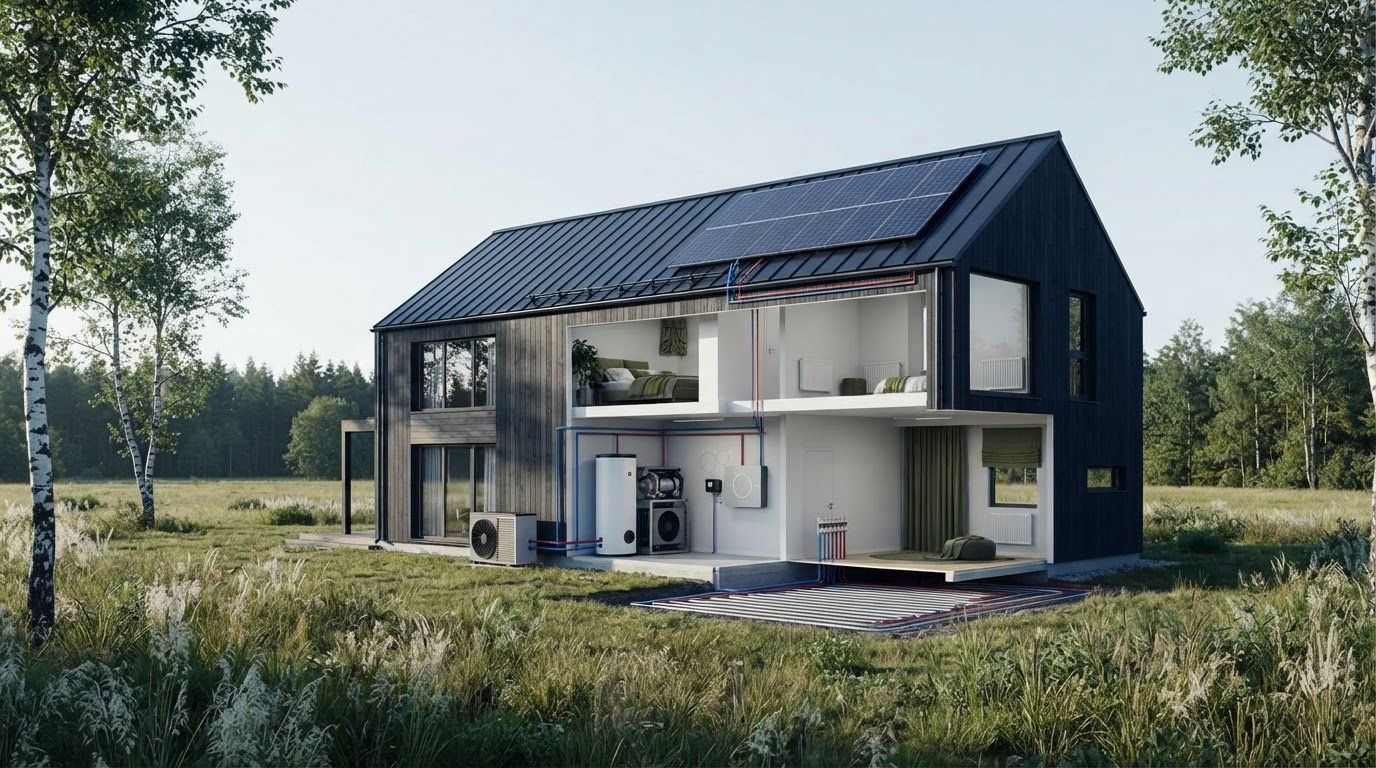
The latest heating equipment is not always the best choice for your home. Also, in 2026 the most modern heating systems are not one particular type of equipment: the most suitable solution depends on the heating performance of the building, the existing heating, energy source and daily habits. Therefore, compare the heat pump, boiler or hybrid system, assess not only the name of the plant, but also its compatibility with the existing heating, the amount of installation and the needs of future maintenance.
In this article we will look at how modern heating solutions work and what to take into account when choosing a system for different buildings in Latvia. Find out how to compare air-water, air-air and ground heat pumps with pellet, wood-based or gas condensing boilers, as well as how solar energy solutions can complement heating. We will look at not only the equipment, but also the calculation, design and maintenance of capacity.
What does modern heating mean by 2026?
Modern heating is not just the latest boiler or heat pump. It is a system adapted to the needs of the building, where the source, distribution, management and preparation of hot water work in a coordinated way. So, the most modern heating systems in 2026 are assessed not only according to the age or technology of the equipment, but also according to how carefully it is calculated and connected to the other building's engineering systems.
This view helps us to understand why a solution that fits one building may require a significant change in another. Heating interacts with ventilation and air conditioning, so an overview of the overall system is also useful. heating, ventilation and air conditioning (HVAC) systems.
Installation or complete heating system?
Heat pump or boiler is a source of heat, but the system does not end with it. Heat enters the premises through a distribution system, for example, radiators or warm floors, while control helps to adjust the heating operation to daily needs. Also, the preparation of hot water should be provided for separately. Before selecting the equipment, check whether existing radiators or heated floors, hot water solution and control will be suitable for it. If the components are not mutually coordinated, a new installation in itself does not mean a smart modernisation.
Short definition: A modern heating system is a solution calculated, controlled and mutually agreed for the needs of the building, not just a new installation.
Why does the building's conditions determine the direction of modernisation?
Start the evaluation with the heating demand of the building, existing infrastructure and habitants. Find out how the heat is divided, how hot water is prepared and which rooms need to be heated on a daily basis. These conditions affect both the most suitable heat source and how much the existing system needs to be changed.
There is no one solution that fits every building. Capacity calculation and design helps to evaluate the particular conditions, not just to choose the equipment because it is new. Therefore, the starting point for modernization is to study the needs of the building and its use, but the choice of technology is the next step.
The most modern heating systems in 2026: how do they differ?
The most modern heating systems in 2026 are not the same technology. Heat pumps move the heat in the environment, but boilers heat is obtained by burning fuels. Also, the way heat reaches the premises and the preparation of hot water is different. for domestic heating technologies and energy efficiency.
Heat pumps and boilers: different principles for heat generation
The air-to-air heat pump generates heat from the outside air and transfers it to the heating water. The air-to-air heat pump heats the rooms by transferring heat to the indoor air. The ground heat pump uses the heat stored in the ground. In turn, the pellet and wood boilers burn biomass, and the gas condensation boiler heat is generated by burning the gas. Air-to-water heat pump selection also has the meaning of how it fits with the building heating system.
- Type of system: Air-water Working principle: Outdoor air heat is transferred to water heating.; What to evaluate in design: Existing heat distribution and hot water needs.
- Type of system: Air-air; Operating principle: Outdoor air heat is transferred to the room air.; What to evaluate in design: Space layout and heated areas.
- Type of system: Ground heat pump; Operating principle: Uses ground heat.; What to evaluate in design: Location and ground solution options.
- Type of system: Granules, wood or gas boiler; Working principle: Heat is generated by burning fuels.; What to evaluate in design: Existing infrastructure and everyday use.
How does solar energy and ventilation complement heating?
Solar panels produce electricity, while solar collectors perceive solar heat that can be used for water heating. They can complement the heating solution, but do not replace the heat pump or boiler as a heat source. Ventilation and recuperation solutions are assessed together with the building's air exchange and heat loss. When designing the system, it is important to match these technologies with the needs of the building. Commodus designs heating, solar and ventilation solutions to assess them in a single perspective. design and calculation of heating systems.

How to evaluate modern heating for your building?
By choosing the most modern heating systems 2026, start not by comparing a particular model, but with a clear idea of the building. This approach helps to understand whether existing heating can be adjusted, whether more changes are needed and which solutions are worth exploring further.
- Collect the building data. Find available building documentation and information on the current heating consumption and system operation.
- Check out the existing heating. Check how heat is distributed, how hot water is prepared, and which parts of the system can be stored.
- Calculate the capacity required. Heating system specialist evaluates the building's heat demand and space heating needs to justify the choice of solution with calculation.
- Compare the appropriate options. Consider energy sources, heating distribution, daily use and future maintenance needs.
What data is needed to calculate the heating system?
The building's plans and other available documentation, information about the existing boiler or heat pump and radiators or warm floors, as well as information about the premises that need to be heated daily. Write down the habit of the occupants and the needs of hot water. The Kommodus heating cost calculator can help to compare heating methods and fuels, while the calculation of the capacity of the heating or heat pump also requires an assessment of the building and its heating system.
How to compare solutions without unwarranted promises?
When comparing the modern heating systems 2026, assess the same criteria: equipment and installation volume, necessary changes in the distribution of heating, management solutions and maintenance needs. The price of the equipment alone does not reflect the whole project, because the costs are also influenced by the infrastructure of the building and the necessary additional works. When requesting the offer, compare what it includes: equipment, design, calculations, assembly and system adjustment. Commodus offers special installation prices for the sold equipment. If you are considering the air heating solution, the air-air heat pump guide helps to get to know this system.
Commodus specialists advise, calculate, design, install and service heating systems. Talk about the evaluation of heating solution for your buildingto build on the real needs of the next step.
From heating assessment to modern system with Kommodus
The most modern heating systems are chosen according to the needs of the building in 2026, but finding a suitable solution is only part of the work. It is important that the plan is transformed into a coherent project, where the choice, calculation, assembly and further maintenance of the equipment constitute a single process.
Design, assembly and maintenance within the same operating cycle
The work begins with an evaluation of the needs of the building and then is followed by design and calculation, which links the chosen heating equipment with the existing heat distribution and other elements of the system. Thus, not only the equipment itself can be assessed, but also its suitability for the building. After the solution is developed, Commodus performs the installation and provides system maintenance. The practical experience of the team helps to focus on the issues that need to be solved before the work begins.
The offer includes air-water, air-air and ground heat pumps, pellet and wood-based boilers, gas condensing boilers, solar panels and solar collectors. None of these solutions are automatically suitable for any building. For example, CTC air-water heat pumps can be compared to other solutions, taking into account the needs of the building and the existing heating system.
How can we take the first step?
Before consulting, collect the building documentation, information about the distribution of existing heating equipment and heat, as well as observations about the use of premises and the needs of hot water. The clearer the starting idea, the more targeted you can discuss the solution. The heating cost calculator helps to compare heating methods, but the most appropriate direction is also determined by expert calculation and design.
If you want to find out what heating solution is in accordance with your building, discuss your heating solution with CommodusStart with the information and questions available, then you can plan the evaluation step by step.
Take the next step to a smart heating
When choosing the most modern heating systems 2026, start with your needs, not with the purchase of a specific equipment. Write down what you would like to maintain or change in the current heating solution. This starting point will help in the conversation about the choice of the most modern heating system to focus on your home's most important.
You do not need to know all technical terms or immediately choose the machine. Collect the information available about the building and your questions, then you can discuss the most appropriate direction step by step.
Talk about the heating of your building with Commodus and take the first step towards a wise decision.
Frequently asked questions on heating in 2026
Is there State aid for the replacement of the heating system available in 2026?
Yes, in 2026 the EQF programme provides support for renewable energy installations, including heat pumps, solar panels and collectors, as well as for new pellet boilers. Support may reach up to 70% of the purchase costs of eligible equipment, but for holders of the Honorary Family Certificate up to 85%; for one project the total support shall not exceed € 15 000. The programme also allows the addition of renewable equipment to an existing system.
Can a modern heating system be installed in a building that already has heating?
Yes, the introduction of a new heating installation can also be planned in a building with an existing system. The evaluation can determine whether the stored radiators or heated floors and whether the existing heat source can be supplemented by another solution.
Is the most modern heating system always a heat pump?
No. The term "the most advanced heating systems" 2026 ● does not mean that all buildings should choose the same technology. The heat pump may be suitable in one situation, but another also evaluates the pellet, wood or gas condensing boiler. If a building already has a functioning boiler, it is possible to consider supplementing the system rather than accepting that everything needs to be changed.
Can the heating system be combined with solar panels?
Yes, solar panels can be part of a common building energy solution, including a heat pump. Panels generate electricity, but how systems are connected and coordinated with the building needs, determine the design solution and the selected equipment. Therefore, heating and solar energy are worth planning together. Commodus advises and designs both systems, adapting the solution to the specific object.
Comments