Problems with warm floor heating: causes and solutions
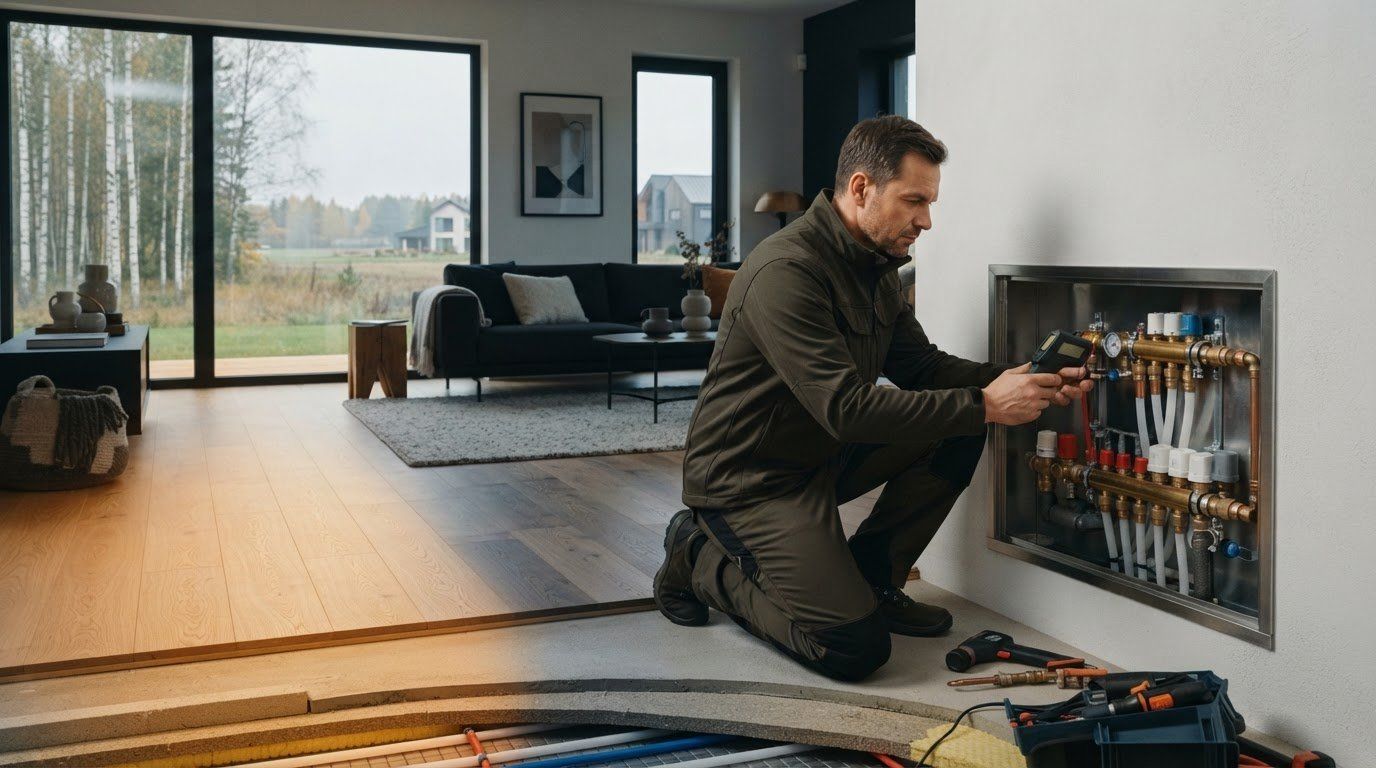
Does a cold floor always mean that a damaged thermostat? Not necessarily. If heating is switched on, but the room remains cool or the heat spreads unevenly, problems with warm floor heating may be related to settings, control, collector, heating circle or heat source. Therefore, first it is determined where and when the disturbance appears, rather than immediately changing any component.
To understand whether a thermostat, collector or heat source could be faulty, start with simple and reliable tests. Check the temperature readings, compare the rooms where heating works with those where the temperature is cool and record when changes appear. In this article you will find out how to distinguish between the most common symptoms that you can check yourself and when you need expert evaluation. The next step is supported by a more precise symptom and observation of system operation, rather than by a guess of one detail.
Problems with warm floor heating: how to recognize symptoms?
The floor of Vēsis or the slow heat of the room does not necessarily mean that the whole heating system needs to be changed. First, it is clear how the disturbance is manifested directly: whether the floor is cool throughout the room, the heat breaks unevenly or the space heats slower than expected. These differences help to understand what to check further.
The characteristics of the floor heating systems are different, as explained in the report on floor heating systemsThe importance of one symptom depends on the specific solution.
- The floor is cold throughout the room: heat is not felt in any area.
- Heat is uneven: one place the floor seems warmer, another cooler.
- The room warms up slowly: the floor may seem warm, but the desired temperature in the room is not reached as fast as expected.
- The action changes: re-changes in thermostat readings, control activity or heating mode.
Why can the floor surface and room temperature differ?
The surface of the floor may not seem warm, although the room is comfortable. In turn, a warm floor can be felt, but the air in the room can still be cool. Check that the cooling is in the whole room or only in a certain area, and compare it with the reading of the thermostat.
Which signs indicate a malfunction?
If the temperature, control or heating changes recur, record when they appear and in which room. Note that the temperature temperature readings or the selected mode are also changing at the same time. This information will help to assess the situation as a whole. If you notice any leak or visible signs of deterioration, do not continue to use hand-held checks. Professional evaluation of the system is required. Problems with warm floor heating are solved by first identifying symptoms, then choosing the next step.
Why is the warm floor not warm or uneven?
Similar symptoms can be caused by different reasons. If the floor does not heat, the setting of the thermostat, the control signal, the heating mode and the heat supply should be taken into account during the test. If the heat is distributed unevenly, the functioning of the collector and individual heating circles may also be important. One observation is usually not sufficient to determine which part is to blame.
Is the problem in the thermostat or control settings?
Start with a thermostat display: is it switched on and shows the intended mode? Check that the temperature has not been accidentally chosen for a reduced or other mode that does not meet the current need. If the thermostat does not require heat, the control may not have a signal to activate heating. Compare the settings with the space in which the heating works. If they seem right, but the situation does not change, this does not mean that the thermostat is damaged.
How does the heating circle and heat source affect the operation of the floor?
The heat source, such as the air-water heat pump, prepares the heat for the heating system. The collector divides it over the floor of the heating arcs serving different spaces or zones. If the heat does not reach the collector, several circles may be cooler. If the problem affects one area, attention should also be paid to the corresponding arc and its control. The circulating pump helps to ensure water movement within the system, however, its operation should not be determined only by the way the floor feels.
If the heating source and the floor arcs act as one system, they are worth evaluating together. Air-to-water heat pump operations guide. Compatibility of materials is useful construction engineers' recommendations on heated floors. If problems with warm floor heating continue, Commodus can help to evaluate the heating system as a whole and its maintenance.
How to safely check the warm floor: successive initial diagnostics
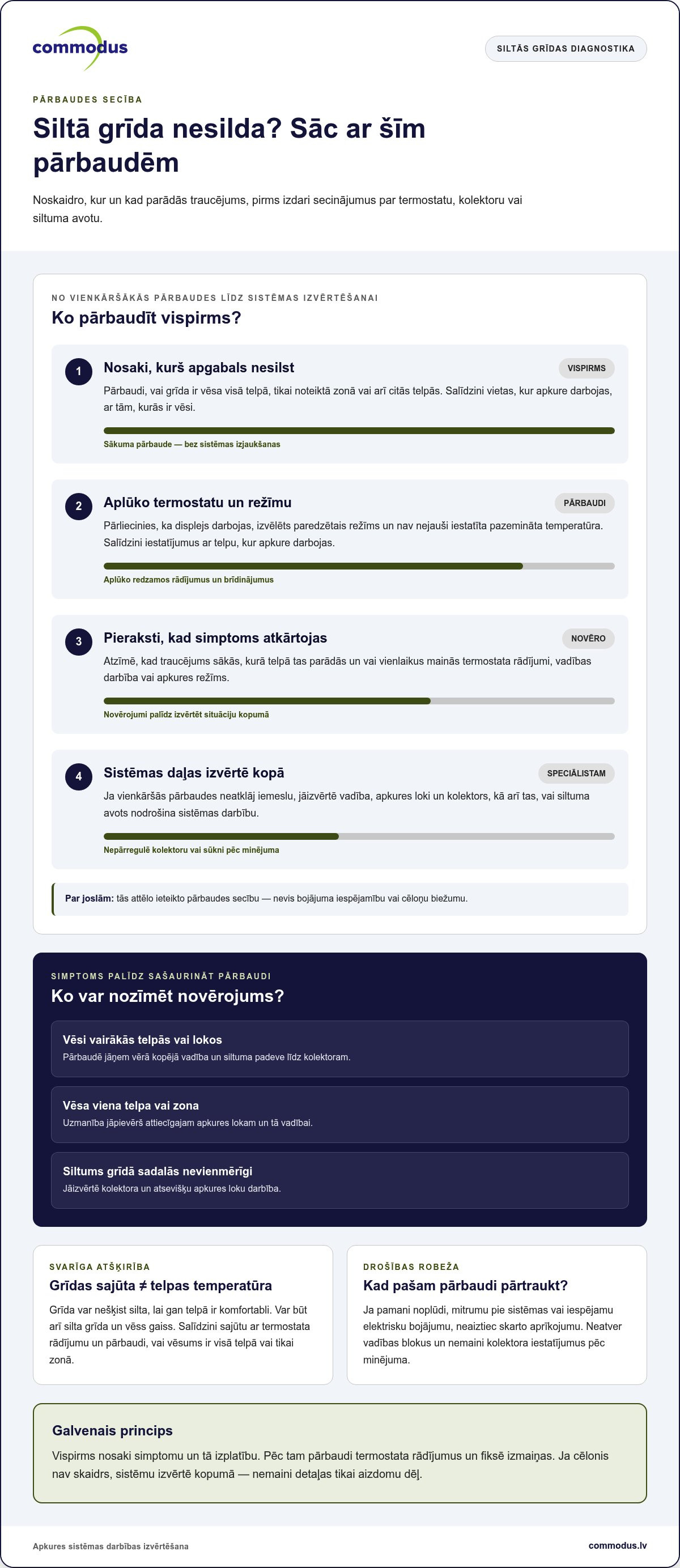
Start with observations, not with the breaking of the system. Record that the floor does not heat or heat unevenly when it started and or the sign recurs. Note whether the disturbance affects one zone or several and if in other rooms heating works as usual. Such a record will help to understand what to check further and will be useful to the specialist when evaluating the system.
What can the master test without breaking up?
Check that the display is running, which mode is selected and whether a warning is visible. Compare the settings of the rooms where the heating is operating with those where the control shows that heat is required, but the room does not heat, record this observation. Do not try to control the collector or pump manually.
- Observations: thermostat readings, mode and visible warnings.
- Comparison: which spaces or areas are affected by the disturbance and or other heating operating.
- Recording: when the symptom appears and what changes in the control is accompanied by it.
General information on construction supervision in Latvia can be found at: State Construction Control Office on the site. It does not replace the technical inspection of the specific heating system.
When is the test better to stop and call a specialist?
If you notice leakage, moisture at the system or possible electrical damage, stop manual checks and do not touch the affected equipment. Do not open control units, do not transfer unknown parts and do not change collector settings after guessing. Problems with warm floor heating may be associated with several parts of the system, so it is safer to evaluate the system as a whole.
Apply for heating system consultationif the initial observations have not helped to understand the cause of the disorder.
How to prevent warm floor problems and restore smooth heating?
If the thermostat mode has been set inadequately, correct it and watch if the heating operation changes. If the setting is correct but the same room still does not heat, it is necessary to carefully evaluate the heating circle and system in question. Repair or adjustment should not be chosen by guess, because similar signs may create different parts of the system.
What is the expert's assessment of the warm floor system?
The test course depends on the particular system design. The specialist can evaluate the control settings, heating circles and collectors, as well as whether the heat source ensures the system operation. This helps to determine whether the disturbance affects one area or is related to the common heating system. When the cause is determined, it can decide whether adjustment, maintenance or repair is necessary.
If the warm floors work together with the heat pump, it is important to evaluate cooperation between both solutions rather than change one machine only due to suspicion. air-water heating solutions.
How does planned heating system maintenance help?
Regular evaluation of the heating system helps to notice changes in its operation and to make well-considered decisions on future use. Maintenance does not replace diagnosis of a particular disorder, but allows you to view the system as a whole rather than focus on just one part. If problems with warm floor heating recur, system evaluation helps to understand the possible cause and plan the most appropriate solution.
See heating system solutions and choose a thoughtful next step.
Act in good time to return home comfort
If the floor does not heat or the room heat unevenly, one symptom does not yet mean that the whole system needs to be changed. First, you will have to record where and when the disturbance appears and check the visible settings of the thermostat. If it does not reveal the reason, the heating circle, collector and heat source must be assessed together. This approach helps to identify a suitable solution, rather than to change the details after the guess.
The assessment of the system helps to understand whether regulation, repair or maintenance is necessary.Commodus provides advice, design, assembly and maintenance of heating systems and heat pumps.
Apply for heating system consultationto assess the situation and agree on the next steps.
Frequently asked questions about warm floor heating
Can you regulate the warm floor yourself?
Yes, you can initially check the thermostat mode and the visible settings. Do not interrupt the collector, circulator or electrical parts and regulate components that you do not know. If it is not clear how the system is built, or if you notice leakage, damage or warning signal, stop self-checking. The specialist can evaluate the possible cause and recommend a suitable solution.
Why is the warm floor heated in one room, but not in another?
The reason may be different thermostat settings, control signal or operation of the heating area. First compare the thermostat modes of the rooms and find out if the cool zone does not heat permanently or only occasionally. The fact that heating in other rooms is running does not yet prove the damage to the specific part. If the problem persists, the system should be evaluated in general.
What if the warm floor does not heat, although the heating is turned on?
Record when the disturbance started and whether it affects one or more rooms. Check the thermostat mode, settings and visible readings, but does not open the system components. Problems with warm floor heating can cause different parts of the system, so cold floor does not in itself show the cause. If there is no heat or visible leakage, damage or warning, stop the check and apply professional evaluation.
Can the heat pump be associated with problems of the warm floor?
Yes, the heat pump and floor heating can be part of one heating system, so the disturbance at one stage can affect the overall operation. However, the cold floor alone does not confirm the heat pump damage. Also, the thermostat control, collector and heating circle should be taken into account. The potential cause is determined by evaluating the system and its structure in general.
Comments