Remote heating management in the dwelling
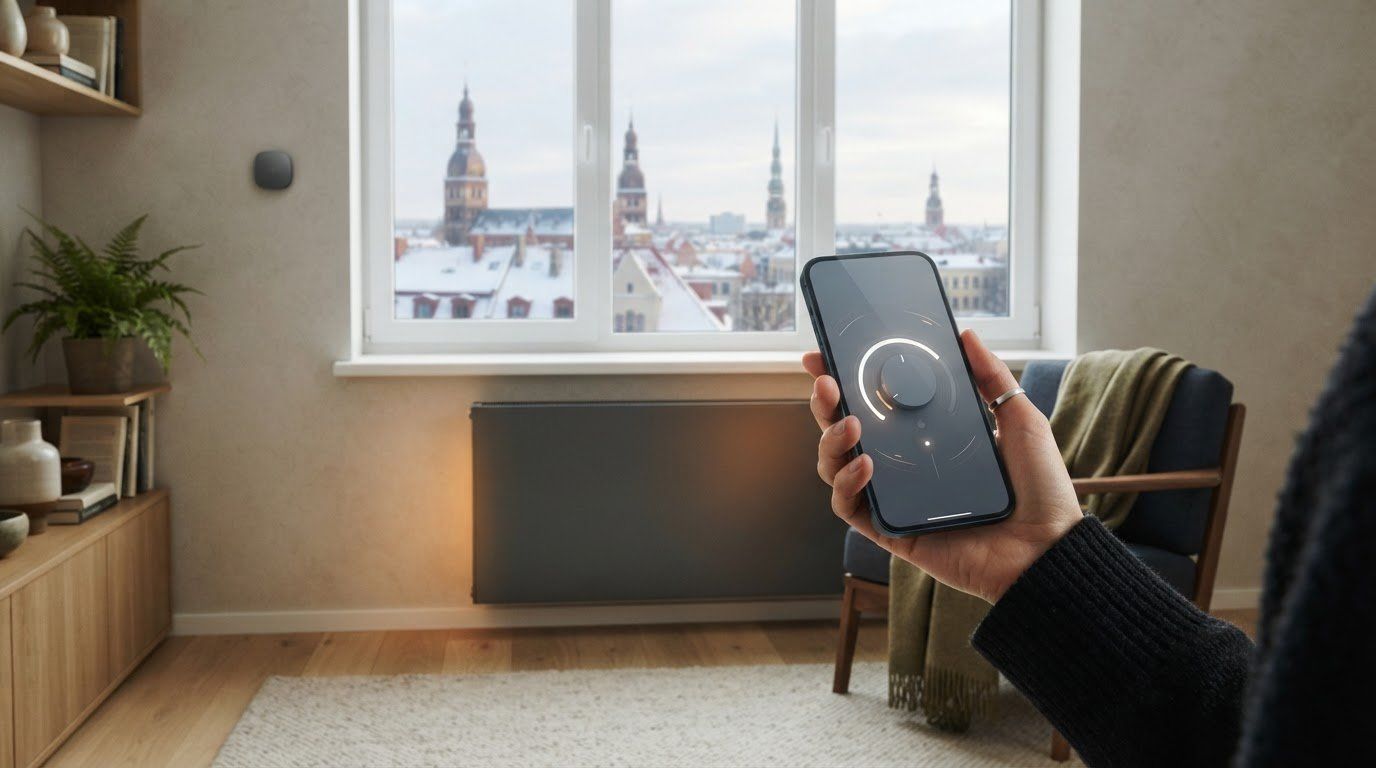
The temperature does not have one adjustment interval for all dwellings. Remote heating control allows the thermostat to switch on or off the heating equipment when the temperature of the room deviates from the set. Therefore, the system reacts to temperature changes, rather than making adjustments after a certain minute schedule.
It is understandable to expect that heating will react immediately to a change in weather or pre-set schedule. However, the result is influenced by both indoor and outdoor temperatures and the chosen heating mode. The graph can help to lower the temperature while nobody is in the house and restore comfort before the occupants return.
In this article you will find out what determines the frequency of temperature adjustments, how weather conditions affect the heating curve and how to adjust the schedule to the daily rhythm. Let's also look at the control with the thermostat and app to make it easier to understand what the system is doing and why.
How often does the system adjust the temperature?
The thermostat switches on or off the heating unit when the temperature of the room deviates from the set. Therefore, adjustments are made according to actual temperature changes, not necessarily after a certain period of minutes.
Heating schedule planning
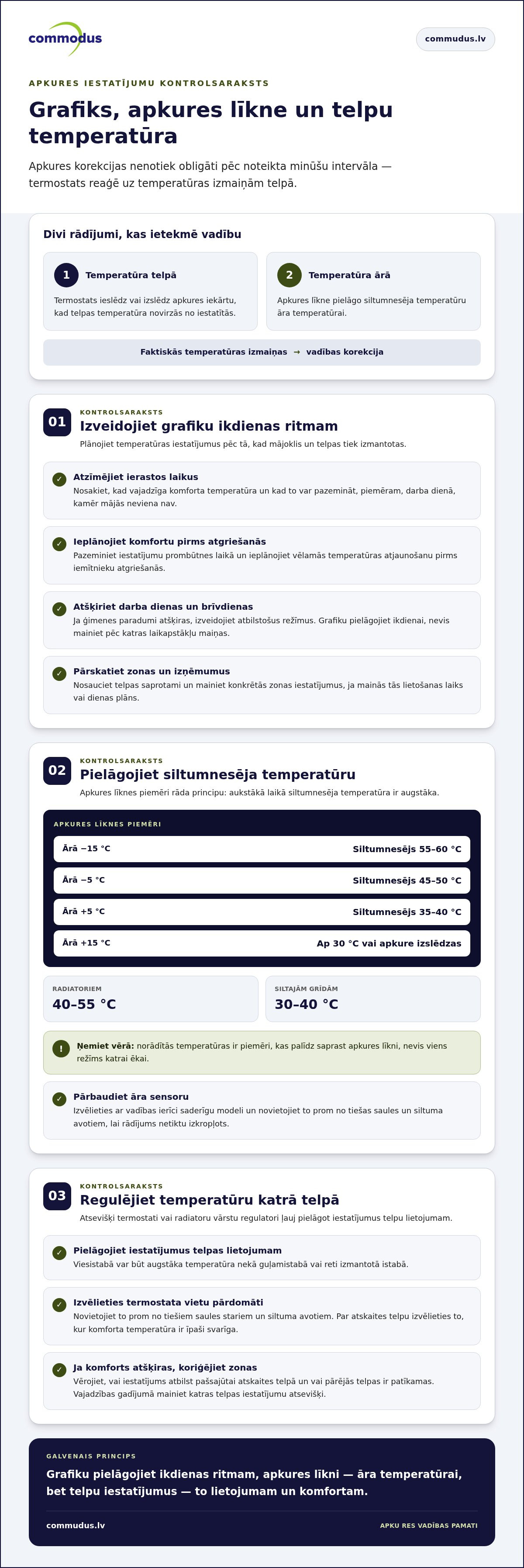
In the graph, please specify when the comfort temperature is needed and when it can be lowered. For example, if nobody is present at home on working days, plan a lower setting at this time and restore the desired temperature before returning. Adjust the schedule for family life instead of changing it after each change in the weather. It can avoid unnecessary heating while maintaining comfort.
Temperature adjustment of the heat transferor
The heating curve changes the temperature of the heat transferor according to the outdoor temperature. For example, at an outdoor temperature of -15 °C, the heat transferor may be 55-60 °C, but at -5 °C it is sufficient to have a temperature of 45-50 °C. At +5 °C, an example is 35-40 °C, while at +15 °C it may be sufficient to have a 30 °C or a heating can be switched off. The range of 40-55 °C for the radiators is given, for warm floors 30-40 °C. These examples help to understand the principle rather than single mode for each building.
If the system has an outdoor temperature sensor, select a model compatible with the control. Place it so that the temperature reading of the outdoors is not distorted by a direct sun or heat source. A more accurate measurement allows the control to adjust the heating curve to the weather.
indoor temperature control
Individual thermostats or radiator valve regulators allow you to change temperature in each room. For example, the living room can set temperatures higher than in the bedroom or rarely used room. Place the thermostat away from direct sunlight and heat sources, preferably in a room where a slightly higher temperature is required. The comfort needs of the hosts may differ, so adjust the schedule for the use of rooms and the feeling of being, rather than the same for the entire dwelling.
This approach is particularly useful if the rooms have different applications and temperature settings. The room with higher comfort requirements becomes a reference point, but in other rooms the temperature can be regulated separately. Thus, one measurement should not be taken as an equal characteristic for the entire dwelling. If the thermostat is placed in a room that is normally warmer, control will respond to its reading rather than to the needs of a cooler space. Therefore, consider where the temperature is most important for comfort in everyday life and do not choose a place only for convenient access. After installation, watch if the setting is suitable for feeling in this space and if the rest of the room is still pleasant. If comfort is not even, adjust the settings of each room rather than just rely on the location of the thermostat.
What is weather-related control?
The weather management adjusts the outdoor temperature of the heating operation, but the thermostat responds to the temperature in the room. The choice depends on the heating equipment and what you want to control.
Comparison of thermal mode and weather control
The thermal monitor head regulates the heat output of the radiator in a specific room. The controller controls the heating equipment, while the weather sensor helps it to adapt to outdoor conditions. Smart plugs are designed for compatible electrical devices, not automatically for any boiler. First, when selecting the system, you need to find out if space, boiler or radiator control is needed.
Thermostats can save up to 12 percent of heating costs, but weather management can reduce them by 20-30 percent. They are different management solutions, and the actual impact is related to the heat loss and setting of the building. Wireless thermostat transmitter and receiver communicates after mutual programming. Choose a thermostat that fits with the heating equipment and allows to control the areas required.
Management in the apartment and in the private house
In the apartment, the control often refers to radiators and individual rooms. In the private house, control options may vary depending on the heating system. Before choosing whether the system allows to change the temperature of the radiators, heating schedules or both. Remotely controlled systems can use an app, wireless thermostat or weather control.
Risks and restrictions
In Latvia, requirements and safety conditions depend on the equipment and the type of connection. Install the thermostat and controller according to the manufacturer's instructions, especially if the system is connected to the boiler or electricity grid. In a apartment building, take into account the structure and control limits of the existing heating system. If the internet disappears, remote commands of the apps are not available, but local control may continue if the devices are supplied with electricity.
Heating graphics and remote adjustment
Well-designed heating schedule begins with understanding the daily rhythm of the house. Write down which days of the week the family habits vary and which rooms are used in the morning, evening or only occasionally. For example, if breakfast takes place in the kitchen on weekends, but during working days, homeworkers leave earlier, create different working days and holiday regimes.
Before you enter your settings, arrange the space and zone in the app with understandable names. The terms "Latvian" and "bedroom" help you to quickly find the required control section, especially if there are several sensors in the system.
- Check your normal times. Write down when family members usually use kitchen, living room and other rooms. Please note the days when this rhythm changes regularly, for example because of remote work or groups.
- Create appropriate modes. Set up the working day and holiday settings in the app, and name the areas according to their use. If you copy the schedule, use this option only for similar days and then review the settings of each room.
- Make exceptions. A holiday, guest reception or unusual working day can disrupt the normal rhythm. At times, plan a temporary regime change to return the home to your normal weekly plan.
Check the schedule when it is starting to match the real daily routine. If any room is used at a different time, adjust the setting of the area rather than the entire housing plan. For example, evening activities in the living room may require a different mode than in the bedroom.
If the daily plan changes unexpectedly, adjust the specific mode in the management app. Then check whether the changes relate to the right area and whether the normal schedule is still in place in the following days. This check helps to keep the plan arranged even when the daily rhythm changes.
What is remote heating management and how does it work?
Remote control is an additional control layer between the occupant and the heating system. It changes the settings transferred to the system, but does not create heat itself. Remote control allows to adjust the heating activity to the chosen mode and needs of the space.
Such control can be adapted to different types of heating, including a gas boiler, central heating, heat pump, electric heating and warm floors. However, one solution is not automatically suitable for all systems. Before choosing whether control is intended for a boiler, radiator valves or for individual areas. This helps to understand which features will be available directly in your home.
In practice, consider three issues:
- What is the source of heat? Record the type of heating equipment and its control options. For example, in the heat pump and radiator system, check which equipment accepts the control commands.
- How is the divided heating? Determine whether there is a single area or several individually adjustable areas throughout the dwelling. The principle of control of heated floors may differ from the radiator system.
- What result do you want? Choose whether the main objective is to maintain room temperature, use heating schedule or manage separate rooms.
These criteria help to distinguish between the control options and the heating facilities themselves. If the system controls the boiler, its settings influence the heat supply on a wider scale. However, regulating individual premises allows to take into account their different applications. Therefore, first, evaluate the construction of the existing heating system and then determine which functions are really needed.
Look at heating solutions for the houseif you want to assess how the chosen heating unit fits into the overall system.
If the heating management is designed for a particular room, the heating of the system can be controlled by a mobile application from anywhere in the world. This means that the user can access the heating control even if not in the house; most importantly, the application serves for heating control rather than for heat production. Such access is useful if you want to manage the heating of the room remotely, not just in person.
The thermostat of the room can remotely control the boiler and maintain a constant temperature in the room. In this case, the thermostat links temperature maintenance with the boiler operation. Therefore, when evaluating the system, pay attention to whether you want to control heating with a mobile app or use a thermostat of the room that controls the boiler and helps to maintain constant temperature. In both cases, it is about heating management, but the source of heat is still the heating system.
Commodus: Air conditioning
Commodus offers air conditioning and heating equipment, including pellet boilers. If you plan remote control, you also want to evaluate the heating source, separate the functions of the installation and the control system: the boiler provides heat, but the control solution adapts the heating operation to the setting. Air conditioning is a separate solution for maintaining the microclimate of the room.
Commodus also offers solar panel kits and solar collectors. When assessing the possibilities of the house, start with the existing heating equipment and your needs, for example, determine whether you want to replace the heat source or to supplement climate solutions.
Contact Kommodus to discuss the choice of a home-appropriate heating equipment.
Choose a heating solution that matches your home
The next step is to understand what you want to improve: daily management, heating equipment or both. Write down where the rooms require separate temperature control and how the use of the house changes on working days and holidays. These needs will help in the conversation to focus on the essentials and assess how to link the heating management to the chosen heat source.
Commodus offers air-water, air-air and ground heat pumps. Each solution needs to be assessed together with the heating system and usage habits. If you plan to improve the remote heating management or consider the heat pump, discuss what settings and control options are in line with your intention.
Contact CommodusTo discuss the next step in the choice of heating solution for the house. A thoughtful start helps to move towards everyday comfort.
Frequently Asked Questions
What is needed to control heating over the Internet?
Not only internet connection but also stable wireless network coverage is important in everyday life, where the control device is located. If the router is far away or the signal is held by thick walls, the app commands can delay. When choosing the control position, take into account the location of the router and check whether the current status of the system is visible in the app.
What exactly should I manage?
Choose the settings you want to manage according to what you want to change daily. For example, if the most important is heat in certain areas, check whether the control system allows each zone to use different modes. If the heating operation in variable weather conditions is a priority, evaluate the weather management settings.
Can the heating curve be set independently?
The heating curve can be adjusted if the following setting is available in the control panel of the unit. Change one setting at the same time to understand its effect on the temperature of the room. Take a look at the result both in cooler and warmer days, rather than after one brief observation. Note that the heating curve determines the heat transfer, but the temperature setting of the room indicates the desired temperature in the room.
How to remotely control heating by phone or smart home app?
Use the heating system app for the specific control device. Follow the instructions for the application to connect the system to your account. If the heating is connected to the smart home app, the control options depend on the compatibility of the two systems. Before everyday use, check that the space or area chosen in the application corresponds to the actual heating area.
What devices and internet connection are needed for remote heating control?
The system costs depend on its design and installation volume. They affect the number of control elements and zones required, compatibility with the existing heating equipment, as well as the complexity of the connection and installation. In discussing the intention, prepare information about the boiler model and the premises you want to manage.
How much can be saved by remote heating management?
Saving depends on the initial heating regime, heat loss of the building and how long the space is not used. To make a meaningful comparison, write down the heating consumption and changes in settings in similar weather conditions. Take into account other changes such as the number of occupants or the use of the space. This will be able to distinguish the control effect from other consumption factors.
Comments