Warranty conditions for heating equipment and repair costs
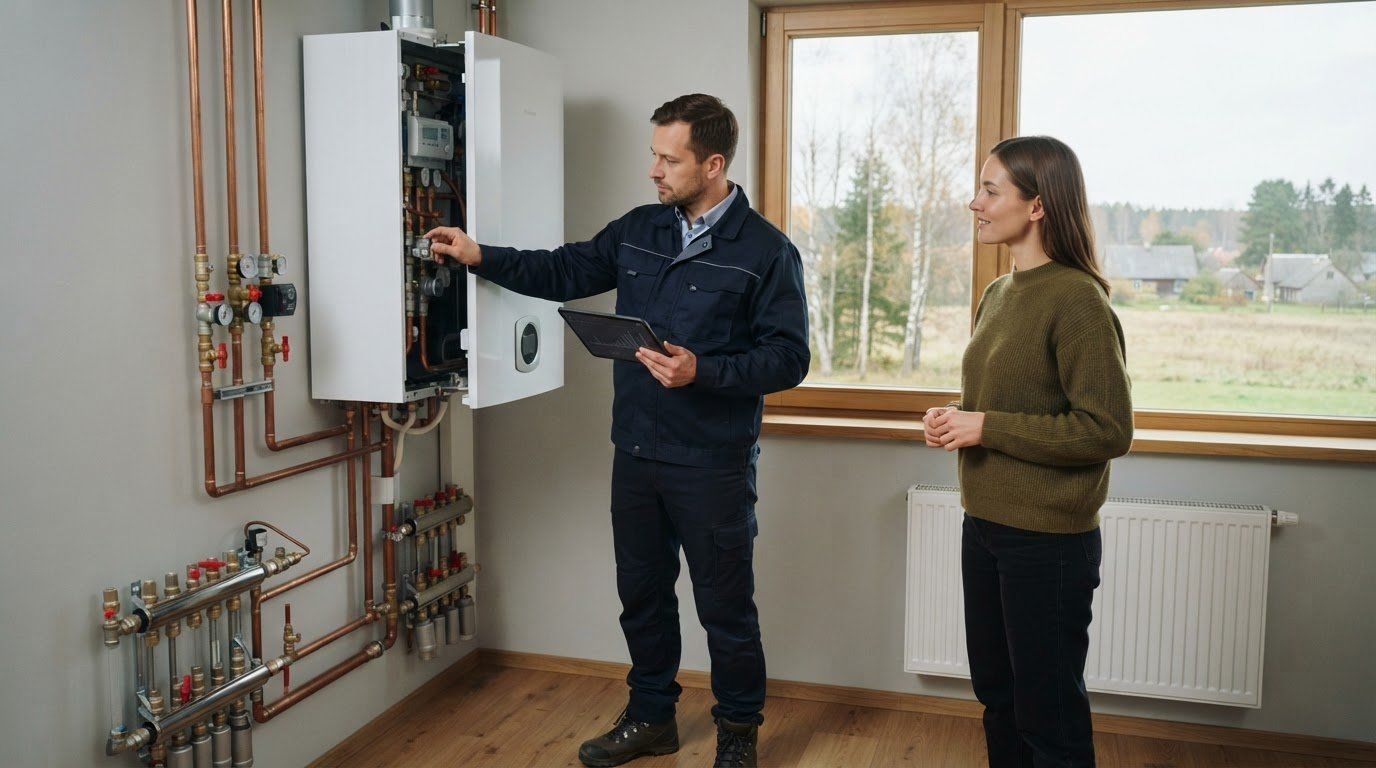
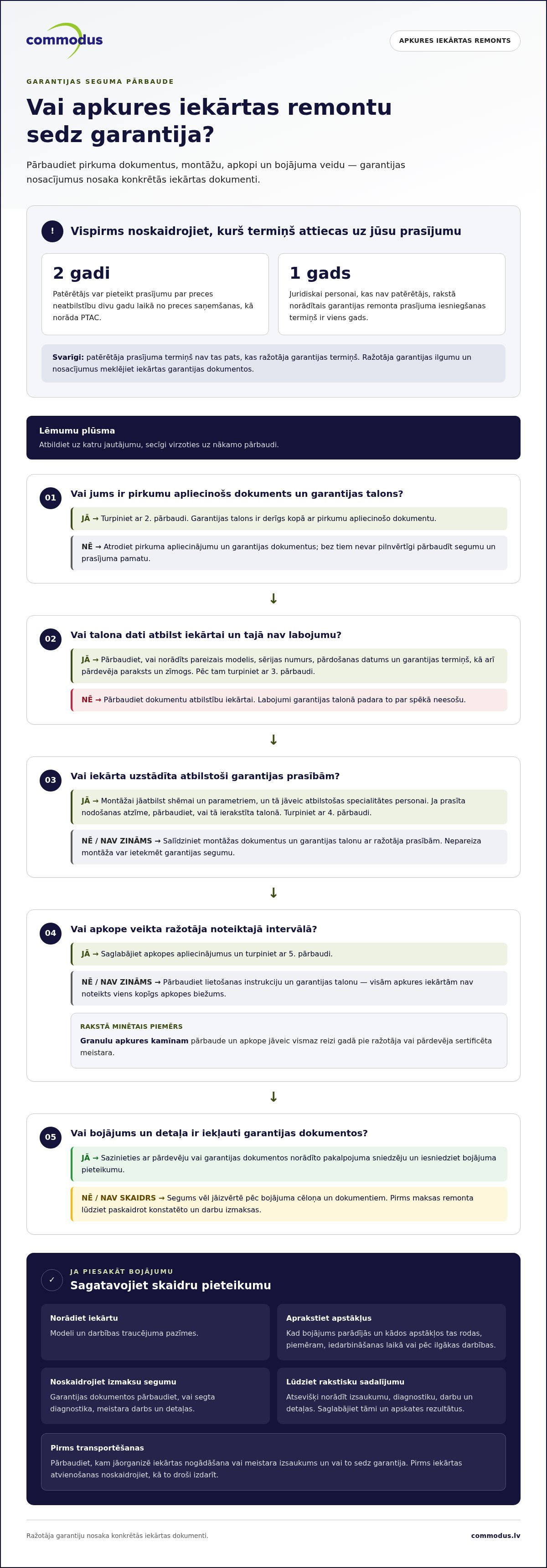
In Latvia, the consumer can apply for a claim for non-compliance of the product within two years of receipt of the claim, as the Consumer Rights Protection Centre (PTAC) points out. This is not the same as the manufacturer's guarantee: its term and conditions are determined by the warranty documents of the particular equipment. To understand whether the defect will be remedied under the warranty procedure, it is important to comply with the requirements set out in the guarantee voucher and to ensure correct installation.
If the heating installation is not functioning, please first find out whether the repair is covered by the warranty and how to apply for it. The warranty conditions for the heating installation may vary, and the repair costs depend on the cause of the damage and the coverage of the warranty. In this article you will find out what the duration of the consumer's claim and the manufacturer's warranty, which may limit the warranty coverage and how to prepare the installation for the repair. Let's also look at what costs may have to be covered and which documents should be kept to make the repair application complete and clear.
Limitations and exclusions to the guarantee
The warranty limits determine when the manufacturer or seller is considering repairs under warranty. To understand whether the damage is covered, consider the heating equipment documents, installation and maintenance.
Manufacturer's warranty, seller's liability and extended warranty
The manufacturer's guarantee is the obligations set out in the warranty documents. The seller's liability for non-compliance of the product is separate from the warranty offered voluntarily by the manufacturer. The extended guarantee extends or complements the original coverage according to its provisions. The consumer in Latvia can apply for a claim for non-compliance of the product within two years of receipt, as indicated by the Consumer Rights Protection Centre (PTAC).
Maintenance frequency for the preservation of the guarantee
To keep the warranty, follow the maintenance interval specified by the manufacturer of the equipment. For all heating equipment, a uniform maintenance frequency is not specified, so be guided by the instructions and warranty voucher. For example, the pellet heating fireplace must be checked and maintained at least once a year by a master certified by the manufacturer or seller.
The manufacturer's warranty covers those damage and details included in the warranty documents. Before applying compare the signs of damage with the warranty conditions and the user manual. Keep the purchase certificate, as the warranty voucher is valid only with it. Corrections in the warranty voucher render it invalid.
The warranty conditions for heating equipment may also require proper installation. Heating equipment, water heaters, pumps and other devices must be installed by the person of appropriate speciality, according to the installation scheme and parameters. If the warranty conditions provide for the marking of the installation to be put into service, it must be entered into the warranty voucher. Check that the voucher shows the correct model, serial number, date of sale and warranty period, as well as the seller's signature and stamp. These data help to ensure that the documents meet the equipment and warranty requirements.
Guarantee repair and transport costs
The cost of warranty repair may include determination of defect, work and details. In warranty documents, check which positions are covered by the manufacturer. For example, replacement of parts and the master's work may be described separately. Therefore, do not consider that any damage costs are automatically part of the guarantee.
First, write down the damage and describe when it appeared. Specify the model of the equipment, the signs of the malfunction and the conditions in which it occurs. For example, write down whether the boiler stops during the start-up or after a longer period of operation. This information will help to assess whether the initial remote diagnosis or on-site inspection of the equipment is necessary.
Diagnostic costs are the cost of determining the cause of the damage, if it is provided for in the particular repair procedure. Before starting work, please check whether this fee is also payable if the defect is recognised as a warranty case. Ask for a written cost allocation, specifying the call, diagnosis, work and details. The cost of the repair depends on the damage, the required details and the amount of work, and it is determined by the application for repair.
Transport costs may include delivery of the equipment to a repair site or a workshop path to the installation. In warranty documents and repair application, check who must arrange for the transport and if it is covered by the guarantee. For example, a wall-mounted heater can be viewed on the site, but a removable device may have to be delivered separately.
If the check finds that the damage is not due to a defect covered by the guarantee, the costs may depend on the cause of the damage and the work performed. Before the repair, please indicate what the master has found and what items will be included in the bill. Keep the application, the results of the inspection and the estimate.
Term of guarantee for individuals and legal entities
The warranty period is the period during which the coverage specified in the guarantee documents is applied. In Latvia, consumers must have a period of no less than two years, except when the shorter period is compensated by other significant benefits or a more rapid depreciation characteristic of the part. Compare the period indicated in the documents with the date of purchase and the proof of purchase.
The consumer's claim period for non-compliance of the goods differs from the guarantee granted by the manufacturer. As stated by the Consumer Rights Protection Centre (PTAC), the consumer in Latvia can apply for the claim within two years from receipt of the goods. This period is not automatically equal to the period recorded in the guarantee voucher. For example, keep both the invoice and the guarantee documents in order to specify the time of receipt of the goods and the basis of the claim in the application.
For a legal person other than the consumer, the time limit for submission of a warranty repair claim is one year. If the heating installation is purchased for the needs of the company, pay attention to the time limit specified in the purchase documents and warranty terms. Before the application, prepare an invoice, model of the equipment and description of the damage.
For some goods in Latvian online stores it may reach 50 years, but this example does not mean that such a long period applies to heating installations. If the product description does not specify the warranty period, it is advisable to clarify it with the seller. Therefore, keep the description of the product before purchase and check whether it is relevant to the model.
In practice, start with three tests: find out who purchased the equipment, find the date of purchase and read the warranty period indicated in the documents. For example, the claim period for the boiler and the boiler of the company may differ due to the status of the buyer. The warranty conditions for heating equipment must be assessed together with the purchase supporting document and guarantee documents, not according to one number of advertising material.
If the warranty period for the heating installation is not available on the offer page, the Latvian online store indicates that it is 2 years. Keep a description of the model so that it can be verified later what the deadline was indicated in the offer at the time of purchase. This helps to distinguish the information provided by the store from the conditions set out in the warranty documents and to assess whether the documents correspond to the specific equipment.
Section 12 (6) of Latvian Consumer Rights Protection Law provides that during the period of exercise of the right of withdrawal the consumer is responsible for maintaining the quality and safety of the product. Therefore, when familiarising with the equipment during this period, care must be taken to maintain its quality and safety. This requirement is related to the exercise of the right of withdrawal, not in itself determines the duration of the warranty repair.
Transfer of equipment for warranty repair
Before sending or disconnecting a heating installation, contact the seller or repair accepting agent specified by the manufacturer and check acceptance procedures. If repairs are refused, please ask for written justification, compare it with warranty terms and submit a claim to the seller or manufacturer.
To make it easier to examine an application, prepare all relevant information in one place. Attach the purchase supporting document and warranty documents, as well as specify the model of the equipment and the signs of damage. Describe when the disturbance started and how it becomes, for example, whether the boiler does not turn on or stops during operation. If the display shows an error message, write down the code or photograph the screen.
Before transferring the equipment, check whether the complete device has to be delivered or a specific test of the part is sufficient. Do not disconnect the heating equipment independently if it cannot be done safely or if the instructions require the involvement of the specialist. Pack the removable device so that the hull and connections are not damaged during transportation. Write down the date of transfer and receive confirmation of acceptance of the equipment.
- Apply a lesion. Send a description, model information and documents to the seller or repair collector.
- Agree delivery. Check where the equipment is to be delivered and whether its accessories are to be connected.
- Hold the position. Before hand over, take pictures of the body and visible lesions.
- Keep the evidence. Keep a copy of the application, a confirmation of acceptance and a repair report.
If the grounds for refusal are incorrect assembly, lack of maintenance or failure to follow the instructions for use, please indicate the specific finding and its relationship to the damage. Attach the installation or maintenance documents if they are at your disposal. This will help to assess whether the refusal is based on a particular irregularity or only on a general formulation.
Before the construction of the pellet heating plant, the flue duct canal must be checked for a certified chimney sweeper who draws up the act of acceptance. If you transfer such a plant, you must keep the act together with the other documents of the installation.
Before adding a document, check that a copy is legible and it shows that it is an act of acceptance. Keep the original so that it can be presented if necessary. If the act is not available, do not claim to be attached, but specify only what you can certify. The act informs the repairer about the examination of the flue duct channel, but does not prove the cause of the damage.
Commodus: Air conditioning
Commodus offers air conditioning and heating solutions, including pellet, wood and gas condensing boilers. If you are considering replacing the installation or renovating the heating system instead of warranty repairs, first, consider what solution is appropriate to your home and daily needs. Commodus also offers solar panels and solar collectors.
When choosing a new equipment, keep your purchase documents and read the warranty terms carefully. Check how the equipment should be registered and what installation or maintenance requirements are set by the manufacturer.
Visit commodus.lvTo get acquainted with the Commodus offer.
Choose the next step for your heating system
If you are considering the renovation of the heating installation, start with the assessment of the needs of the housing and the existing solution. A reasonable choice does not just mean buying a new device: it is important to understand how it fits into everyday life and what comfort you want in the long term.
Commodus offers air-water, air-air and ground heat pumps. They are suitable for various buildings and heating solutions, therefore, evaluate your situation and the planned operation of the system. The warranty conditions for heating equipment must be read before purchase to have clear document requirements and follow-up.
Contact Commodus, to discuss a heating solution that meets your expectations. With a clear need and thought-out next step, it is easier to move to a more comfortable dwelling.
Frequently Asked Questions
What are the warranty conditions for heating plants in Latvia?
In Latvia, the guarantee cover is determined by the documents of the particular equipment, while the consumer's claim period for non-compliance of the goods is a separate issue. As the Consumer Rights Protection Centre (PTAC) points out, the consumer can apply for the claim within two years from receipt of the product.
How long is the guarantee for boilers, heat pumps and radiators?
The warranty period for boilers, heat pumps and radiators should be found in the documents of the model. In Latvia, consumers should have a warranty period of not less than two years, except in certain cases, including faster deterioration of the parts. Guarantees may vary for different equipment, therefore compare it to documents and do not consider that the same period is for the whole category.
What damage and costs are not covered by the guarantee?
The warranty does not cover damage and expenses not covered by the specific regulations. If the equipment, for example, is damaged due to inadequate assembly, the assessment takes into account the installation requirements and the cause of the damage. Diagnostic, transport, work and parts costs may be determined separately. Before the repair starts, ask for a written estimate to understand which items will have to be paid for.
Does the heating equipment guarantee require certified installation?
The heating installation must be installed by a person of appropriate speciality, according to the manufacturer's scheme and parameters. The certificate may be required by the specific model and its warranty terms. The warranty voucher may, for example, include a mark for putting into service. Before installation, read the instructions and save the installation documents together with the purchase supporting document.
What documents are needed to apply for a guarantee for a heating installation?
Please provide the purchase certificate and warranty voucher attached to the application, if any. Specify the model and serial number and briefly describe the damage. If the display shows an error code, take a picture of the defect to be described more precisely. Check that the documents contain the seller's signature and stamp and if the data is consistent with the equipment.
How to submit a guarantee claim in Latvia and what are the time limits for review?
Submit a claim to the seller, accompanied by a purchase document, installation identification and description of damage. The warranty conditions for heating installations can determine where the equipment is to be delivered and which documents must be attached. The time limit for the consumer's claim does not determine the duration of the repair.
Comments