Why a conductor metal tube is required in a borehole: Safety and quality guarantee
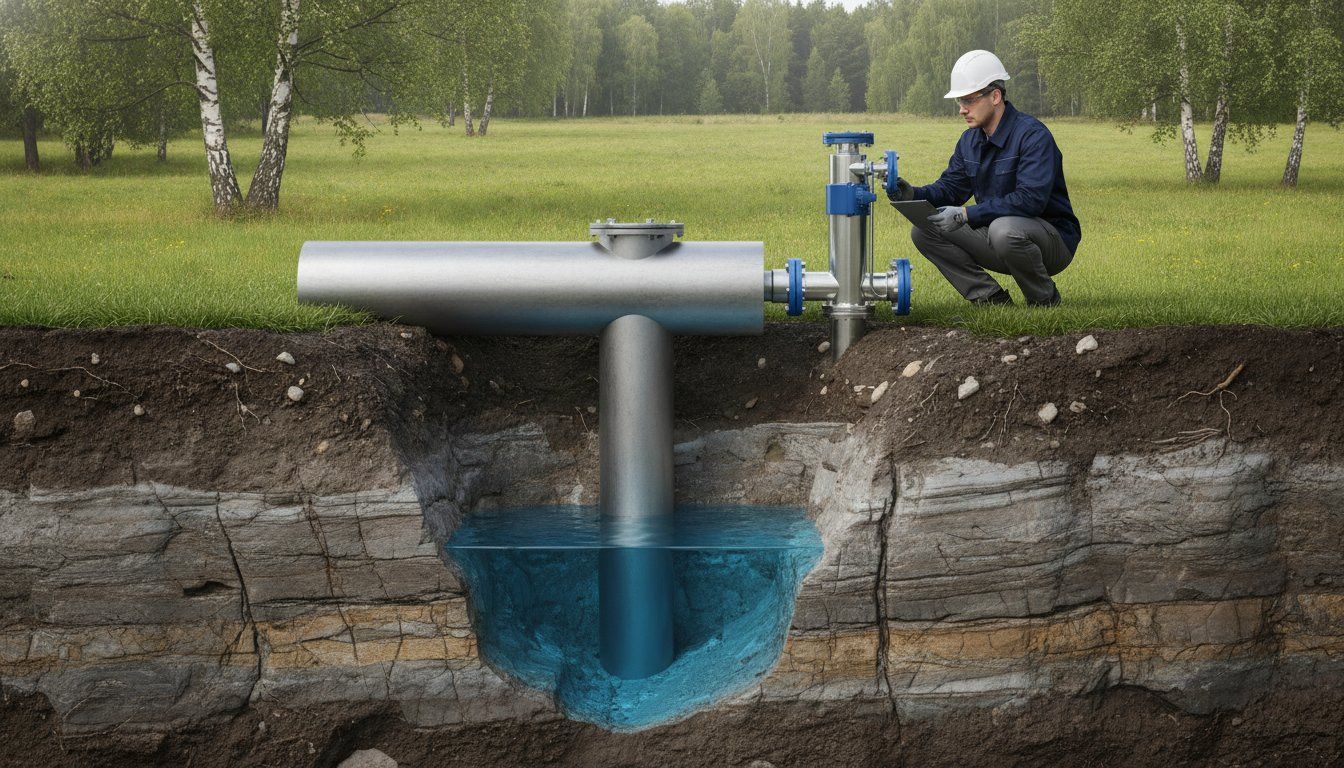
Would you entrust the foundations of your house to plastic pipes, knowing that there are tons of heavy earth layers and potential pollution above them? Most house owners, when planning a new borehole, are most afraid of two things: that drinking water will suddenly become dirty or that the system itself will simply collapse in a few years. We understand that complex engineering terminology often makes choices even more difficult, creating a false feeling that safety is charged at an unreasonably high price.
However, to understand why a conductor's metal tube is needed is the first step towards peaceful sleep and truly clean water every day. It is not just an additional position estimate, but a fundamental guard for your well, which will serve for decades. In this article we will explain in a simple and understandable language how this element effectively isolates surface pollution, prevents invasions and why it is one of the smartest long-term investments in your property energy-dependant. Our goal is to give you full confidence in the chosen technology so that the source of water is safe, high quality and reliable.
What is a metal tube of the conductor and what is its role?
The conductor is a larger diameter metal tube, which is placed by drilling specialists at the very top of the well. It is the first and most responsible step we take when starting a professional a borehole creation. This element serves as a safety barrier between the environment and your future source of drinking water. The main tasks are clear and justified:
- Insulate the well from surface sewage, fertilizers and bacteria.
- Strengthen loose ground layers such as sand or clay to prevent them from invading.
- Protect the internal working pipe and pump from mechanical damage and ground pressure.
Without this element, the well remains vulnerable to earth movements and environmental pollution. Therefore, understanding why a conductor's metal tube is needed is essential for everyone who wants to invest in a durable system.
Difference between the conductor and the working pipe
Our customers often ask why not enough is one pipe. The answer lies in their different functions. The conductor is an external protective layer with a larger diameter, which usually only extends through the first unsafe layers of the ground. The work pipe is located inside it and extends to the water horizon. If the work pipe alone would try to withstand the earth's pressure and isolate the surface water, it would not be able to ensure complete airtightness. Only this two pipe tandem guarantees that the system will operate for decades without crash.
Role of the conductor in the drilling process
The technological conductor is indispensable to keep working safely in deeper layers of the earth. This prevents the upper rocks from falling down when the drill moves down. When the metal tube is inserted, the space between it and the well walls is carefully cemented. This cementing is critical. It creates impermeable "corches" that prevent surface pollution from passing along the outside of the pipe to the clean water horizon. It is a guarantee of engineering quality that we never ignore in our work.
Technical need: Stability and protection against pollution
We will start with the most important, namely stability. Latvian land is not a monolith stone; it consists of different, often moving layers. Social networks and forums often have the view that a hard ground without a conductor can be saved to save resources. It is a dangerous myth. Even if the walls seem to hold, over time, loose layers, such as sand or gravel, start to walk. Without a metal pipe, this movement can simply compress or deform the well. As a result, the pump and filters suffer, which quickly clogged with sand and sludge.
The deep borer is a filter and guard at the same time. This prevents mechanical impurities from entering the system, ensuring that your investment does not die in the first years. It is worth consulting specialists about the supply of water. professional borehole the creation of a system to avoid such errors from the outset.
Cleanliness of drinking water
Clean water is not just a transparent liquid. It is water without nitrates, bacteria and surface pollution. Surface water, or so-called "verhovodka," often contains agricultural chemicals and waste water. Understanding why a conductor's metal tube is needed, it becomes clear that it serves as a leak-proof stopper. A metal tube, which is properly cemented, physically prevents this contamination from "sowing" along the walls of a well down to the clean water horizon.
The longevity of the structure in Latvian geology
The geology of Latvia is very variable. In one place there is a dense clay, in the other - flowing sand or dolomite chippings. Such an environment creates constant, uneven pressure on the well structure. A engineerly properly installed conductor is like the foundation of the building. It assumes the entire load of the ground, allowing the internal work pipes to function without mechanical stress. This approach extends the working life of the well for several decades, compared to simplified solutions without serious protection.
Most common risks and consequences without a quality conductor
The saving on building materials is often the most expensive mistake that can be made in the development of the water supply system. If the conductor's metal tube is not installed or is of poor quality, the first problems usually appear after heavy rains or spring melt. Water becomes cloudy because surface wastewater finds its way to your drinking water horizon. Understanding why a conductor's metal pipe is needed makes it clear that it is the only safe shield against such pollution.
More serious consequences are gradual sanding of the well. This happens if loose ground layers are not completely isolated from the work area. This not only reduces water debits, but can lead to mechanical deformation of the whole system. In such a situation, replacement or maintenance of the pump becomes virtually impossible, because the pipe is compressed or dislodged. The only solution is often the creation of a new well in another place, which means double costs and damaged backyard area.
Premature wear of pump equipment
The sand and sludge that enter the system due to poor insulation function as a powerful abrasive material. They literally grind pump wheels and cause excessive load on the engine. As a result, an expensive pump, which should be serviced for ten years, can pass from a short time after a few seasons. This means unplanned expenses and regular calls by service teams, which in general significantly increases the cost of water extraction in the long term.
Legal and environmental risks
We are responsible for the natural resources we use in our own property. A poor well can become a source of pollution for the entire underground water horizon, threatening the water quality of our neighbors. Professional depth, which is designed to comply with engineering standards, is your safety guarantee. It protects against possible legal risks and ensures that your farm operates in accordance with the environmental protection requirements of Latvia.
If you want to avoid these risks and provide your family with safe water, apply for consultation with our specialists and learn more about the proper and long-lasting well design.

Why is a metal conductor the best choice and how to install it?
When choosing a material to protect the well, discussions often arise about the efficiency of polymers and metal. Polymer pipes are light and cheap, but they cannot compete with steel when it comes to huge bottom pressure. Mechanical strength of metal is the main reason why a conductor metal tube is needed in the first meters of the well. Steel does not lose its shape even at sharp temperature fluctuations or earth shifts, which is not rare in Latvia's changing weather conditions.
Selection of materials and mounting nuances
Steel pipes stand out with exceptional longevity in aggressive underground environments, where constant moisture and mineral effects can damage fragile materials. To ensure maximum leak-proofness, we use either precise welding or special threaded connections that eliminate any risk of leakage. However, the pipe itself is not enough. In every professional project, filling the space between the pipe and the well walls with a cement mortar is an integral part of the process. This process creates a monolithic and impermeable structure that prevents surface water from accessing the deepest layers. It is a critical engineering step that we never miss in our work.
Long-term return investment
Although initially a metal conductor may seem more expensive than a simplified plastic variant, it is a smart investment in your future. Comparing these costs with potential repair costs arising after the invading a well or water pollution, the benefit is obvious. A quality conductor not only protects your peace of mind, but also directly increases the value of real estate. It is a sustainable solution that guarantees that water supply will work seamlessly for decades. Commodus experts always stress that engineering quality should not be sacrificed for short-term savings. Engineering accuracy today is a reliable basis for your energy independence and comfort tomorrow.
Choose a reliable basis for the water supply of your property
The construction of a borehole is one of the most important investments in energy-independent and comfort in your home. As we have seen, understanding why a wired metal pipe is needed is the first step towards clean drinking water and system stability for decades. This engineering solution serves as a impermeable shield against surface pollution and protects expensive pump equipment from sand or earth shifts. Commodus team with more than 10 years of experience in the development of engineering systems understands that quality lies in detail and in the choice of the right materials.
We provide an individual approach to each project in Latvia, attracting only certified specialists and using proven materials. Our goal is to give you the confidence that the chosen technology will serve perfectly, regardless of the specifics of the ground. A quality well is an investment that pays off with peace of mind and clean water at each opening of the tap. Learn more about professional borehole solutions on Commodus homepage! We are ready to become your trusted partner, creating a safe and sustainable source of water for your family.
Frequently Asked Questions about Deep-hole Conductors
What is a conductor in a deep-hole, and why is it needed?
The conductor is a larger diameter protective pipe, placed at the top of the well to secure loose ground layers and isolate the system from surface pollution. It is an essential element of engineering that prevents sand and clay from invading the well during work. The metal tube provides the necessary mechanical strength to protect the internal working pipe from the earth's pressure. For this reason, specialists emphasize why a conductor's metal pipe is required in every quality bore.
Can a plastic tube be used instead of a metal conductor?
Although there are various materials in theory, Commodus experts recommend using steel tubes directly because of their excellent mechanical strength. Plastic tubes are often unable to withstand high pressure and temperature fluctuations that can cause structural deformation. Metal provides stability for decades and allows for quality cementing. It is critical for complete bore airtightness and protection of drinking water horizons against pollution.
How deep is the tube of the conductor usually installed?
The depth of the constructor is directly dependent on the geological conditions of the site and the thickness of unstable layers of the ground. Usually it is placed up to the first stable layer of rock, which in Latvian conditions is often between 5 and 20 meters. The exact depth is determined by drilling specialists during the process. This is done to ensure that all loose layers and surface waters are safely isolated from the deepest water horizons.
How does the conductor affect the taste and quality of drinking water?
The conductor does not directly change the chemical composition of the water, but it is the main obstacle to the contamination of the surface to damage the quality of drinking water. Without a properly installed and cemented conductor, bacteria, nitrates and mud from the upper layers of the ground can enter the well. It helps to preserve water crystal clear and safe for consumption.
What are the signs that the conductor is not installed correctly?
The most obvious sign of the errors in the assembly is the opacity of water immediately after heavy rain or spring melt. Also, problems are seen with the appearance of sand in the system, which indicates insufficient leak pressure. If the conductor has not passed the pressure on the ground, it may be difficult to remove the pump for maintenance because the pipe is deformed. These signs demonstrate why a conductor's metal tube with professional cementing is needed from the very beginning.
Comments