Granule fireplace: how to choose a suitable heating solution?
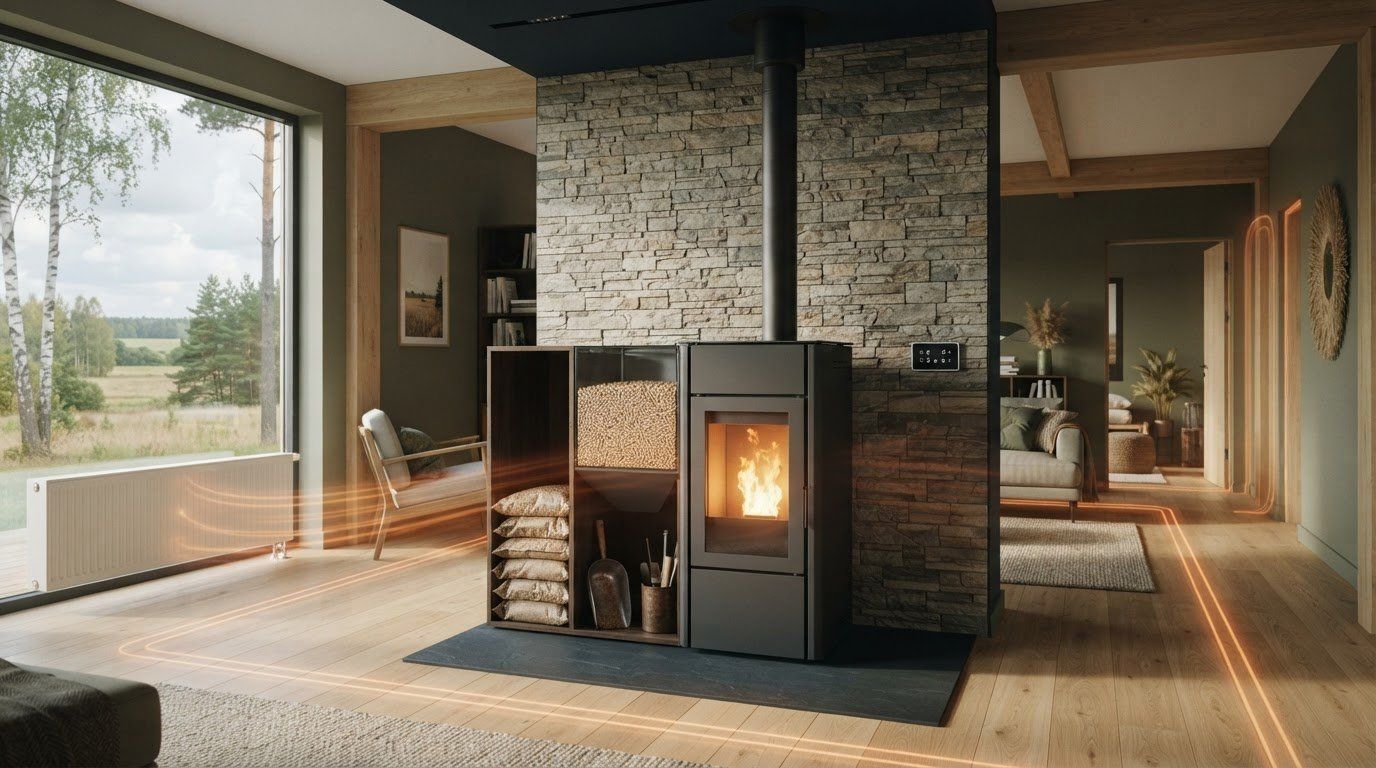
Can the pellet fireplace heat the entire house, or does it mainly heat the space in which it is located? The answer depends not only on the capacity of the plant, but also on how the heat is transferred and distributed. When planning heating, evaluate the layout of the premises, connection to radiators or warm floors, as well as the storage area of the pellet, flue and access to maintenance.
This article explains how the pellet fireplace works and how the model for heating the space is different from the fireplace with water contours that can be connected to the central heating. Find out how the heat resistance, layout and everyday habits of the house help to evaluate the most suitable option. A practical starting point is to understand whether the fireplace will be an additional source of heat in a particular room or part of the heating of the whole house.
What is a pellet fireplace, and how does it heat the dwelling?
The Granule fireplace burns the chips of the wood and transfers the heat to the room or heating system. The way of transferring heat determines whether the plant will heat the space in which it is located or will direct the heat to several areas of the dwelling. Therefore, the choice of the fireplace only does not have to compare the appearance of the fireplaces. The heat resistance of the building, the layout of the premises and the way you use the heating in everyday life should be taken into account. description of the pellet fireplace.
How does the pellet fireplace generate heat?
Granules are transferred from the tank to the burner, where they burn and heat. It is transferred to the room directly from the plant or used to heat water. Granules supply and combustion control differ in different models. When comparing the equipment, check what control functions are designed for the particular model, and not assume that all fireplaces have the same possibilities.
Is the space heating or connection to the central heating?
The heating fireplace of the space will give heat to the surrounding space. It may be suitable if a heat source is required in a given area, but the heat does not always reach more remote spaces evenly.
The heating fireplace transfers heat to heating water, which is further transferred by the system to radiators or heated floors. This solution can heat a wider part of the dwelling if it is suitable for the heating needs of the building and the existing heating system. Not every fireplace is designed for heating the entire building, therefore first determine where the heat is needed and how it will reach the premises.
Types of pellet fireplace: how to choose the necessary heat distribution?
Start with the main choice: do you want to heat the room where the fireplace will be located or to drive the heat into the heating system? The answer will help determine what type of equipment meets your needs and what plans for its installation.
- Heat transfer mode: Right for the room; Suitable situation: It is important to heat a specific space or zone; What to plan: Space location, open doors and heat spread path
- Heat transfer mode: Heating water; Appropriate situation: Want to discharge heat into radiators or warm floors; What to plan: The existing system, its connection and the total heat need of the building
Space heating solution
If you spend more time in the same room, a direct heat return can be appropriate. However, the heat of the fireplace does not spread equally throughout the house. It is influenced by the layout, the location of the doors and whether the rooms are connected. Therefore, when choosing the fireplace location, consider where the heat will come and whether it will be sufficient for your main needs.
Connection to central heating
This solution is assessed together with the existing heating. It is important to be compatible with radiators or heated floors and how the heat will be distributed in the system. If you consider another scale or type of heating system, an alternative may also be pellet boiler. For the consideration of the choice of different equipment can be read In the case of a pellet boiler selection guide. Air-water heat pump is another heating solution, which is assessed by taking into account the housing and heating system as a whole.
What to check when choosing a pellet fireplace for your home?
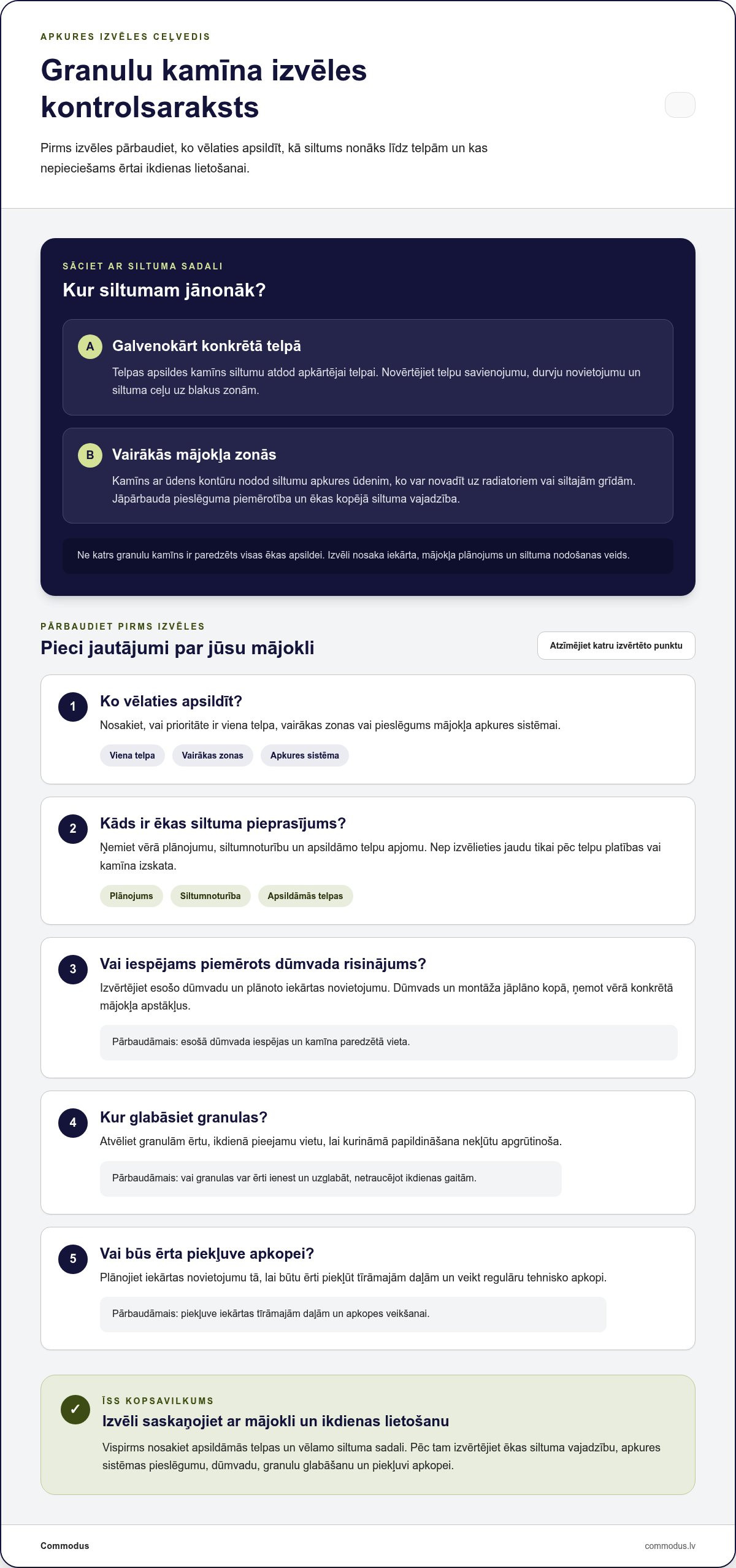
To make the choice practical, start with heating needs and then assess the technical options. Answer the following questions:
- What do you want to heat up? Determine whether priority is given to one room, multiple areas or connection to a housing heating system.
- What is the heat demand of the building? Planning, heat resistance and the volume of space to be heated affect the required capacity. Do not choose it solely by space or appearance of the fireplace.
- Is there a suitable flue solution possible? The flue and assembly should be planned together, taking into account the housing conditions.
- Where will you store the granules? Choose a convenient, everyday space for them so that fuel replenishment does not become burdensome.
- Will there be easy access to maintenance? Plan the location of the equipment so that it is easy to access the cleanable parts and to maintain regular maintenance.
Housing conditions and flue
The heating fireplace and the equipment connected to the entire house heating have different tasks. Before choosing to evaluate the space location, desired heating volume and connection options. Heating planning may be part of a wider energy conversation. renewable energy use in Latvia.
Storage and maintenance of granules
Think about whether the granules will be convenient to bring and store without disturbing the daily routine. Access to the clean parts and maintenance of the equipment is also important. If these aspects are taken into account at the beginning of the planning, the location and daily use of the equipment will be easier to adapt to the housing.
Comfortus heating specialists help to evaluate housing needs and plan the appropriate solution. Learn about choosing and installing the pellet fireplace.
When is the pellet fireplace suitable, and how to take the next step?
The suitability is determined by how well the equipment fits the house and its usage habits. The pellet fireplace can be considered if you want to use the pellet heating and the housing is suitable for the equipment, storage of the pellets and flue solution. However, this does not automatically mean that the fireplace will be a full source of heating for the whole building.
What is the answer?
If the main objective is to heat a particular space, evaluate its size, location and possibilities for heat spread. If you want to heat a wider part of the dwelling, the link to the existing system, such as radiators or warm floors, becomes important. Also take into account daily routine: pellet replenishment, equipment control and access to cleaning.
From needs assessment to solution
Before talking about heating, collect the essential information: which rooms you want to heat, what heating is in the house at the moment, where the flue is located and where you can store the pellets. This will help you to evaluate not only the installation, but also its location and connection.
See the offer of Commodus pellet fireplaces and assess which solution fits your home and heating purpose.
Choose heating that matches your home
The choice of suitable solution begins with a clear understanding of which rooms you want to heat and how heat will be divided. The Granule fireplace can heat a particular space or connect to the central heating system, but not every model is intended for heating the whole building.
Before choosing to collect information about the housing and your heating needs. Commodus specialists help to evaluate the solution, plan design and installation, as well as provide maintenance services. Commodus works with customers throughout Latvia.
Contact Commodus to choose a pellet fireplace and plan a suitable solution for your home.
Frequently Asked Questions
Can the pellet fireplace heat the whole house?
Yes, if a central heating installation is chosen and it is suitable for the building. The heating model of the space is mainly passed on to the space in which it is located, while the central heating fireplace heats water which the system passes to radiators or warm floors. The results are influenced by the layout of the house, so the steady heat in all rooms is not self-evident.
What is the difference between the pellet fireplace and the pellet boiler?
The difference is mainly in the function and role of the equipment in the heating system. The pellet fireplace can transfer heat directly to the room or be intended for connection to the central heating. The pellet boiler is evaluated as a heating system. Compare not only the names, but also the extent of the housing you want to heat and what system is already in operation in the building.
Does the pellet fireplace need a flue?
When selecting and installing the installation, waste gas discharge must be planned. The solution depends on the conditions of the installation and the housing, so one option does not fit all the installations. Before installing, professionally evaluate the flue and the location of the installation to match the intended heating solution.
How much does the pellet fireplace cost?
The price of the pellet fireplace depends on the type of equipment, functions and assembly. The total costs may also include assembly and adjustments to the housing. When comparing offers, pay attention to whether they include an equivalent equipment, assembly and the amount of installation works.
Is the pellet fireplace suitable for the apartment?
The pellet fireplace can be suitable for an apartment if the requirements of the particular installation and the conditions of the apartment allow. The exhaust exhaust discharge, the layout of the room and the need for heating of the same room or a wider heating solution. The heating specialist can evaluate the housing, the existing heating system and the planned use to help choose the appropriate solution.
Comments