Mini Heat Recovery Ventilator: A Complete Guide to Selection, Installation and Use in 2026
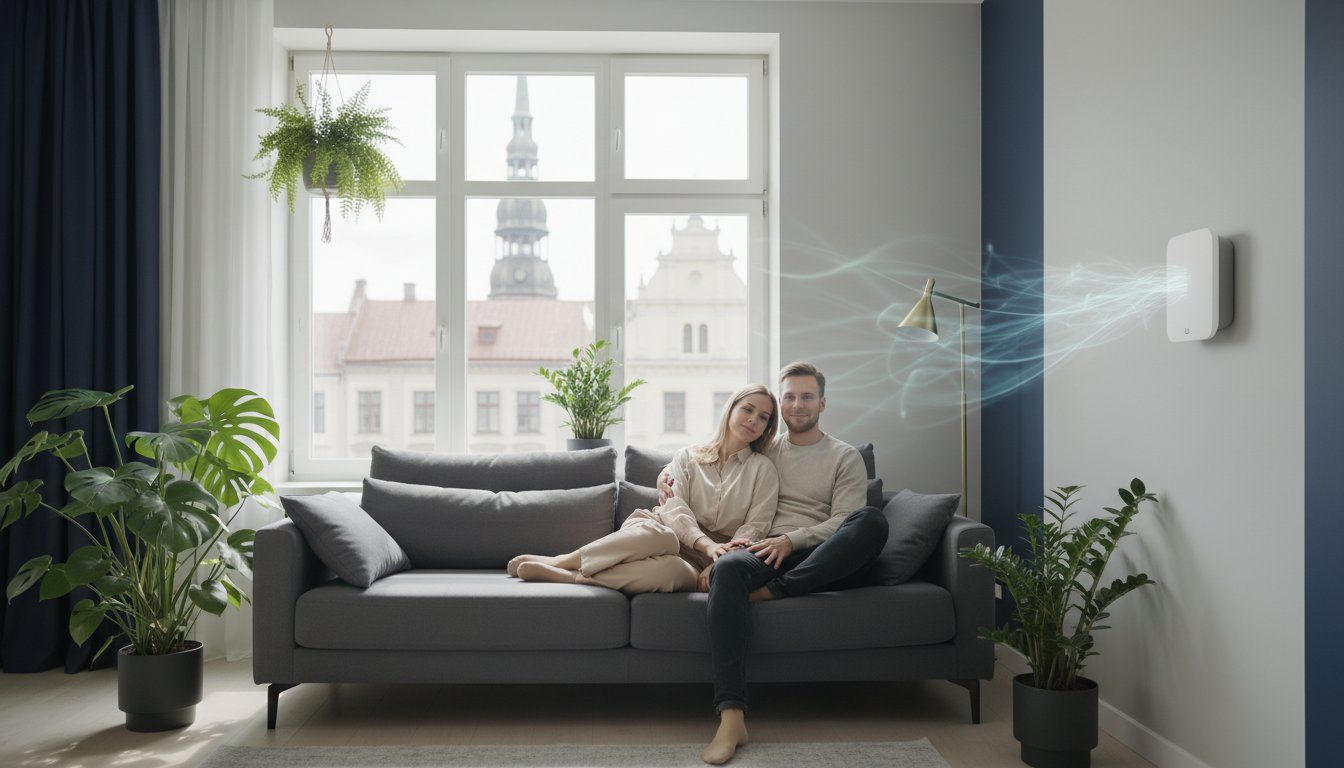
Last winter, a Riga resident named Janis noticed that the windows in his newly renovated flat were misted up every morning and that he felt unwell after sleeping. Measurements revealed that the CO2 level in the bedroom exceeded 1,500 ppm, well above the recommended limit and high enough to affect sleep quality directly. You will probably agree that the desire to retain heat in the home often leads us to sacrifice fresh air, unintentionally creating ideal conditions for mould and chronic fatigue. This is a challenge faced by approximately 65% of Latvian residents living in insulated buildings without a centralised ventilation system.
We promise that this guide will help you find an effective solution for maintaining a healthy indoor climate without keeping the windows open and cooling the rooms. Learn how a correctly selected mini heat recovery ventilator can recover up to 90% of the heat while purifying the air and protecting your walls from moisture damage. We will examine the best models for 2026 in detail, compare their airflow capacity and show how installation can be completed in one afternoon without dust or unnecessary noise, allowing you to enjoy the benefits immediately.
Key takeaways
- Learn how a mini heat recovery ventilator provides a continuous supply of fresh air and effectively reduces the risk of mould while retaining heat in the home.
- Understand how a ceramic heat exchanger works and why this material is particularly effective for storing heat in Latvia's variable weather conditions.
- Find out how to calculate the required airflow correctly and what noise level to choose so that the unit does not disturb sleep in the bedroom.
- Discover why diamond drilling is the best installation method, allowing a ventilation system to be fitted without dust or the need to redecorate the room.
- Receive practical advice from Commodus experts on choosing brands suited to our climate and long-term solutions for your comfort.
What is a mini heat recovery ventilator and how does it improve the indoor climate?
Let us begin with the basics, because clarity is the first step towards a comfortable home. A mini heat recovery ventilator is not merely an upgraded fan or a hole in the wall. It is a compact, decentralised ventilation unit that provides continuous air exchange without losing the heat in the room. The main difference from ordinary extract systems lies in the heat exchanger. While a standard fan simply blows warm air outside, a mini heat recovery ventilator captures that heat and transfers it to the fresh air entering from outdoors. By 2026, this technology has become standard because it can retain up to 90% of the heat energy.
The situation in Latvia is specific. Over the past five years, many apartment buildings have been insulated and their windows replaced, yet ventilation has often been overlooked. As a result, the home becomes an airtight 'thermos flask'. Without adequate ventilation, indoor CO2 levels quickly exceed 1,000 ppm, causing fatigue and reduced productivity. Mini heat recovery ventilation in renovated flats is no longer optional but a technical necessity. It effectively addresses several common problems:
- High humidity: Prevents condensation from forming on windows and in corners.
- Risk of mould: Removes the conditions in which harmful fungi develop and affect the respiratory system.
- Street noise: You no longer need to keep the windows open for fresh air, so the bedroom remains quiet.
- Air pollution: Built-in filters remove dust and soot particles from the incoming air.
Why choose a mini heat recovery ventilator instead of a central system?
Installing central ventilation in an existing home is often complicated and expensive. You may need to lower the ceiling by at least 15 centimetres to conceal the ductwork and undertake extensive building work. A mini heat recovery ventilator, by contrast, is a practical solution. It can be installed at any stage of renovation or even after the walls have already been painted. It requires only one opening through an external wall and an electrical connection. The investment is considerably lower, and airflow can be adjusted individually in each room to match your daily routine.
A mini heat recovery ventilator for a flat: what difference does it make in everyday life?
In daily use, the device operates as an unobtrusive assistant. You receive fresh air without a draught, which is particularly important for families with young children. Built-in filters, such as G3 or higher-grade F7 filters, capture spring allergens and urban smog. This makes a mini heat recovery ventilator an excellent companion for an energy-efficient home because you no longer literally throw money out of the window. At Commodus, we believe that technology should be clear and accessible, which is why this solution has become a favourite among our customers seeking peace of mind and a healthier home.
How mini heat recovery ventilation works: the technical side and efficiency
A mini heat recovery ventilator is not simply a fan fitted into a wall. It is a carefully engineered device based on the principle of heat regeneration. The operating cycle is usually divided into two phases, alternating every 60 to 70 seconds. During the first phase, the unit expels warm, stale indoor air. This air passes through the ceramic heat exchanger and transfers its heat energy to it. The ceramic element effectively stores heat like a battery. During the second phase, the fan reverses direction and draws in fresh outdoor air. As the cold air passes through the warmed ceramic element, it is heated before entering the room at a more comfortable temperature.
At Commodus, we know that the ceramic heat exchanger is the heart of these units. Unlike plastic or aluminium, ceramic has a very high heat-storage capacity and can retain up to 90% of the heat in the extracted air. This means that you are not literally heating the street and throwing money out of the window. In terms of running costs, a mini heat recovery ventilator is one of the most economical solutions in a home. Average electricity consumption ranges from 3 to 7 watts per hour. Even if the unit operates at maximum output around the clock, the monthly electricity bill will rise by only approximately EUR 0.80 to EUR 1.50. That is a very small price for a continuous supply of fresh air without draughts.
Heat recovery efficiency and its importance during a Latvian winter
Efficiency is critical in Latvia, where January temperatures can fall to -20°C. The declared 90% heat recovery efficiency may decrease slightly during severe frost, but good-quality units can still supply air at a temperature above +15°C. High-quality models include a frost-protection function. When the outdoor temperature becomes critically low, a sensor keeps the unit in extract mode for longer so that warm indoor air can defrost the heat exchanger. This prevents ice formation and supports reliable operation even on the coldest winter nights.
Air filtration and purification
In addition to retaining heat, a mini heat recovery ventilator performs an important air-purification function. Units are equipped with filters of different classes that protect both your lungs and the interior of your home:
- G3 and G4 filters: Standard protection against coarse dust, insects and fluff.
- F7 filters: Higher-grade protection that can capture pollen and fine soot particles, which is particularly important for residents of city centres.
For people with asthma or allergies, this level of filtration can provide major relief because the indoor air is renewed without opening a window and allowing irritants inside. Filters usually need to be replaced every 3 to 6 months, depending on outdoor pollution levels. To find the most suitable solution for your home, explore our energy-efficient equipment and we will work alongside you to improve your comfort.
How to choose a mini heat recovery ventilator: key criteria and comparison
The first step in choosing the right solution is to calculate the room volume and the required airflow capacity. Latvian building regulations and health guidance for 2026 continue to recommend approximately 30 m³ of fresh air per hour for each person. If your living room has an area of 25 square metres, look for a unit with a maximum airflow of at least 60 m³/h. This will allow it to operate at medium speed in everyday use, reducing motor wear and avoiding unnecessary noise. At Commodus, we often see customers choose units that are too small and therefore have to operate continuously at maximum speed, causing discomfort.
Noise level is decisive, especially when the unit will be installed in a bedroom. For restful sleep, night-time noise should remain below 20 to 25 decibels (dB). For comparison, 20 dB is similar to the sound of leaves rustling in a light breeze. Controls are also important. A modern mini heat recovery ventilator is usually equipped with a Wi-Fi app that allows you to change settings from the sofa or even while at work. The design is no longer limited to a plain white box on the wall. The latest models are slimmer and feature minimalist front panels that blend naturally into modern interiors without becoming a dominant visual element.
Single-unit versus paired heat recovery ventilators
A single unit usually operates in cycles, extracting air for 70 seconds to warm the heat exchanger and supplying fresh air for the next 70 seconds. In larger homes, however, we recommend installing the units in pairs. They synchronise with each other wirelessly. While one unit extracts air, the other supplies it, providing continuous circulation and stable air pressure throughout the home. This arrangement can improve heat recovery efficiency by approximately 15% because the indoor air moves more evenly.
Sensors and automation
Smart automation distinguishes a good unit from an excellent one. CO2 sensors automatically increase airflow when more people gather in the room and the air quality deteriorates. This is particularly useful in meeting rooms and children's rooms. Humidity sensors are invaluable near bathrooms or in kitchens because they help remove excess moisture quickly, preventing condensation on windows and reducing the risk of mould. Night mode ensures that the mini heat recovery ventilator reduces its speed to the minimum and switches off all light indicators so that nothing disturbs your rest. We believe technology should serve people rather than become a burden, so we help customers choose solutions that are configured once and then operate automatically in the background.

Installing a mini heat recovery ventilator: a step-by-step guide
Correct installation determines whether a unit will serve for ten years or begin causing problems during its first winter. Even the best mini heat recovery ventilator cannot provide the promised 90% heat recovery if it is installed carelessly. The unit should be positioned in the upper part of the room, at least 30 centimetres from the ceiling and adjacent walls or furniture. This allows it to capture the warm air that naturally rises and ensures even circulation throughout the room.
Modern installation is difficult to imagine without diamond drilling. This method creates an accurate opening through masonry walls up to 500 mm thick without impact force, which means that the interior finish and external façade remain undamaged. A dust-extraction system prevents the need for major cleaning after the work. A diamond core bit can cut cleanly through both brick and reinforced concrete, leaving smooth edges that make it easy to fit insulation and the unit's duct.
Preparations before installation
Before drilling begins, it is essential to identify the construction of the wall. In Latvian homes, wall thickness can range from 250 mm in timber-frame buildings to 600 mm in historic properties. Use a metal detector to avoid electrical cables or water pipes. A spirit level should be available to set the correct fall, along with expanding foam for sealing and the necessary personal protective equipment. Accurate measurements at the first stage save hours of work later.
Installation considerations for different wall types
Drilling through aerated concrete is quick and takes approximately 20 minutes, whereas sand-lime brick or concrete walls require more time. In timber walls, particular attention must be paid to sealing the vapour-barrier membrane so that moisture cannot enter the structure. One of the most important details is a fall of 1 to 3 degrees towards the outside. This ensures that condensate drains outdoors instead of accumulating inside the unit and creating a risk of mould.
Initial commissioning involves more than simply pressing a button; it also includes calibrating the sensors and checking the electrical connection. The mini heat recovery ventilator must be connected to the power supply in accordance with all safety requirements. To be completely confident in the result, it is best to entrust the work to professionals who approach every installation responsibly. Our team will ensure that the unit is not only installed correctly from a technical perspective but also integrated neatly into the interior without creating thermal bridges around the opening.
To improve the indoor climate of your home without unnecessary stress, learn more about the services provided by Commodus specialists and give your family fresh air today.
Why choose a mini heat recovery ventilator from the Commodus range?
When selecting a ventilation solution, experience is a decisive factor in the system's service life. The Commodus team has installed hundreds of units throughout Latvia, providing fresh air in both city flats and spacious detached houses. We do not offer generic catalogue solutions; instead, we select proven brands and models specifically suited to our climate zone. Latvia's severe winters and damp autumns require equipment that resists freezing and maintains a high efficiency even at -20°C.
Our service covers the complete process. It begins with a free consultation during which we assess the technical condition of the building and continues with professional installation. Importantly, the customer receives a full warranty for both the unit and the work carried out by our specialists. This provides peace of mind and confidence that the chosen mini heat recovery ventilator will operate reliably without creating unnecessary concerns in the long term.
An individual approach for every customer
Every home is unique, which is why our experts carry out accurate calculations to determine the airflow required for your particular rooms. We consider not only the floor area but also ceiling height, the number of occupants and even the layout of the rooms. To experience the unit's quietness and efficiency in person, you are welcome to visit Commodus branches in Riga and elsewhere in Latvia, where the equipment can be viewed and tested before purchase.
In addition to technical matters, we help customers navigate state-support programmes for improving energy efficiency. Currently available funding can significantly reduce the required investment, and our specialists will assist with preparing the necessary documentation so that installing the ventilation system becomes more financially advantageous.
Long-term cooperation and service
We believe that genuine cooperation begins when the unit is switched on. For a mini heat recovery ventilator to serve reliably for years, it requires regular maintenance and timely filter replacement. We can take care of this for you by providing scheduled service visits and rapid filter delivery. Our technical support is available whenever you need answers about system settings or operating modes.
We are an energetic, solution-focused team that is not afraid of challenging projects. Contact Commodus experts and improve the air quality in your home today! We promise an honest approach and genuine cooperation so that your home becomes a place where breathing is easy and pleasant.
Start breathing more freely at home today
In 2026, energy efficiency and indoor air quality are no longer simply trends; they are everyday necessities for health and comfort. By choosing the right ventilation solution, a mini heat recovery ventilator becomes a smart investment that helps reduce heat loss and control indoor CO2 levels effectively. With more than 15 years of experience in building-services solutions, the Commodus team will help you navigate the wide range offered by leading European manufacturers and select a unit suited precisely to your home. Our specialists provide the highest level of service using professional diamond-drilling equipment, allowing the work to be completed without dust or damage to the walls. We work as one team and take personal responsibility for every project because your long-term comfort and peace of mind matter to us. Whether you are planning improvements in a small flat or a spacious detached house, we are ready to work alongside you to achieve the best result. Take the first step towards fresh air and entrust the technical work to experienced professionals you can rely on.
Explore the range of mini heat recovery ventilators and receive advice on the Commodus website!
Frequently asked questions about mini heat recovery ventilators
Is a mini heat recovery ventilator noisy, and will it disturb sleep?
No. A modern mini heat recovery ventilator is almost inaudible in night mode, producing only 11 to 20 decibels of sound. This is quieter than a human whisper, so it will not disturb even very light sleepers. We generally recommend models with EC motors because they are more energy-efficient and quieter. The Commodus team will help you find a unit that provides fresh air without unnecessary noise.
How much does it cost to install a mini heat recovery ventilator?
Installation of one mini heat recovery ventilator in Latvia usually costs between EUR 150 and EUR 300. The final price depends on the wall thickness and material, such as concrete or timber, as well as the complexity of working at height. The price includes professional diamond-core drilling, installation of the unit and connection to the electricity supply. We prepare an accurate quotation after reviewing the site plan so that there are no unpleasant surprises.
Can one mini heat recovery ventilator air an entire flat?
One mini heat recovery ventilator is designed to ventilate a single room, usually with an area of no more than 25 to 40 square metres. To provide good air exchange throughout the home, units should be installed in each room. They work best in pairs, with one unit supplying air while the other extracts it. This produces even circulation and prevents stale, heavy air from accumulating in corners, which is essential for a healthy indoor climate.
How often should the filters in a mini heat recovery ventilator be replaced?
Filters should be replaced every 3 to 6 months, depending on the home's location and the level of outdoor air pollution. If you live beside a busy road in central Riga, the filter may become clogged more quickly than in a quiet rural home. Clean filters ensure effective removal of dust and allergens and help protect your health. We always remind customers that regular maintenance extends the unit's service life and ensures efficient long-term operation.
Will a mini heat recovery ventilator make the room cold in winter?
No. A mini heat recovery ventilator does not chill the room because it is equipped with a ceramic heat exchanger that recovers up to 93% of the heat. Warm outgoing air heats the incoming fresh air, so an icy draught does not enter the room. Even when it is -20°C outside, the supplied air will be much closer to a comfortable indoor temperature. This can significantly reduce heating costs while providing the necessary amount of fresh air indoors.
Can a mini heat recovery ventilator be installed in a bathroom?
A mini heat recovery ventilator is not normally installed in a bathroom because the high moisture load can cause the heat exchanger to ice up during winter. A standard extract fan with a humidity sensor is more suitable for such rooms. Heat recovery units perform best in bedrooms and living rooms, where people spend the most time. Where ventilation is required in a specific wet room, we develop an individual solution suited to the conditions.
What is the difference between a mini heat recovery ventilator and an air conditioner?
The main difference lies in their function: a mini heat recovery ventilator supplies fresh outdoor air, whereas an air conditioner only cools or heats the air already inside the room. An air conditioner does not produce oxygen or remove carbon dioxide; it recirculates the same indoor air. For both pleasant cooling and fresh air, the best approach is to combine the two systems. We will help you determine which system should be the priority in your situation.
Does a mini heat recovery ventilator really help prevent mould on walls?
Yes. A mini heat recovery ventilator is one of the most effective tools for preventing mould because it helps maintain an optimum humidity level below 50%. Mould develops where the air is stagnant and moisture accumulates, especially after old windows have been replaced with airtight plastic-framed units. Continuous air exchange removes moisture before it can condense on the walls. This is a valuable investment not only in the building but also in your family's health.
Comments