Ventilation Units: A Checklist for the Right Choice and Installation in 2026
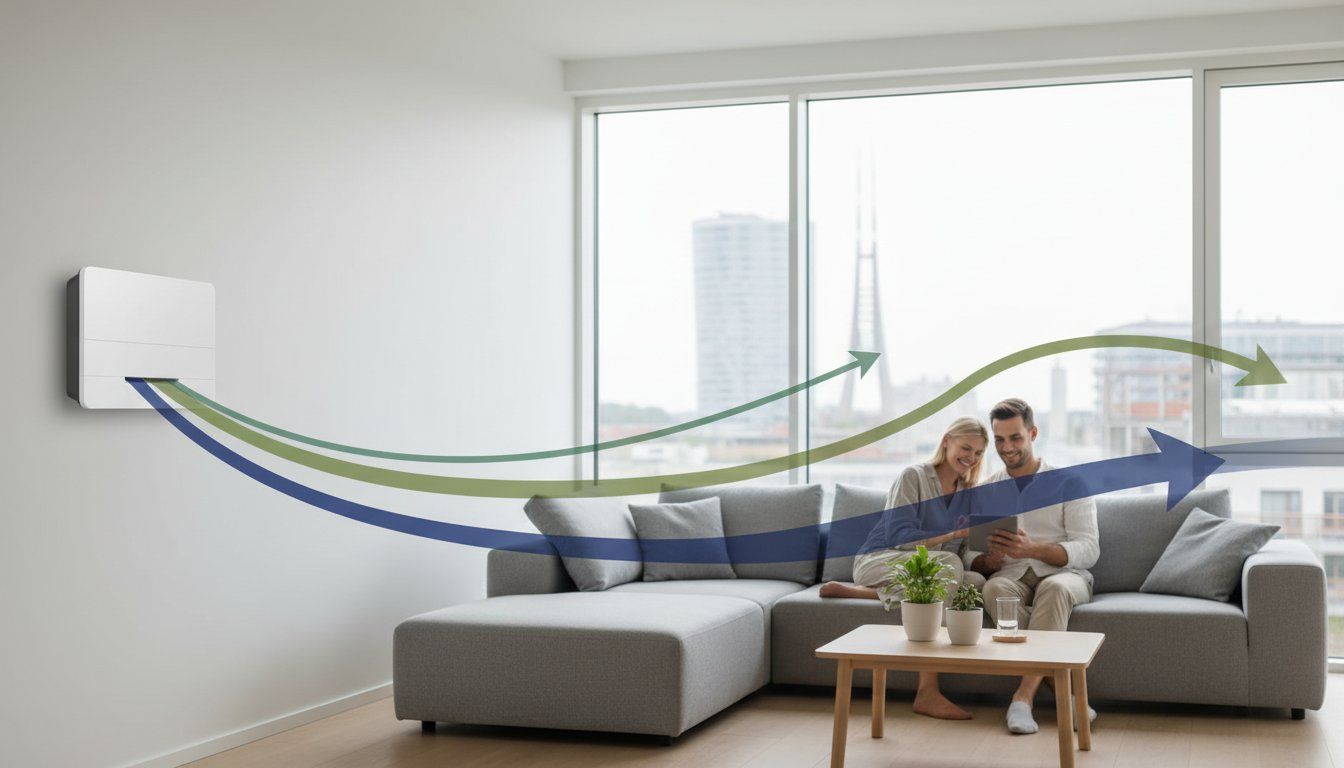
Did you know that the air in the average Latvian home can become up to five times more polluted at night than near a busy street in central Riga? Many of us still rely on opening windows, but in 2026 this method means not only unnecessary draughts but also literally throwing money out the window along with expensive warmth. You will certainly agree that a home should be a place where breathing is easy, not a place where one has to live with the risk of mould or morning fatigue. That is precisely why correctly chosen ventilation units have become standard in every energy-efficient project that we at the Commodus team help to implement, caring for our clients' comfort.
This checklist will help you choose the most suitable solution, avoiding costly mistakes and ensuring a healthy microclimate in your home for the long term. Our goal is to help you make a considered decision so that freshness prevails at home without unnecessary noise and unplanned expenses. In this guide we will look at practical steps that will allow you to reduce monthly heating bills by approximately 30% thanks to modern heat recovery. We will also provide a clear plan on how to navigate the wide market offering and what exactly to pay attention to during the installation process, so that the system serves for decades without any worries.
Key Takeaways
- Find out why modern ventilation units are indispensable in today's airtight buildings to effectively remove moisture and ensure a healthy microclimate.
- Learn how to calculate the required airflow capacity and choose the most suitable heat exchanger type according to your home's floor area and needs.
- Discover which solution – a centralised system or compact mini heat recovery units – is most appropriate for your home's layout and budget.
- Obtain a practical checklist for correct installation and maintenance to ensure quiet system operation and longevity.
- Discover how Commodus's knowledgeable technicians will help you move forward, providing full service from the first consultation to warranty maintenance.
Why Are Modern Ventilation Units Necessary in Every Home?
Modern construction standards have made our homes into almost hermetically sealed capsules. While this helps retain warmth, without adequate air exchange we quickly find ourselves in an environment where the air becomes heavy and stale. Modern ventilation units are not a luxury item but a necessity that provides controlled air exchange, filtration and energy-efficient heat recovery. Unlike natural ventilation, which depends on wind direction or temperature differences, a mechanical system works as precisely as a clock, regardless of the weather outside.
We at the Commodus team see daily that clients often confuse simple airing with full-scale microclimate control. While natural ventilation simply "blows" warm air out through the chimney, a modern heat recovery ventilation (HRV) system can take the heat from the exhaust air and transfer it to the fresh air flowing into the house. This is a sustainable solution that in 2026 has become the standard in any energy-efficient project.
The Impact of Air Quality on Health and Productivity
Did you know that CO2 levels in rooms above 1000 ppm (parts per million) cause your brain to work more slowly? Studies show that high carbon dioxide concentration reduces concentration ability by at least 15%. This is the main cause of morning headaches or fatigue after a working day in a home office. Correctly installed ventilation units completely eliminate this risk by keeping CO2 levels within optimal limits below 800 ppm.
The second critical factor is moisture and mould. If relative humidity in rooms consistently exceeds 60%, condensation begins to form on cooler surfaces, which is an ideal environment for mould. Mechanical ventilation removes excess moisture from bathrooms and kitchens before it can damage either the building's structures or your respiratory tract. In urban environments, filters are no less important; they trap dust, pollen and even fine PM2.5 particles, creating a safe haven for people with allergies.
Energy Efficiency: How Ventilation Reduces Heating Bills
Many still believe that the best way to ventilate rooms is to open windows wide. In a Latvian winter, when the temperature drops to -10°C or -15°C, this is the most expensive mistake one can make. Opening a window for 10 minutes literally throws out euros that you have paid for heating, and rooms cool down instantly. Heat recovery units work in the opposite way; they retain up to 90% of thermal energy.
Key benefits of A-class energy efficiency units:
- Heat recovery: Incoming air is warmed without using additional electricity or gas.
- Low electricity consumption: Modern EC motors consume less energy than a single standard LED bulb.
- Smart control: The unit itself adjusts its output depending on air quality sensors, saving resources when nobody is home.
When choosing a system in 2026, the emphasis is on long-term payback. Investment in a quality unit usually pays off within 5 to 7 years through heating bill savings alone, not to mention the health benefits. It is like tackling a common challenge towards a greener and cheaper future, where comfort is no longer associated with large expenses.
Key Technical Parameters: Checklist Before Purchasing a Unit
When choosing ventilation units, the technical specification is not just a row of numbers on paper; it directly determines your quality of life for the next 15 years. We at the Commodus team have seen hundreds of projects, so we know that a successful choice is based on precise planning, not rough guesswork. A correctly chosen system works in the background, remaining unnoticeable while providing fresh air in every room.
How to Choose the Right Output for Your Home?
Airflow capacity (m3/h) is the first indicator to pay attention to. Latvian building regulations and best practice stipulate that the air change rate must be at least 0.5 times per hour of the total room volume. This means that in a 150 square metre house with 2.7 metre ceilings, the total volume is 405 m3, so the unit must provide at least 202 m3/h of airflow in normal operating mode.
Never choose a unit whose maximum capacity precisely matches your calculated requirement. We recommend allowing approximately 20% to 30% of output reserve. If the unit is constantly operating at the limits of its capacity, it will create more noise and wear out faster. Reserve output is critically important at times when there are guests at home or intensive cooking is happening in the kitchen, allowing the air to be quickly purified without stressing the mechanisms.
Heat Exchanger Comparison: Counter-Flow or Rotary?
The heat exchanger type determines how the unit will behave in Latvia's variable weather conditions. A rotary heat exchanger is an excellent choice for our region, as it can return some moisture to the rooms. This is important in winter months when heating causes the air to become dry. These units also practically never freeze, even when the outdoor temperature drops below -20 degrees.
A counter-flow heat exchanger, on the other hand, offers higher thermal efficiency, often reaching 90% and above. It completely separates the airflows, ensuring that odours from the kitchen or bathroom in no way return to the living areas. When choosing between these types, it is useful to research various home ventilation strategies to understand which solution best suits your building's energy efficiency goals and family habits.
Key efficiency indicators:
- SFP (Specific Fan Power) coefficient: This figure indicates how much electricity the fans consume to move one cubic metre of air. For a modern unit in 2026, the SFP rating must be below 1.5 kW/(m3/s), indicating high energy efficiency.
- Noise level (dB): For a unit installed near bedrooms, the sound level must not exceed 25 to 30 dB. Pay attention not only to the unit's own noise but also to how well the air ducts are insulated.
We know that a sea of technical parameters can seem daunting, but together we can push through to the end and find the best solution. If you want to verify the precision of your choice, Commodus specialists will help adapt ventilation units specifically to your home's layout and budget.
Centralised System or Mini Heat Recovery Unit: Which Solution is More Suitable?
The choice between the two solutions usually depends on the home's current condition and your long-term plans. If you are planning a new build or major renovation, centralised ventilation units will be the most logical investment, providing full climate control throughout the building. In an already occupied apartment where one does not want to dismantle ceilings to build air ducts, a mini heat recovery unit becomes a practical lifesaver. Our experience shows that in 2026 clients are increasingly seeking precisely this balance between energy efficiency and simple maintenance.
A centralised system requires a larger initial investment but serves the entire house with one powerful unit. Mini heat recovery units are cheaper as individual units, but to ensure air exchange throughout the house, several such devices will be needed, which in total may approach the cost of a central system. For the system to work efficiently and meet modern requirements, it is important to carefully assess technical parameters for ventilation systems, which include both airflow capacity and noise attenuation ratings.
Mini Heat Recovery Unit as a Quick Solution in an Existing Apartment
This solution is ideal for city apartments or individual rooms where fresh air is lacking. Installation is maximally simple: a hole of approximately 160 to 200 mm is drilled in the wall, the unit is inserted, and the job is done within 2 to 3 hours. It is an excellent option for bedrooms, as it prevents CO2 accumulation at night without losing warmth through an open window. However, limitations must be taken into account; one unit effectively handles on average 20 to 30 square metres, and its operating cycle (supply/exhaust) is not as smooth as full-cycle systems.
Advantages of a Centralised System in a Private Home
In private homes, centralised ventilation units are unrivalled in terms of comfort. Key benefits valued by our clients:
- Quiet in living areas: the unit itself is located in a technical room or attic, so in bedrooms only a gentle airflow is audible.
- Even air distribution: the duct network ensures that fresh air reaches every corner, simultaneously removing moisture and odours from kitchens and bathrooms.
- Additional functions: air cooling sections, humidifiers and smart control can be integrated into the system, automatically adjusting output depending on air quality sensors.
At the Commodus team we believe that every project is like pushing a common challenge forward together. Regardless of whether you choose one mini unit or a complex engineering system, the goal is the same – a healthy environment for your family. We not only install equipment but help understand which solution will be more economically sound for your specific home layout, so that the investment pays off through lower heating bills and better wellbeing.

Installation and Maintenance Checklist: How to Ensure System Longevity?
Even the most modern ventilation units will not deliver the expected comfort if mistakes are made during installation. Everything begins with precise project development. It must account not only for duct layout but also for the positions of noise attenuators. Without them, even the quietest system can create a hum that disrupts sleep at night. A quality project is the foundation for air to move without unnecessary resistance and energy losses.
During installation, our technicians pay particular attention to the airtightness of connections. If air ducts are not sealed, even a 5% leakage can increase the system's electricity consumption by more than 10%. Insulation is equally important, especially in sections passing through unheated spaces such as attics. Insufficient insulation creates a condensate risk that can damage both the unit and the building's structures. We at the Commodus team believe that every connection must be measured and checked with a craftsman's diligence.
Why is System Balancing Critically Important?
Regulating airflow in each room is the last but decisive step after installation. Without balancing, situations arise where the air in the bedroom seems "stagnant" but an unnecessary draught is felt in the living room. A correctly set up system ensures optimal pressure balance in the building. This prevents unpleasant odours from spreading from the kitchen or bathroom to the living areas. Furthermore, a balanced system reduces motor load, which directly extends the unit's service life and reduces bills.
Filter Replacement and Service Intervals
Regular maintenance is the simplest way to protect your investment. The standard interval for filter replacement is 3 to 6 months, depending on ambient air pollution. In 2026 models, smart sensors are increasingly being used that notify the phone about the need for maintenance based on actual air permeability rather than just the calendar.
- Heat exchanger cleaning: Once a year a visual inspection and cleaning is necessary to maintain high heat recovery efficiency.
- Air duct inspection: Every few years it should be verified that dust or moisture has not accumulated in the system.
- Condensate drain revision: It should be checked that outlet pipes are clean and free, especially before the start of the heating season.
We know that technically complex matters are best entrusted to those who tackle this every day. If you want your home to always have fresh air without unnecessary concerns, apply for professional system maintenance from Commodus experts and ensure the longevity of your unit.
Professional Support With Commodus: From Project to First Breath
Since 2010, the Commodus team has been helping Latvian residents move forward on the path to more energy-efficient and healthier homes. We are not just equipment retailers. We are trusted partners who understand that quality ventilation units are a long-term investment in your family's wellbeing. Our 15 years of industry experience allows us to precisely anticipate the challenges posed by Latvia's specific climate, where high autumn humidity alternates with harsh winter frost.
We provide a full service cycle, taking responsibility for every stage. Everything begins with a detailed situation analysis and engineering calculations, followed by precise equipment selection. Professional installation and prompt warranty servicing are our standard. You do not need to spend time searching for separate designers or technicians, as we provide technical assistance throughout Latvia. Our approach is simple: we work so that the client can forget about the system's existence and simply enjoy fresh air.
Why Choose Commodus for Your Ventilation Project?
Our company's character is rooted in a doer's spirit. We are not afraid of complex challenges, regardless of whether a solution is needed for a compact apartment or a spacious private home. We speak clearly and avoid unnecessary bureaucracy, focusing on a result that will serve for decades.
- Individual approach: Each site is assessed separately, taking into account room layout, number of occupants and your daily habits.
- Professional team: Our specialists continuously follow 2026 technology trends and energy efficiency standards.
- Transparency: We provide clear costs without hidden additional works and precisely observe agreed execution deadlines.
- Access to the best brands: We offer only proven and Latvia-tested ventilation units from leading manufacturers.
Start Your Journey to Fresh Air Today
System creation begins with a conversation. We offer free consultations and site inspections to help you make a considered decision. Our experts will explain the differences between various solutions, helping to find the optimal balance between unit output and electricity consumption. We believe that technology should serve people, not the other way around, which is why we offer solutions with intuitive control and minimal maintenance requirements.
Do not wait until excess moisture or stuffy air appears in the home. Take the first step towards comfort and a healthy environment right now. Contact Commodus experts and we will help you develop the most effective ventilation plan, carry out precise calculations and prepare a competitive offer. Our team is ready to put its shoulder to the wheel so that your home always has easy breathing.
Start Breathing Fresh Air in Your Home Today
When choosing the most suitable solution, the key is finding a balance between the unit's technical capacity and your home's individual layout. Correctly matched ventilation units not only provide continuous fresh air exchange but also effectively protect the building's structures from moisture and mould risks. This is a considered investment in your family's health and daily wellbeing that pays off through higher quality of life and energy efficiency every day.
Commodus is an established Latvian company whose 15 years of industry experience allows us to understand each client's needs from the very first word. More than 5,000 satisfied clients throughout the country have already entrusted their home's microclimate to us. Our certified installation specialists provide the highest quality service and full warranty so that you can feel completely confident about the system's longevity. We believe in a personal approach and are ready to tackle this challenge together with you from the first draft to a fully functioning system.
Receive a personalised ventilation system offer here!
Let us take care of the technical side and complex calculations so that you can simply enjoy a healthy and pleasant environment in your home.
Frequently Asked Questions About Ventilation Solutions
Do Ventilation Units Consume a Lot of Electricity?
No, modern ventilation units consume very little energy thanks to efficient EC motors. In the average private home, the unit consumes approximately 30 to 60 watts per hour, equivalent to one old-style incandescent bulb. Over a year, such consumption amounts to only a few dozen euros, but the benefit from recovered heat is considerably greater than the electricity spent. This helps us jointly move towards a more energy-efficient and greener home.
How Often Should Filters Be Changed in a Heat Recovery System?
Filters in a heat recovery system should normally be changed twice a year to ensure clean air and unit sustainability. The best times for replacement are spring after the end of the heating season and autumn before the onset of severe cold. If you live in the city centre or near a busy highway, filter condition should be checked every 3 months. Dirty filters increase energy consumption by 10 to 15 percent and worsen indoor air quality.
Can a Heat Recovery Unit Fully Replace an Air Conditioner in Summer?
A heat recovery unit cannot fully replace an air conditioner, as its main function is air exchange, not active cooling. On hot summer days, the unit uses a bypass function to let cooler outdoor air into the rooms at night without additional heating. However, at 30 degrees of heat, heat recovery will not be able to lower the temperature the way an air conditioner does. These systems work best in tandem, providing both freshness and pleasant coolness in your home.
Is the Ventilation System Loud and Will it Disturb Sleep?
Correctly designed and installed ventilation units operate almost inaudibly, not exceeding the 25 decibel threshold in bedrooms. We use noise attenuators and insulated air ducts that prevent sound from spreading through the house. If the unit is chosen with appropriate output reserve, it operates on low speeds daily. This means your sleep will be sound and undisturbed, enjoying fresh air throughout the night without any hum.
What is the Difference Between a Rotary and Counter-Flow Heat Exchanger?
A rotary heat exchanger returns some moisture to the rooms and does not freeze at low temperatures, while a counter-flow heat exchanger is more energy-efficient in heat recovery. Counter-flow units achieve up to 90 percent efficiency but require condensate drainage. A rotary mechanism is ideal for Latvian winters as it does not dry out the air as intensively. The choice depends on your home's floor area and desired microclimate parameters, so we help make a considered decision.
Is a Mini Heat Recovery Unit Sufficient for the Entire House?
A mini heat recovery unit is designed for ventilating one specific room and cannot provide air exchange throughout a private home. Such ventilation units are an excellent solution for renovated apartments or individual bedrooms where it is not possible to build an air duct system. On average, one unit serves a 20 to 40 square metre area. For whole-house comfort, it is better to choose a central system that evenly distributes airflow in every room and provides a full-scale result.
How Much Does Ventilation System Installation Cost for an Average Private Home?
Ventilation system costs for an average 150 square metre private home usually range from €4,000 to €8,000. The precise amount depends on the chosen unit brand, air duct materials and the complexity of installation. This price usually includes project development, all necessary materials and professional installation. We always help find the best balance between investment and long-term benefits so that you end up in safe and experienced hands.
Does a Heat Recovery Unit Help Fight Mould on Walls?
A heat recovery unit is one of the most effective weapons in the fight against mould, as it continuously removes excess moisture from rooms. Mould usually appears in places where air humidity exceeds 70 percent and air circulation is poor. By installing a ventilation system, humidity levels are maintained within the optimal range of 40 to 60 percent. This not only protects the building's structures but also creates a healthy environment where there is no place for dangerous fungus or unpleasant odours.
Comments