Cleaning Solar Panels from Snow and Dust: A Practical Guide for 2026
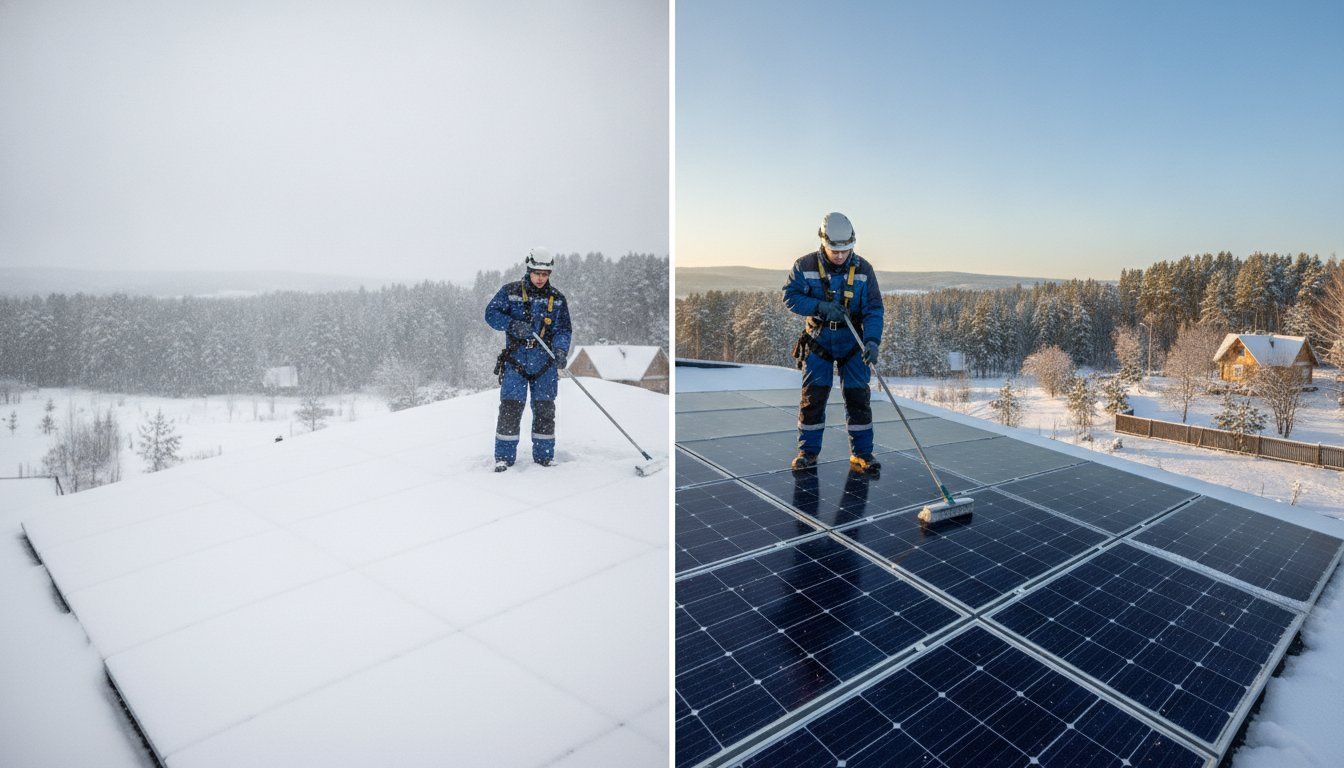
Did you know that even a small layer of deposits on your roof can reduce system output by 30% to as much as 60%? This means that cleaning solar panels from snow and dust is not just an aesthetic issue, but a direct investment in your household's energy efficiency. In 2026, when solar energy is already used by more than 24,000 households in Latvia, proper maintenance has become the key to turning every ray of sunlight into valuable electricity, preventing weather conditions from slowing down your energy independence.
We know that unpleasant feeling well: on a winter morning, you see your panels under a thick blanket of snow that can weigh as much as 46 kilograms per square metre. Concerns about roof safety or fears of accidentally scratching the panel surface are completely justified, so our goal is to help you act wisely and confidently. This guide will explain how to maintain solar panels safely and effectively in every season in order to maximise your system's electricity output. We will cover the most suitable equipment, methods tested by our team and safety recommendations that will help you keep peace of mind and high production figures all year round.
Why is cleaning solar panels from snow and dust important?
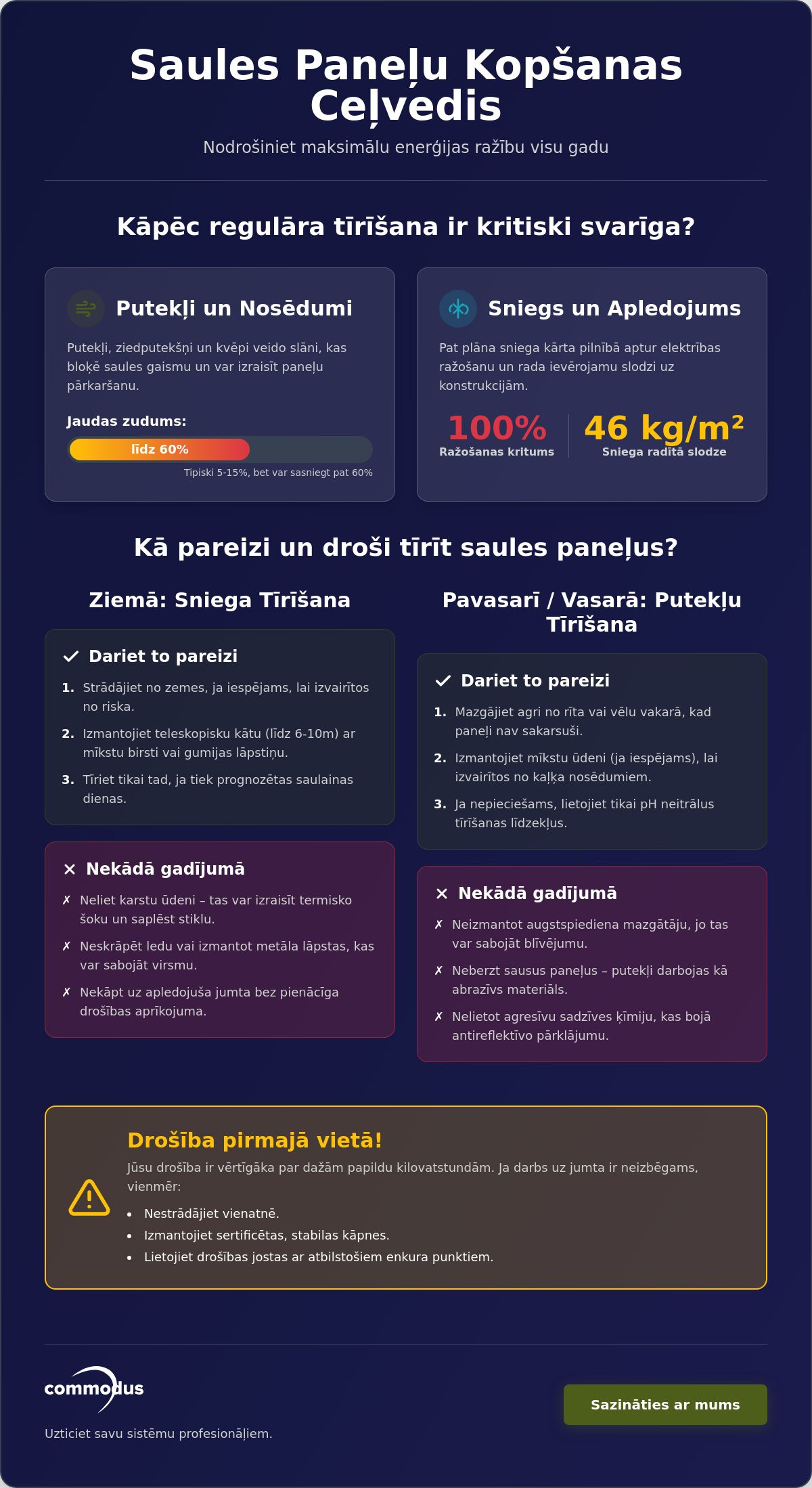
Many homeowners think that rain and melting snow will do all the work for them. Unfortunately, the reality in Latvia's climate is different. Cleaning solar panels from snow and dust is necessary because natural self-cleaning is usually not sufficient when the panel slope is low. A layer of dust that accumulates over months reduces solar panel efficiency by 5% to as much as 15%. This is especially noticeable if you live near gravel roads or agricultural land, where fine particles are constantly present in the air.
Regular maintenance is not only about cleanliness. It is an opportunity for both us and you to make sure the system is technically sound. During cleaning, small cracks in the glass or loosened fixings after strong wind gusts can be noticed. Identifying such details in time protects you from larger expenses in the future, when a defect could affect the entire system.
The impact of snow on panel operation in winter
In winter, the situation becomes even more serious. Even a thin layer of snow completely stops the photovoltaic process because sunlight simply cannot reach the silicon cells. This means a 100% production drop precisely on those rare sunny winter days when energy is needed most. Let us not forget the weight either. A snow layer creates a huge load on the panel frames and roof structure, so cleaning helps maintain the longevity and safety of the equipment.
Dust, soot and pollen: the invisible thieves of efficiency
In spring, the biggest challenge is yellow pine pollen and dust from neighbouring fields. Together with rain, they form a sticky layer that often accumulates at the lower edge of the panel. This deposit layer not only covers part of the cells, but can also encourage local overheating, or the formation of "hot spots". If the panels are not washed, these muddy deposits can become a permanent barrier that ordinary rain can no longer rinse away, gradually "stealing" the electricity you produce day after day.
How to safely remove snow from solar panels: methods and tools
Before starting work, always assess the economic benefit. If cloudy weather is expected in the coming days, clearing snow may not be worth the effort. However, if the forecast shows clear skies, the impact of snow and dust on production becomes critical. Our experience shows that the priority should always be working from the ground. Using telescopic poles that reach 6 to 10 metres, you can safely maintain the system without putting your health at risk.
Important warning: never pour hot water on the panels. Even if it seems like the fastest way to melt ice, the temperature difference creates thermal shock. It can irreversibly crack the tempered glass. Also avoid chiselling or scraping ice. If snow has frozen onto the panels, it is better to wait for a thaw or the warmth of the sun, which will help it slide off by itself.
The best tools for DIY cleaning
When choosing a brush, look for models with soft, specialised bristles or a rubber squeegee. Ordinary household brooms are often too hard. They can leave micro-scratches where dirt later sticks more easily. Metal shovels should stay in the shed. Even one accidental touch with metal can damage the panel's protective layer. If you are also planning other improvements on your property, such as installing modern CTC air-to-water heat pumps, remember that the whole system works best when every element is properly maintained.
Safety measures when working at height
If cleaning from the ground is not possible, safety must come first. Never work on the roof alone. A second person below can not only pass tools, but also provide help in an unexpected situation. Use only certified ladders and safety harnesses with anchor points. In winter, roofing becomes especially slippery, so even a slight slope can be dangerous. Remember that cleaning solar panels from snow and dust is important, but your safety is incomparably more valuable than a few extra kilowatt-hours.
Cleaning dust and deposits in spring and summer
Many homeowners believe spring rain is enough to wash away the traces of winter. However, Latvian spring brings specific challenges, such as yellow pine pollen and agricultural dust from nearby fields. These fine particles, together with morning dew, create a persistent, "baked-on" layer that ordinary rain cannot fully remove. That is why cleaning solar panels from snow and dust is relevant not only in winter, but also during the warm months, to ensure that your solar panel kits operate at maximum output precisely during the most productive period.
The optimal time for washing is early morning or late evening. In the middle of the day, the panel surface can heat up to 60 or 70 degrees. Pouring cold water onto hot glass creates a risk of thermal shock that may cause microcracks. Practical cleaning advice from industry experts emphasises that pressure washers must be strictly avoided. A powerful water jet can damage the panel frame seals, allowing moisture to enter the laminate layers and permanently damage the system.
Use soft water. If tap water in your region is hard, white mineral stains will remain on the panels after drying, reducing light transmission again. If you are thinking about your property's overall energy efficiency, take a look at the CTC heat pumpswe offer, which complement a solar panel system perfectly.
Choosing cleaning agents
In most cases, clean water and a soft microfibre cloth or a special brush are enough. If the panels are especially dirty, for example with bird droppings or tree resin, use only pH-neutral cleaning agents. Aggressive household chemicals can damage the anti-reflective coating on the panel glass, which in turn reduces total yield in the long term.
The most common mistakes during washing
The biggest mistake is rubbing panels "dry". Dust acts as an abrasive material that creates micro-scratches. Also, never step on the panels. Even if the structure seems strong, your weight creates microcracks in the silicon cells that are invisible to the naked eye but significantly reduce system performance. If you also want to improve indoor air quality, our ventilation solutions will be the right choice for your comfort.
When should you choose professional maintenance?
Although we like doing many jobs around the house ourselves, there are times when bringing in professionals is the smartest decision. If your home has a steep roof, a complex structure or panels installed in hard-to-reach places, do not risk your safety. Professional cleaning of solar panels from snow and dust not only protects you from injuries, but also guarantees that the work is carried out with appropriate equipment, without causing microcracks in the panel structure. During cleaning, specialists often also perform visual and technical diagnostics. This makes it possible to spot corrosion on fixings or cable insulation damage that is almost impossible to notice on your own.
System monitoring as an indicator for cleaning
Modern technologies allow us to monitor production data in real time through a smartphone app. If, on a clear sunny day, you notice that the amount of energy produced is 15% or 20% lower than under similar conditions previously, this is a clear signal that a layer on the surface is starting to interfere. Such monitoring is critical if your system is complemented by efficient air-to-water heat pumps. This integrated approach requires maximum output from every solar panel in order to provide cheap, green heat in your home without unnecessary electricity costs from the grid.
Advantages of professional maintenance
By choosing specialists, you gain access to technologies that are often not available at home. We use special deionised water, which leaves absolutely no mineral marks or limescale deposits after drying. This ensures flawless surface transparency for a longer period and prevents new dust from sticking to the surface so quickly. Maintenance performed by certified technicians helps preserve the equipment manufacturer's warranty because all technical protocols and safety standards are followed.
When working on the roof, we also recommend checking how your ventilationis functioning at the same time. Dust, leaves and pollen tend to accumulate not only on panels, but also in air intake grilles or recuperation system outlets. Comprehensive maintenance ensures a healthy microclimate and maximum energy efficiency throughout the home, allowing you to enjoy peace of mind and lower bills in the long term.
Ensure maximum energy output in every season
A solar panel system is a valuable long-term investment whose efficiency directly depends on proper and regular maintenance. Remember that timely cleaning of solar panels from snow and dust not only prevents a significant drop in production, but also helps identify small technical faults in time. By using gentle methods and the right tools, you protect your investment and ensure its longevity for many years.
Our team has more than 15 years of experience in engineering system solutions, so we know how important precision is in every detail. Commodus certified installation and maintenance specialists are ready to provide professional consultations throughout Latvia so that your energy independence is safe and stable. If you have doubts about the best cleaning method or need a system inspection, entrust it to experienced technicians who care about your comfort and long-term peace of mind.
Learn more about Commodus solar panel service and solutions and check your system's output today. May your home always be warm and full of energy!
Frequently asked questions about solar panel maintenance
Can solar panels be cleaned with an ordinary snow shovel?
No, an ordinary snow shovel must absolutely not be used because it can irreversibly scratch the panels' protective glass or even break it. Use only special brushes with soft bristles or rubber squeegees with a telescopic pole designed for gentle maintenance. Even small scratches on the surface can create unwanted shading and significantly reduce system efficiency in the long term, so the tools must be as gentle as possible.
How often should solar panels be cleaned from dust in Latvian conditions?
In Latvian conditions, cleaning solar panels from snow and dust is usually needed once or twice a year. It is best to do it in mid-spring, when the active pollen period has ended, and in the second half of summer if there has been no heavy rain for a long time. If your property is near a gravel road or agricultural land, cleaning may be needed more often to prevent a dense dust layer from forming and "stealing" yield.
Does cleaning panels with hot water help remove ice faster?
Never use hot water to melt ice, as it creates dangerous thermal shock. A rapid temperature change between the cold panel surface and hot water can cause the glass to crack, making the equipment unusable. The best solution is to let the ice melt naturally or use special, gentle tools to remove the snow layer without touching the ice layer that is firmly attached to the glass.
What is the optimal panel slope for snow to slide off by itself?
The optimal panel slope that encourages snow to slide off naturally in Latvia is 35 to 45 degrees. The steeper the installation angle, the lower the chance that snow will accumulate in large amounts and completely block sunlight. However, even at this slope, wet and heavy snow can "stick" to the surface; therefore, it is important to monitor production data in the app and perform manual maintenance when necessary.
Can incorrect cleaning void the solar panel warranty?
Yes, incorrect cleaning that does not follow the manufacturer's instructions can be a valid reason for voiding the warranty. This applies to mechanical damage such as scratches or microcracks caused by using unsuitable tools or stepping on the panels. The warranty may also be lost if aggressive chemical agents or pressure washers are used, damaging the panel frame seals and anti-reflective coating.
Comments