Heating system efficiency audit for building owners
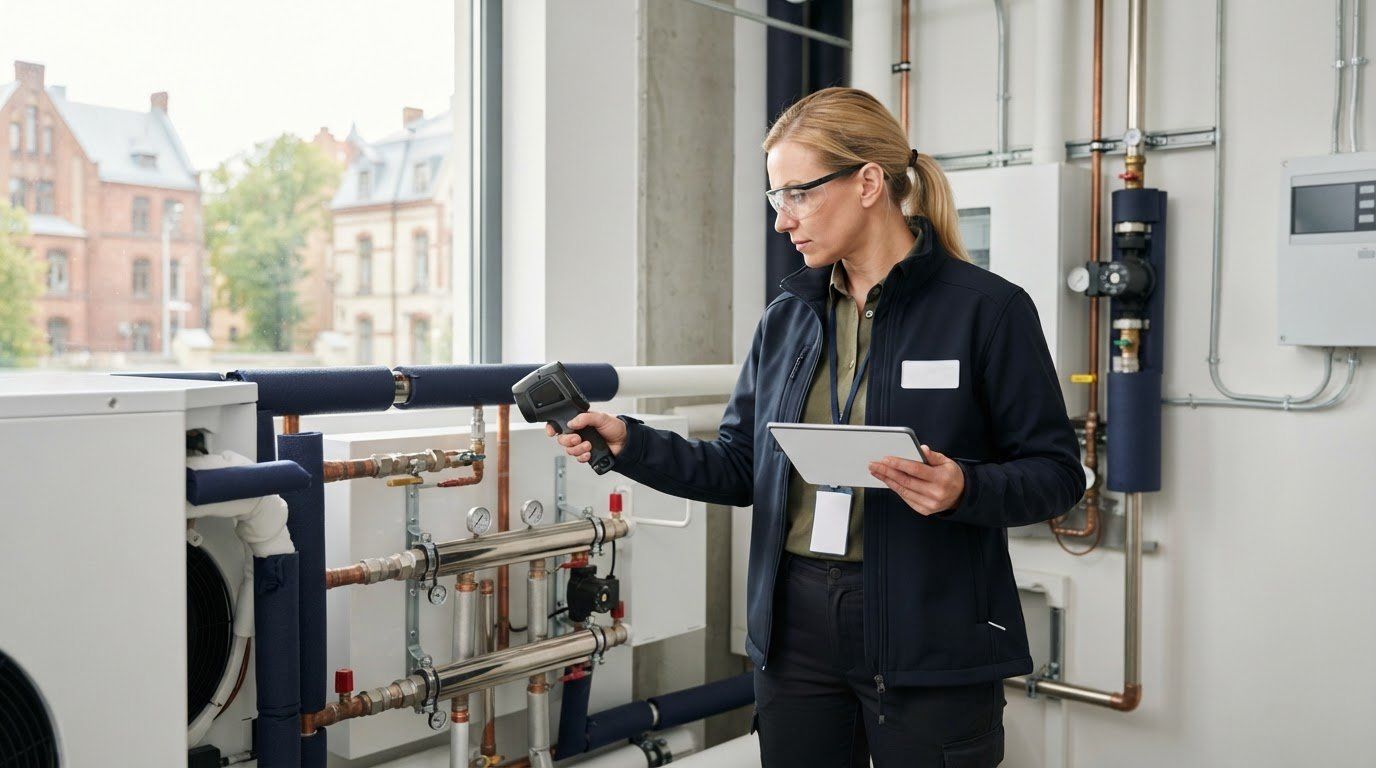
Heating system efficiency audit begins with data, not guesses. periodic inspection of the heating system is required if its total rated power exceeds 70 kW. The energy audit is an analysis of the possibilities, and it is not the same as the energy performance certificate of the building.
When thinking about heating costs and comfort in the premises, it is important to understand what is worth improving the system first. The heating system efficiency audit helps to evaluate it by collecting information about the operation of the equipment and the needs of the building, so that recommendations are adapted to the specific situation.
See how the audit collects data, develops practical recommendations and compares the air conditioning power to the cooling needs of the building. Let's also see what Latvian regulations apply to system checks and how proper settings can help reduce energy consumption.
Collection of audit data and drafting of recommendations
The heating system efficiency audit begins with the collection of data on the building and equipment. The expert evaluates the heating source, management settings, room temperature and system operation. Consumer bills and information about the use of the building are also useful. For example, if the same temperature is maintained in uninhabited premises, the heating regulation may be adjusted.
Heating system audits, maintenance and energy audits are different services. Maintenance includes maintenance and verification of operation of the equipment, while the audit analyses system's suitability and efficiency. Energy audit helps to evaluate the energy efficiency improvement options of the building.
In Latvia, the testing of heating and air conditioning systems is performed by a specialist who has completed training and obtained the appropriate certification of LSGĪTEIS. The tests of boilers are performed according to LVS EN 15378:2009. The test act of boiler is prepared according to Annex D, but the test act of heating system according to Annex K.
The process begins with the collection of documents and consumption data, followed by the system review and performance evaluation. Heating and air conditioning systems are also checked during the building energy certification and after major renovation or reconstruction. The duration of the audit depends on the building area, the number of systems, access equipment and the completeness of available data.
The audit price in Latvia depends on the size of the building and the system to be tested. It is also influenced by the availability of documents and the required measurement amount.
The audit's recommendations in themselves do not grant financing for the modernisation of heating. Support is assessed separately taking into account the conditions of the specific programme, the owner of the building and the planned works.
In the cooling assessment compare the actual rated capacity of the conditioning equipment with the cooling demand of the building. In Latvia, the verification of air conditioning systems is performed in accordance with Cabinet Regulation No 222 if the actual rated capacity exceeds 12 kW. This comparison helps to see if the equipment meets the needs of the building.
Reducing energy consumption and operating costs
The aim of the audit is to match the performance of the equipment with the heating needs of the building and consumption patterns. A comparison of these indicators helps to determine which settings should be reviewed.
Efficiency and consumption indicators to be checked
The evaluation of the efficiency and consumption of the heating system includes energy consumption, indoor temperature and equipment control settings. It is important to compare the heating performance with the actual use of the building. For example, if the premises are heated even during long absence, the controller's mode may not correspond to the daily schedule.
Also, heat distribution is assessed: whether the space is heated evenly and whether individual radiators are not becoming excessively hot. Such observations help to see whether the system needs balancing. Consumer bills, machine operating modes and the habits of the population together provide a practical picture, not just one isolated indicator.
Recommendations for reducing consumption and costs
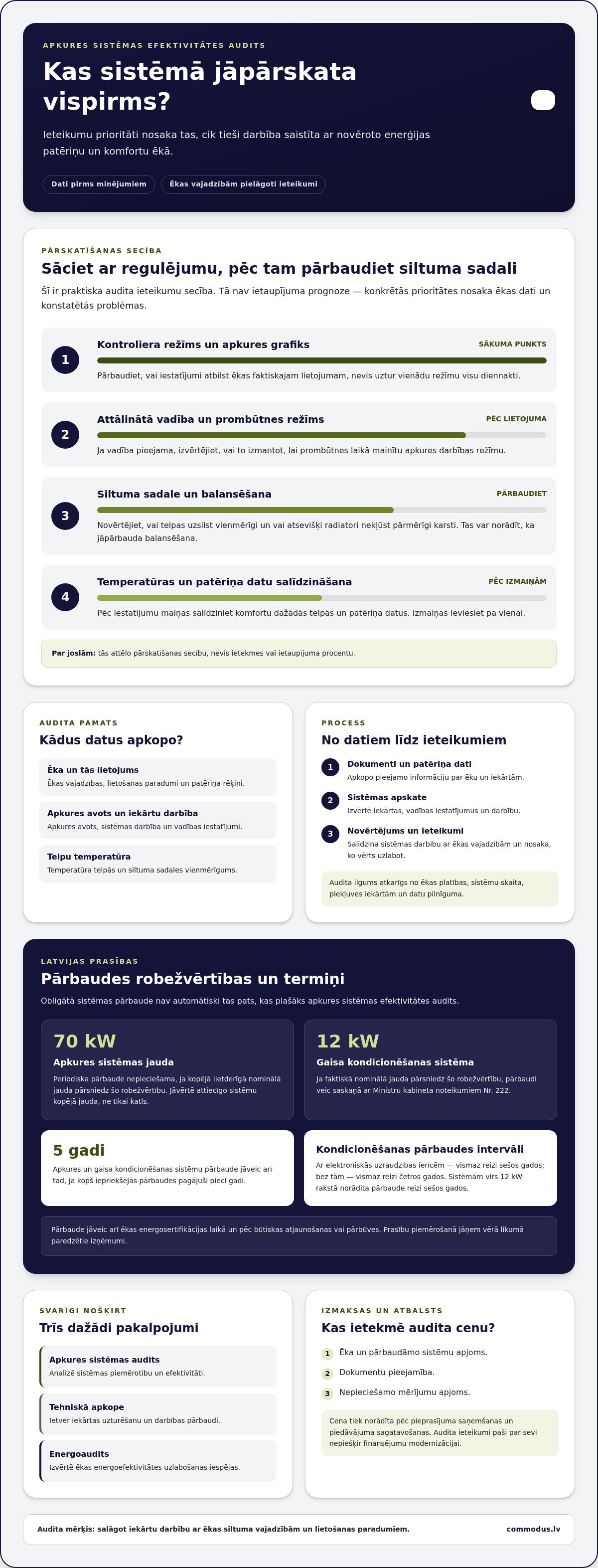
Recommendations often start with a review of controller mode, remote control and balancing settings. Properly adjusted operating modes and regulation equipment can improve the energy efficiency of the heating system even without capital investment. For example, the heating schedule can be adjusted to the actual use of the building rather than maintaining the same mode 24 hours.
If some rooms heat faster than others, it may be necessary to check the heat distribution and adjustment settings. If the controller has a remote control function, it can be used to change the operating mode in the absence of the driver. Changes are introduced one by one, then comparing the space comfort and consumption data.
- Review controller modes and heating schedule.
- Assess whether remote management is in line with building usage habits.
- Check the settings of balancing and adjustment devices.
- Compare temperature in different rooms after changing settings.
This approach helps to distinguish between everyday settings problems and situations requiring technical improvements. The priorities of the audit recommendations are defined according to how much each activity is related to observed consumption and building comfort.
For which buildings in Latvia is the audit of the heating system mandatory?
The requirements of Latvia apply to periodic inspections of heating systems, not automatically for each energy audit. The verification is necessary for a heating system or for a combined heating system with ventilation if the total useful rated power exceeds 70 kW. Therefore, the owner of the building must first establish the total capacity of the system and the history of the verification.
Under certain conditions, lower capacity systems may also be covered. The testing of heating and air-conditioning systems must be carried out if five years have elapsed since the previous test.
- Check the total useful rated power of the system.
- Review the previous heating or air-conditioning system inspection documents.
- Assess whether the building has undergone major renovation or reconstruction.
- Please note the energy certification process and its verification requirements.
In practice, this means that not only the boiler's capacity should be assessed. If a building operates several parts of the heating system or has a combination of heating and ventilation, the total useful rated capacity of all the systems concerned should be taken into account. For example, the power limit of the plant does not itself say whether a particular building needs to be tested.
The Building Energy Efficiency Law provides for exceptions in Article 3 of the derogations. They should be evaluated when determining whether the verification requirements apply to the building. Therefore, it is important to distinguish the mandatory system inspection from the wider audit of the efficiency of the heating system.
In Latvia, air conditioning systems with control and control devices that ensure electronic system monitoring must be checked at least every six years, and in Latvia, without the said electronic monitoring devices, at least every four years. In Latvia, air conditioning systems with effective nominal power above 12 kW, the test must be performed every six years. Therefore, when assessing the technical equipment of the building, a distinction must be made between the requirements of the heating system and the test period applicable to the air conditioning system.
If it is necessary to attract an independent expert, an independent expert register in the field of energy efficiency of buildings is included in the Construction Information System in accordance with paragraph 36 of Cabinet of Ministers Regulation No.531. This cost information refers to the development of a certificate and does not itself determine whether the building is eligible for verification of the system. Before ordering the service, the owner is useful to determine whether a system verification, energy performance certificate or both is required and to choose an appropriate expert.
What Latvian laws and regulations define requirements for inspection and audit of heating systems?
Latvia heating system The requirements of the verification are related to the energy performance regulation of the building and the technical assessment of the system. Article 3 of the Buildings Energy Efficiency Law provides for exceptions to be assessed before concluding whether the requirement applies to the building. Therefore, it is not enough to compare the capacity of the boiler with a single threshold.
Periodic inspection of heating or ventilation combined heating system is required if the total useful rated power exceeds 70 kW. Testing of heating and air conditioning systems should be performed if five years have passed since the previous test.
The test of boilers in Latvia shall be carried out in accordance with standard LVS EN 15378:2009. The test act of boiler shall be prepared according to Annex D to this standard, but the test act of the heating system, according to Annex K. These documents record the test result and allow the owner of the building to understand which part of the system is covered by the conclusions.
Air conditioning systems are subject to certain requirements. In accordance with Cabinet Regulations No 222, the verification is performed if the actual rated power of the system exceeds 12 kW. If the cooling system is combined with ventilation, periodic verification is required if the total useful rated power exceeds 70 kW.
- For heating, check the total capacity and date of the previous check.
- Check if energy certification for the building or major renovation has been carried out.
- For cooling, consider the applicability of the actual rated power.
- Please note the exceptions provided for in Article 3 of the Buildings Energy Efficiency Act.
The application of requirements depends on the type of building systems, their capacity and the specific reason for verification. Therefore, the audit of the efficiency of the heating system must be distinguished from the test provided by the regulatory enactments: the audit helps to analyse the possibilities for improvement, but the technical and documentation framework for the inspection is defined.
If the heating requirements of a building have not changed, the assessment of the size of the boiler should not be repeated during the test. Therefore, the assessment of the test information should determine whether the requirements of the building have changed rather than automatically assume that the size of the boiler should be reassessed each time.
In Latvia, the register of independent experts in the field of building energy efficiency is included in the Construction Information System, according to the Cabinet of Ministers Regulation No. 531 paragraph 36. For companies in the European Union, which are not small or medium-sized enterprises, the energy inspection should be performed every four years. These requirements allow to separate the issues of verification of heating systems of buildings from the obligation to perform energy verification which applies to a particular group of companies. Therefore, the applicable procedure should take into account both changes in heating requirements of the building, and whether the company is a small or medium-sized company.
Commodus: Air conditioning
If the audit assessment indicates the need for cooling, Commodus offers air-conditioners. The solution should take into account the use of space and cooling demand, and not just the nominal capacity of the unit.
If the audit recommendations are to change the heating source, Kommodus also offers pellet boilers, wood-based boilers, solar collectors and solar panels. These are different solutions, so the choice should start with the assessment of the building's needs and the existing system.
If you plan to improve the heating or cooling of a building, contact Commodus or visit Commodus siteto get acquainted with the offer.
Turn audit conclusions into a well thought-out next step
The heating system efficiency audit helps to understand whether the next step is to arrange management settings or to make more changes. Before selecting the equipment, re-evaluate audit recommendations in clear requirements: what heating load should be ensured, how heat is distributed and which solution fits with the existing system. This helps to make a decision based on the needs of the building, not just the name of the installation.
If the evaluation requires considering changing the heating source, Commodus offers air-water, air-air and ground heat pumps. These solutions differ in the type of installation and connection to the heating system of the building, so the audit conclusions can help to assess the most appropriate direction. To make the conversation concrete, prepare audit recommendations and briefly describe the heating needs of the building.
Contact CommodusA thoughtful decision begins with a clear understanding of what the building really needs.
Comments