Connecting a Solar Panel System to the Grid: Complete Guide for 2026
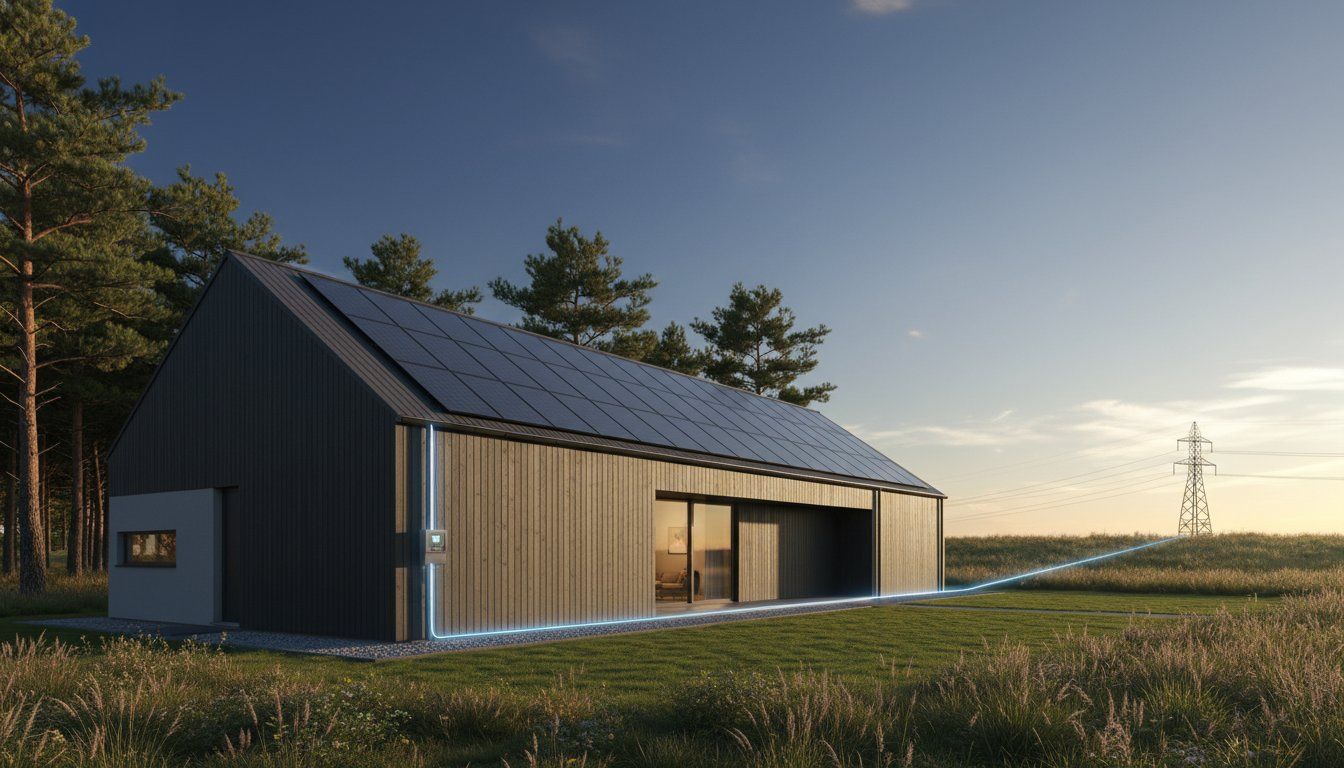
From January 1, 2026, Latvian households face a new reality, as state support for tariff caps has ended, increasing monthly payments for maintaining connection capacity. These changes make it even more important to assess carefully how connecting a solar panel system to the grid can help optimize your costs and provide energy independence. We know that bureaucratic twists, the technical requirements of "Sadales tīkls" and concerns about choosing the wrong inverter can feel like a major challenge. It is completely understandable to feel confused between the new ampere charges, which since May 2026 range from EUR 101.36 to as much as EUR 184.15 per ampere, and the desire for a safe, legal system.
In this article, we will clear away the uncertainty and give you a clear, step-by-step action plan. You will learn everything about the required documentation, the technical process and how to use the net settlement system effectively so that every watt you generate works for you. Our goal is to help you reach the point where the system is successfully commissioned, giving you peace of mind and the maximum long-term benefit from solar energy. Let us look at the details so your path to green energy is understandable and predictable.
What is connecting a solar panel system to the grid and why is it necessary?
Connecting a solar panel system to the grid essentially means turning your home into a small but smart energy source that works in sync with the shared electricity grid. Most Latvian households choose microgenerator status, which applies to equipment with capacity up to 11.1 kW. This is an optimal size for covering a private home's self-consumption and feeding surplus electricity into the grid. Before going deeper into the technical details, it is worth understanding the basics of what a solar panel is and how it converts light into electricity, because this technology is the heart of your new system.
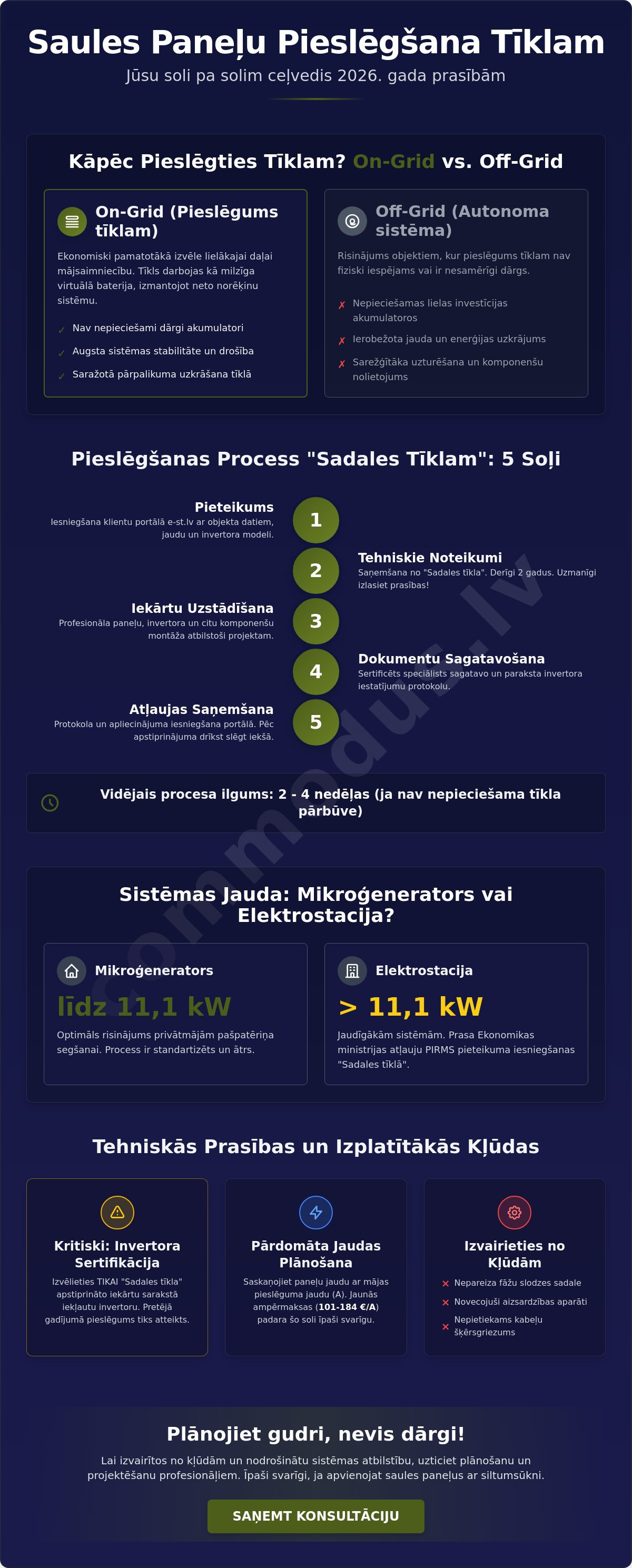
Why connect to the grid at all? The main reason is parallel operation. This means that when the sun is not shining, you receive electricity from the grid, while on sunny days you send your generated but unused energy for storage. This is where the net settlement system helps. It works like a virtual wallet that records the kilowatt-hours you have fed into the grid, allowing you to use them later, for example during the winter months. If you are planning a more powerful system above 11.1 kW, the process becomes more complex. In that case, the installation is classified as a power plant and requires permission from the Ministry of Economics before an application is submitted to AS "Sadales tīkls".
On-grid vs off-grid systems: Which should you choose?
On-grid systems, meaning systems connected to the public grid, remain the most economically justified choice for most clients in 2026. You do not need to invest large sums in expensive battery blocks, because the grid itself acts as a huge battery. Off-grid systems that operate fully autonomously are usually used only at sites where a grid connection is physically impossible or disproportionately expensive. Considering that ampere charges have increased since May 2026 and state tariff support has ended, precise capacity planning and grid connection have become a strategic decision, not just a technical formality. Our team always emphasizes that this connection with the grid is what ensures system stability and long-term payback.
Step by step: The solar panel connection process with "Sadales tīkls" in 2026
The connection journey starts digitally through the customer portal e-st.lv. Here you will need to provide property details, the planned microgenerator capacity and the selected inverter model. We recommend preparing the data in advance so submitting the application takes only a few minutes. Once the application has been processed, you will receive the technical requirements. They are valid for two years, giving you enough time to choose the best solution calmly. In this document, "Sadales tīkls" will define the specific requirements for your connection. Read them carefully, because they may sometimes include a requirement to rebuild part of the electricity grid, which can affect the total cost of the project.
Although in theory everything looks simple, the practical process with "Sadales tīkls" requires precision in every detail. Once the equipment has been installed, the next critical step is preparing the inverter settings protocol. This document is signed by a certified specialist, confirming that the equipment has been configured according to the parameters of the Latvian electricity grid. Only after this protocol and the construction confirmation have been submitted in the portal will you receive the final permission for parallel operation with the grid. Remember that switching on the system yourself before official approval can lead to unpleasant penalties.
How long does the connection process take?
Realistically, the whole process from application to the moment you may switch on the inverter takes about 2 to 4 weeks. This applies when the grid capacity in your area is sufficient and the documents are submitted without errors. The process can be delayed by the need for grid reconstruction or inaccurately specified equipment models. We always recommend double-checking every number, because even one wrong character can force the entire process to start again.
Inverter certification: Why is it critical?
The inverter is the brain of the system, and its certification is decisive. "Sadales tīkls" maintains a list of recognized equipment that has been tested and approved as safe for operation in the Latvian electricity grid. If you choose an inverter that is not on this list, connecting the solar panel system to the grid will be refused. This is done to protect the shared grid from voltage fluctuations and to ensure that your system does not affect the operation of your neighbours' electrical appliances. Before purchasing equipment, always make sure it complies with the current requirements.
Technical requirements and the most common mistakes when connecting a system to the grid
Precise capacity planning is the foundation for connecting a solar panel system to the grid without unnecessary costs or technical problems. One of the most common mistakes is a mismatch between the home's existing ampere capacity and the planned generation capacity of the panels. If the current rating of your input protection device is too low, the system will not be able to feed all the generated energy into the grid. This is critical in 2026, when ampere charges vary depending on distance to the grid. No one wants to pay for unnecessary capacity, but urgent grid reconstruction at the last minute is even more expensive.
When planning home energy efficiency, we often see clients wanting to combine several powerful solutions. If air-to-water heat pumps are also being installed in your home, capacity calculation becomes an engineering priority. These units and solar panels are an excellent pair, but they require smart distribution of phase loads. This is where the most common mistakes appear:
- Incorrect phase load: One phase is overloaded while the others remain underused.
- Unsuitable protection devices: Old fuses cannot handle the load created by modern equipment.
- Insufficient cable cross-section: Energy losses and the risk of overheating.
To avoid these risks, we recommend ordering engineering system design in good time. This will help coordinate all equipment into one safe system before the first panel is installed. When using the state support program, the requirements for technical execution are strict, so documentation errors are not acceptable.
Why is consultation with a certified construction specialist necessary?
The specialist's role is not only to sign papers. It is about the "hygiene" of your home's internal electrical network. A professional will check whether the existing electrical installation is ready for the new load and whether local improvements are needed. This inspection before connection helps avoid unpleasant surprises after the system has been installed, ensuring that connecting the solar panel system to the grid is legal and technically flawless. Our team believes that long-term peace of mind comes only from carefully planned engineering work. Contact our experts to learn how CTC air-to-water heat pumps can be integrated into your solar energy project.
Commodus full-service solution: From project to permit
Our team believes that technology is only half the victory. The other half is human responsiveness and the ability to navigate complex rules without losing focus on the client's needs. When a solar panel system is being connected to the grid, Commodus experts become your trusted partner, taking over the entire bureaucratic burden. We not only install equipment, but also prepare precise documentation for receiving the "Sadales tīkls" permit. This ensures that the application is approved without unnecessary delay, because our certified specialists know every technical nuance required by the system operator.
By choosing the solar panel kits we offer, you receive a solution that is fully compatible with your home's heating and engineering systems. We believe in long-term cooperation, so our work does not end when the last screw is tightened. After the system is commissioned, we provide continuous monitoring and technical maintenance so you can always be confident in the efficiency of your investment. An individual approach is not just a slogan for us; we look for solutions even where others see only technical obstacles or capacity limits.
Why entrust the connection to professionals?
The main benefit is your time and a guarantee that gives peace of mind. Professional involvement ensures that all installed equipment complies with the strict 2026 standards and safety requirements, which is critical for insurance and state support. In addition, we help integrate ventilation and heat recovery systems into the overall home energy efficiency plan. This means that connecting a solar panel system to the grid becomes part of a unified, smart ecosystem that minimizes your bills and improves quality of life. By entrusting this work to us, you choose a safe path toward energy independence.
Start your path to energy independence today
Connecting a solar panel system to the grid in 2026 is a strategic investment that requires both technical precision and knowledge of current bureaucratic processes. The main thing to remember is that a successful project is based on correct capacity planning and the use of certified equipment that fully matches the current electricity grid requirements. Properly organized documentation and thoughtful synergy with other home engineering systems will ensure that your investment starts paying back from the very first sunny day. It provides peace of mind and security about future bills in a changing energy market.
We know this process can seem complex, so we are here to help as equal partners. The Commodus team has more than 15 years of experience in building engineering systems, and our specialists have successfully connected hundreds of sites across Latvia. We take full responsibility for organizing the documentation and technical execution so you can enjoy green energy without unnecessary worries. You can be confident that your home and its energy efficiency are in good hands. Contact Commodus experts and request a free consultation on solar panel installation!
Frequently asked questions about connecting solar panels
May I switch on the solar panels immediately after installation?
No, it is strictly forbidden to switch on solar panels before receiving the final permit from AS "Sadales tīkls". Even if installation is fully complete and everything seems ready for operation, the system must remain switched off until confirmation of permission for parallel operation with the grid appears in the e-st.lv portal. Switching it on yourself before this point can cause incorrect energy metering or even grid damage, which may in turn lead to unpleasant penalties.
Which inverter is suitable for connection to "Sadales tīkls"?
You must choose only an inverter that is included in the official list of equipment recognized by "Sadales tīkls". These units have been tested and certified for safe operation in the Latvian electricity grid, guaranteeing that they will not cause voltage fluctuations. If you purchase a model that is not on this list, connecting the solar panel system to the grid will be refused, and you will have to look for another unit, creating additional costs and delays.
Is there an additional fee for connecting solar panels to the grid?
Yes, you should account for a connection fee and monthly capacity maintenance costs. Since May 2026, the fee for connecting a new microgenerator to the 0.4 kV grid is EUR 117.21, while the ampere charge for increasing capacity starts from EUR 101.36 per ampere. In addition, since January 1, 2026, monthly capacity maintenance payments have increased because state support for tariff caps has ended, raising actual expenses for households.
What happens if my generated capacity exceeds the permitted microgenerator capacity?
If the system capacity exceeds 11.1 kW, it is no longer classified as a microgenerator, but as a power plant. In this case, the connection process becomes significantly more complex and requires prior permission from the Ministry of Economics before an application is submitted to the operator. For most households, the 11.1 kW limit is the optimal balance for covering self-consumption and avoiding the additional bureaucratic obstacles typical of larger projects.
Is the net settlement system still worthwhile in 2026?
Yes, the net settlement system is still financially justified, but its effectiveness is most visible through direct self-consumption. Since state tariff support has ended, it is most beneficial to use your own generated energy at the moment when the sun is shining. By planning the operation of powerful devices, such as heat pumps or electric car chargers, during the daytime, you minimize the need to purchase energy from the grid and therefore achieve faster payback for the system.
Comments