Solar Panel Maintenance: A Complete Guide to System Efficiency in 2026
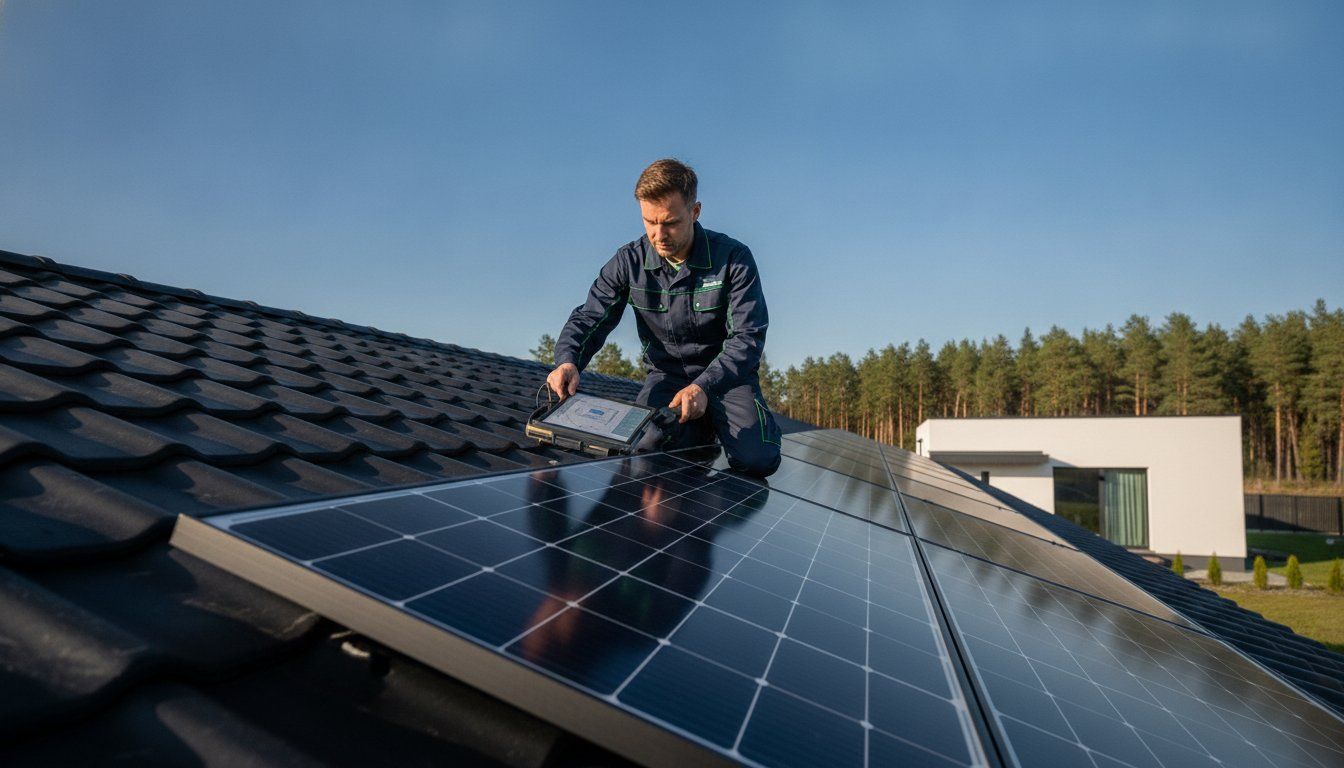
Did you know that, in Latvia's changeable weather, dirty solar panels can cause an electricity production drop of as much as 47% over the course of a year? Many homeowners mistakenly believe that rain will do all the work for them, but in reality dust, tree debris and deposits quietly reduce system output. That is why solar panel maintenance in 2026 is no longer just an aesthetic matter, but a critical prerequisite for your investment to pay back as quickly as possible and for the system to operate safely.
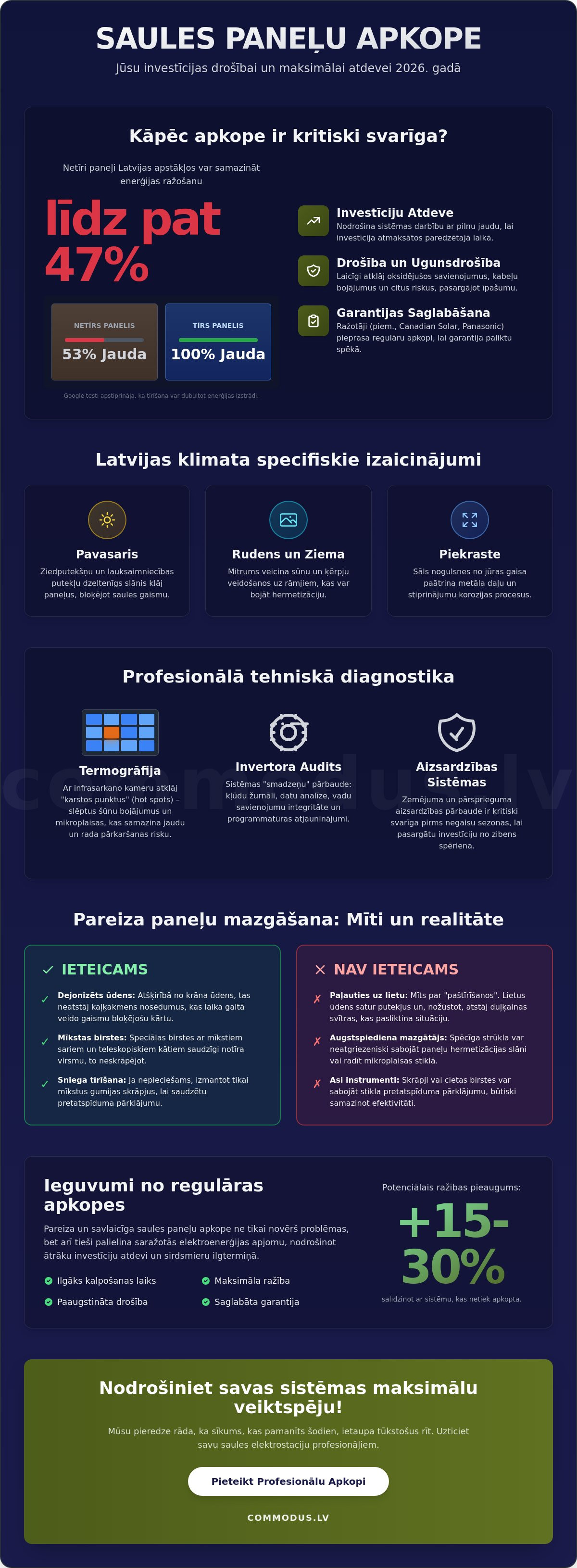
We fully understand the concerns that arise when you see a drop in production figures or suspicious cable connections on the roof. It is not pleasant to worry about fire safety or to wonder whether you may climb onto the roof with an ordinary garden hose without risking damage to expensive equipment. In this guide, you will learn how proper solar panel maintenance can increase electricity production by 15-30% and ensure the safety of the entire system for many years. We will cover everything you need, from technical diagnostics and thermography to practical advice that will help you decide when DIY is enough and when the help of a professional, knowledgeable technician is required.
Why is solar panel maintenance essential for return on investment?
Investing in renewable energy is a smart step, but for it to pay back within the expected period, the system must operate at full capacity. Solar panel maintenance is not just an aesthetic issue. It is a technical set of measures combining visual inspection, electrical measurements and gentle surface cleaning. The basics of solar panel maintenance include making sure that every element works flawlessly, because even one damaged or dirty panel can significantly slow down the total output of the whole string.
The data is unforgiving. In Latvian conditions, dirty panels can cause annual energy losses ranging from 7% to as much as 47%. Tests carried out by Google showed that cleaning after a longer pause was able to double energy output literally overnight. In addition to productivity, regular inspections are mandatory for preserving the warranty. Manufacturers such as Canadian Solar and Panasonic clearly state that solar panel maintenance is a prerequisite for the efficiency and safety promised by the manufacturer to remain valid for decades.
Safety is another essential aspect. Preventive maintenance allows oxidised connections or cable damage caused by rodents or the surrounding environment to be detected in time. This helps prevent fire risks and protects your property from unexpected losses before they become an expensive problem. Our experience shows that a small detail noticed today can save thousands tomorrow.
The impact of Latvia's climate on panel wear
Our region has specific challenges. In spring, clouds of pollen and dust from agricultural work cover panels with a yellowish layer that literally blocks sunlight. Damp autumns and winters encourage moss and lichen to form on aluminium panel frames, which can damage sealing. Meanwhile, those living in coastal areas must take salt deposits into account, as they accelerate corrosion processes if the system is not inspected regularly.
Technical diagnostics: thermography and inverter audit
High-quality solar panel maintenance goes far beyond simply wiping surfaces. It is an inspection of the system's "internal organs", where thermography plays the key role. Using an infrared camera, our specialists can identify so-called hot spots. These areas indicate hidden cell damage or microcracks that are invisible to the naked eye, yet significantly reduce total output and create a risk of local overheating. As stated in the U.S. Department of Energy maintenance guide, preventive diagnostics is the cheapest way to avoid downtime of the entire system.
The inverter is the brain of the whole power plant, so its audit is critical. We not only check the error log, but also compare current production with historical data. If we notice deviations, we look for the cause in the integrity of cables or MC4 connections. In rural regions of Latvia, rodents often choose cable insulation as a snack, while in urban environments intensive UV radiation can make plastic fasteners brittle over the years. Before every thunderstorm season, it is also important to make sure the earthing and surge protection systems are ready, so that a sudden lightning strike does not put your investment out of service.
Small details are often decisive. If your system starts showing unexplained fluctuations, you can consult our specialists on the Commodus websiteto arrange a technical inspection.
Inverter software and settings optimisation
Technology does not stand still, and regular firmware updates can improve energy conversion efficiency by even a few percent. This is especially important if you have chosen modern solar panel kits with smart optimisers. Monitoring apps are not meant only for pretty graphs; they are your first warning signal. By learning to recognise anomalies in production curves, you can book a solar panel maintenance service before the system has stopped completely. We always advise clients to review production data at least once a month to maintain peace of mind and maximum output.
Panel washing and physical protection
Many homeowners rely on rain as a natural ally, but the "self-cleaning" myth is one of the most common misconceptions in the solar energy sector. Rainwater often contains atmospheric dust particles and, when it dries on heated glass, leaves cloudy streaks that only make the situation worse. High-quality solar panel maintenance includes periodic washing, preferably using deionised water. Unlike ordinary tap water, which in Latvia is mostly hard, deionised water leaves no limescale deposits. Over the years, these barely visible mineral layers create a haze that literally "steals" sunlight and reduces the system's total yield.
It is important to remember to be gentle during the process. Pressure washers may seem like a quick solution, but they are dangerous. An overly powerful water jet can damage the panel sealing layer or create microcracks in the glass, which later turn into serious defects. Instead, special soft-bristle brushes and telescopic poles should be used. If your system needs a professional inspection or you are planning to install new solutions, Commodus specialists will help assess the system's condition and provide practical maintenance advice.
Snow removal and winter maintenance
Latvian winters often raise the question: should snow be removed? If the snow layer is thick and heavy, it creates significant mechanical load on roof structures. However, from the perspective of electricity production, cleaning in December or January rarely provides a major financial benefit because the number of daylight hours is minimal. If you nevertheless choose to clean the panels, do it only with soft rubber scrapers so as not to scratch the expensive anti-reflective coating, which is essential for panel efficiency in the spring season.
Bird spikes and barriers: preventive solutions
Birds, especially pigeons, love using the space under panels for nesting because it is warm and sheltered from wind. This creates serious risks, as nesting materials restrict the panels' natural ventilation and cooling. In addition, bird droppings are chemically aggressive. The acids they contain can cause corrosion of aluminium frames and damage the glass surface, creating irreversible defects. Installing special protective mesh or spikes around the panel perimeter is the most effective way to protect the system from unwanted tenants in the long term.
Professional maintenance vs DIY: when should you call a technician?
A homeowner's watchful eye is the first protective shield for any engineering system. You can safely perform a visual inspection from the ground and regularly monitor production data in the mobile app to spot sharp changes. This is an excellent way to keep everyday control of the situation. However, when it comes to physical contact with equipment on the roof, the risks increase exponentially. Working at height without professional safety equipment is dangerous, and even a small lapse in attention can end in injury or expensive panel damage.
The risk of electric shock is another major factor that must not be underestimated. Solar panels produce direct current (DC), which is particularly dangerous to human health because, at the moment of contact, it can cause muscle spasms and prevent a person from pulling away from the power source. High-quality solar panel maintenance requires specific knowledge of cable insulation resistance measurements and earthing loop inspection. Unlike cheap occasional workers who offer only surface wiping, Commodus engineers are certified specialists who understand the technical structure of the system and guarantee a safe result.
We recommend carrying out full technical maintenance once a year, preferably in the spring months (March or April), to prepare the system for maximum output before the peak of summer sunshine. An extraordinary inspection is also advisable after particularly strong storms or hail, to make sure structural fasteners are stable and that no microdamage has appeared in the panel glass that could affect long-term safety.
Commodus service standard
By choosing our services, you receive more than just clean panels. Our standard includes a comprehensive inspection, from gentle washing to inverter settings calibration and a review of all electrical connections. After the work is completed, we prepare a full technical report on the system's condition and provide recommendations for optimising productivity. We take care of home engineering systems as a whole, so our team also offers ventilation system maintenance, ensuring that your home is not only energy-efficient, but also has a healthy microclimate and safe utilities.
Ensure your long-term energy independence
Maintaining your solar power plant is a smart investment that pays back through lower electricity bills and genuine peace of mind. In this guide, we found that even a seemingly insignificant dust layer or unnoticed cable damage can cause a significant drop in productivity. High-quality solar panel maintenance is the best way to protect your investment from premature wear, fire safety risks and loss of warranty.
When the work involves height and precise electrical measurements, it is safest to rely on experience. The Commodus team has been helping Latvian residents implement and maintain energy-efficient solutions for more than 15 years. Our certified engineers work across the whole territory of Latvia, using specialised deionised-water cleaning technology that protects the panel surface and ensures maximum transparency without limescale deposits.
Do not postpone the system inspection until production has already dropped critically. Contact us and take care of your home's energy source today. Book professional solar panel maintenance with Commodus experts!
May your system work flawlessly and may the sun provide maximum benefit in every season!
Frequently asked questions about solar panel maintenance
How often should solar panel maintenance be carried out in Latvian conditions?
In Latvia, technical maintenance and panel washing are recommended once a year, preferably in spring after the pollen season has ended. This ensures that the system is ready for maximum output during the sunniest summer months. An additional visual inspection is advisable after particularly strong storms or hail, to make sure the structural fasteners have not loosened and the panel glass has not suffered mechanical damage.
Can solar panels be washed with an ordinary garden hose and tap water?
Washing with tap water is not recommended because in Latvia it is mostly hard and contains many minerals that leave limescale deposits after drying. This white haze gradually reduces panel transparency and overall efficiency. Professional solar panel maintenance uses deionised water, which leaves no traces and gently cleans the surface without risking damage to the expensive anti-reflective coating.
How can I know that my solar panels need maintenance?
The main indicator is an unexplained drop in production volume in your monitoring app compared with the same period last year. If you notice that the system produces less energy than usual on a sunny day, it may indicate a dust layer, bird droppings or even hidden cell damage. Visibly noticeable moss on frames or dirt streaks at the lower part of the panels are a clear signal that it is time for maintenance.
Is solar panel maintenance mandatory to preserve the manufacturer's warranty?
Yes, most leading manufacturers clearly state in their warranty conditions that the system must undergo regular and documented technical supervision. If a defect occurs because of blocked ventilation or overheating caused by dirt, the manufacturer may refuse to fulfil the warranty obligations. Regular maintenance serves as insurance that your investment is protected and all warranty conditions remain valid throughout the equipment's service life.
Does removing snow from panels in winter really increase productivity?
Removing snow in December or January increases productivity only very slightly, because the number of daylight hours in Latvia is minimal at that time. The greatest benefit of snow removal is reducing mechanical load on roof structures if the snow layer is unusually thick and heavy. If you still decide to remove snow, do it only with soft rubber tools so as not to scratch the panel glass, because every scratch will reduce the system's output in spring.
Comments