Geothermal Borehole for a Ground Source Heat Pump: Price, Benefits, and Complete Cost Guide for 2026
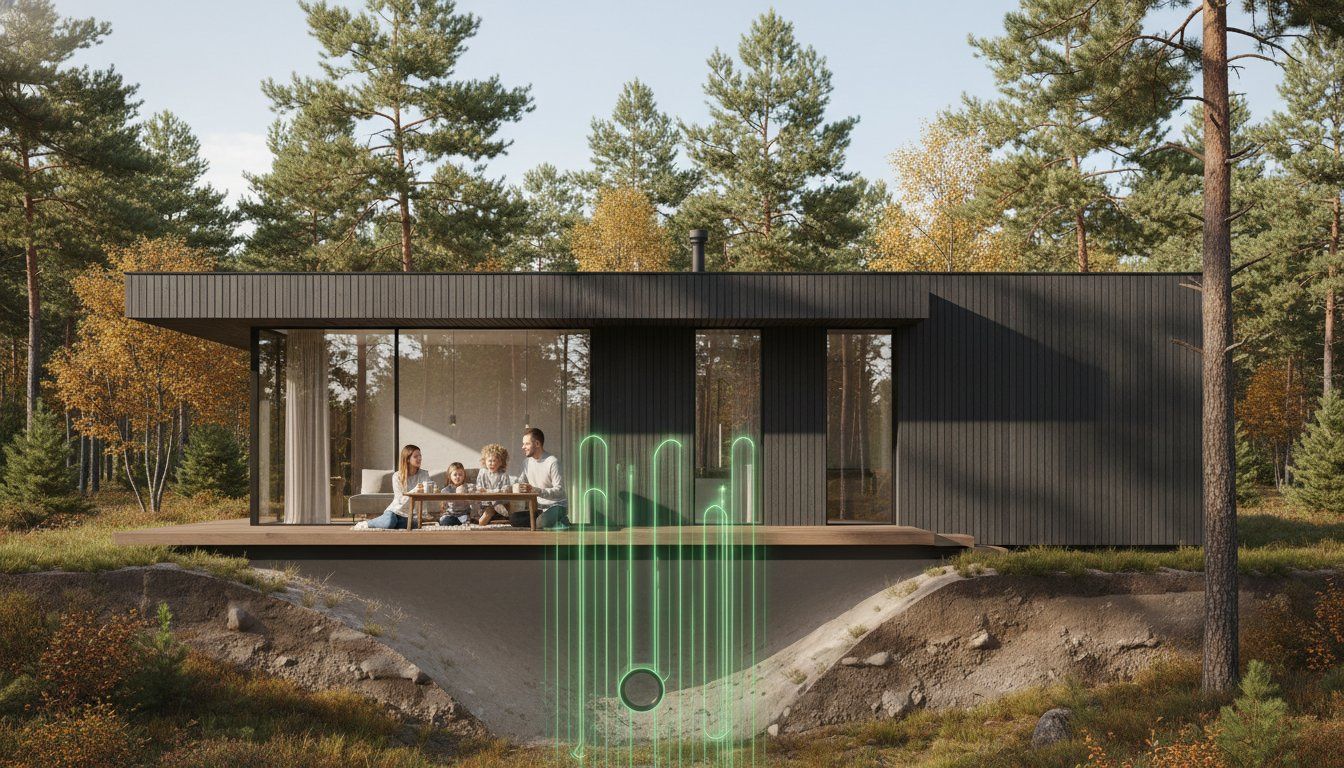
Did you know that a borehole is not just an engineering structure, but your home's personal "energy store" for the next 50 years? We understand very well that the question of what the geothermal borehole for a ground source heat pump price will be often causes concern and makes people question whether this investment is worthwhile. It is completely normal to feel a little overwhelmed by the twists and turns of bureaucracy and complex capacity calculations, because this is an important decision for your family's peace of mind and long-term comfort.
In this guide, we will help you see a clear picture by dispelling myths about unmanageable costs and approval processes. You will learn everything about current installation trends in 2026, state support programs that can cover up to 85% of costs for certain groups, and why a vertical collector delivers the highest efficiency even in Latvia's harshest winter. We will guide you through the entire process, giving you the knowledge needed to make a well-considered and economically sound decision.
What is a borehole for a ground source heat pump, and what factors determine its price?
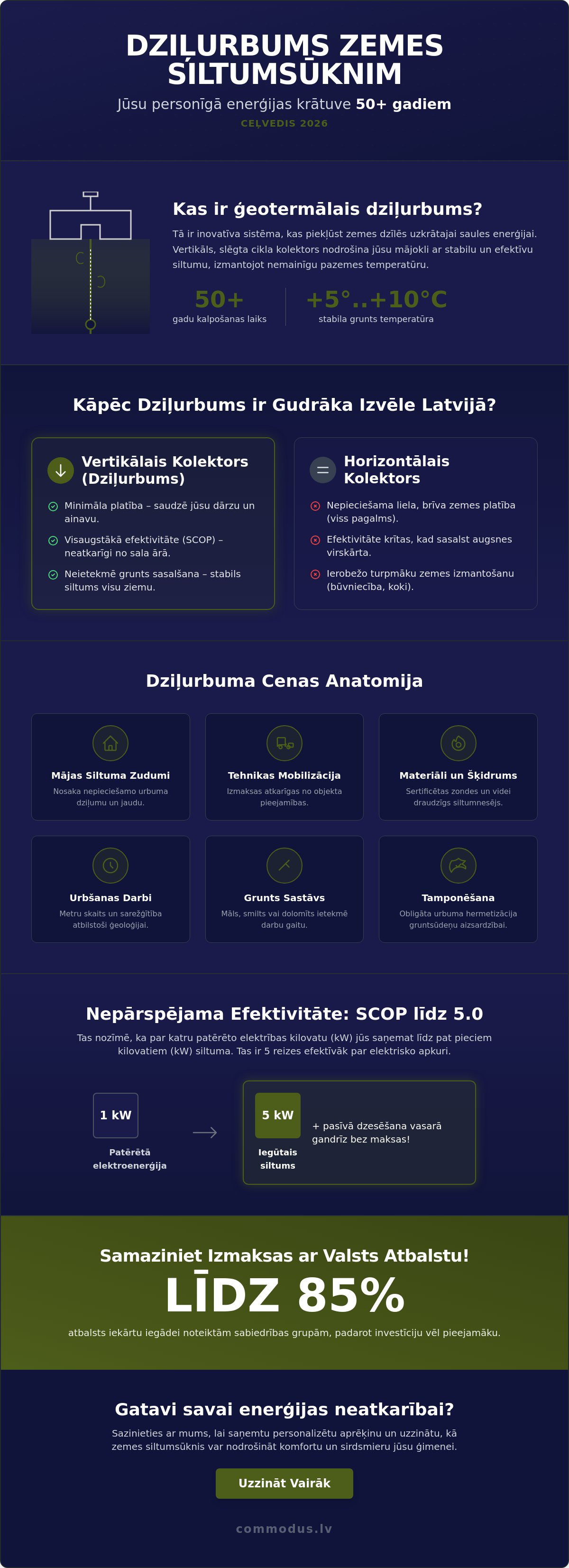
A geothermal borehole is an innovative solution that gives access to an inexhaustible energy source right beneath your feet. In essence, it is the core element of what a ground source heat pump is: a closed-loop system in which a special heat-transfer fluid circulates. This technology provides stable and predictable heating, because the ground temperature at depth does not change even on the coldest January nights. The geothermal borehole for a ground source heat pump price is directly linked to the system's longevity; it is infrastructure that will serve for more than 50 years, becoming one of the most valuable elements of your property.
Our team's experience shows that the vertical solution is the most reliable choice in Latvia's changeable weather conditions. Unlike horizontal collectors, which are affected by freezing in the upper soil layer, a borehole ensures the maximum SCOP figure throughout the entire season. The price consists of several important components: the drilling equipment used, the geological profile of the specific location, and the quality of the selected materials. Every meter we drill is carefully documented to ensure that the system meets the highest standards.
Heat-transfer fluid and probe materials
System safety starts with high-quality polyethylene pipes, or probes. They must withstand high pressure and temperature fluctuations for decades, so we choose only certified materials. The heat-transfer fluid circulating in the system is just as important. It must be environmentally friendly and have high thermal conductivity to ensure efficient energy exchange between the ground and your heat pump. These details are critical for preventing leaks and guaranteeing long-term system efficiency.
Advantages of vertical boreholes in limited space
For many of our clients near Riga and in other densely populated areas, a borehole is the only way to install a ground source heat pump. The vertical solution takes up very little space, allowing you to preserve a beautiful garden and an undisturbed landscape. You do not have to dig up the entire yard, as would be the case with a horizontal collector. This gives you freedom for future use of the land, such as building a gazebo or planting trees, without worrying about damaging the heating system.
Borehole installation costs: What makes up the estimate in 2026?
Preparing an estimate is not just a mathematical calculation; it is a careful engineering process in which every detail matters. The main factor influencing what the geothermal borehole for a ground source heat pump price will be is your home's heat loss. The more energy the building uses for heating and domestic hot water, the deeper the borehole, or the more boreholes, must be installed to provide the required capacity throughout the season.
The geological composition is the second most important element that can change the course of the work. If there is a hard dolomite layer beneath your property, the work will require more specific equipment and more time than drilling in loose, sandy ground. International studies on heat pump system costs and performance confirm that accurate geological assessment and the right collector length are critical to investment return. Do not forget about grouting; this process hermetically seals the borehole, protecting groundwater from contamination and fixing the probe in place. It is a mandatory safety requirement in any high-quality project, and one we never skip.
Equipment mobilization and drilling work
Costs are also affected by logistics. Moving large drilling equipment and ensuring access to the specific place in the garden requires advance planning. If the yard is narrow or has a limited entrance, more compact but more specialized equipment may be needed. We always carefully assess the soil composition to choose the most suitable drilling method, ensuring maximum precision and a careful approach to your property.
Matching heat pump capacity with the borehole
A calculation error can be expensive in the long term. If the borehole is too short for the selected pump capacity, the system will not be able to draw enough energy and the ground around the probe may freeze. This significantly reduces the unit's efficiency coefficient. In Latvian conditions, we recommend a small capacity reserve that guarantees pleasant warmth in your home even at minus 25 degrees. If you are planning such a project, the ground source heat pumps we offer and their professional installation will help you avoid such technical mistakes.
Investment payback: Ground source heat pump versus other heating types
When choosing a heating system, we often look only at the initial figures, but the true value lies in efficiency over decades. Although the geothermal borehole for a ground source heat pump price initially seems higher than for air source heat pumps, a ground source heat pump shows the most stable SCOP figure, reaching up to 5.0 in Latvian conditions. This means that from one kilowatt of electricity consumed, you receive five kilowatts of heat. Such efficiency is possible because the ground at a depth of 100 meters maintains a constant temperature, regardless of whether there is heat or severe frost on the surface. To make this investment even more accessible, it is worth using the opportunities provided by the state support program, which can cover up to 85% of equipment purchase costs for certain groups.
Compared with pellet boilers, a ground source heat pump frees you from any physical work and from planning fuel storage. Air-to-water systems, meanwhile, lose capacity when the outdoor temperature drops below minus 20 degrees. If your budget or plot specifics require another solution, our Air-to-Water Heat Pump: Complete Guide will provide useful information. Do not forget about the passive cooling function; in summer, the system can cool rooms using only the circulation pump's power, which is an almost free bonus for your comfort.
The importance of the SCOP figure in Latvia's climate
Our winters can be unpredictable. The stability of the ground temperature (around +5 to +10 degrees) ensures that the pump does not have to spend huge amounts of energy to "squeeze" heat from freezing air. Studies show that an optimally designed system consumes 30 to 40% less electricity than air source heat pumps. This means lower bills every month and faster system payback, making the overall geothermal borehole for a ground source heat pump price a good long-term deal.
System maintenance and value retention
The indoor unit of a ground source heat pump is protected indoors and does not have to face aggressive outdoor conditions, as air systems do. This means less frequent maintenance and a longer service life. In addition, the borehole is a permanent part of your property's value. It increases the market value of the real estate, because the next buyer already has ready and tested heating infrastructure. If you would like to learn more about which ground source heat pumps would best suit your home, we will be happy to help with advice.
How to start the project: Approvals, permits, and state support
Starting the path toward energy independence may seem challenging, but in reality it is a clear and logical process when you have an experienced partner by your side. Everything begins with an accurate heat loss calculation, followed by geological assessment. Only when we know the exact number of meters can we say what the final geothermal borehole for a ground source heat pump price will be for your home. We, the Commodus team, are here to help you at every step; from the first consultation to the moment your home becomes warm and cozy.
Bureaucracy often feels intimidating, but approval is necessary for your own safety. Documentation includes permits from the Latvian Environment, Geology and Meteorology Centre (LVGMC) and the local municipal construction board. These institutions monitor that boreholes do not affect groundwater quality and comply with all environmental standards. We prepare the necessary technical data so that the approval process runs smoothly and without delays, protecting you from unnecessary worries.
The approval process in Latvia
It is very important to carry out drilling work only after the project has been officially approved. One of the most common mistakes is rushing; starting work before receiving permits can lead to serious fines or problems with commissioning the building. Accurate preparation of the borehole passport and an approved position on the plan guarantee that your heating system will be fully legal and safe in the long term.
Receiving state support and optimizing estimates
2026 is an excellent time to switch to green energy, because state support programs have become even more accessible. Under EKII, households can receive support of up to 15,000 euros, while for participants in the "Goda ģimenes" program the aid intensity reaches 85%. To receive financing, the estimate must be detailed and the equipment must meet high efficiency standards. Many of our clients also choose to install solar panel kits to fully cover the heat pump's electricity consumption. Such a combination not only increases independence, but also ensures that the total geothermal borehole for a ground source heat pump price pays back even faster.
Invest in your home's future today
A geothermal borehole is not a short-term solution; it is stable energy infrastructure that will serve for decades. Although the geothermal borehole for a ground source heat pump price requires an initial investment, its stability and maximum efficiency in Latvian winters are unmatched. By using state support opportunities, this project becomes one of the smartest steps toward complete independence from energy price fluctuations. You gain not only warmth, but also real peace of mind and confidence in the sustainability of your choice.
We, the Commodus team, with more than 15 years of experience in the Latvian market, will take care of the entire process from A to Z. Our certified drilling and installation specialists provide full service; from precise design and document approval to regular maintenance. You do not have to wander through the twists of bureaucracy or fear incorrect capacity calculations, because we approach every client as an equal partner, providing a personal and honest attitude.
Take the first step toward comfortable and economical heat right now. Apply for a free borehole and heat pump estimate and find out which solution will be best suited specifically to your property and your family's needs. We will help create a home with a cozy atmosphere and a sense of security in any weather.
Frequently asked questions about boreholes
How much does one meter of borehole for a ground source heat pump cost in Latvia?
The cost of one meter of borehole is determined by several factors, mainly the geological composition of the specific location and the drilling method used. If hard dolomite dominates the ground, the work requires more specific equipment and more time than drilling in sandy soil. The total geothermal borehole for a ground source heat pump price usually includes not only the drilling process itself, but also probe materials, heat-transfer fluid, and the necessary documentation for commissioning the system.
Does a borehole require a special permit from the municipality?
Yes, installation of any geothermal borehole in Latvia requires an approved project and a permit from the local municipal construction board. In addition, the work must be coordinated with the Latvian Environment, Geology and Meteorology Centre to receive a drilling permit and later register the borehole passport. This process guarantees that the system does not endanger groundwater quality and is fully legal, which is also essential for receiving state support.
What is the maximum borehole depth for one probe?
The depth of one probe most often ranges from 80 to 120 meters, but depending on technical possibilities it can also reach 150 meters. If the home's heat losses are high and one borehole is not enough, we usually create several medium-depth boreholes. This makes it possible to draw ground heat more efficiently and ensures smoother system operation, avoiding overly complex and expensive drilling at very great depth.
Can a ground source heat pump freeze the ground around the borehole?
Ground freezing around the probe can occur only if the system is incorrectly designed or the borehole is too short in relation to the heat pump capacity. If the calculations are accurate and the necessary capacity reserve is observed, the ground around the borehole has time to recover even after the harshest winters. That is exactly why we emphasize the importance of professional design, so your heating system works flawlessly for decades.
How long does it take for an investment in a borehole to pay back?
The average investment payback period is usually 5 to 10 years, but in 2026 this period may be even shorter thanks to available state support. Since the geothermal borehole for a ground source heat pump price is a fixed investment in long-term infrastructure, savings come from low monthly operating costs. Compared with fossil fuels or air source heat pumps, the efficiency of ground systems ensures the lowest bills throughout the unit's service life.
Comments