Heat Pump for an Old House with Radiators: Is It Possible in 2026?
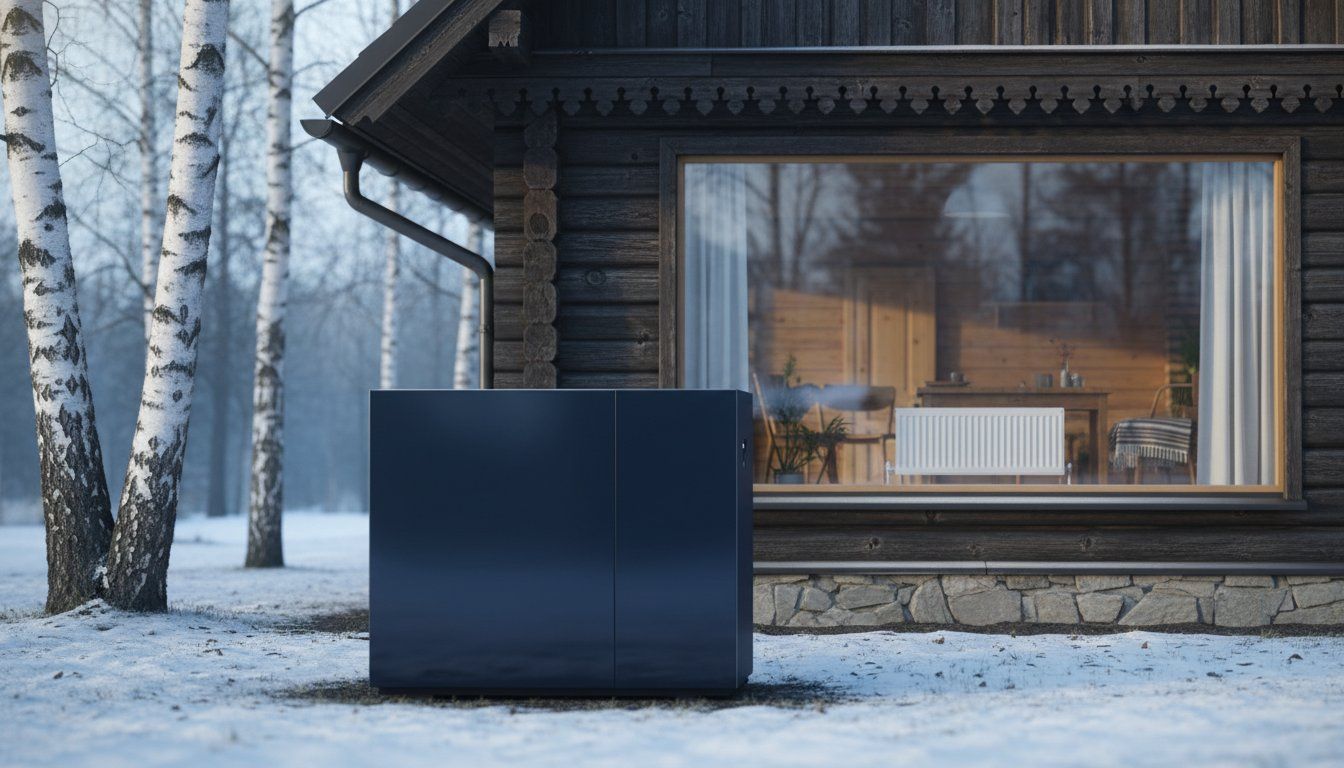
Do you really think a heat pump for an old house with radiators is only an expensive dream that automatically means tearing up all the floors? Many homeowners still believe that without underfloor heating this technology cannot provide comfort in a harsh winter, so they keep accepting high heating costs or tiring fuel loading. We fully understand these concerns, because no one wants to be cold at home or invest in a system that cannot cope with Latvia's changing weather.
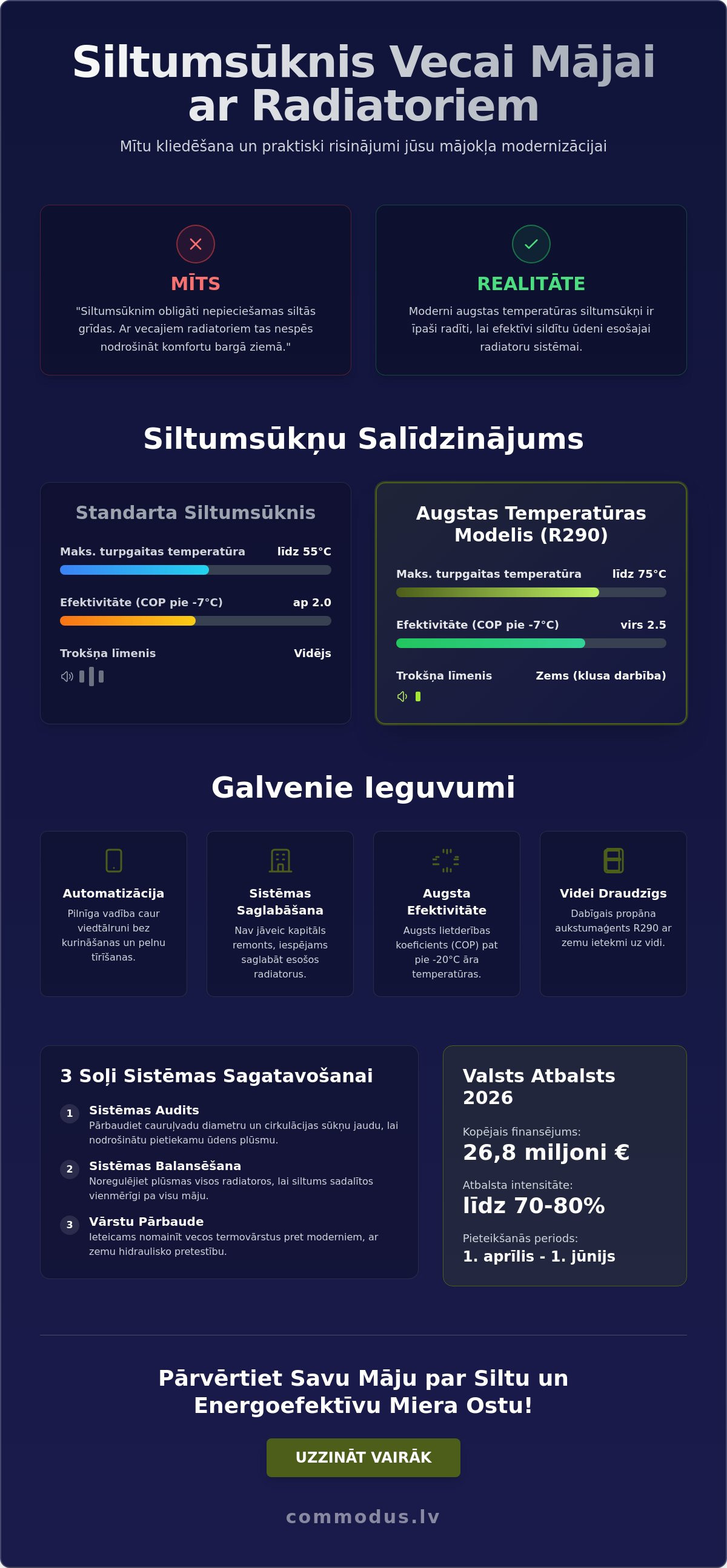
In this article, you will learn how modern high-temperature heat pumps can efficiently heat your existing home without requiring a complicated full renovation. We will look at exactly what improvements are needed to keep the existing radiators and finally enjoy fully automated heating without unnecessary stress. We will also clarify the state support available in 2026, where applications for 26.8 million euros of Modernisation Fund financing are planned from 1 April to 1 June. Support intensity can reach even 70 or 80 percent, so this is the right time to plan the change. Get ready to find out how to turn your house into a warm, energy-efficient haven without needless complications.
Is a heat pump for an old house with radiators a suitable solution?
We often hear the view that a heat pump and an old house do not go together. Customers worry that without major renovation and underfloor heating, the system simply will not work. In reality, a heat pump for an old house with radiators is not only possible, but also a technically sound solution as long as the right unit is chosen. The main obstacle is usually not the house itself, but outdated assumptions about how heat is transferred into a room. Modern technology has moved far ahead, and in 2026 we are no longer talking about compromises, but about efficiency and peace of mind.
The myth of mandatory underfloor heating
The physics is simple. Underfloor heating only needs a low water temperature, usually around 35 degrees, because its heating surface is very large. Radiators are smaller, so historically they needed water at 60 or even 70 degrees. However, modern high-temperature units have overcome this barrier. Interestingly, old cast-iron sections are very well suited to heat pumps because of their high inertia. They cool down more slowly, providing a more stable indoor temperature even when the unit stops briefly. Once you understand how air-to-water heat pumps work, it becomes clear that extracting energy from outdoor air is efficient even when a higher flow temperature has to be reached.
When is a heat pump the best choice for modernisation?
For many of our customers, the biggest driver is the desire for freedom. Wood or pellet heating requires constant attention, physical work, and space for storing fuel. Switching to an automated system means mornings no longer start with cleaning out ash. A heat pump for an old house with radiators lets you keep the existing pipework while gaining modern control through a smartphone. If the house is especially large or concerns about severe winter remain, the system can easily be integrated with the existing boiler. It will serve as a safety backup in extreme cold, although the latest models also perform very well on their own. This gives independence and predictable long-term costs.
High-temperature heat pumps: A technological breakthrough
Many homeowners worry that standard units will not be able to supply water hot enough to heat cast-iron or steel radiators. This is where high-temperature heat pumps come in, as they are designed specifically for renovation projects. Unlike classic models, which usually reach only the 55-degree range, these modern units provide stable heat even in severe frost. This means that a heat pump for an old house with radiators becomes a full alternative to gas or solid-fuel boilers without losing the feeling of warmth at home.
R290 propane heat pumps: Radiators' best friend
The biggest turning point in the industry is the use of R290, or natural propane, refrigerant. This technology allows the unit to heat water up to 75 degrees without using additional electric heaters, or heating elements. That is critically important when the outdoor temperature drops below minus 20 degrees. Such a modern air-to-water heat pump not only protects the environment, but also provides high efficiency (COP) at high temperature parameters. Our experience shows that this solution helps avoid unnecessary radiator replacement costs, because the system can work with the existing infrastructure.
Standard vs. high-temperature unit comparison
| Parameter | Standard model | High-temp. model (R290) |
|---|---|---|
| Max. flow temp. | Up to 55°C | Up to 75°C |
| COP at -7°C (A7/W55) | Lower (around 2.0) | Higher (above 2.5) |
| Noise level | Medium | Low (quiet operation) |
By investing a little more in a high-temperature unit, you gain confidence that even on the coldest January night your home will be pleasantly warm. These systems work smarter, not harder, so electricity bills will be lower than if a standard unit constantly ran backup heating elements. If you want to understand which model will best suit your heating circuit, we invite you to view our offer and consult our technicians, who will help find the most efficient solution so that a heat pump for an old house with radiators works at maximum output.
How to prepare the existing radiator system for a heat pump?
Before installing a new unit, it is important to carry out a proper audit of the existing system. This will help determine whether your radiators can provide comfort at a lower temperature than during wood or pellet boiler operation. Often, a heat pump for an old house with radiators requires only minor adjustments, not a full pipe replacement. Start by checking pipe diameters and the capacity of circulation pumps. A heat pump needs higher water flow, so system balancing and replacing old thermostatic heads with modern low-resistance valves can significantly improve overall efficiency.
When planning such improvements, it is worth remembering that state support in Latvia is still available in 2026. It helps cover part of the modernisation costs, making the transition to automated heating financially easier and more predictable in the long term.
Increasing radiator output without replacing them
Many people do not know that radiator efficiency can be improved without spending thousands on new heat emitters. One of the most practical methods is installing fan blocks under existing radiators. These small, quiet fans help air circulate faster, increasing heat output by as much as 20 to 30 percent. If the audit shows that one room still lacks heat, it is usually enough to replace one or two radiators with larger ones (for example, type 33), rather than renovating the whole house.
Buffer tank: A guarantee of comfort
A buffer tank, or so-called buffertank, is a critical component for a heat pump for an old house with radiators to operate steadily. It serves as an energy reserve for defrost cycles. In winter, when the outdoor unit ices up, the system reverses operation for a few minutes to defrost itself. Without a buffer tank, this heat would be taken directly from the radiators, causing them to cool rapidly. The tank ensures that temperature fluctuations in the house are not noticeable and that the system lasts longer. The optimal tank volume is usually selected by calculating at least 15 to 20 litres for each kilowatt of unit capacity.
Preparing the system is not complicated when it is done thoughtfully. If you want to know exactly what improvements your home needs, we recommend booking a technician's visit, where measurements will be taken and the best solution recommended.
Installation and state support in Latvia in 2026
We, the Commodus team, have helped hundreds of homeowners across Latvia turn cold and uneconomical buildings into cosy homes over the years. A heat pump for an old house with radiators is not just a piece of equipment; it is a carefully planned engineering project. That is why, in our view, professional design is more important than the price of the unit itself. We assess the specific heat loss of each house to choose a capacity that is sufficient but not excessive, ensuring maximum efficiency and peace of mind.
2026 is especially favourable for investment, because 26.8 million euros are available from the Modernisation Fund. Applications for this support run from 1 April to 1 June 2026. Depending on the building status and the selected programme, financing can cover 70 to even 80 percent of eligible costs. It is important to remember that, to receive support, the building usually needs to meet at least energy efficiency class "D", so the first step is assessing the current situation and preparing an energy certificate.
Steps for receiving state support
To qualify successfully for co-financing, documentation should be prepared in good time. The energy certificate serves as proof of the home's energy efficiency potential and is a mandatory attachment to the application. To reduce operating costs even further, many of our customers choose hybrid solutions. For example, modern solar panel kits make it possible to generate your own electricity, which the heat pump later uses to heat the home. This combination not only increases independence from energy price fluctuations, but also allows you to apply for a higher support intensity.
Why trust installation to Commodus specialists?
We provide a full service cycle. This means our cooperation does not end when the unit is switched on. We take responsibility for the entire process: from precise capacity calculation through to annual maintenance and system monitoring. Every old house is unique, with its own history and technical condition, so our technicians look for individual solutions so that a heat pump for an old house with radiators works flawlessly. We believe that personal attention and technical competence are the foundation of long-term cooperation that brings warmth and a sense of security to every home.
Start the journey to a warm, carefree home today
Modern technology has proven that a heat pump for an old house with radiators is not just a bold experiment, but a smart and forward-looking investment. By using high-temperature units and properly preparing the existing heating system, you gain full automation and comfort without the need for major renovation. The 2026 state support programmes make this transition more financially accessible than ever, covering most of the investment and allowing the home to become energy-efficient.
The Commodus team, with more than 14 years of experience installing heating systems, is your trusted partner in this change. As the official CTC and Midea representative in Latvia, we provide not only top-quality equipment, but also full support in preparing documents for state co-financing. Apply for a free consultation and find out whether your home is suitable for a heat pump! We believe that every house can become a modern and cosy place where mornings no longer start with worries about heating, but with a peaceful cup of coffee in a warm and pleasant environment.
Frequently asked questions about heat pumps in old houses
Will a heat pump be able to heat the house if it is -25°C outside?
Yes, modern high-temperature units are designed to operate even in extreme conditions. New-generation units with R290 refrigerant maintain high efficiency even at minus 25 degrees, providing the required heat without excessive use of electric heating elements. The most important factors are correctly calculated capacity and quality installation, so the system has enough reserve for the harshest winter nights, which we always take into account at the design stage.
Do I have to replace old cast-iron radiators?
No, old cast-iron radiators are often even an advantage because of their high thermal inertia. They cool down more slowly and help maintain a stable temperature in the house even during unit defrost cycles. However, it is important to check whether their total heating surface is sufficient for operation at a lower temperature. Sometimes replacing one or two radiators in the cooler rooms is enough for the whole system to work efficiently and keep the home pleasantly warm.
How big is the difference in electricity consumption when using radiators instead of underfloor heating?
When radiators are used, electricity consumption is usually 15 to 25 percent higher than in systems with underfloor heating. This is explained by the need for a higher flow temperature, which slightly reduces the unit's coefficient of performance, or COP. However, when a high-temperature unit specifically adapted for radiators is chosen, this difference becomes minimal and still delivers major savings compared with pellet, wood, or gas heating.
Can a heat pump be connected to an existing gravity-fed heating system?
Yes, it can be done, but the system will need small improvements to ensure forced circulation. A heat pump for an old house with radiators requires stable water flow, so a gravity-fed system must be supplemented with a circulation pump and usually also a buffer tank. This will help equalise pressure and ensure correct unit operation without requiring a complete rebuild of the pipework or room renovation.
What is the average payback period for a heat pump in an old house?
The average payback period usually ranges from 5 to 7 years, depending on the previous heating type and the selected system. Considering the state support available in 2026, which can cover up to 70 or 80 percent of the investment, this period can be considerably shorter. A heat pump for an old house with radiators provides an immediate reduction in monthly bills and fully automated heating, making it one of the best long-term investments in the value of a home.
Comments