Heat Pump or Pellet Boiler: Which Heating Type Should You Choose in 2026?
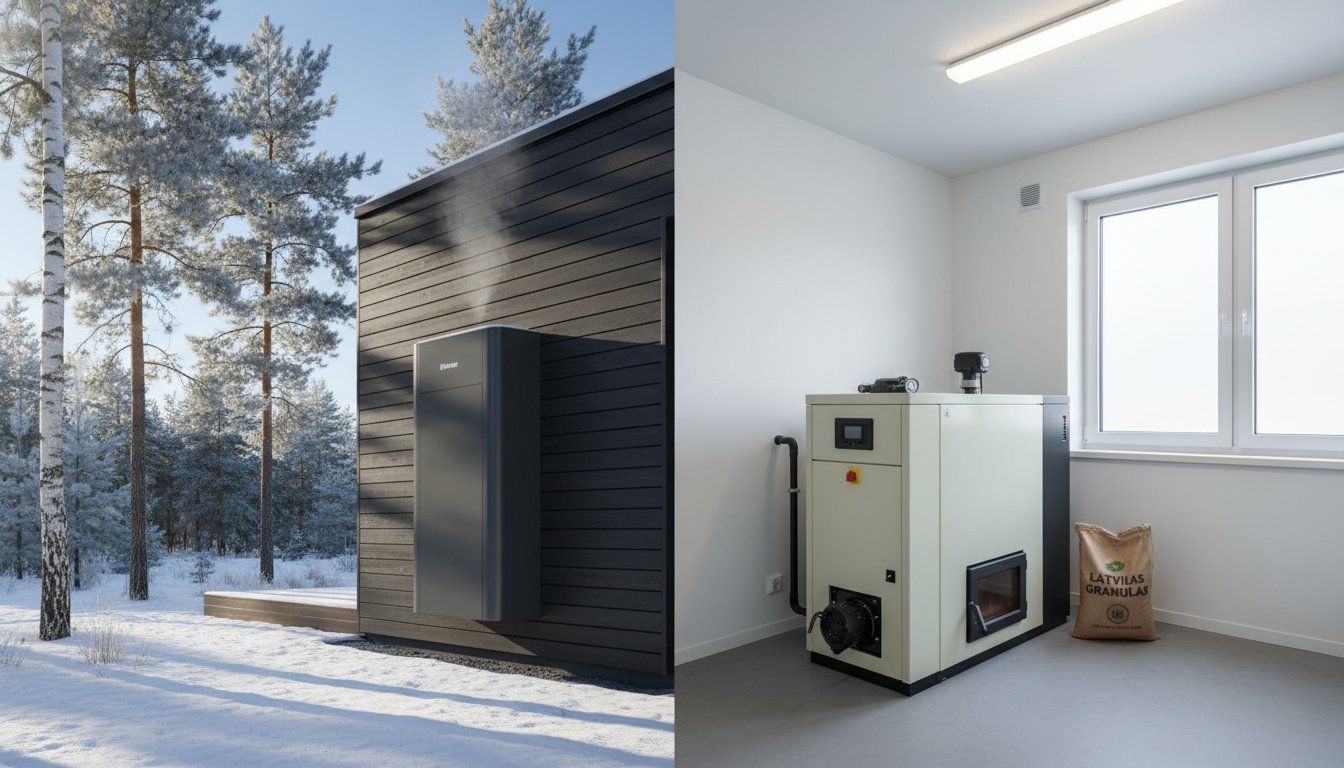
Did you know that in 2026, the annual costs of an air-to-water heat pump for a medium-sized home can be as much as EUR 700 lower than pellet heating? That is a serious reason why the dilemma of whether a heat pump or pellet boiler is better is receiving so much attention right now. We fully understand your doubts. Nobody wants to become a prisoner in their boiler room, cleaning ash and carrying heavy bags, but at the same time you want confidence that winter bills will be predictable. After all, you are looking for a solution that will serve you for years and let you enjoy peace at home without unnecessary physical work.
In this article, we offer an objective comparison so you can make the smartest decision for your home and budget. We will look at real operating costs, taking current energy prices into account, and explain how to handle EKII state support more easily, which is still available in 2026. You will gain a clear understanding of which system best meets modern energy-efficiency requirements and how to ensure fully automatic heat in your family home, whatever the weather outside.
Heat Pump or Pellet Boiler: Key Differences and Selection Criteria
Choosing between these two systems is not just a technical decision. It is a story about how you want to spend your free evenings. A heat pump basically works like a refrigerator, only in reverse. It extracts heat from the surrounding environment, air or ground, and delivers it to your home. If you want to understand the physics in more depth, it is useful to learn what a heat pump is and how it can generate heat without any combustion process. By contrast, a pellet boiler is a reliable engine that obtains energy by burning renewable biomass. It provides stable output that is not afraid of even the harshest frost.
Many people still wonder whether Latvia's changeable climate is suitable for modern technology. The reality is encouraging. Today's equipment is designed precisely for our latitude. However, before making a final decision, two important factors must be assessed: the building's thermal insulation and the available electrical grid capacity. In a poorly insulated home, any heat pump or pellet boiler will work under excessive load, so an energy-efficiency audit is the first step toward a smart choice.
Modern heat pump: when is it the best solution?
This choice is ideal for new builds. If your project includes underfloor heating and high energy efficiency, CTC air-to-water heat pumps will provide maximum comfort. You can completely forget about monitoring the heating process. No ash, no smoke, and no need to worry about fuel deliveries. It is complete freedom and a home ready for future environmental requirements.
Pellet boiler: a reliable classic with a modern touch
Pellet heating is still unmatched in renovated buildings. If the house has retained a radiator system that requires a higher temperature regime, RTB Phoenix pellet boilers will be an efficient solution. It provides independence from sharp electricity price fluctuations on the exchange. Although it requires periodic hopper refilling and ash removal, modern systems have made this process as automated and clean as possible.
Ease of Use and Efficiency: A Lifestyle Comparison
When choosing between these two heating types, it is important to understand how they will change your daily routine. A heat pump is a "set it and forget it" type of unit. You do not need to worry about ordering fuel, coordinating deliveries, or removing ash every week. By contrast, even in its most modern form, a pellet boiler requires regular physical involvement. Even if you choose RTB pellet boilers with automatic cleaning, refilling the hopper still remains your responsibility. If you do not want to spend your weekends lifting pellet bags, the first option wins in the heat pump or pellet boiler dilemma.
One of the biggest benefits that competitors often forget to mention is the cooling function. A modern air-to-water heat pump can work as an air conditioner during the summer months. It provides pleasant coolness in the home without installing additional equipment. A pellet boiler does not offer this comfort. Space requirements must also be considered. Pellets need a spacious and dry storage area, which takes up valuable square metres in the home. The indoor unit of a heat pump is compact and visually resembles ordinary household equipment.
Comfort and time resources
On average, a pellet boiler owner spends about 40 hours on maintenance work during the heating season, including ash cleaning and fuel stacking. For a heat pump user, this time commitment is close to zero. The entire system can be controlled remotely via smartphone, adjusting the temperature even while travelling. At the moment, state support for heating system replacement helps cover a significant part of installation costs. This makes the transition to full automation more financially attractive than ever before.
Operation in extreme conditions
Heat pump efficiency is described by the SCOP indicator, which has become even more impressive in 2026 models. Even at minus 20 degrees, quality equipment maintains a high efficiency coefficient. In the case of pellet heating, efficiency depends directly on fuel quality. The 2025 winter season showed that pellet prices can be volatile, reaching as much as EUR 500 per tonne during crisis periods. If you are looking for predictability and do not want to monitor exchange prices every month, our specialists at Commodus.lv will help you choose the solution best suited to your building.
Cost Analysis: Investment, Operation and State Support
The initial investment is often the main argument when evaluating a heat pump or pellet boiler. Installing a pellet system usually costs less, ranging from EUR 4,000 to 8,000. However, this amount does not always include hidden costs. You need to budget for building a suitable chimney and creating a fire-safe room, which is a mandatory requirement for pellet heating. In the case of a heat pump, the investment is higher, reaching EUR 5,500 to 11,000, but operation is considerably cheaper. The International Energy Agency's comparison of heating system efficiency confirms that heat pumps are the most energy-efficient solution for private homes.
Operating costs in 2026 clearly show the trend. While pellet heating for a 150-square-metre home costs an average of EUR 1,050 to 1,500 per year, an air-to-water heat pump reduces these costs to EUR 550 or 800. This becomes especially beneficial when the system is combined with solar panel kits. Self-generated electricity makes it possible to reduce monthly bills almost to zero, making the home completely independent from energy price jumps on the exchange.
Initial investment and payback period
A more expensive but more efficient system pays for itself in an average of 5 to 7 years. This happens thanks to lower maintenance costs and the fact that there is no need for regular servicing of expensive mechanical parts that often wear out in pellet boilers. Although pellet prices in March 2026 remain around EUR 251 to 260 per tonne, their volatility is still high, creating risks for your budget.
State support and energy efficiency
2026 is an excellent time for change, because the EKII support programme still allows you to recover up to 50% of the equipment purchase cost. We, the Commodus team, are by your side at every step. We help prepare all necessary documentation so receiving state support is simple and free of unnecessary stress. If you want to calculate your home's potential savings precisely, book a consultation with our experts and we will find the most cost-effective solution together.

Commodus Recommendations: How to Make the Final Decision?
Choosing between two strong contenders is not simple, because there is no universal formula that suits everyone. Every home is unique, with its own insulation, window area and family habits. That is why our experience shows that the most successful project starts not with choosing equipment from a catalogue, but with a careful audit. A heat pump or pellet boiler is a long-term investment, so the decision must be based on precise data, not guesswork.
For the system to serve the promised 20 or more years, regular maintenance is critically important. Even the most modern RTB Phoenix boiler or CTC heat pump will lose its efficiency if an annual inspection is not carried out. It is similar to a car: regular service not only preserves the manufacturer's warranty, but also ensures that heating bills do not rise because of small technical issues. We believe home heating should increase peace of mind, not become another concern on your daily list.
Professional engineering calculation
Incorrectly selected capacity is the most common mistake we see in our work. If the unit is too weak, it will work at the limit of its capabilities and wear out faster. If it is too powerful, you will overpay for a resource you do not actually use. Our engineers develop solutions tailored specifically to your building. We do not simply sell boxes. We create a system that works harmoniously with your home's utilities, ensuring maximum efficiency in every day of the season.
Why choose the Commodus team?
We provide a full service cycle throughout Latvia. This means our specialists will be with you from the first consultation and design stage through to system commissioning and further maintenance. We work only with trusted brands that have proven themselves over decades. Our goal is to make the first cool autumn evening in your home cosy and warm, without worries about technical challenges. Contact our experts and receive a personalised offer!
Ready for a Warm and Peaceful Home?
The choice of whether a heat pump or pellet boiler will be installed in your home is a decision about your comfort for the next two decades. We saw that a heat pump offers complete automation and summer cooling, while a modern pellet boiler retains its position as a reliable solution for renovated buildings. The main thing to remember is that state support is still available in 2026, making this the right moment to invest in energy efficiency and reduce monthly costs.
The Commodus team, with more than 15 years of experience in the Latvian market, is your trusted partner on this path of change. Our certified installation specialists provide quality service throughout Latvia, and we will personally help prepare all necessary documents for receiving EKII support. We believe every home deserves an individual approach and technically precise engineering calculations so your heating system works flawlessly.
Take the first step toward predictable bills and a cosy atmosphere. Receive a free consultation and an accurate heating system calculation today! Your comfort is our priority, and we will help you achieve it in the most cost-effective way.
Frequently Asked Questions About Choosing Heating
Will a heat pump be able to heat a house during a Latvian winter at -30°C?
Yes, modern air-to-water heat pumps are specially designed for operation in Nordic climates and reliably provide heat even at -30°C. In such extreme conditions, the equipment's efficiency decreases, so the system automatically connects the built-in electric heating element to maintain the desired comfort in the home. It is essential to choose a model with the correct capacity so the home remains warm even on the coldest winter nights without excessive electricity consumption.
How often does a pellet boiler and chimney need to be cleaned?
Pellet boiler maintenance depends on the chosen model, but the ash box usually needs to be emptied once every one or two weeks. The heat exchanger should be cleaned approximately once a month, unless the boiler has an automatic cleaning system installed. According to fire safety regulations, chimney cleaning is mandatory at least once a year before the start of the heating season to prevent flue gas ignition risks and ensure good draught.
What are the requirements for the room where a heat pump or pellet boiler is installed?
In the dilemma of whether to choose a heat pump or pellet boiler, room requirements are an important factor. A pellet boiler requires a separate fire-safe room with ventilation and a flue, as well as enough space for fuel storage. The indoor unit of a heat pump is much more compact and can even be installed in a utility room or kitchen, because it does not need a chimney. The outdoor unit requires free space near the wall of the house where airflow is not obstructed.
Is it worth replacing a pellet boiler with a heat pump if the system has radiators?
Replacing pellet heating with a heat pump is economically justified even in homes with radiators, provided the building is sufficiently insulated. Modern high-temperature heat pumps can heat water to the level required by radiators. Before replacement, we recommend carrying out an engineering calculation to make sure the area of the existing radiators is sufficient for efficient system operation at lower temperatures, which will significantly reduce bills in the long term.
What state support can I receive for replacing a heating system in 2026?
In 2026, households have access to EKII support, which allows them to recover up to 50% of the purchase cost of new heating equipment. This programme is intended for replacing fossil-fuel equipment with renewable energy technologies, including heat pumps and modern pellet boilers. Our team will help you prepare all necessary documents and applications so receiving state co-financing is quick and free of unnecessary complications.
Comments