Optimal Heat Pump Temperature: How to Balance Comfort and Efficiency in 2026?
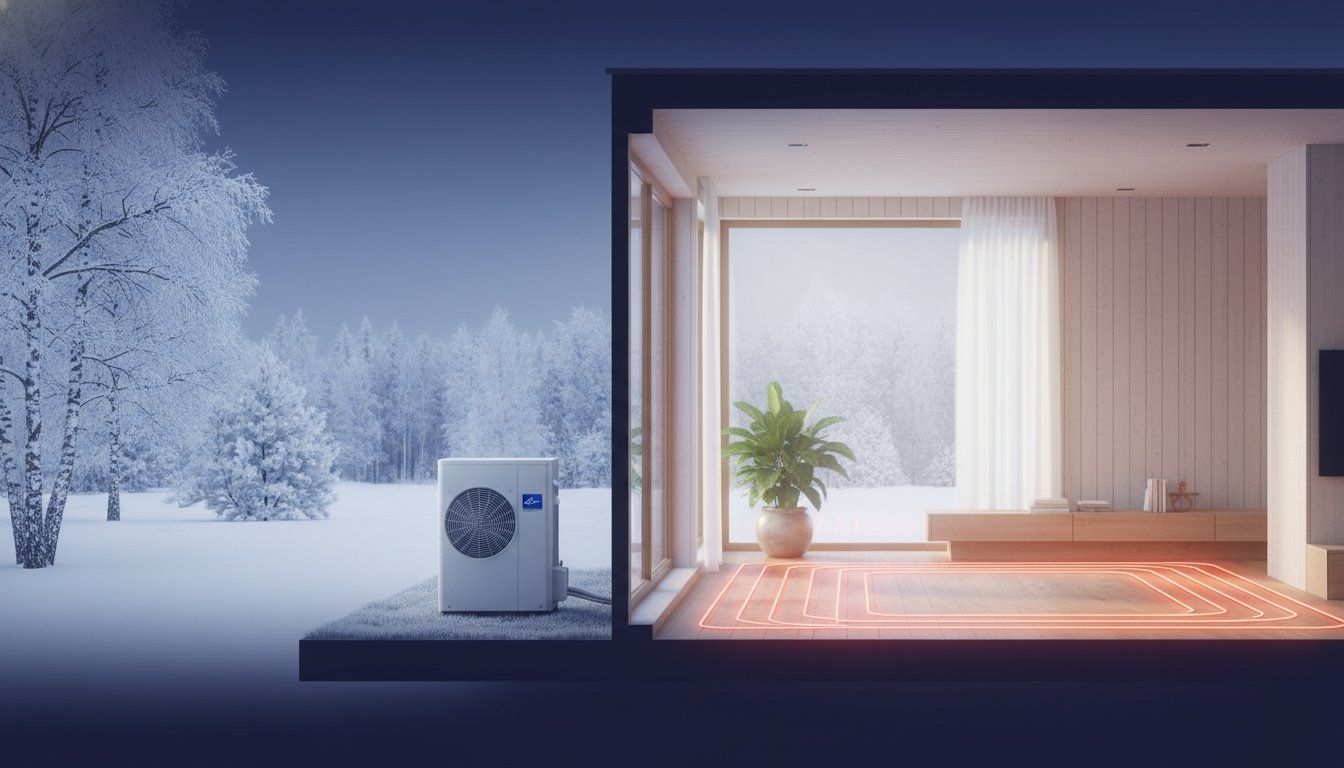
Did you know that trying to save money by sharply lowering the temperature at night can actually increase your electricity bill by 15% or more? Many homeowners in Latvia face an unpleasant surprise when, in severe frost, the unit starts using disproportionately more energy, raising concerns about system efficiency. Finding the optimal temperature for a heat pump is not just about setting one number on the controller. It is a dynamic balance between your home's heat retention, the outdoor air temperature, and the unit's ability to operate in its most efficient range.
We fully understand the uncertainty that comes with being afraid to damage expensive equipment with the wrong clicks, or to experience discomfort because of sharp temperature swings. In this article, we will act as your knowledgeable technicians and help you understand how to configure the settings correctly, so your home stays warm in winter 2026 while your bills remain predictable. You will learn all about adjusting the heating curve and why steady operation is better than constant switching on and off. We will also look at how current electricity tariffs and state support programmes affect your choices, helping you ensure peace of mind and warmth every day.
What Is the Optimal Temperature for a Heat Pump: Outdoor Air vs. Indoor Comfort
A heat pump is not simply a device you switch on and forget. It is an intelligent mechanism whose performance changes depending on the surrounding environment. The optimal temperature for a heat pump is a variable value that depends on how skillfully we match the home's heat loss with the unit's output. In Latvia's harsh winter conditions, modern models such as CTC heat pumps can operate steadily even when it is -25°C or even -30°C outside. However, it is important to understand that efficiency at these extremes will differ from efficiency during a mild thaw.
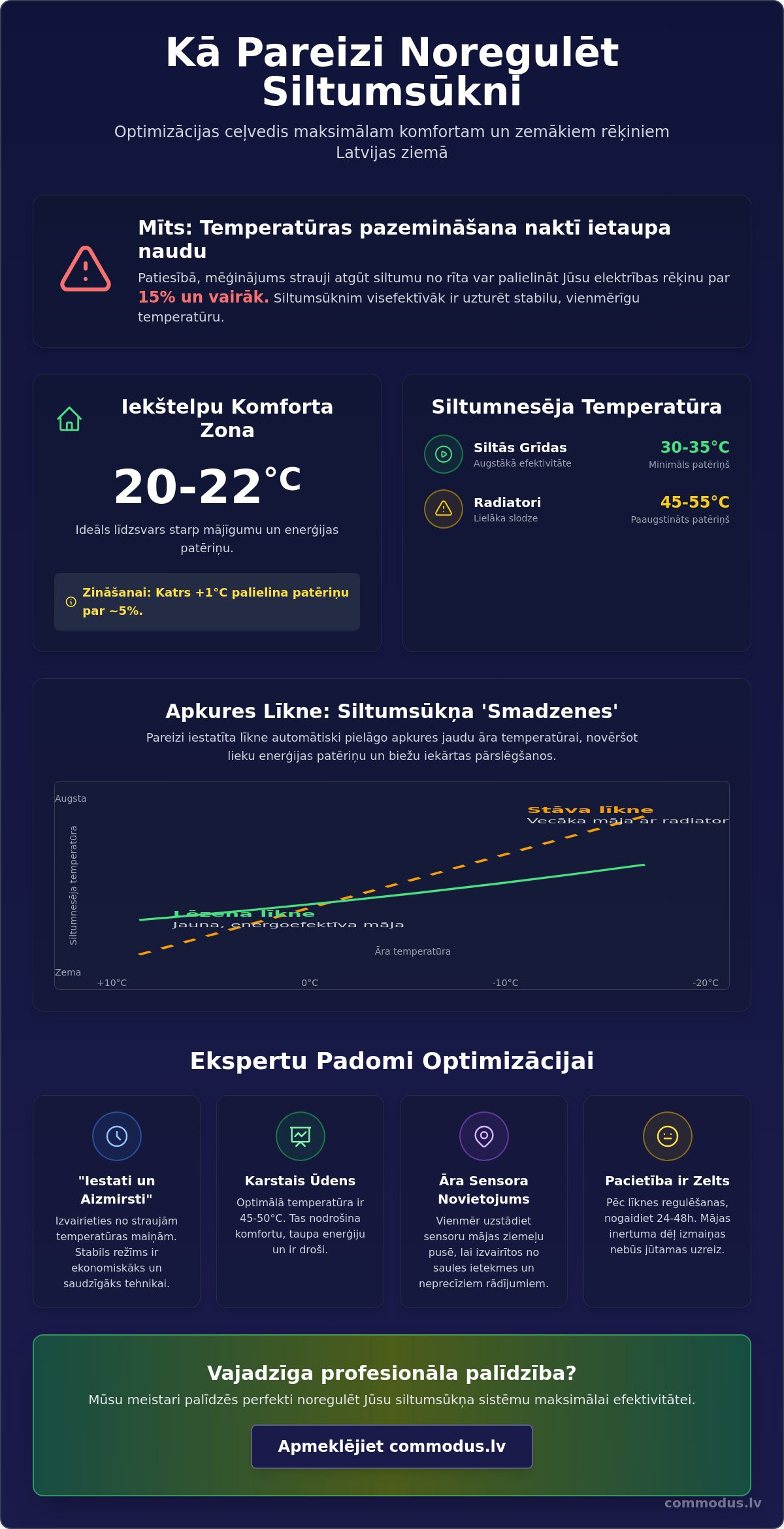
To understand how the system produces heat, it is worth knowing what a heat pump is? and how its coefficient of performance, or COP, works. For most people, the indoor comfort zone is 20 to 22 degrees. Every additional degree you want to see on the room thermometer increases electricity consumption by about 5%. That is why choosing the right temperature precisely is the first step toward lower bills without sacrificing cosiness.
How Outdoor Temperature Affects Efficiency
When the thermometer drops below -10°C, the efficiency of air-source heat pumps begins to decline gradually. This is a natural process, because it is harder to "extract" the required heat energy from colder outdoor air. At such moments, the unit may engage backup electric heaters, or heating elements. They serve as a safety cushion so the temperature in the home does not fall even in extreme frost, but running them too often can have an unpleasant effect on monthly costs.
Heat Carrier Temperature: Underfloor Heating vs. Radiators
The operating efficiency of a heat pump is directly connected to how hot the water must be for the heating system. The lower the heat carrier temperature, the easier it is for the unit to work.
- Underfloor heating: This is the ideal combination, because floors need only 30-35°C. In this mode, the heat pump feels at its best and uses the least electricity.
- Radiators: Classic systems usually need 45-55°C. This forces the compressor to work under a higher load, which slightly reduces the overall system efficiency.
By choosing the right temperature both indoors and in the heating system, you create an environment where the equipment lasts longer and works more efficiently. Our experience shows that these exact nuances separate an average solution from an excellently adjusted heating system.
The Heating Curve: The Heat Pump's 'Brain' and How to Configure It Correctly
Many homeowners make the mistake of trying to adjust the temperature manually every time it gets colder outside. In reality, system efficiency is based on the heating curve. This setting tells the unit how hot the heat carrier should be depending on the outdoor air temperature. The more accurately this curve is adjusted, the better the optimal temperature for the heat pump is maintained without unnecessary energy consumption. This automation lets the system operate smoothly, avoiding sudden jumps in power.
A correctly configured curve is essential not only for comfort, but also for the longevity of the equipment. It protects the compressor from so-called "cycling", meaning overly frequent starts and stops. Think of it as steady driving on a highway rather than jerking through city traffic. If you feel that the home becomes too cool at slight sub-zero temperatures but too hot during severe frost, your heating curve is most likely set too steep. Practical tips for heat pump operation will help you navigate these settings better and achieve maximum efficiency.
How to Find Your Home's Ideal Heating Curve?
Every home loses heat differently, so there is no single universal formula. For a new, energy-efficient building, the curve will be flatter because a low-temperature heat carrier is sufficient. Older homes with radiators, on the other hand, will require a steeper slope. The main rule is patience. After any adjustment in the system, wait at least 24 to 48 hours. A home's inertia is slow, and there will be no immediate result. Only after this time will you see whether the change truly provides the desired comfort and whether the optimal temperature for the heat pump has been reached.
The Role of the Weather Sensor in Precise Operation
A heat pump relies on the data supplied by the outdoor sensor. If it is installed on the south side of the house, the sun can warm it even on a cold winter day, making the unit "think" that spring has arrived. As a result, the home will become unpleasantly cool. The sensor should always be on the north side, away from direct sunlight. Proper cooperation between the sensor and the indoor thermostat is the key to a stable microclimate without constant intervention. If you are planning system improvements, choose quality equipment that will provide precise control for the long term.
Practical Tips for Heat Pump Control During a Latvian Winter
The most effective way to use your heating system is to follow the "set it and forget it" principle, allowing smart automation to maintain steady warmth without unnecessary intervention. Many users still make the mistake of lowering the temperature by several degrees at night. For a heat pump, this night setback mode is often disadvantageous. In the morning, while trying to quickly recover the lost heat, the unit works at maximum output, which can lead to higher electricity consumption than maintaining constant warmth throughout the night. The goal is to ensure that the optimal temperature for the heat pump is maintained steadily, avoiding unnecessary energy waste.
When it comes to domestic hot water preparation, the best balance between comfort and economy is usually between 45 and 50 degrees. This is fully sufficient for everyday needs while also protecting your wallet. To take care of health, modern systems such as CTC air-to-water heat pumps automatically perform thermal disinfection against Legionella once a week by heating the water above 60 degrees. This approach ensures safety without sacrificing everyday energy efficiency.
Why Shouldn't You Change Temperature Settings Abruptly?
Underfloor heating, which is often used in Latvian homes, stands out for its high inertia. This means the system responds slowly, and you will not feel an immediate increase in warmth. If you suddenly raise the desired temperature on the controller, the system may activate the costly backup electric heaters, or heating elements, to fulfil your command as quickly as possible. This is one of the fastest ways to increase the heating bill unexpectedly. The best solution is to make small adjustments and allow the building to warm up gradually, using compressor power rather than electric heaters.
Smart Control and Remote Monitoring
Modern technologies offer excellent mobile apps, but they should be used wisely. Instead of manually changing settings every day, use the app to monitor consumption and supervise the system. You can set notifications that warn you about unusual changes or operating errors before the home becomes cool. This provides peace of mind, especially if you are away from home or travelling. If you are planning to install a new heating system or improve an existing one, choose quality heat pumps that offer intuitive and transparent control tools for long-term cooperation.
How to Ensure Heat Pump Sustainability and Efficiency?
A heat pump is a long-term investment whose return is determined not only by smart settings, but also by regular and careful maintenance. Even if the optimal temperature for the heat pump has theoretically been found, dirty filters or insufficient refrigerant pressure can make the unit use 10 to 20% more energy than expected. Professional maintenance once a year is the best way to prevent small technical issues before they turn into expensive repairs. This is especially important because a modern air-to-water heat pump works intensively throughout the heating season, providing both warmth and hot water.
Homeowners should also remember the condition of the outdoor unit. In Latvia's changeable winters, snow, icing, or fallen autumn leaves can block the heat exchanger and significantly reduce airflow. If the unit cannot "breathe", it starts working under a heavier load and consumes more electricity. System design also directly affects efficiency. If the capacity has been selected incorrectly, the optimal temperature for the heat pump will never be achieved efficiently, because the unit will be forced to operate constantly at the edge of its capability or to engage backup heaters too often.
The Role of Commodus Experts in Your Peace of Mind
Our experience shows that service does not end with equipment installation. Professional consultation and precise system setup during the first heating season help homeowners learn the right usage habits. By choosing certified installers and service specialists, you gain confidence that the work is carried out according to the requirements of Latvia's climate. We help find the best balance between comfort and costs, so the system can serve for decades.
Thinking about the future and energy independence, more and more customers choose to combine heating with self-generated electricity. Quality solar panel kits combined with a heat pump are the energy-efficiency standard of 2026. This synergy makes it possible to significantly reduce bills, because the heat pump uses free solar energy, making your home not only warm, but also environmentally friendly and financially predictable in the long term.
Warmth and Peace of Mind in Every Latvian Home
A properly configured heating system is more than a simple set of technical parameters. It is your everyday comfort and long-term financial stability. Remember that the optimal temperature for a heat pump works best when you follow the "set it and forget it" principle and entrust the system's 'brain', or heating curve, to smart automation. By avoiding sharp temperature swings and carrying out regular equipment maintenance, you will ensure efficient warmth even on the coldest winter nights.
Our team, with more than 15 years of experience in the Latvian market, is ready to help you reach this ideal balance. We provide a full service cycle carried out by certified installation and service specialists, from design through to regular system monitoring. If you want to make sure your heating system works with maximum output and minimum costs, we invite you to apply for a professional heat pump consultation and service. Together we will create a cosy and safe atmosphere for your family, where technology serves your convenience, not the other way around.
Frequently Asked Questions About Heat Pump Settings
What Is the Ideal Heat Carrier Temperature for Underfloor Heating?
The ideal heat carrier temperature for underfloor heating is usually between 30 and 35 degrees. This low temperature level allows the heat pump to operate with maximum efficiency because the unit does not need to spend a large amount of energy heating the water. As a result, steady warmth and a pleasant floor surface temperature are maintained in the home, while heating bills remain as low as possible.
Is a Heat Pump Still Efficient at -20 Degrees?
Yes, modern heat pumps adapted to northern climates remain efficient even at -20 degrees of frost. Although the coefficient of performance decreases in such conditions, the unit still produces more heat than the electricity it consumes. In extreme sub-zero temperatures, the system may automatically engage an additional electric heater to ensure that the optimal temperature for the heat pump is maintained and the home does not become cold.
How Often Should I Change the Heating Curve Settings?
The heating curve settings should be adjusted only once, ideally during the first heating season after the system is installed. Once you have found the slope that matches your home and comfort requirements, smart automation will adapt by itself to outdoor temperature fluctuations. Monthly corrections are not necessary; unnecessary intervention can only disturb the system's natural balance and efficiency.
Why Does My Heat Pump Use So Much Electricity Even Though the Home Is Not Warm?
High consumption without sufficient indoor warmth often indicates an incorrectly set heating curve or significant heat loss in the building. If the system is forced to operate constantly at maximum output or uses backup electric heaters too often, bills will rise while the indoor temperature may remain insufficient. In such situations, it is important to check whether the optimal temperature for the heat pump is aligned with the home's real heat retention.
Can I Set Up the Heat Pump Myself, or Do I Need a Specialist?
You can make small temperature corrections of a couple of degrees yourself, but the initial configuration and heating curve setup should be entrusted to a specialist. A professional will take into account the specifics of your home, the type of heating system, and technical nuances that a user may not notice. Correct first-time setup will protect the unit from premature wear and ensure that the heating operates economically from day one.
Comments