Heat Pump or Gas Boiler: Which Heating Type Should You Choose in 2026?
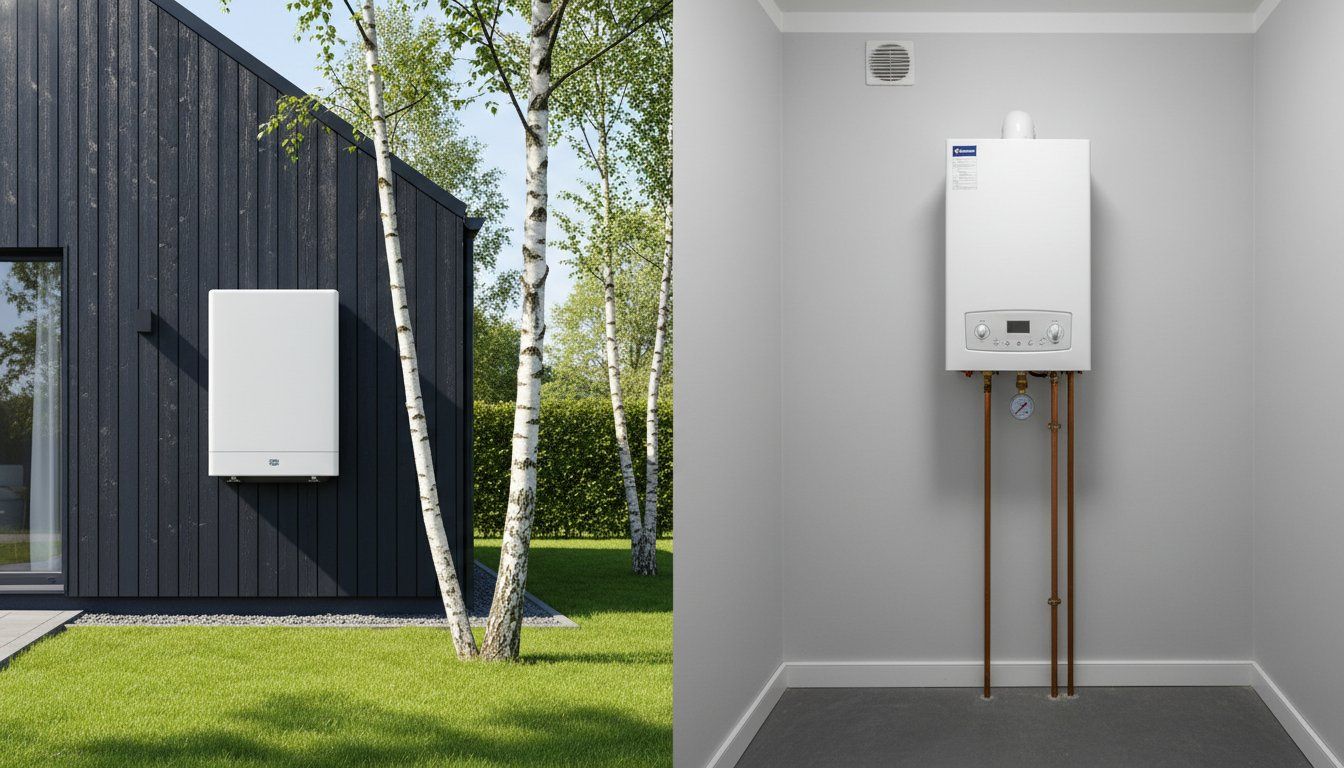
Did you know that recent decisions to extend the deadline for installing new gas boilers until as late as 2030 have completely changed the rules of the game? Many people felt that the choice between a heat pump or gas boiler had already been made for them, but today's situation calls for even more careful and calm consideration. In our daily work, we see that many homeowners feel understandably confused between high initial investments and concerns about future energy price fluctuations. That is only natural, because this choice will affect your comfort and your budget for the next twenty years.
We are here to help you see the picture clearly and make a decision as equal partners. Learn the key differences between a heat pump and a gas boiler so you can make an economically sound decision for your home's warmth and energy independence. In this article, we will explore the current EKII and Modernisation Fund support programmes, which currently offer substantial co-financing, and compare the maintenance convenience of both systems. Our goal is to help you find the path to an energy-efficient home where warmth comes without unnecessary daily attention or excessive bills.
Heat Pump or Gas Boiler: The Heating Landscape in 2026
The choice between two completely different heating philosophies is more relevant today than ever before. A gas boiler traditionally relies on fossil fuel and centralised networks, while a heat pump draws energy from the surrounding environment and turns it into heat for your home. The year 2026 has become a genuine turning point in Latvia's heating market. Although Riga City Council decided at the end of 2025 to extend permits for installing new gas equipment until 2030, Europe's overall movement toward energy independence and the “green course” makes all of us think one step ahead. The question of a heat pump or gas boiler is no longer only about the price of the unit, but also about the home's energy efficiency class and future resale value.
The Future and Limits of Gas Heating
The fossil fuel era is slowly but irreversibly changing. European Union regulations are placing increasingly strict limits on the creation of new gas connections in new builds, encouraging a shift toward renewable resources. This directly affects both gas availability in new residential areas and long-term costs. Today, creating a gas connection is often linked with time-consuming bureaucracy and significant installation expenses. Many homeowners choose to avoid this complexity, preferring systems that do not require excavation outside their own plot boundaries or dependence on a single supplier.
Technological Development of Heat Pumps
Heat pump technology has made a huge leap in efficiency in recent years. Modern air-to-water heat pumps are designed specifically for northern climates, providing stable warmth even when winter temperatures in Latvia drop well below zero. This is no longer just a technological novelty, but a proven and reliable standard. Smart control is now an integral part of the system. You can remotely control the temperature at home through a smartphone, track electricity consumption, and optimise system operation according to exchange prices. This freedom of control provides not only comfort, but also real peace of mind about your monthly expenses.
Technical Comparison: Efficiency, Comfort, and Installation
When comparing efficiency, the difference between the two technologies is obvious at first glance. A gas boiler's efficiency coefficient usually ranges around 90 to 98 percent, which means that nearly all the energy burned is converted into heat. By contrast, heat pump efficiency is measured using COP and SCOP indicators. For example, if COP is 4, it means that from one kilowatt of electricity the unit produces four kilowatts of heat. The International Energy Agency report emphasises that precisely this ability to transform energy makes heat pumps a key player in the global transition to sustainable heating. In Latvia's changeable weather, SCOP is especially important because it shows average efficiency over the entire heating season, including the harshest winter months.
Heating Comfort and Ease of Use
A heat pump offers something that a traditional gas boiler cannot: a cooling function in summer. On hot July afternoons, the same system that warmed your floors in winter can help maintain pleasant coolness throughout the house. Gas heating, meanwhile, is fully dependent on the stability of centralised supply and gas pressure in the network. When choosing whether a heat pump or gas boiler is more suitable for your home, it is worth considering this “two in one” solution, which makes life easier in every season.
Engineering Preparation
In terms of installation, a gas boiler requires a flue and specific ventilation, which can be a serious challenge in older houses. For a heat pump, the main requirements are adequate electrical grid capacity and free space for the outdoor unit. Many of our clients acknowledge that an air-to-water heat pump is the easiest option to integrate in renovation projects, because it does not require complicated approvals from gas network operators. If you want to understand what connection capacity is needed specifically for your home, we invite you to contact our specialists, who will help make precise calculations.
Maintenance work differs for both systems, but it is equally important. For gas equipment, an annual safety inspection is critical to prevent leakage risks and check the condition of the flue. For heat pumps, maintenance is simpler, usually including filter cleaning and system pressure control. In Latvia's climate, both systems serve reliably for 15 to 20 years, provided they are properly cared for and the manufacturer's recommended inspections are not ignored. The choice between a heat pump or gas boiler ultimately depends on your readiness to invest in future technologies and your desire for complete energy freedom.

Cost Analysis: Investment, State Support, and ROI
Turning to the financial side, the question of a heat pump or gas boiler often comes down to the scale of the initial investment. Purchasing gas equipment usually requires less money, but the connection and flue construction must also be included, which can significantly increase the total amount. A heat pump requires higher starting capital, but this is where state support programmes help. The EKII programme for private houses is available until the end of 2029, giving you the opportunity to recover a significant share of the investment. Likewise, the new Modernisation Fund in 2026 offers support intensity of up to 70 percent for apartment buildings and energy communities. By choosing a modern heating type, you not only reduce bills but also increase your property's market value. Buyers today are looking for homes that are not dependent on the whims of fossil fuels.
Synergy with Solar Panels
How do solar panel kits change the rules of the game? The synergy is simple and effective. A heat pump consumes electricity that you generate yourself on your roof. This allows you to maximise self-consumption and avoid fluctuations in grid tariffs. Such a combination is the surest path to complete energy freedom. We see that clients who install both systems at the same time begin to feel real savings in their budget the fastest, because heating costs shrink to a minimum.
The Real Payback Period
Determining an exact payback period is challenging, but the trends are clear. University of Portsmouth study data show that even hybrid solutions can be an effective intermediate step toward greener energy. Considering that gas prices will remain volatile in the long term and fossil fuel taxes may rise, a heat pump usually becomes more cost-effective within 5 to 8 years. It is a thoughtful marathon, not a short sprint. The investment is larger, but peace of mind about future bills is worth it. If you would like to receive an individual calculation for your project, we invite you to check our offer and consult with our team to find the most suitable solution.
How to Make the Right Decision: Recommendations from Commodus Experts
The choice between a heat pump or gas boiler is not just a technical decision; it is a long-term investment in your quality of life and peace of mind. A gas boiler can still be a rational solution in specific cases, for example if the building is historic, has poor thermal insulation, and already has a powerful gas connection, where heat pump efficiency would be lower. However, most of our clients today choose a heat pump as their primary heating source. They are drawn by the system's autonomy, the environmentally friendly aspect, and the fact that they do not have to worry about fossil fuel availability in the future. Our team's experience shows that a correctly chosen unit is only half the victory; the other half is quality service and a reliable partner beside you.
Why Choose Professional Installation?
We often encounter situations where self-planned systems lead to incorrect capacity calculations or faulty equipment placement. This not only reduces efficiency, but can also shorten the system's service life. By choosing Commodus, you receive the full cycle: from precise project development to regular warranty maintenance. We provide technical support throughout Latvia, which means our technicians are available to help in any situation. Professional installation is the guarantee that your investment will truly pay back and that the system will operate without unnecessary surprises.
Next Steps: From Consultation to a Warm Home
Your path to an energy-efficient home begins with a simple conversation. We offer a free site inspection, during which our specialists take the necessary measurements and perform capacity calculations. It is important to us that every offer is individual and matches both your home's technical requirements and the planned budget. We believe in open communication, so we will explain every nuance to make you feel confident about your choice. Contact us to receive a professional consultation on heating systems and take the first step toward a warmer and more stable future in your home.
Ready for Changes in Your Home Comfort?
The choice between systems such as a heat pump or gas boiler in 2026 is no longer just a technical question, but a strategic decision for your home's value and energy independence. Although gas heating still offers a certain stability and extended installation deadlines until 2030, the technological development of heat pumps and available state support make renewable energy the more advantageous long-term choice. The key is to find the balance between today's investment and tomorrow's peace of mind, while remembering the role of the building's energy efficiency.
The Commodus team has more than 14 years of experience in the Latvian market, helping homeowners make well-founded decisions. We provide full service that includes everything from design to regular maintenance. Our branches and service centres across Latvia guarantee that professional support will always be within reach, regardless of your location.
Receive a free heating system calculation and consultation from Commodus experts!
We believe every home is unique, and we are ready to become your trusted partner on the path to an efficient and warm home. See you soon!
Frequently Asked Questions About Choosing a Heating Type
Can a heat pump fully replace a gas boiler in an old house with radiators?
Yes, modern high-temperature heat pumps are specially designed to work with existing radiator systems and can provide the necessary heat carrier temperature. Before installation, we always recommend carrying out a building heat loss calculation to make sure the system will be efficient. Sometimes replacing a few radiators with more efficient models may be enough to ensure maximum comfort even on the coldest winter days.
How loud is the outdoor unit of a heat pump?
Modern units operate surprisingly quietly; their noise level at a distance of a few metres usually ranges from 35 to 50 decibels, which is comparable to a quiet conversation or the hum of a refrigerator. A correctly chosen installation location and high-quality vibration pads ensure that the unit's operation will not disturb your peace or that of your neighbours. Innovations in fan blade design have made the latest models almost unnoticeable in everyday background noise.
Does replacing a gas boiler with a heat pump require major reconstruction work?
In most cases, reconstruction work is minimal and does not require renovating the entire house, because the system is connected to the existing heating circuit. The main work involves dismantling the gas boiler, positioning the outdoor unit, and installing the indoor hydraulic module. When choosing whether a heat pump or gas boiler is more suitable for your home, the simple installation and absence of a flue often become decisive factors in favour of the modern solution.
What state support programmes are available for heat pump installation in 2026?
In 2026, private homeowners can access the EKII programme, which will continue until the end of 2029 and provides significant financial relief for equipment purchases. Since April 2026, the Modernisation Fund has been open for apartment buildings and communities, with an impressive support intensity of up to 70 percent of project costs. These programmes were created to help Latvian residents switch to more environmentally friendly heating while significantly reducing the burden of the initial investment.
Will a heat pump work if the electricity goes out?
No, a heat pump is fully dependent on electricity supply, just like modern gas condensing boilers, whose controls and pumps require power. In regions where power outages are more frequent, we recommend considering additional solutions such as a generator or battery block. This will ensure continuous operation of your system and warmth at home even in unexpected situations.
Comments