Improving air quality in an apartment: A complete guide to a healthy indoor climate in 2026
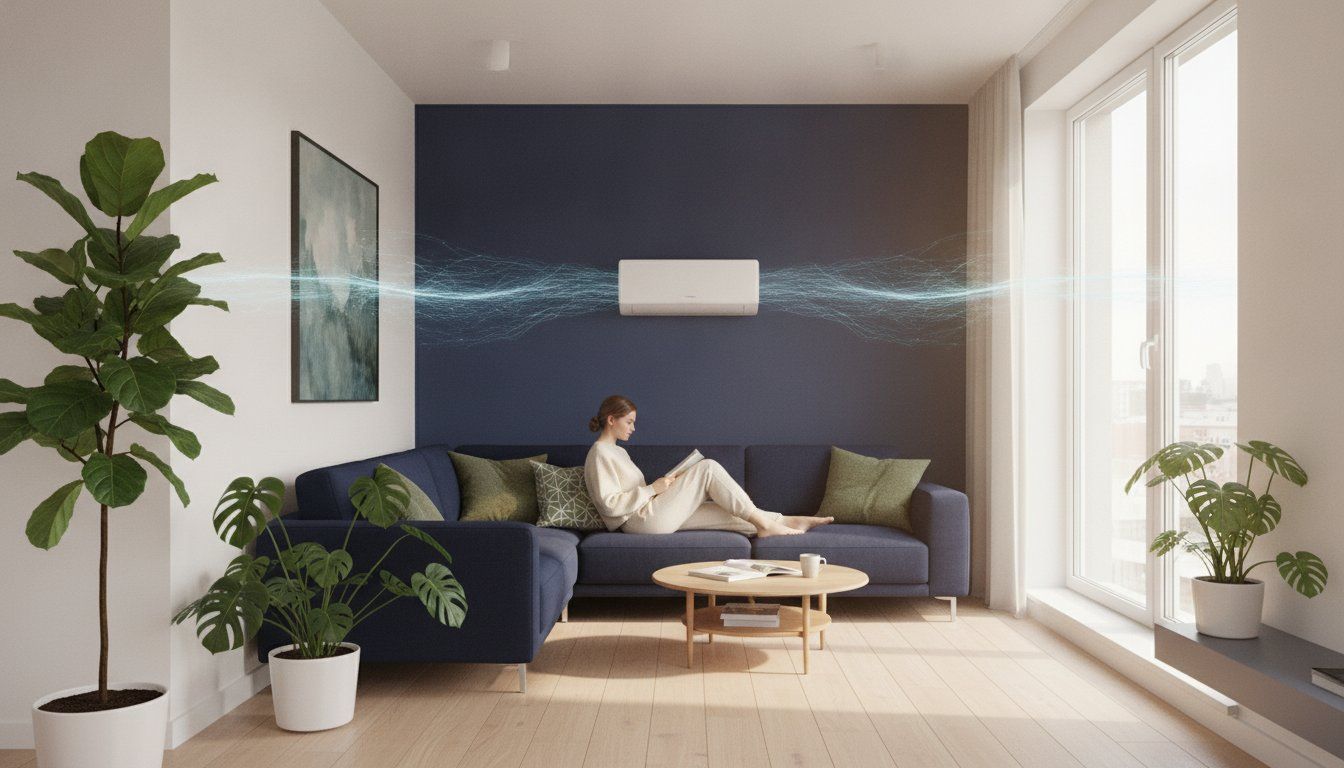
Did you know that the air in your bedroom can get heavy and cause headaches within a couple of hours, even if you did get a good air out before you sleep? Many of us face daily unpleasant choices between fresh air and street noise or dust, which inevitably flow through an open window. Improving the air quality of the apartment in 2026 is no longer just an accidental ventilation. This is a targeted action to adapt to the new EU standards and to protect itself from urban pollution, which is still a challenge in Riga.
We appreciate how annoying it may be to have excessive humidity in winter or to keep fighting dust on furniture. In this article you will find out how to effectively reduce CO2 levels and create a healthy climate through smart technological solutions and simple daily habits. We will see how modern recuperation systems help to reach WHO recommended air freshness threshold below 1000 ppm, while reducing your heating costs and creating a quiet, peaceful environment for recreation without having to keep your windows open.
What affects air quality in the apartment and why is it important?
We often do not appreciate the impact that an environment in which we spend most of our time has on our well - being. Indoor air quality (IAQ) indoor air quality describes air purity, temperature and humidity in our homes. Poor air quality is not just an unpleasant smell. It directly affects the depth of your sleep, your ability to concentrate and even your general immunity. If you feel sleepless in the morning or get tired quickly when working on a computer, the reason may be the air in the room.
Today, many face an unexpected paradox. By repairing and installing modern, dense windows, we make the apartment warmer, but at the same time we turn it into an airtight "heater." Natural ventilation, which previously operated through window gaps, no longer exists. As a result improvement of air quality in the apartment becomes a priority to avoid problems such as:
- Condensate on glass and windowsills in cold weather;
- Funny, consisting of air in the bedroom in the morning;
- The formation of mold in the corners of rooms or behind furniture;
- Accumulation of dust and volatile organic compounds (VOC) from furniture and household chemicals.
CO2 level √ silent fatigue trigger
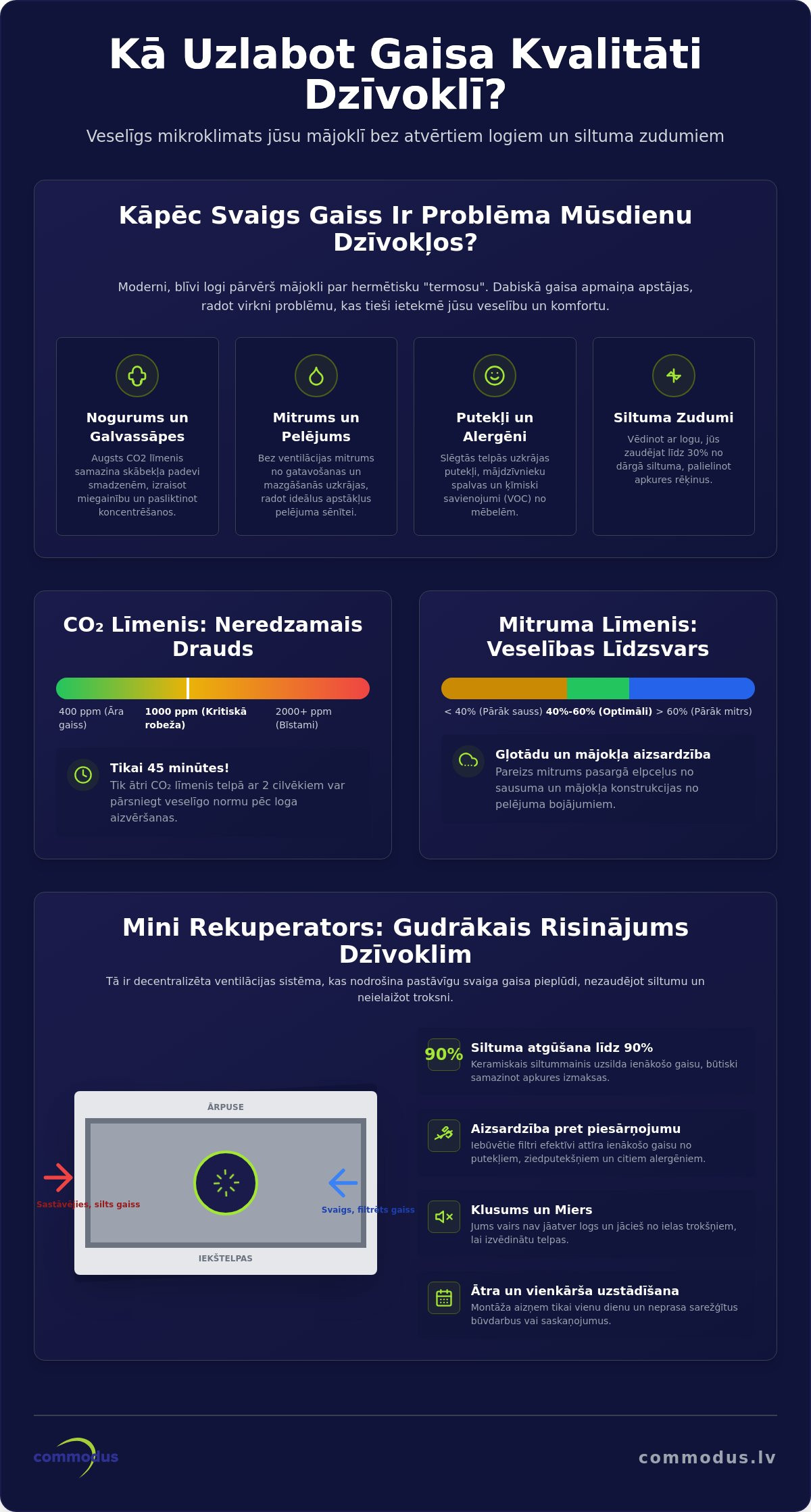
Carbon dioxide or CO2 is the main indicator of air use. The World Health Organisation and industry experts consider 1000 ppm (particles per million) as a critical breakpoint. When this level is exceeded, the brain starts to get less oxygen. Somnolence, decreased productivity and headache may occur. Normal ventilation, opening the window for a few minutes a few times a day, gives only a temporary effect. Once the window is closed, the CO2 level in the room with two adults can return to the critical zone after 45 minutes.
Moisture levels and their role in health
Optimal relative humidity in the apartment is between 40% and 60%. During the heating season, indoor air often becomes too dry, irritating the airway mucous membranes and eyes. On the other hand, in poorly ventilated apartments, humidity accumulates from cooking, washing, or drying laundry. This creates an ideal environment for dust mites and mold fungus. Effective ventilation is the only way to maintain this balance by protecting both your health and home structures from irreversible damage.
Efficient techniques and technologies for improving air
Many apartment owners still rely on natural ventilation, hoping that opening windows for a few minutes will solve all the problems. In reality, in winter months, such an approach is uneconomic, because together with the air that is formed, the expensive heat is flowing out of the window. Improving air quality in the apartment requires a smarter approach combining controlled air exchange with filtration. US Environmental Protection Agency (EPA) recommendations stresses that the most effective way is to reduce pollution directly at its source by adding mechanical treatment tools.
Air purifiers with HEPA filters are a great help in fighting dust, pet feathers and pollen. They physically arrest the tiny particles, preventing them from entering your lungs. On the other hand, smart sensors that monitor CO2 and moisture levels in real time provide clear data on when active action is needed. If you notice signs of deterioration, air wetting or drying agents may serve as a temporary solution for stabilising microclimate, but they do not replace fresh air.
Air conditioning and heat pumps as filtration tools
Modern Air conditioning machines and heat pumps are not long ago exclusively for temperature control. Quality equipment now acts as multi-stage filtration stations. When choosing a device, we recommend to pay attention to ionization and self-cleaning functions. Ionization helps neutralize the bacteria and viruses in the air, while self-cleaning prevents the accumulation of moisture and the formation of mold in the plant itself. This ensures that the air you inhale is not only cool or warm, but also clean.
The role of ventilation in energy efficient housing
After insulation of the apartment and replacement of windows natural air circulation virtually stops. In such an environment, air exchange becomes critical to prevent suffocation of air and windows. The optimal solution is to install recovery system, which provides fresh air inflow, while maintaining up to 90% of the heat of the room. If you plan to improve your home, our specialists will help you choose the right one ventilation solutionwhich will serve in the long term and bring peace of mind to family health.
Mini recuperator: the best solution for ventilation of the apartment
If you are looking for a way to provide fresh air without thorough repair, mini recuperator is the best choice. This device is installed directly in a wall well, which means that you do not have to plan complex air ducts or lower the ceiling. Decentralised ventilation allows each room to breathe independently. This is particularly important in urban apartments where street noise and dust do not keep windows open. Improving the air quality of the apartment with this method is fast and effective, as the equipment works cyclically, removing the formed air alternately and introducing fresh air.
One of the biggest advantages is heat recovery up to 90%. In the heart of the mini recuperator there is a ceramic heat exchanger that accumulates heat from the air from the room in winter and gives it to the incoming outdoor air. This way the improvement of air quality in the apartment takes place without increasing heating bills, but optimising them. Built-in filters and noise insulation protect your home from urban pollution and sound, creating a calm and clean environment even next to busy streets.
Why choose a mini recuperator in the apartment?
Assembly usually takes only one day and does not require reconciliation or major construction works. You can start with a bedroom where fresh air is most important for sleep, and later add equipment to other rooms depending on the need. This is a very flexible solution that does not require immediate investment in the ventilation system of the entire building. Our masters perform their work cleanly using dust extraction technology, so there is no need to worry about damaged interior decoration.
Comparison: Mini recuperator versus ventilation valves (freesh)
Many mistakenly believe that the usual "freesh" valves are enough. Unlike these inlet openings, which simply introduce cold outdoor air into the room, the recuperator provides a comfortable temperature. You no longer have to feel the unpleasant brook along your feet or face the icey airflow in winter evenings. Recuperation is the only way to combine fresh air with keeping heat in the dwelling. If you want to find out which model is more suitable for your premises, look at our ventilation equipment and consult our specialists.
Practical steps and Commodus expert advice
Improving air quality in the apartment begins with a clear understanding of the current situation. We recommend not to rely only on subjective feelings, but to use modern CO2 and moisture meters. Only by seeing specific numbers will you understand how often air exchange is actually needed. Once the data is obtained, the next step is to evaluate the layout of the apartment. It is essential to understand which "dead areas" are, where air circulates the worst, and where it would be the most appropriate place to install the ventilation unit so that it does not interfere with everyday life.
When the place is chosen, the time to find suitable ventilation solution. Our experience shows that the most successful projects are made in close cooperation between the client and the engineer. After installation do not forget about regular maintenance. The change of filters every six months is a small, but critical work; it guarantees that the system will work effectively for years and only clean air will enter your lungs.
Why is consultation with an engineer essential?
Every home is unique, so universal recipes do not work here. The engineer will make an accurate calculation of capacity, taking into account the square meters of the room and the number of people who stay there daily. Professional assembly is the only way to avoid cold bridges and the direction of incorrect air flow. We, Kommodus team, believe that peace of mind begins with technically properly executed work that protects your home's structures from damage to moisture.
Maintaining a healthy climate on a daily basis
Technology is a huge support, but everyday habits are also important. Regular cleaning of rooms with a vacuum cleaner with a HEPA filter and avoiding strong household chemicals will help keep the air cleaner for longer. If you want to raise your comfort at the next level, we recommend to learn more about how to Air-air heat pumps can help not only heat or cool, but also additionally filter the air in your home all year round.
Time to breathe fresh air in your home
Improving air quality in the apartment is not a luxury, but a necessity for your well-being and working ability. We looked at why ordinary ventilation is no longer working in contemporary airtight dwellings and how mini recuperators can save up to 90% of heat while cleaning air from urban dust. Remember that the first step is an objective assessment of the situation and the right choice of equipment, tailored to the specifics of your space and the number of inhabitants.
Kommodus team has more than 15 years of experience in the Latvian market, helping to create healthy microclimate for thousands of homes. We provide a full service cycle from engineering design to regular maintenance, offering energy efficient solutions adapted to our local climate. Contact Commodus experts and get ventilation advice! You can do this here: Contact Commodus experts and get ventilation advice!
Do not let silly air and fatigue affect your daily comfort. Start changing today to wake up tomorrow in an environment where it is easy and pleasant to breathe.
Frequently asked questions about air quality
Does the installation of a mini recuperator in the apartment require a construction permit?
The installation of a mini recuperator usually does not require a full construction permit, as the works do not affect the building's supporting structures. However, before installation it is important to align the works with the building manager or joint owners, as the visual appearance of the facade is slightly changed. If you live in a historic building or in a city's historic centre, coordination with the building council may be a mandatory requirement.
How often do filters need to be changed in mini recuperation system?
The filter change in the mini recuperation system usually takes place every 3 to 6 months, depending on the environmental pollution. If your home is close to the streets of intensive traffic, the filters will clog faster and will need to be changed more frequently. Regular replacement of filters is a key condition for the efficient improvement of the air quality of the apartment and the operation of the equipment at full capacity.
Can air purifier completely replace ventilation?
Air purifier cannot replace ventilation because it only filters the air already in the room, but does not add new oxygen. While the purifier is perfectly handling dust, smoke and allergens, only ventilation can effectively remove stored carbon dioxide (CO2). A healthy climate requires a combination of both functions or a recovery system that combines both processes.
What is the optimal level of CO2 in the bedroom at night?
The optimal level of CO2 in the bedroom during the night is below 1000 ppm (particles per million). Ideally, in order to ensure a deep and high quality sleep, the indicator should be between 600 and 800 ppm. Improving the air quality of the apartment by using smart sensors and ventilation helps to maintain this level automatically, preventing the air from becoming stinky even when windows are closed.
Do mini recuperators consume a lot of electricity?
Mini recuperator consumes very little electricity, usually its power is in the range of 5 to 30 watts. This is comparable to the performance of one ordinary LED lamp. This small consumption is negligible compared to the benefits of heat recovery; the installation helps to save on heating because the air entering the room is already heated using the heat of the air to be discharged.
Comments