Ground-Mounted or Rooftop Solar Panels: Which Solution Is Better for Your Home in 2026?
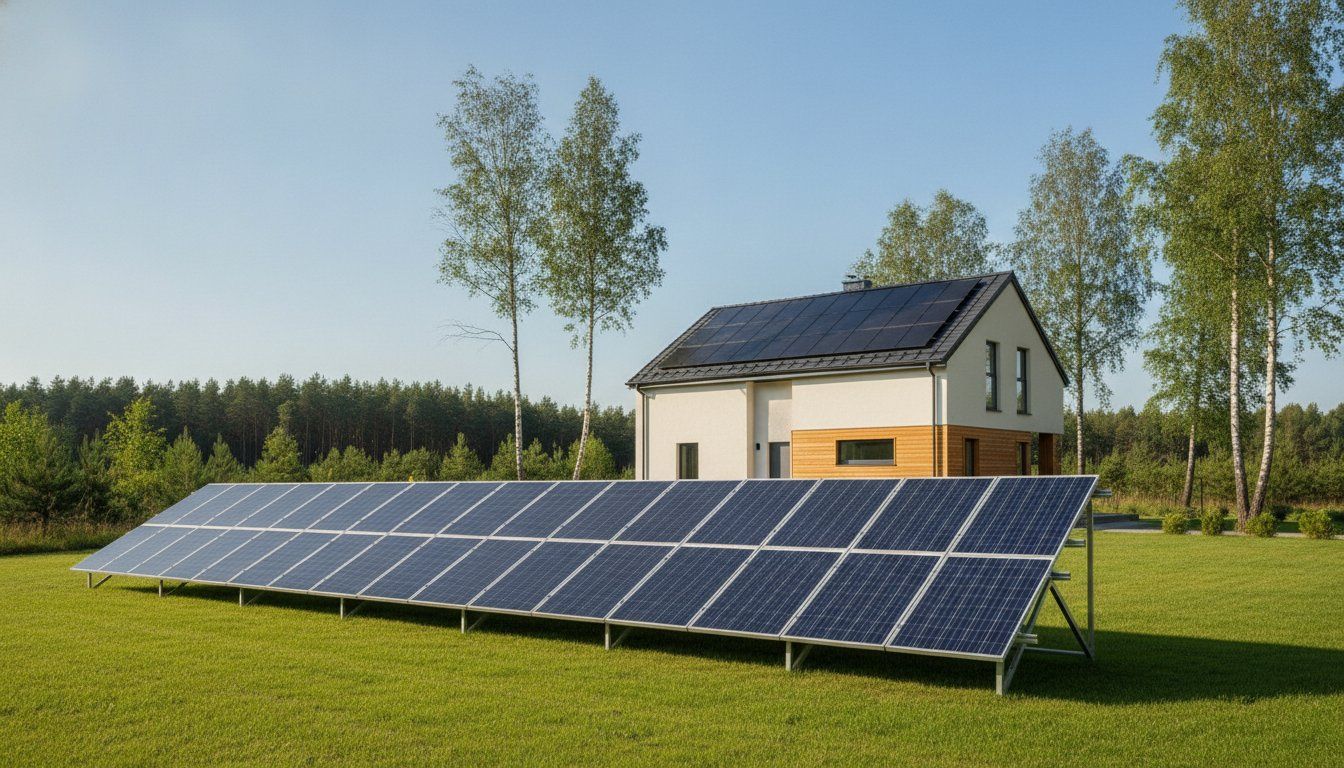
Many homeowners assume that the roof is the only logical place to generate energy, but reality shows that ground-mounted structures often deliver better output. Choosing whether ground-mounted or rooftop solar panels are better is one of the first and most important questions when planning an energy-efficient home in 2026. You are probably worried about possible damage to the roof covering or about how snow will need to be cleared in winter so the system can keep working. These concerns are justified, because no one wants extra worries about home safety or complicated maintenance after the equipment has already been installed.
This guide will help you assess technical efficiency, costs and installation details so you can make the right decision about solar panel placement. We understand that your goal is maximum self-generation of electricity and a clear understanding of the required investment, especially considering the current net billing system and available state support. In this article, we will compare both solutions in detail, examine limitations related to yard space and the impact of shade from neighbouring trees, and provide practical advice for creating a safe and long-lasting system.
Comparison of solar panel placement: roof versus ground
The choice between installing solar panels on the roof or building a structure in the yard is often the first step towards energy independence. In Latvia, most households still prefer rooftop solutions because they do not take up valuable yard space and use an existing building element. However, technical efficiency and long-term benefits can differ. solar panel mounting systems on the ground allow ideal positioning that the roof slope cannot always provide. The main difference lies not only in aesthetics, but also in the size of the investment and the ease of system maintenance.
Our experience shows that the decision on whether ground-mounted or rooftop solar panels are better depends on the overall engineering setup of the home. If the roof is in good technical condition and its orientation is favourable, it is the fastest route to green energy. Ground-mounted structures, on the other hand, are the choice for those whose priority is maximum system output and easy access in any season.
Why choose rooftop solar panels?
Rooftop installation is a financially more attractive starting point because the panels are fixed to existing rafters without using a separate metal frame. This significantly reduces material costs. In addition, panels on the roof are safely protected from accidental mechanical damage, such as children playing or curious pets. Architecturally, this solution looks discreet and preserves yard space for a garden or recreation area, which is especially important for smaller urban properties.
When is it better to choose a ground-mounted solar panel array?
Ground-mounted structures are suitable when the house roof faces east or west, or when it is shaded by neighbouring trees. On the ground, we can achieve an ideal 30 to 40 degree slope and precise south-facing orientation, which is optimal in Latvian conditions. During hot summers, ground-mounted panels cool better because air circulates freely underneath the structure, preventing overheating. Such a system is also much easier to scale if you later decide to add extra panels or battery storage blocks.
Technical efficiency and production potential
In Latvia's climate, every ray of sun is valuable, so system efficiency depends not only on the number of panels, but on their ability to capture light without obstacles. Shading is the silent killer of efficiency. Even a small shadow from a neighbouring building, a growing birch tree or the house chimney can reduce output by 30% or more if the system is not equipped with costly optimisers. When assessing whether ground-mounted or rooftop solar panels would be better in your case, it is important to understand that the roof covering — metal, tiles or bitumen — affects not only installation, but also temperature. On hot summer days, rooftop panels tend to overheat, which paradoxically reduces their output. solar panel efficiency in cold climates is actually higher because lower temperatures improve semiconductor performance, so good ventilation under the structure is critical.
The importance of the ideal angle and azimuth in Latvia
The south-facing side is the gold standard for maximum output. If your home's roof slope faces east or west, the amount of electricity produced will be about 15 to 20% lower than in the ideal scenario. In such cases, ground-mounted structures become a rational choice because they allow the necessary azimuth and optimal 35 to 40 degree slope to be set freely. This provides steady output throughout the day, not only in the morning or evening hours when the sun is lower on the horizon.
Roof load-bearing capacity and safety risks
Before placing panels on a building, an engineer's assessment of the structural strength is essential. A solar panel kit together with the mounting hardware adds significant extra load to the rafters, which not all older roofs can withstand without reinforcement. Maintaining watertightness is also important; incorrectly selected fixings or careless installation can cause leaks and damage thermal insulation. If you are planning a complete improvement of your home's energy efficiency, it is worth considering how a powerful electricity system will work with modern solutions such as CTC air-to-water heat pumpsto achieve maximum independence from grid tariff fluctuations.
Practical maintenance and upkeep in Latvian conditions
When we talk about which solution is more practical, we often forget about everyday tasks after installation. Latvia's changeable weather sets its own rules. In winter, the main issue is snow. If ground-mounted or rooftop solar panels are covered by a thick layer of snow, production stops completely. Ground-mounted structures can be reached with a simple brush within minutes, while cleaning panels on a roof is a dangerous process that requires special equipment or a lift. Many people choose to wait for a thaw, but that means lost production days precisely when the sun finally appears.
In summer and autumn, dust, pollen and leaves become relevant. Ground-mounted systems are easy to wash with a garden hose, whereas rooftop panels often remain dirty until the next heavy rain. It is also important to maintain the area around ground frames; grass must not shade the lower row of panels, because even one tall blade of grass can affect the efficiency of the entire string. A robotic mower or gravel layer under the structure can help here. Service work, such as checking the inverter or cable connections, is incomparably easier for ground-mounted systems because the technician does not have to work at height, reducing both cost and time.
Winter challenges and snow load
Ground-mounted panels allow the owner to return to production much faster after snowfall. While the neighbour waits for snow to slide off the roof, you have already cleared your system and are producing energy. When cleaning snow from a roof, there is a risk of damaging the roof covering or the panels themselves, so ground-mounted structures are safer both for the house and for the owner. It is important to plan sufficient clearance from the ground so that snow sliding off the panels does not create banks that cover the lower part of the modules.
Longevity and mechanical strength
The risk of structural corrosion in Latvia's damp climate is real, so we recommend using only hot-dip galvanised steel or aluminium fixings. Ground-mounted systems require more robust lightning and surge protection because they are located in open space. If you want complete peace of mind and a system that will last for decades, it is worth choosing proven engineering solutions. When planning your home's engineering systems, remember that high-quality heating is just as important as electricity — take a look at our RTB pellet boilerswhich will provide heat even when the sun rests in winter.

Commodus solutions: from project to energy independence
The decision about where to place the system is only the beginning of the path towards efficient home management. The Commodus team believes that every project is a personal story about the owner's peace of mind and independence. Our experts carry out a thorough site survey to assess the roof condition or yard terrain in person. Only then can we safely say whether ground-mounted or rooftop solar panels will be more efficient for your property's specific configuration. We do not only install equipment; we also help arrange all documentation so you can receive EKII state support, which in 2026 still provides significant co-financing for investment costs. By choosing an integrated approach, you avoid risks where components from different manufacturers are incompatible or create unnecessary losses.
Using solar energy to power heat pumps
A modern home is unthinkable without smart energy management. CTC air-to-water heat pumps are an ideal partner for solar panels. During the day, when the panels produce maximum output, the heat pump can heat water in a boiler or underfloor heating, effectively using the home's structures as an energy accumulator. This allows you to increase self-consumption and reduce dependence on grid tariff fluctuations, which is critical under the new net billing system. We will help precisely balance system capacity so that you do not overpay for unnecessary grid connection capacity, but gain maximum return from every installed kilowatt.
Why trust installation to professionals?
Professional installation means safety for decades. We provide a full warranty both for the equipment itself and for our technicians' work, creating a comfortable and safe atmosphere in your home. You will have access to the latest solar panel kitsselected based on our team's experience and technical knowledge. Our specialists are like knowledgeable craftsmen who are always reachable and ready to offer human, practical advice. Apply for a consultation today; together we will find the best solution for your home so that energy bills are no longer a burden, but a well-considered investment in the future.
Your path to a smart and independent home starts today
Choosing whether ground-mounted or rooftop solar panels are more suitable is a strategic decision that will affect your daily comfort and energy independence for the next 25 years. The main thing to remember is that there is no universal option; everything depends on the condition of your roof covering, the amount of yard space and your wish for easy maintenance in the winter months. The right placement combined with a modern heat pump will create a system that not only reduces bills, but also provides peace of mind in the long term.
With more than 15 years of experience in installing engineering systems, the Commodus team is ready to become your trusted partner in this process. Our certified installation specialists across Latvia ensure the highest quality, while for each site we carry out individual calculations to find the most beneficial solution for you. We believe that energy independence is achievable for everyone, provided there is a knowledgeable specialist by your side who helps you navigate technical nuances and state support programmes.
Apply for a free solar panel system consultation with Commodus experts! We will help you make a balanced decision and make sure your home becomes a smart, warm haven already this season.
Frequently asked questions
Are ground-mounted solar panels more expensive than rooftop panels?
Yes, installing ground-mounted structures usually costs more because a separate support frame and foundations, such as screw piles or concrete supports, have to be built. On the roof, panels are fixed to the existing building structure, which significantly reduces the amount of material needed and the number of working hours.
However, the investment difference is often offset by higher energy output. When choosing whether ground-mounted or rooftop solar panels are better, it should be considered that ground-mounted systems allow an ideal angle, which in the long term can provide up to 15% more electricity than a poorly oriented roof.
Is a building permit required for installing ground-mounted solar panels?
In most cases, for private houses it is enough to submit a notification to the building authority if the system capacity does not involve major engineering changes. However, ground-mounted structures must more strictly follow the required distances from property boundaries, usually at least 4 metres. If you plan to place panels closer to a neighbour's fence, written consent from the neighbour will be required.
What is the optimal distance from ground-mounted panels to the house?
The most efficient distance is up to 20 or 30 metres in order to minimise electricity losses in cables and reduce excavation costs. The greater the distance, the thicker and more expensive the cables required to maintain system voltage stability. Our specialists always perform individual calculations to find the balance between placing panels in the sunniest location and the length of the cable route.
Can rooftop panels damage my roof warranty?
Unprofessional installation can indeed affect the roof warranty, so the work should be entrusted to certified specialists who use fixings intended for the specific roof covering. A correctly installed system does not affect roof watertightness. We always encourage contacting the roof covering manufacturer or distributor before starting work in order to agree on the fixing method and preserve all valid warranty obligations.
How often do solar panels need to be cleared of snow in Latvia?
Snow clearing is usually needed only 3 to 5 times per season after especially heavy snowfalls. Most of the time, snow slides off by itself because the dark panel surface quickly warms up in the sun, creating a thin layer of water that helps the snow slide away. Ground-mounted structures are more convenient in this respect because they can be safely reached with a soft brush, without using ladders or risking your safety on a slippery roof.
Comments