Solar Panels and a Heat Pump: How to Maximize Efficiency and Perform Maintenance in 2026
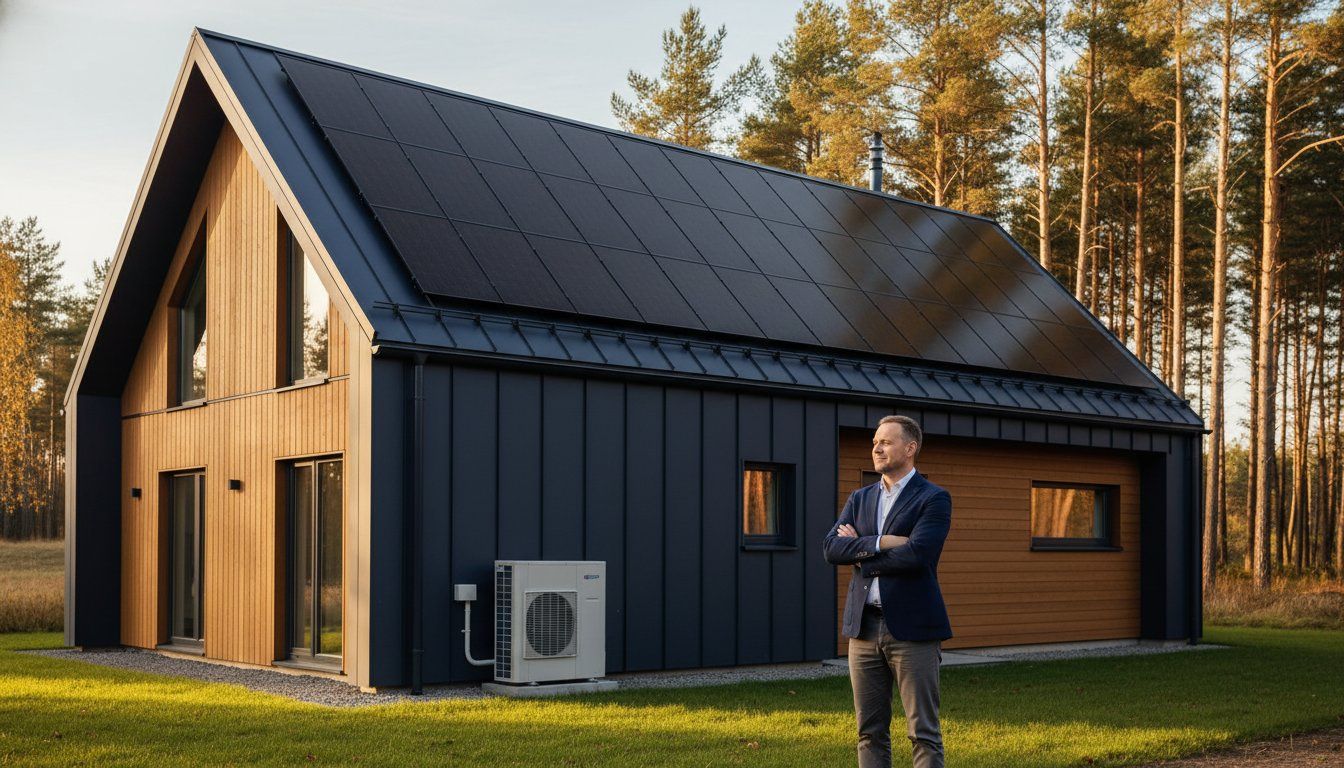
Do you really control your heating bills, or do they control your family budget every time the temperature in Latvia falls below zero? We know very well that unpleasant feeling when, while waiting for the coldest winter months, you have justified concerns about electricity price spikes during peak hours and system efficiency losses caused by snow or frost. It is completely understandable to want security and predictability in your home, especially at a time when the energy market and the conditions of state support programmes often seem complicated and difficult to understand.
In this article, we will explain how solar panels and a heat pump work as one coordinated team to give you maximum energy independence and peace of mind. You will learn how to use the new net settlement system wisely in 2026 and apply for state support that can reach up to 6,500 euros under the EKII programme. We have also prepared a practical, easy-to-understand maintenance plan that will help ensure the long service life of your equipment in Latvia's harsh conditions. Our goal is to give you the knowledge that turns complex technical challenges into a clear and reliable action plan for warmth and comfort in your home.
Solar Panels and a Heat Pump: Why Is This the Ideal Combination in Latvia?
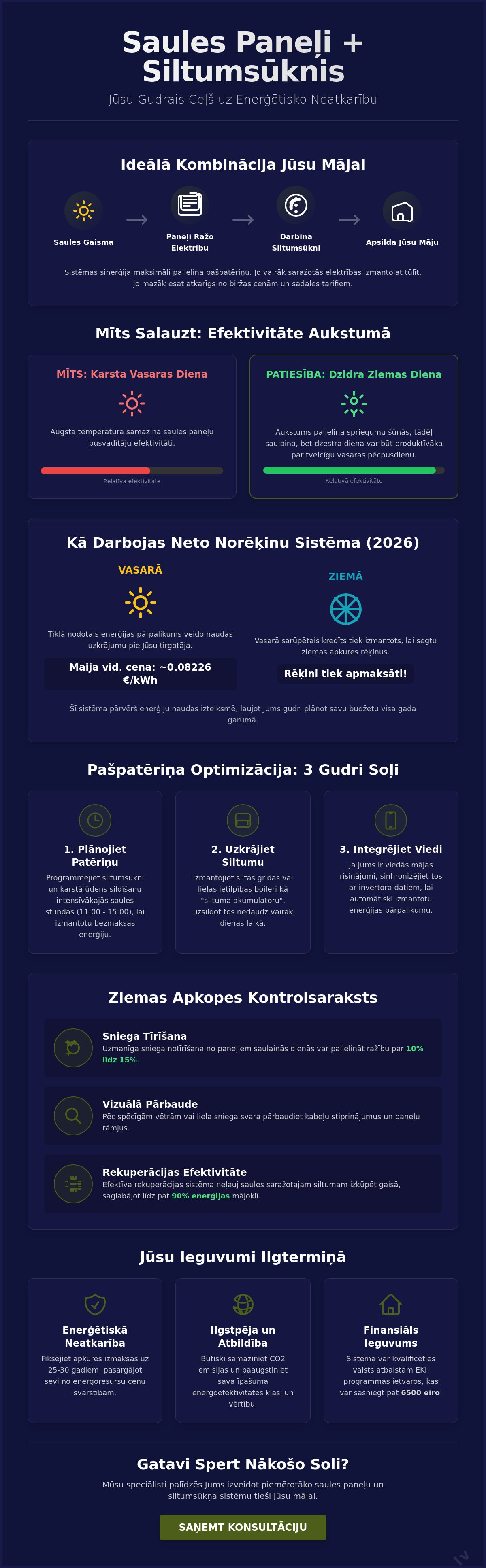
When we talk about a modern and economical home, we no longer mean separate devices, but a smart energy ecosystem. At the heart of this system are solar panels and a heat pump, which together form a powerful tandem. The synergy is very simple: solar panels produce free electricity that directly powers the heat pump compressor. This means that you not only generate your own energy, but also use it immediately and efficiently for heating or cooling your home.
Internationally recognized solar panel and heat pump systems clearly show that this kind of integration makes it possible to maximize self-consumption. In 2026, when the net settlement system is fully operating in Latvia, immediate energy use has become the main key to lower bills. The more electricity you consume at the moment it is produced by the sun, the less dependent you are on fluctuating exchange prices and distribution tariffs. This is especially important for owners of air-to-water heat pumps, for whom solar energy can cover a large part of the required capacity at the beginning and end of the heating season.
How Temperature Affects Overall System Efficiency
There is a popular myth that solar panels work best on a hot summer day. The opposite is true. Semiconductor physics shows that photovoltaic cells are much more efficient at lower temperatures. Cold increases the voltage in the cells, so a sunny but cool February day can be even more productive than a sweltering July afternoon. Latvia's climate, with its clear winter and spring days, is ideally suited for solar panels and a heat pump to work at full output. While the panels generate energy in the cold air, the heat pump turns it into cozy warmth in your living spaces.
Energy Independence and Sustainability
By choosing to install modern solar panel kits, you effectively lock in your heating costs for the next 25 or even 30 years. It is an investment that protects you from unpredictable future fluctuations in energy prices. In addition to the financial benefit, this kind of system significantly improves the building's energy efficiency class and reduces CO2 emissions. It is not only a matter of savings; it is a responsible attitude toward the environment and your property, creating a secure and independent future for you and your family.
Economic Justification and Self-Consumption Optimization
For solar panels and a heat pump to deliver maximum return, installation alone is not enough. The real secret lies in changing habits and using smart equipment control. Latvia's 2026 net settlement system is designed so that the greatest benefit goes to households that consume their generated electricity immediately. By programming the heat pump to work during the most intensive solar hours, usually from 11:00 to 15:00, you are literally turning free sunlight into heat that the house will retain throughout the night.
Thermal storage is another powerful tool in your arsenal. You can use the building structure, such as underfloor heating, or large-capacity boilers as a kind of energy storage. During the day, when the panels are operating at full capacity, the heat pump can heat water and rooms a couple of degrees higher than necessary. This stored heat allows the system to rest in the evening, when electricity prices on the exchange often rise. To keep the system running smoothly, a professional heat pump maintenance guide will be useful for keeping all components in proper working order.
Many customers ask us whether it is worth clearing snow from panels in winter. Our experience shows that on sunny winter days, removing snow can increase output by 10 to 15 percent. However, it must be done carefully to avoid damaging the surface. Also remember that an efficient heat recovery ventilation system is essential because it prevents the heat produced with solar energy from simply escaping into the air during ventilation, retaining up to 90% of energy in the home.
Step by Step: How to Optimize Energy Use
Start by adjusting the heat pump temperature curve. Set the system so that domestic hot water heating takes place exactly in the middle of the day. If your home has smart home solutions, synchronize them with the data from the solar panel inverter. This will automatically increase heating output when surplus energy is being produced, reducing the need to send electricity to the grid and later buy it back while paying for distribution services.
Advantages of the Net Settlement System in 2026
The net settlement system introduced in Latvia in May 2024 records energy in monetary terms, not in kilowatt-hours. This means that the surplus generated in summer creates a cash balance with your electricity trader. In May 2026, the average exchange price was approximately 0.08226 €/kWh, which is a good indicator for building up this balance. By correctly calculating panel capacity so it covers the heat pump's annual consumption, you can reach a situation where winter heating bills are covered by the credit created by summer sun. If you want to plan your system precisely, we recommend consulting our specialists about the most suitable solution for your home.
Technical Maintenance Checklist for the Winter Season
Solar panels and a heat pump are durable systems, but Latvia's unpredictable winters with sharp temperature swings require extra attention. Most owners focus only on snow clearing and forget about the system's "nervous system" - cables and the inverter. After strong storms or heavy snow loads, always perform a visual inspection. Check whether cable fastenings are still secure and whether the panel frames have not deformed under the load of ice. It takes only a few minutes, but it can protect you from serious damage in spring.
The inverter is the brain of the entire system. After sudden thaws or humidity following frost, check whether any error messages appear. If you notice anything unusual, it is better to contact a specialist in good time. Remember that state support for installing solar panels and heat pumps is available until 2029, which confirms that the state encourages long-term system maintenance and efficiency. Taking care of your equipment today ensures its return for decades.
When clearing snow, use only soft brushes with telescopic handles. Never use shovels or sharp objects. Even a microscopic scratch in the glass can create "hot spots" and permanently damage a panel. There is also a strict ban on hot water or chemical ice melters. Hot water can cause thermal shock and crack the glass, while chemicals can damage the anti-corrosion coating of the frames.
The Impact of Snow and Ice on Structures
The self-cleaning process for snow depends largely on the slope of the panels, but even at a steep angle, ice plugs can form between panels. They prevent water from draining during a thaw. When it freezes, the force of expanding ice can literally push panels out of their mounts. Pay close attention to these gaps so ice does not accumulate and create unnecessary pressure on the structure.
Electrical Safety and Monitoring Tools
During thaw periods, moisture can enter even the smallest cracks in cable insulation. That is why it is critical to monitor the condition of the grounding system and use data monitoring apps. If you see an unexplained drop in power while the sun is shining and the panels are clean, it may indicate insulation problems or inverter faults. If you are not sure about the technical condition of your system, book heat pump and panel diagnostics with Commodus technicians so you can get through winter without worries.
Commodus Solutions: Why Entrust Maintenance and Installation to Professionals?
When it comes to complex engineering systems, details are decisive. Our team believes in an integrated approach, where solar panels and a heat pump are not just two separate devices, but a precisely synchronized mechanism. To achieve the highest efficiency, we also ensure the compatibility of these systems with a modern ventilation system. This integration makes it possible to manage energy flows intelligently, ensuring that every watt produced is used effectively instead of being lost because of incorrect settings.
The visual inspection you can carry out yourself, as described above, is valuable, but professional diagnostics provide complete security. Our specialists use high-resolution thermal cameras that make it possible to see what the human eye misses. We identify "hot spots" and microcracks in panels that can cause long-term power loss or even system failure. Professional maintenance is also a prerequisite for preserving the warranty. Work performed by certified technicians is your guarantee of safety, confirming that the system meets all manufacturer standards and Latvian building regulations.
We develop individual maintenance plans tailored specifically to the changing weather conditions in our region. This includes not only inspection of technical components, but also software updates and analysis of efficiency data. In this way, we help you optimize self-consumption based on real data from your household.
Engineering Competence and Experience
With more than 15 years of experience in the heating and energy efficiency solutions market, we have seen how technologies develop and change. We know that choosing the right air-to-water heat pump is the foundation for how successfully solar panels and a heat pump will work together in the future. Our engineers will help you choose capacity that precisely matches your home's heat losses and the potential output of the solar system, avoiding unnecessary investment in oversized equipment.
Book Service in Good Time
Although winter is the peak season for heating, the spring peak in solar production begins as early as March. That is why the end of February is the ideal time to prepare the system for major production. We provide fast response and technical support throughout Latvia, regardless of project scale or location. Our team is only one call away, ready to bring peace of mind and confidence in your home's warmth. If you want to make sure your system is ready for the new season, contact us today and we will agree on a visit.
Prepare for an Efficient and Green Heating Season
By choosing modern energy solutions, you are investing not only in your home, but also in peace of mind and predictable costs. As we have seen, solar panels and a heat pump in 2026 are one of the smartest ways to protect yourself from fluctuating electricity prices and maximize self-consumption. Proper synchronization of systems and regular professional maintenance are the essential prerequisites that allow your equipment to serve with maximum return even in the harshest Latvian frost.
Our team, with more than 15 years of experience in the local market and the knowledge of certified engineers, is ready to help you at every stage. We provide full-cycle service and individual solutions so that every project reaches its highest energy efficiency potential. Whether you are planning a new system installation or want to diagnose existing equipment, we will be your reliable partner on the path toward a sustainable home.
Contact Commodus experts and book maintenance or a consultation for your system!
We believe that energy independence is achievable for everyone, and we are here to make this path simple, safe, and easy to understand. May warmth and comfort always prevail in your home.
Frequently Asked Questions About Solar Panels and Heat Pumps
Can Snow Damage My Solar Panels or Heat Pump?
No, if the system is installed correctly, snow usually does not cause any damage to the equipment. Solar panels are designed to withstand significant snow loads, and the outdoor units of heat pumps are equipped with an automatic defrost function that prevents them from freezing. However, it is important to make sure that large snow banks do not accumulate around the heat pump and restrict airflow, and to prevent ice plugs from forming between panel frames.
How Much Electricity Do Solar Panels Produce in December and January in Latvia?
In December and January, production is the lowest of the year, usually amounting to only 1 to 3 percent of the total annual volume. This is due to short days, cloudiness, and the low angle of the sun. During this period, the main financial benefit is the cash balance built up in the net settlement system during the summer months. It helps cover winter expenses when solar panels and a heat pump operate in their most intensive mode to provide home heating.
Do I Need to Climb onto the Roof to Clear Snow from the Panels?
We strongly advise against climbing onto the roof for safety reasons, especially in slippery winter conditions. In most cases, snow slides off by itself thanks to the smooth surface of the panels and the heat they emit during operation. If cleaning still seems necessary, use only special soft brushes with telescopic handles and work from the ground or from a safe ladder, so you do not scratch the surface or damage the photovoltaic cells.
Why Does the Inverter Show an Error After Severe Frost and What Should I Do?
Error messages after sharp temperature changes may indicate condensation or temporary voltage fluctuations in the electricity grid. First, check the error code in your monitoring app and compare it with the manufacturer's instructions. If the error does not disappear after restarting the system or appears repeatedly, the safest choice is to contact our technical support. Our specialists can perform remote diagnostics and help restore system operation quickly.
Is State Support Available in 2026 for a Combination of Solar Panels and a Heat Pump?
Yes, in 2026, support under the EKII programme is still available to private house owners. You can receive up to 4,000 euros for purchasing a solar power plant and up to 2,500 euros for a battery system, which together creates co-financing of up to 6,500 euros. This programme is valid until 31 December 2029. This means that investment in renewable energy is economically justified and actively encouraged by the state, helping households achieve energy independence.
Comments