What heat pump is most suitable for private homes: Roadmap 2026
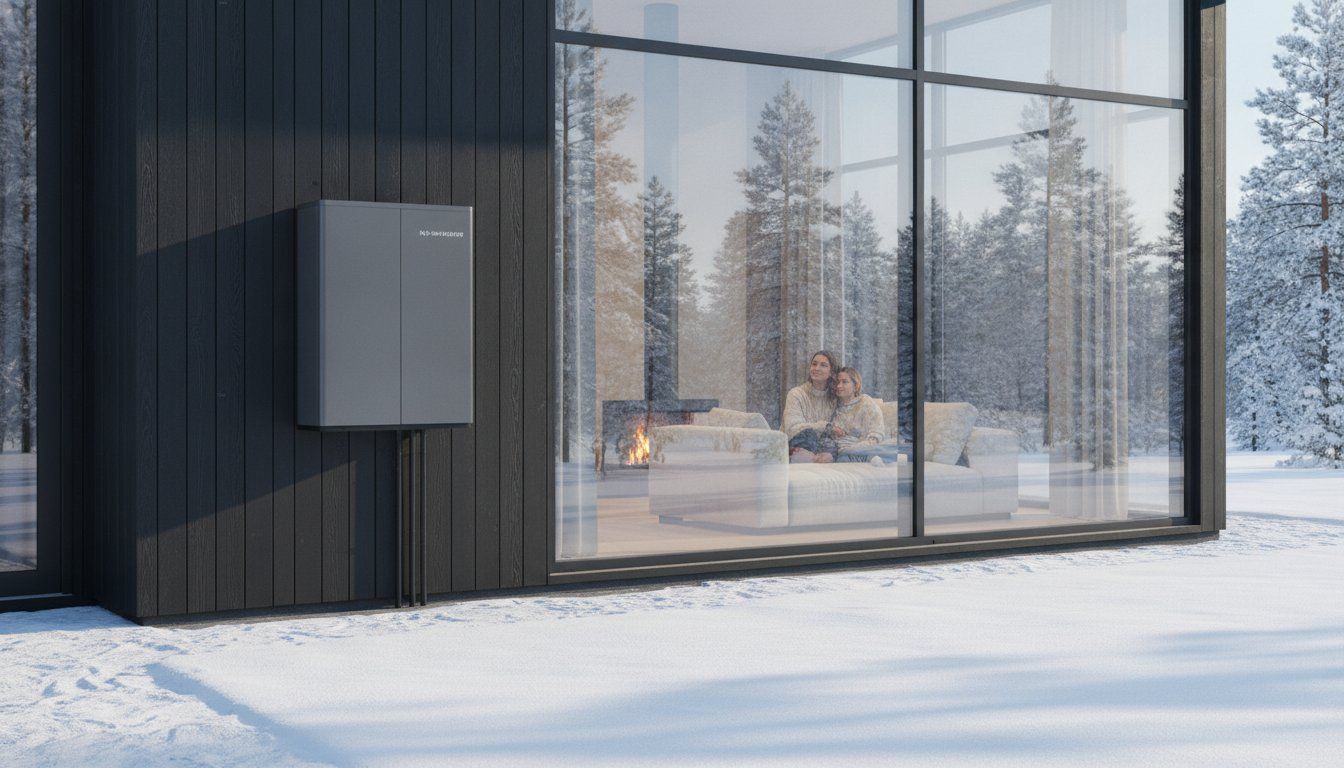
Did you know that since May 2026 the new energy performance standards for buildings in Latvia have become about 20% stricter? the heat pump is most suitable for private house"We see that the owners of Kommodus team are most afraid of complex power calculations and uncertainty about whether the chosen equipment will really be able to maintain a warm house on the harshest winter nights.
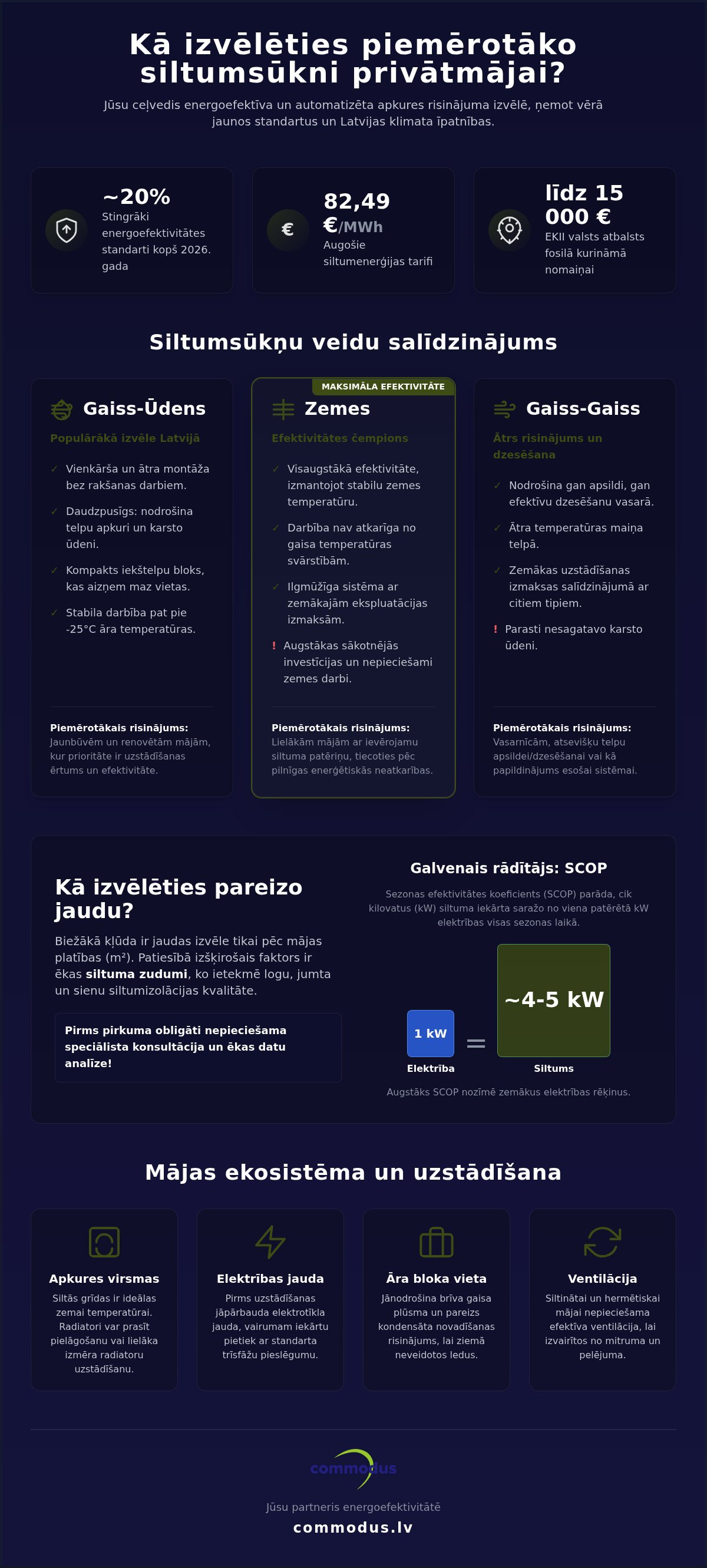
We fully understand your desire for a system that works for yourself while you enjoy time with your family. In this article we will help you to choose the most energy efficient solution based on real data on the climate of Latvia and the technical condition of your home. You will learn how to receive state support under the EQF programme, which still offers co-financing of up to €15,000 in 2026 for the replacement of fossil fuels. We will look at the differences between air-water, air-air and ground heat pumps, providing a clear action plan for the development of a fully automated heating system and significantly lower bills in the long term.
Types of heat pumps for private houses: Air, water or land?
The choice of heat pump is a strategic decision that will affect your comfort and wallet for the next decades. To understand, the heat pump is most suitable for private house, start with the choice of the energy source. Principles of operation of heat pumps The main reason is heat transfer, not production, which makes these equipment so efficient. Three main types of market are dominated by each with its own technical advantages and installation nuances.
Why is the air-water heat pump the most suitable for the Latvian climate?
This type has become the most popular choice for both new and renovated house owners. CTC air-water heat pumps is designed for Nordic conditions and is able to work safely even if outside is -25°C. This is crucial for our changing winters. The main advantages are:
- Simple assembly: No expensive and voluminous digging works in your garden.
- Multilaterality: The system heats the rooms through warm floors or radiators and at the same time prepares hot water for the whole family.
- Compact: The indoor unit takes little space, freeing up space for other needs.
Ground heat pump: When does the investment pay out the fastest?
The ground heat pump is the champion in terms of efficiency, because it uses constant ground temperature at depth. It is particularly beneficial for large houses with significant heat consumption. Horizontal collectors are required to operate the system or boreholes, which provides energy from the ground. Initial investment is higher, but low operating costs and system longevity pay off with overestimation. This is the solution for those who want complete independence from air temperature fluctuations.
For smaller buildings or as an additional solution we often recommend Alpicair air heat pumps. They are ideal for summer cottages or for cooling rooms in summer heat, ensuring a rapid change of temperature. When selecting the equipment, always take into account the house area and the quality of insulation. Even the most powerful pump will not be able to heat the house with large heat losses, so consultation with a specialist is mandatory before purchase.
How to choose the right power and model specificity?
The heat pump's power is not a universal size that can be chosen only by the square meter of the house. A myth is often found that the 10 kW machine will fit any 150 m2 house. In reality, everything depends on the heat-insulation and insulation quality of the building. If the house has large heat losses through windows or roof, even the most advanced machine will work with excessive load. To determine exactly, the heat pump is most suitable for private house in your situation, start with the energy audit of the building or at least an analysis of historical heating data.
The main indicator in choosing the model is SCOP or seasonal efficiency factor. This shows how many kilowatts of heat will be produced from one kilowatt of electricity over the whole season, not just in a moment. Energy efficiency and maintenance is closely connected, so modern inverter technologies are so important. They allow the compressor to work in a variable mode, not only to connect and off. It not only prolongs the system life, but also significantly reduces the noise level. It is important if the outdoor unit is located close to the neighbouring border or the bedroom window, ensuring peace for you and others.
CTC heat pumps: Swedish quality for Latvian winters
CTC air-water heat pumps Swedish engineers know exactly what harsh and changing weather conditions mean, so these equipment are specially adapted to the Nordic climate. The smart control of these devices allows to control the temperature at home remotely through a mobile app. The system automatically optimizes its own operations in response to the fluctuations in outdoor temperatures, which are common in Latvian winters.
Hybrid solutions: Heat pump together with pellet boiler
Sometimes a complete electricity transition is not the only solution. If your house is already installed quality pellet boiler, it can be saved as a spare heat source for extreme situations. Such hybrid system provides an additional feeling of safety in the harshest winter nights and allows you to flexibly vary with heating costs. It is a smart balance between complete automation and energy independence.
If you are not sure about the power needed or the model selection, our specialists will help you make accurate calculations to make your new heat pump work with maximum returns and minimum costs.
Installation of the heat pump and compatibility with the home ecosystem
The heat pump is not just an isolated device on the wall of the house. It is a central node in your home's energy ecosystem, which works best if all components are aligned. Thinking about it, the heat pump is most suitable for private house, the heating surfaces are crucial. Warm floors are an ideal ally because they work with low heat transfer temperature, allowing the equipment to reach maximum efficiency. If the house has radiators, they will have to adapt or choose a model with higher forward temperatures to ensure the same comfort.
The power supply of the main equipment is sufficient to provide standard three-phase connections, but the precise calculation will protect against unpleasant surprises in the coldest winter days. Also, the location of the outdoor unit is a technical task, not just an aesthetic issue. The free air flow and proper drainage solution for the discharge of condensate is required so that the ice mountains do not form around the unit in winter and its operation is not hindered.
Synergies between ventilation and heat pump
Home insulation without proper air exchange can cause moisture problems and mold. Here comes modern help ventilation with heat recovery. Quality recovery system ensures that the heat pump does not need to consume excess energy to heat cold outdoor air flowing through open windows. This creates a healthy microclimate without a hole and significantly reduces the overall load on the heating system.
Heat pump and solar panels: Path to zero bill
By combining the heat pump with solar energy, you are closer to complete energy independence. Solar panel kits allows to produce the necessary electricity for the operation of the device itself. Smart control will heat water just when the sun shines brightest, maximising self-consumption. State aid for heat pumps and solar panels make this investment one of the smartest financial decisions in 2026 to reduce family spending.
If you plan to complete the system modernisation, we will help Commodus to develop a joint project to work together all the equipment. Apply for a consultation on installation of the system and find out what will be the most advantageous solution for your home.
Investment payback and State aid in 2026
Investment in modern heating systems is much safer and more predictable today than ever before. With a heating tariff of 82.49 EUR/MWh in April 2026, fossil fuel use becomes an expensive luxury. If we compare the cost in five years, the heat pump is convincingly ahead of gas heating or wood-based boilers. This is due to the increase in the excise duty on natural gas and the need for continuous fuel supply and cleaning. In addition, data show that the market for energy efficient home reality is 15% to 20% more demanding. This means that when choosing, the heat pump is most suitable for private house, you invest in an increase in the value of your real estate at the same time.
How to apply for public funding
In 2026 large support programmes are still available. EQF programme offers co-financing of up to 70% of eligible costs, with a ceiling of EUR 15 000 per project. To receive this money successfully, it is necessary to start with the preparation of the energy certificate of the building and the development of accurate documentation. One of the most common stumbling stones is the use of uncertified assembly enterprises. State support can only be obtained if the installation is carried out by professionals who can demonstrate their qualifications and equipment compliance with the efficiency standards.
Commodus full service warranty
We consider the client to be our equal partner in the Commodus team. Therefore, we offer a full cycle: from free consultations and precise capacity calculations to assistance with submission of documents for public support. CTC heat pumps We know that even the best technique needs regular service. Our masters provide after-sales maintenance and technical support throughout Latvia. We are next to your system to work smoothly and to keep heating bills at a minimum ten years later. Contact us to find out, the heat pump is most suitable for private house right in your case and start saving already this season.
Start saving with smart heating solution today
The right choice of heat pump is one of the most valuable decisions you can make for your home and family budget. We have considered that efficiency lies not only in the installation itself, but also in its smart integration with ventilation systems and solar energy. Remember that the stringent energy efficiency standards of 2026 and the available state aid programmes provide a unique opportunity to modernise the housing, significantly reducing initial investments. the heat pump is most suitable for private house in your case, you are not only getting warmth, but also complete peace of mind and independence from fluctuating energy prices.
We are ready to become your trusted partner in the Commodus team during this transition period. Our more than 15 years of experience in installing heating systems and certified installers in Latvia guarantee that the work will be done in the highest quality. We not only install equipment, but also help to arrange all necessary documentation for the state support so that the process will be as simple and understandable as possible.
Apply for free consultation and receive individual heat pump offer
Take the first step towards lower bills and modern cosiness. Our team will be happy to help find a solution that will serve faithfully for decades.
Frequently asked questions about heat pumps
Can the heat pump warm the house in a very cold winter?
Yes, modern equipment, such as CTC air-water heat pumps, is specially developed for Nordic climate and works effectively even at -25°C. To ensure maximum heat, it is critical to calculate the heat losses of the building correctly and to choose the appropriate power. In cases where the temperature drops even below, the system automatically connects the replacement electric heater, guaranteeing continuous cosiness and safety.
How much is the heat pump installation process in private house?
The installation of an air-water heat pump usually takes 1 to 3 working days depending on the complexity of the existing heating system. Installation of the ground heat pump takes more time because of the need for extensive ground work or the creation of a borehole that can take up to a week. Our certified masters work operationally, ensuring that the change of the heating system causes minimal inconvenience to your family's daily activities.
Is the heat pump loud and will it interfere with the neighbors?
Modern heat pumps work very quietly, their noise level usually does not exceed 35 to 50 decibels, which is comparable to a quiet conversation or refrigerator sludge. Thanks to inverter technology, the equipment rarely works with maximum power, thus significantly reducing noise levels.
What is the difference between air-water and ground heat pump operating costs?
The use of heat pumps is generally 10 to 20% more efficient than air-water systems, as they use stable temperatures from the bottom of the earth all year round. This means slightly lower electricity bills in the long term, but air-water systems are cheaper and easier to install. the heat pump is most suitable for private house, take into account both the initial investment and the area available in your garden for the collector placement.
Can the heat pump also cool the rooms in the summer?
Yes, most modern heat pumps are equipped with a cooling function that works like an air conditioning in summer heat. If the house is fitted with heated floors or fancoils, the system can effectively lower the room temperature by several degrees. It provides a pleasant microclimate in the house all year round, using the same equipment for both winter heating and cooling on the most attractive summer days.
What are the requirements for a power grid to install a heat pump?
Most private houses require a three-phase electrical connection with a capacity of 16 to 25 amps. Precise requirements depend on the capacity of the selected installation and the total electricity consumption of the home. Before installation, we always perform a thorough power grid check to ensure that your existing connection will be able to operate the new heating system safely and reliably without overloading.
Comments