Gas Boiler Replacement with a Heat Pump in 2026: Complete Guide and Benefits
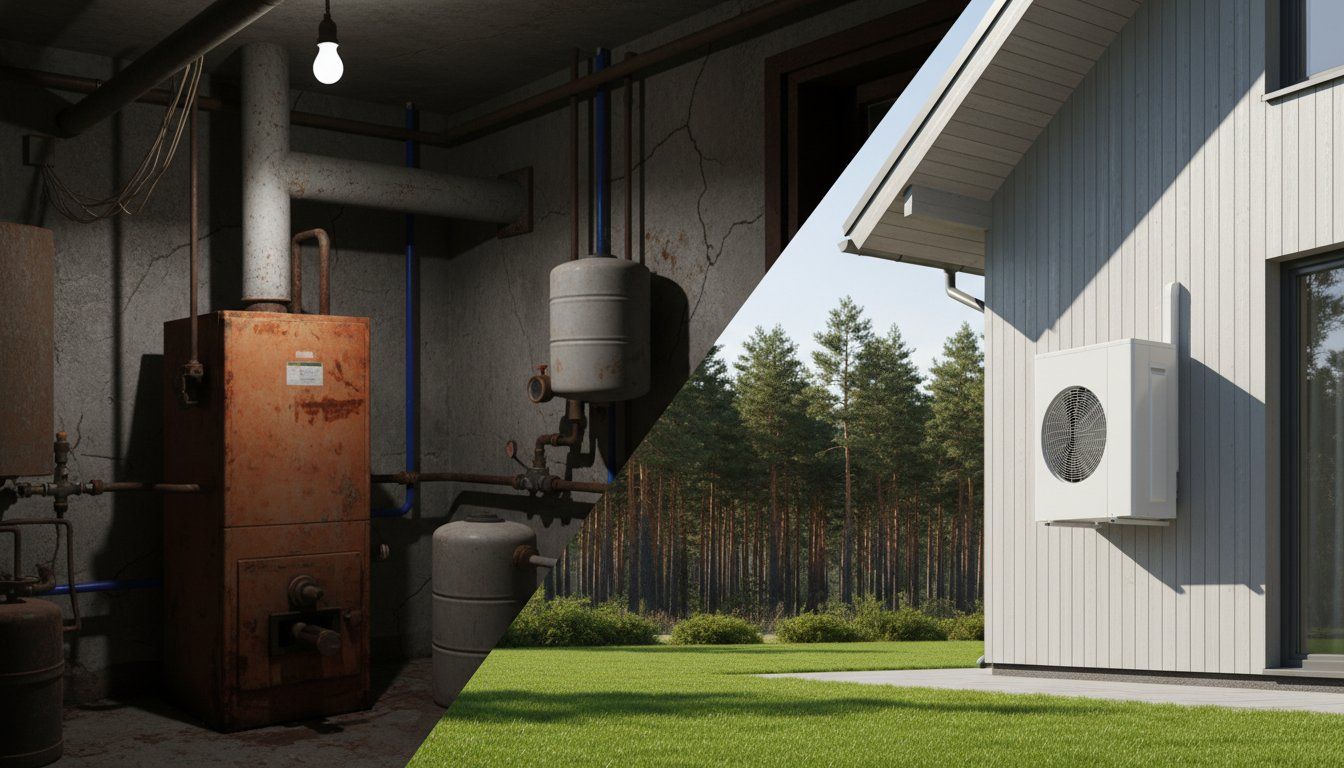
Did you know that your gas boiler may soon become the most expensive appliance in your home, even though the solution is right on your doorstep? We understand that natural gas price fluctuations and uncertainty about the future make many homeowners uneasy, especially if you are unsure whether your existing radiators will work with modern technologies. Replacing a gas boiler with a heat pump in 2026 is no longer just an experiment, but a considered and financially sound step toward peace of mind.
Learn how to replace gas heating efficiently with a modern heat pump, receive state support, and finally reduce your monthly bills. In this guide, we explain in simple language how to apply for funding under the EKII programme, which is available to households until as late as 2029, and why now is the right time to act. We will look at the entire process from the first step to a fully automated heating system that works for you, not for natural gas suppliers, providing warmth and comfort in the long term.
Why is replacing a gas boiler with a heat pump a priority in 2026?
2026 marks an important turning point in Latvia's energy sector. Natural gas is no longer the cheap and stable resource we had grown used to over the decades. Rising fossil fuel taxes and the European Union's climate goals are turning gas heating into an expensive luxury rather than an economical choice. That is why replacing a gas boiler with a heat pump is currently one of the smartest decisions a homeowner can make. It is not only about ecology, but about protecting your wallet from unpredictable bills in the future.
Heat pump technology has made a huge leap in recent years. While a gas boiler reaches 90-95% efficiency at best, a modern heat pump works on a completely different principle. By using energy from the surrounding environment, it can deliver a SCOP of 4 to 5. This means that from one kilowatt of electricity consumed, you receive up to five times more heat. To better understand what is a heat pump? and how it turns air into heat, it is important to know that it does not burn fuel, but moves energy from the outdoor environment into your home.
By replacing gas equipment, you not only reduce CO2 emissions but also improve your home's energy efficiency class. This is critically important because, to receive state support, the building must reach at least class D. An air-to-water heat pump is the most suitable replacement because it usually integrates very well into the existing heating system, using the same radiators or underfloor heating manifolds. Here are the main reasons to make the switch:
- Lower operating costs and independence from gas prices;
- The opportunity to receive state co-financing until as late as 2029;
- Fully automated heating control via smartphone;
- Higher property market value thanks to modern utilities.
Energy efficiency and cost savings
When monthly costs are compared, a heat pump clearly outperforms gas. Although exact bills depend on the insulation of the house, heating costs fall by 30-50% on average. This is possible thanks to low maintenance requirements and the system's long service life. A high-quality heat pump lasts 15-20 years and does not require annual, expensive gas system inspections or chimney cleaning. Replacing a gas boiler with a heat pump usually pays for itself within 5-7 years, which is an excellent result for any engineering investment in your home.
Technical transition: Will a heat pump work with your existing radiators?
One of the biggest myths is the belief that a heat pump only works together with underfloor heating. In reality, replacing a gas boiler with a heat pump is entirely possible in homes with classic radiators as well. The main secret lies in choosing the right unit. High-temperature heat pumps can heat water to as much as +70 or +75 degrees, which is fully sufficient for older cast iron or steel radiators to provide pleasant warmth even in a harsh winter.
If your gas boiler is still in working order, consider creating a hybrid system. This means that the heat pump becomes the main heat source, while the gas boiler remains as a safety reserve. The system automation selects the cheapest fuel itself depending on the outdoor temperature. This is especially useful if you are worried about the system's output at -25 degrees. When planning this type of upgrade, it is worth knowing that households in cities can access EU fund support for heat pumps, which helps cover part of the investment.
Before installation, we always recommend carrying out a heat loss calculation. Sometimes it is enough simply to replace a couple of smaller radiators with more powerful ones so the whole system can work at a lower temperature and consume less electricity. Remember that every insulated square metre of attic directly affects your future bills.
Monoblock vs Split systems: Which should you choose?
A monoblock system is compact. All the technology is located in one outdoor unit, which saves space in your boiler room. A Split system, by contrast, has two units and is protected against the risk of freezing during a power outage because refrigerant, not water, circulates between the units. The choice depends on your home's layout and available space.
Domestic hot water preparation and boiler integration
A heat pump handles domestic hot water preparation for the whole family very well. We usually install special boilers with an enlarged heat exchanger area so the water heats up quickly and efficiently. If you are not sure which system will best suit your existing pipes, our technicians will help find the most suitable solution for your home based on the real situation on site.

State support and financing in 2026
2026 is an excellent time to finally make the transition to sustainable heating. At the moment, the EKII programme administered by the Latvian Environmental Investment Fund (LVIF) offers substantial support to households for replacing fossil fuel equipment. The programme's total funding reaches 85 million euros, and applications are open until 31 December 2029. This means that the state has a direct interest in helping you become more energy independent.
For replacing a gas boiler with a heat pump to go smoothly and for you to receive co-financing that can reach up to 70% of the costs, several basic conditions must be met. One of the most important criteria is the home's energy efficiency. The building must reach at least energy efficiency class D. Support is also granted only if the work is carried out by a certified installer. State funding is not paid for self-installed equipment because system efficiency and safety are the priority. Before work begins, an energy certificate must be prepared, serving as confirmation of the building's condition.
Many people worry about complex documentation, but the process has become easier to understand. The main requirement is a step-by-step approach and accurately prepared documents. If everything is done correctly, reimbursement after the project is completed takes place fairly quickly, significantly reducing your initial investment.
Step-by-step path to financing
- Step 1: Consultation and preparation of an estimate. Our specialists will assess the specifics of your home and prepare an accurate technical proposal.
- Step 2: Application submission. Once the costs are clear and the unit has been selected, an application must be prepared for the EKII or Altum programme, adding the required certificates.
- Step 3: Installation and reports. After the equipment is installed, an acceptance and handover act is prepared and submitted to the state institution together with payment documents.
We know that every home is unique, so we will help you avoid getting lost in the details of the rules. If you want to find out what support you can receive for your specific project, book a consultation with Commodus experts and together we will find the most cost-effective path to cheaper heating.
Why entrust gas boiler replacement to the Commodus team?
We are not simply equipment sellers; we are craftsmen with more than 15 years of experience installing energy-efficient heating systems throughout Latvia. Every gas boiler replacement with a heat pump is a personal challenge and responsibility for us. We believe that quality heating begins with an honest conversation, so we never recommend solutions that your home does not need or that are not technically justified. Our engineers develop a full-cycle project, from precise heat loss calculations to the last screw in the installation process.
In 2026, we are paying special attention to energy independence. Right now, the smartest way to make maximum use of a heat pump's potential is to combine it with solar panel kits. This synergy has become our clients' favourite choice because it allows them to produce electricity themselves, which the heat pump later turns into heat. It is a unique opportunity to almost completely eliminate dependence on external energy suppliers and their price fluctuations, creating a truly autonomous and environmentally friendly home ecosystem.
When you choose to work with us, you gain a partner who cares about your comfort in the long term. We provide:
- An individual engineering approach to every property;
- Help with arranging documentation for receiving state support;
- Professional installation carried out by certified specialists;
- Regular equipment maintenance and technical supervision.
Commodus warranty and technical support
We know how important it is to feel secure, so our service team remains available after the project is handed over. We offer only globally recognised brands, such as premium CTC heat pumps, which are specially adapted for northern climates and deliver excellent efficiency even in the harshest winter. If you want to see how these technologies look and work in real life, we invite you to visit our branches in person. There, our colleagues will explain every nuance in simple and understandable language, helping you make a considered decision about the future of your home. Replacing a gas boiler with a heat pump with Commodus is an investment that pays back through peace of mind and predictable bills.
Start your path to independent and cheaper heating today
Transitioning to a modern heating system is an investment that provides security and predictability for many years. As we have seen, replacing a gas boiler with a heat pump in 2026 is not only technically possible even in homes with radiators, but also financially very advantageous thanks to available state support. By choosing this path, you gain a fully automated system and free yourself from worries about the whims of natural gas prices.
The Commodus team, with its 15 years of experience and thousands of successfully completed projects across Latvia, is ready to become your trusted partner in this process. Our certified installation specialists will take care of high-quality installation, while our office staff will help arrange all the necessary documents for receiving state co-financing. We believe that every project is unique, so our approach is always personal and solution-focused.
Do not postpone the decision until support quotas may be exhausted. You can apply for a free consultation and estimate right now to take the first step toward a warmer and more economical future. We will be glad to help you create a cosy and safe atmosphere in your family home.
Frequently asked questions about changing the heating system
Can a heat pump provide warmth at -25°C?
Yes, modern heat pumps, such as CTC models, are specially designed for the Nordic climate and heat the home efficiently even at -25°C. At such extreme temperatures, the unit automatically uses the built-in additional electric heating element to provide the required output and comfort, so the house will always be warm.
How long does it take for replacing a gas boiler with a heat pump to pay back?
On average, replacing a gas boiler with a heat pump pays back within 5 to 7 years thanks to significantly lower monthly heating costs. This period can be even shorter if you successfully use state support programmes that cover up to 70% of the equipment purchase costs, significantly reducing your initial investment.
Do I have to replace all radiators if I install a heat pump?
Radiator replacement is not mandatory because high-temperature heat pumps are now available and work very well with existing heating systems. Our engineers assess radiator output at every property and, if necessary, recommend replacing only individual heat emitters or increasing the number of their sections so the system works at maximum efficiency without rebuilding the entire system.
Can I receive state support if the gas boiler still works?
Yes, state support programmes such as EKII have been created specifically to encourage the transition from fossil fuels to renewable resources regardless of the old unit's wear. This means that replacing a gas boiler with a heat pump is an eligible activity even if your current boiler is still in working order, but you want to reduce bills and improve your home's energy efficiency.
What are the electricity connection requirements when installing a heat pump?
Most heat pumps require a stable three-phase connection with suitable capacity, usually ranging from 16 to 25 amps depending on the selected unit. Before installation work begins, we always check the condition of your home's electrical network and, if necessary, provide recommendations on increasing capacity so the system operates safely and steadily in any weather conditions.
Comments