Storage and requirements of pellets: Full guide for quality heating in 2026
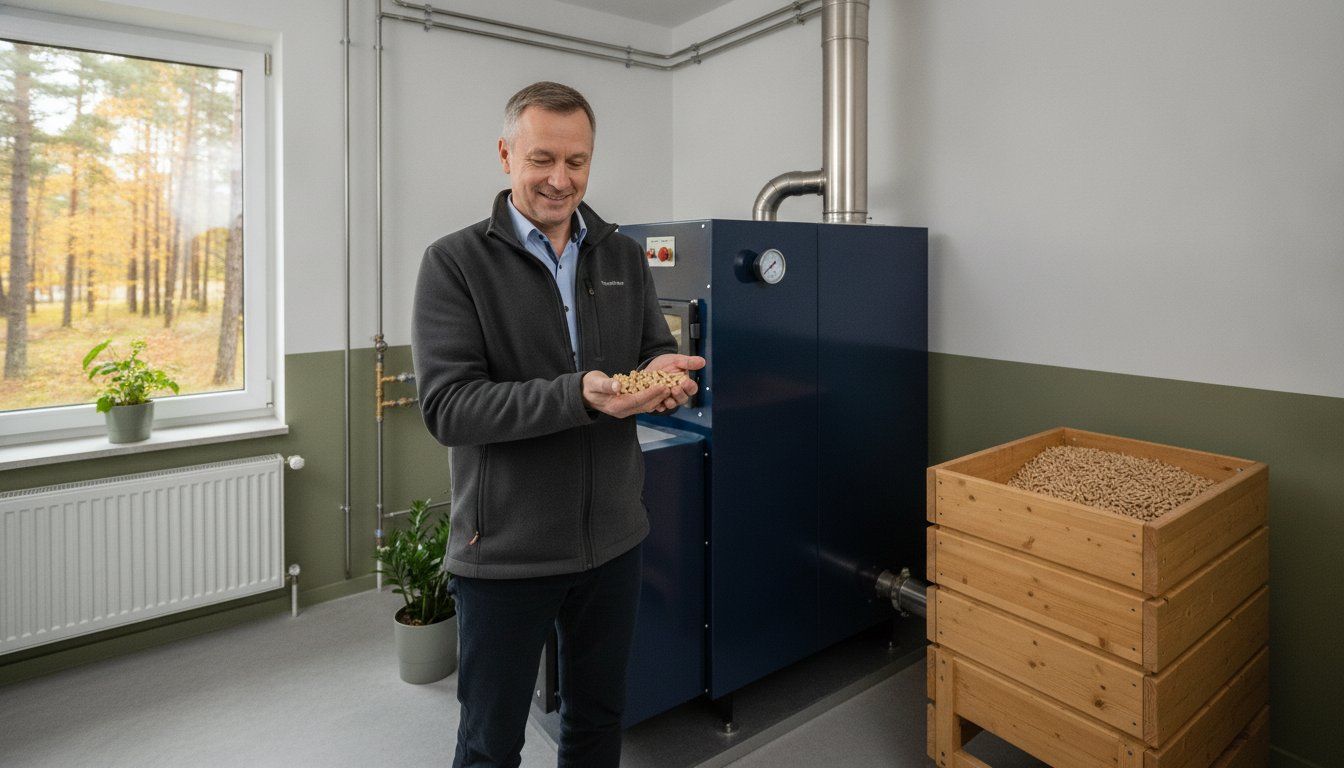
Imagine the cold January morning when you wake up not in cozy heat, but in the cooler, because the boiler's screw is stuck because of the precipitating granules. This is an unpleasant situation that every host wants to avoid, but in reality, the incorrect storage of the granules and the requirements for maintaining them often remain in the second plan, after the choice of the boiler itself. We see in the Commodus team every day that even the most advanced equipment is unable to work effectively when the fuel has lost its quality due to the moisture effect. As in the summer of 2026 the retail prices of the pellets reached up to 350 to 400 euros per tonne, care for each pellet has become a significant part of the financial planning of each household.
In this guide we will share the experience of our masters to help you protect the heating system from expensive emergency stops and to maintain maximum energy efficiency. You will learn how to properly set up bunkers even in a limited area and what technical parameters need to be taken into consideration to ensure a stable operation of RTB Phoenix or any other pellet boiler. We will look at both basic fire safety rules and practical steps that will reduce the long-term heating costs and ensure a safe, cosy environment for your family throughout winter.
Why is proper storage of granules critical to your heating system?
Wood-cab granules are highly hygroscopic material. This means that they absorb moisture from the surrounding environment as a sponge. If not observed correctly storage and requirements for pellets For microclimate, the fuel starts to lose its shape and density. A quality pellet is shiny, solid and sinking in water, while damaged begins to break and swell. Such changes are not only aesthetic; they directly affect your wallet. Our experience shows that misstorage fuels can increase consumption by 10-15%, as the boiler needs to spend extra energy on evaporation of water from wood instead of domestic heating.
The test chemical is a mixture of the test chemical and the test chemical.
Even a small, seemingly tiny 2% increase in moisture can dramatically reduce the amount of heat produced. When the pellet swells, it becomes soft and no longer burns completely. This results in more ash that pollutes the heat exchanger, and the boiler's efficiency falls. The main sign that the granules are "swelled" moisture is their greyish color and tends to break easily between the fingers. The ideal condition of the pellet before entering the combustible chamber must be dry and smooth, ensuring a smooth flame.
Risks from dust and fines
Excessive dust in the bunker is not just dirt. This is a technical risk that can block the automatic ignition element and speed up the wear of the feed mechanisms. RTboiler (5616) designed to operate with high accuracy, but even the best engineering cannot fully compensate for low quality fuels. Safety risks in storage of granules, which includes both dust explosion and carbon monoxide accumulation in non-ventilated rooms. Regular cleaning of the bunker from the fines is simple, but essential work that the owner can perform himself to guarantee the system's longevity.
Technical requirements for the pellet storage: From bags to bunkers
The first thing we recommend to every customer is to forget about stacking the pellet bags directly on the concrete floor. Even in a visually dry room concrete "breath" and transfer moisture to the fuel. storage and requirements for pellets The bag should be placed on wooden pallets, ensuring a minimum distance of 10-15 cm from the floor and walls. This air gap prevents the formation of condensate, which is particularly dangerous to the outer walls. If you plan to store the granules outdoors, remember that UV radiation makes the polyethylene packaging fragile within a few months. The micro-crack film means immediate moisture access, therefore the outdoor shed should be completely darkened and protected from direct sunlight.
The angle of inclination is the determining factor in large-scale bunker construction. In order for granules to come to the supply screws themselves, the floor slope of the bunker must be at least 45 degrees. In the selection of materials, smooth surfaces such as plywood or special anti-static fabrics are preferred, which reduce friction and dust accumulation. Our team stresses that storage and requirements for pellets regarding the tightness is particularly important if the bunker is located in the basement. Also, it is important to observe general Fire protection requirements for storageby providing for sufficient distance from the ceiling and electrical installations.
Storage in bags vs. dry bulk bunkers
Bags are convenient for smaller boiler rooms, because they allow accurate control of consumption and do not require large investments in infrastructure. Conversely, dry bulk bunkers are a long-term investment in comfort. RTboiler (5616) best demonstrates its potential directly in combination with automated bunker systems, where fuel supply is carried out without human intervention. This not only saves time, but also allows to purchase pellets at a more advantageous price for bulk cargo, which is usually lower than for prepacked products.
Ventilation and temperature regime
Many mistakenly believe that the storage should be warm. In fact, the temperature does not matter much, unless it is stable and the room has low relative humidity (below 60%). Natural ventilation is critical to remove excess moisture and prevent the risk of mold at the walls of the bunker. If you are not sure about the suitability of your room, our engineers will help choose the most suitable pellet boiler and plan its position for maximum efficiency.
Security and Maintenance: What should every master know?
Safety often remains in the second plan until the first problems arise. One of the less discussed, but the dangerous risks is carbon monoxide (CO) accumulation. Even dry particle pellets release a small amount of this colourless gas during storage. If the bunker is leaky and the room is not compliant ventilation, CO concentration can reach a level that is dangerous to health. We recommend installing CO detectors in the storage tanks, especially if you plan to carry out an internal inspection of the bunker after a longer period of time.
Another important aspect is the FIFO (First-In, First-Out) principle. This means that the new pellets should not simply be rubbed on the old ones. If the bottom remains fuel from previous seasons, it gradually absorbs moisture and turns into dust, which later blocks the supply. Once in the season, before a new purchase, the bunker must be completely emptied and cleaned with a powerful vacuum cleaner. storage and requirements for pellets against purity guarantees that your heating system will operate without unexpected interruptions and unnecessary repairs.
Fire protection provisions for pellet spaces
The walls and doors must meet a certain fire resistance class to localize the possible ignition. The dusty environment is explosive, therefore the whole electrical installation must be closed and protected against dust penetration. It is also important to observe the minimum distance between the storage and the boiler itself. Usually it is at least 0.5 to 1 meter, depending on the power of the equipment and the manufacturer's instructions, which our specialists always carefully check during the installation.
Rodent and pest control
Mouse and rat adore warm boiler rooms, and pellet bags seem a great place for fog installation. The best protection is a hermetically sealed bunker made of metal or solid plywood. If you notice rodent activity, avoid poisons in the immediate vicinity of granules to prevent chemical fumes from entering the burner. Instead, use natural deterrents or ultrasound devices. If you want to learn more about how to automate your farm to the maximum, view the RTB pellet boilers we offer, which stands out with a high degree of security and intelligent management.
How to choose the most suitable solution together with Kommodus?
When choosing a heating system, it is important to understand that the boiler is only one part of the overall equation. Kommodus we believe that a quality engineering system begins with a thoughtful project. It includes not only the right choice of the equipment power, but also how will be implemented storage and requirements for pellets Our experience in the Latvian market for more than 15 years allows us to anticipate challenges before they arise, ensuring that your home will be warm and safe in any weather conditions.
The RTB Phoenix series boilers are a great example of how technologies make the everyday life easier for the owner. These machines stand out with a high degree of automation and are perfectly integrated with smart bunker systems. storage and requirements for pellets in terms of dryness and cleanliness, RTB Phoenix provides maximum efficiency. This means lower costs and less time spent in the boiler room. We not only install equipment, but also maintain it regularly for decades.
Expert advice of Commodus
Each project starts with a conversation and an object survey. Our engineers make accurate calculations of heat losses to recommend the optimal solution for your building. We also help you to navigate through the bureaucratic grids by preparing the necessary documentation for receiving state support (ECII). This is an essential reflection when you switch to modern and environmentally friendly heating, whether you choose a pellet boiler or a heat pump.
Why air-water heat pump Can be an alternative to heating pellets?
If your home is limited, the heat pump may be a more appropriate choice. It does not require a separate space for fuel storage that frees valuable square meters. By comparing the pellet heating with the heat pump, the main difference is directly in logistics. The boiler requires regular fuel replenishment and bunker cleaning while the heat pump works entirely autonomously. We will help you to weigh both options, taking into account the specifics of the building and your comfort requirements.
Provide your home warmth with thoughtful planning
Correct storage and requirements for pellets It is not only the longevity of the equipment, but also your peace of mind. Remember that dry fuel and clean bunker directly affect your monthly expenses, while security measures protect what is most important, your family and home. By following the principles set out in this guide, you will not only save money, but will also avoid unpleasant surprises during the coldest winter months.
With more than 10 000 satisfied customers across Latvia, we know how to turn technically complex processes into simple and enjoyable comfort. By choosing RTB Phoenix, the most intelligent pellet boiler in the market, you get technology that adapts to your needs. We will take care of everything by providing full warranty for all assembly works and providing professional support even after installation of the system.
Contact Commodus specialists and get an individual heating solution!
We are ready to become your trusted partner on the way to efficient and modern heating. Let your home always have warmth and a pleasant atmosphere!
Frequently Asked Questions about Storage of Pellets
Can the granules be stored in a non-heated garage?
Yes, granules may be stored in a non-combustible room unless it is dry and it has a sharp temperature variation that contributes to the formation of condensate. The main condition is to avoid direct contact with concrete floors or cold exterior walls. Use wooden pallets and leave a small air gap between the wall and the stack of fuel to ensure natural ventilation and to protect the packaging from moisture absorption.
How long can the wood chips be stored without losing quality?
Quality storage and requirements for pellets The environment allows them to be stored for up to two years, but we recommend that stocks be restored every season. Over time, even the most resistant polyethylene packaging may become fragile or lose its airtightness. If the granules are stored for too long, they gradually attract air moisture, which reduces their thermal capacity and increases the amount of ash in the fuel chamber.
What if the granules have become wet and start to collapse?
If you notice that the granules are puffed up and ruins, they must never be poured into the automatic boiler. Wet fuel turns into a mass of sawdust that quickly blocks the supply screw and can cause the engine to burn up. A small amount of wet pellets can be tried to dry and used in a conventional wood stove, but for automated systems they are no longer valid.
What is the optimal size of the pellet bunker for medium private houses?
For medium private houses with an area of about 150 square meters, the optimal bunker is that of 4 to 6 tons of fuel. This allows you to make one large purchase at the beginning of the season when prices are most advantageous. When planning the space, you can count that one tonne of granules takes about 1.5 cubic meters of capacity.
Can the dust from the granules cause explosion?
Theoretically high concentrations of wood dust in a closed room and spark can cause ignition, but in private house bunkers such risk is negligible. To feel completely safe, it is important to regularly clean the bunker and keep an electrical installation in order to keep the room in order. We recommend that you completely empty the storage and extract the accumulated fines, which not only improves safety, but also protects your boiler's mechanisms.
Comments