Ventilation in basement and attic: Full guide to home protection in 2026
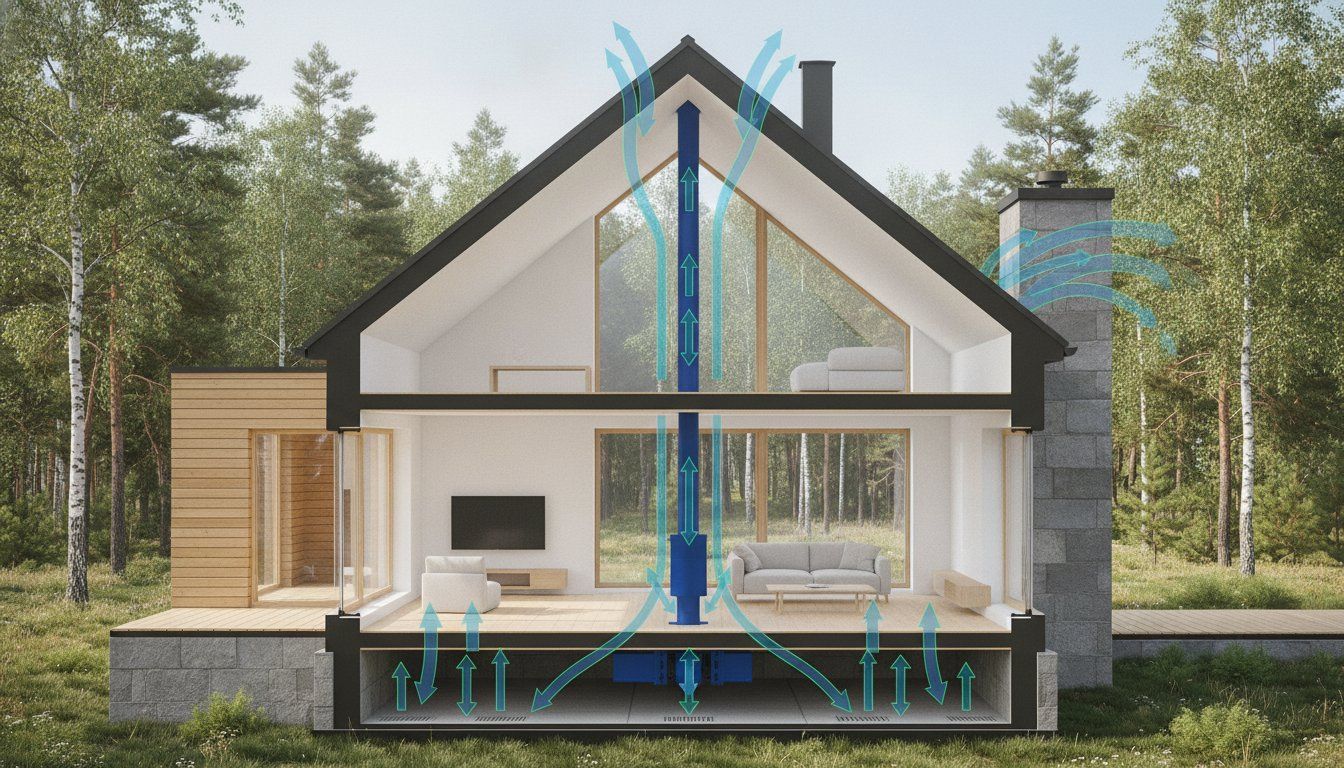
Have you ever felt the specific, heavy smell of the attic when entering the basement, or have watched with concern how the heat insulation of attic becomes wet and heavy? Many owners mistakenly believe that maximum heating of the house is the only way to heat, but without proper air circulation, the house begins to literally thirst.
We understand how unpleasant it is to fight moisture that damages expensive insulation materials and is a cause for concern about the future of the building. This guide will find out how properly ventilation in the basement and attic protects your home from mold and structural damage, following the latest construction standards of 2026. We will look at both effective ventilation principles and modern recovery solutions that will help to maintain dry environments and at the same time significantly reduce heat losses throughout the house.
Why is ventilation in the basement and attic critical to home health?
The house can often be compared to a living organism where air circulation serves as its respiratory system. Air flow naturally tends to move from the bottom of the building to the top, which engineers call "the effect of the chimney." If in this chain any section is weak, the whole structure suffers. ventilation in the basement and attic ensures that the air does not get stuck and decay, but is constantly renewed. principles of building ventilation, it becomes clear that air movement is the main tool in the fight against premature aging and structural damage to the building.
Moisture and condensate: main enemies
The condensate comes at a time when warm and wet air from living rooms is in contact with cold surfaces, such as basement concrete walls or attic roofing. If the relative humidity level is longer than the optimal 40-60%, it begins to form a favourable environment for mold fungus. It is not just an aesthetic defect. The mold spores pass through the floor cracks and communication shafts into your living area, directly affecting the health of the family's airways. Poor air exchange turns the cellar into a moisture reservoir, which slowly nourishes the deterioration of all indoor air quality of the house.
Durability of structures
Many hosts make a mistake thinking that additional insulation of attic will solve all problems. However, even the most qualitative layer of thermal insulation loses its function if it becomes wet. Moisture in attic directly threatens the wood beams and rafters, causing their blowing and structural weakening. Our experience shows that effective ventilation is more important than a thicker layer of wool because the dry construction has been working for decades, while wet can irreversibly spoil in a few seasons. Moreover, unventilated attic in winter contributes to the formation of ice dams on the roof, creating additional load on the safety of the building and unnecessary costs for heating.
Effective basement ventilation: solutions against moisture and mold
The basement is often the most problematic area of the house, where the cool air "lands" becomes a trap of moisture without proper movement. If the air flow is not targeted, stagnation zones are formed, where the moisture accumulates for weeks. controlling hood and lock Processes that not only damage the wall finish, but also slowly undermine the integrity of the building constructions. ventilation in the basement and attic is a single engineering network that prevents moisture from becoming a host of your house.
Natural ventilation is still a popular solution, but it requires precision. Air will not move by itself, it needs impulse. We recommend using the opposite wall principle to create natural traction. However, it should be remembered that natural ventilation can work against expectations in summer months. When you put warm and wet outdoor air into the cellar, it is exposed to cool walls and condensing, creating even greater humidity.
Planning of ventilation openings
The location and size of the air openings are important in planning. The inlet grills must be closer to the floor, while the exhaust channels must be opposite the corner to the ceiling. This ensures that the air passes through the entire room, not just "run" along one wall. The area of the openings must be proportional to the volume of the space, to ensure at least minimal air exchange even in the absence of wind.
Mechanical solutions and automation
In deep cellars or in areas with weak air movement, natural traction often fails. In such cases, the best aid is mechanical ventilation. Modern fans with built-in moisture sensors are a clever investment. They turn on automatically when the moisture level exceeds the set norm and turns off when the environment is dry again. Decentralized recuperators, whose prices range from 200 to 700 euros per unit in 2026. They not only remove moisture, but also help to maintain the heat of the room. If you want to calculate the exact capacity needed for your project, the Kommodus engineers developed by Kommodus engineers ventilation will ensure long-term peace and dry cellar.
Inhibition and insulation: How to avoid condensate?
The attic area is a house roof "lung" that is often forgotten during the insulation process. ventilation in the basement and attic Their impact on the life of roofing and bearing structures is equally important, but the mistakes made in attic are usually more expensive. In the climate of Latvia, where winters are wet and temperature fluctuations are frequent, the air flow from the ledge to the ventilator must be continuous. If the air in the attic stagnates, the warm steam from the living space condenses to the cold rafters, creating an ideal environment for blowing.
Many owners make a critical mistake in trying to heat the house to the maximum. They squeeze ventilation gaps to the heat insulation wool. This completely stops air circulation. As a result, even the most expensive wool starts to flash, losing its heat resistance properties. Remember that dry wool heats, but wet wool only increases heating bills. It is important to provide a free way to the air under the roof deck using properly installed latency and anti-latation.
Correct ventilation of the roof structure
The roof "Pirka" has its own function. The diffusion film must release the vapour from the inside, but does not allow moisture to penetrate from the outside. Complex roofs with many structures are often not enough only with the cracks of the ledge and the cortex. In such cases, additional ventilation outlets or "shadows" are needed, which mechanically help to remove the accumulated moisture from areas where natural traction is weak.
Steam insulation and airtightness
Even the strongest ventilation will not help if the vapour insulation from inside of the premises is damaged or worn out. Warm and wet air through the smallest gaps to lamps or hatches comes into attic and turns into droplets of water. In 2026 the new building norms emphasize the importance of airtightness of the buildings for energy efficiency. If you plan to rebuild or heat the roof, the Kommodus specialists developed a ventilation and precise power calculations will help to avoid expensive mistakes and will provide dry housing for decades.
Modern ventilation solutions and professional installation
We have looked at why air should not stand on site, but in 2026 ordinary air openings are often no longer enough. Modern requirements for energy efficiency and new construction standards make us look for smarter solutions. ventilation in the basement and atticThe only way to ensure fresh air without throwing out the expensive heat produced by your heat pump or pellet boiler is to ensure that the engineering project is the first and most important step to make the system work as a clock.
Recovery as standard in 2026
The choice between a centralised or decentralised system depends on the specifics and budget of your home. If the basement is fully inhabited or there is a rest area, decentralised recovery system It does not require the construction of complex air pipes and effectively controls moisture locally. In the attic area, recuperation helps to maintain a stable climate, preventing overheating in summer and the formation of condensation in winter. Our engineers see that this approach helps to achieve the standards of a nearly zero energy building, which is now mandatory for new buildings.
Why entrust the work to professionals?
Ventilation is not just a fan and tube in the wall. It is a fine engineering balance. If the power is too small, the humidity will not disappear anywhere. If you are too large, you will waste electricity and create a drain. The Commodus team starts every project with accurate power calculations taking into account the volume of rooms and wall materials. We believe that a thoughtful project is the basis for a calm sleep for decades. Commodus for experts, you will receive not only technical performance, but also an individual approach that combines ventilation with your existing heating systems for maximum efficiency. Our experience since 2010 allows us to find solutions even in the most complex objects in Latvia, providing full service from survey to regular maintenance.
The basis for a dry and safe home is the correct air exchange
Care for the dwelling begins with the understanding that moisture is a quiet but persistent enemy. As we have found, effective ventilation in the basement and attic The only safe way to protect the building's structures from mold and premature deterioration is to protect the building from natural drift or modern recovery systems, the most important is precise planning and qualitative performance, which meets the energy efficiency requirements of 2026.
Our team has more than 15 years of experience in the Latvian market, helping the owners to create a healthy environment throughout the house. We offer energy efficient solutions with a guarantee, starting from first conversation to the service of the ready system. Contact Kommodus engineers and get a ventilation system offer! Use the opportunity to apply for free consultation and survey the object to find the solution that suits your home. We believe that each project is a personal story about comfort, so we work with full return regardless of the amount of task we perform.
Your house deserves to breathe freely, giving you a sense of peace and security for decades.
Frequently asked questions about home ventilation
Why is my basement always wet, even if the windows are open?
The main cause is usually condensate, which occurs when warm and wet outdoor air comes into contact with cool basement walls. In summer, while keeping windows open, there is even more moisture in the room that immediately turns into drops of water on cold surfaces. To prevent this, controlled ventilation in the basement and attic is required, which ensures air exchange when outdoor air temperature and humidity are suitable for it, rather than just throughwinding.
Will the attic ventilation not lead to greater heat losses in winter?
No, properly built ventilation does not increase heat losses, but protects your home's heat insulation. It removes wet steam that naturally rises from living spaces, preventing the insulation material from soaking. Dry wool retains its insulation properties, while wet wool literally "removes" heat from the house. Ventilation ensures that your contribution to heat insulation works effectively and the roof structures remain dry and healthy.
How often should vent holes and wires be cleaned in the basement?
Ventilation grills and inlet openings are recommended to be checked and cleaned at least once a year, preferably before the beginning of the heating season. Dust, leaves or spider nets can significantly reduce air flow and system efficiency. If the basement is fitted with mechanical ventilation with air pipes, professional cleaning and filter change is usually required every 3 to 5 years. Regular maintenance ensures that ventilation in the basement and attic is fully powered.
Can I install a ventilation system in the attic myself?
The correct balance of air flows can create an opposite effect, for example, to promote the formation of condensate in places where it has not been previously. Engineers make precise calculations, choosing the right area and location of the openings. This guarantees that the system will not only look good, but also actually protect your house from damage caused by moisture.
How to determine whether the attic ventilation works properly?
Visual inspection is the easiest way to verify the system's operation. In winter there must be no drops of condensate or a layer of frost on the inside of the roof, and wooden structures must be visually dry, without dark spots. Another significant feature is the lack of icicles on the roof edges. If the air is fresh and the smell is not very strongly formed, this indicates that air circulation is correct and your roof is safe.
Comments