Heat Pump Service Life: How Long Will Your Heating System Last?
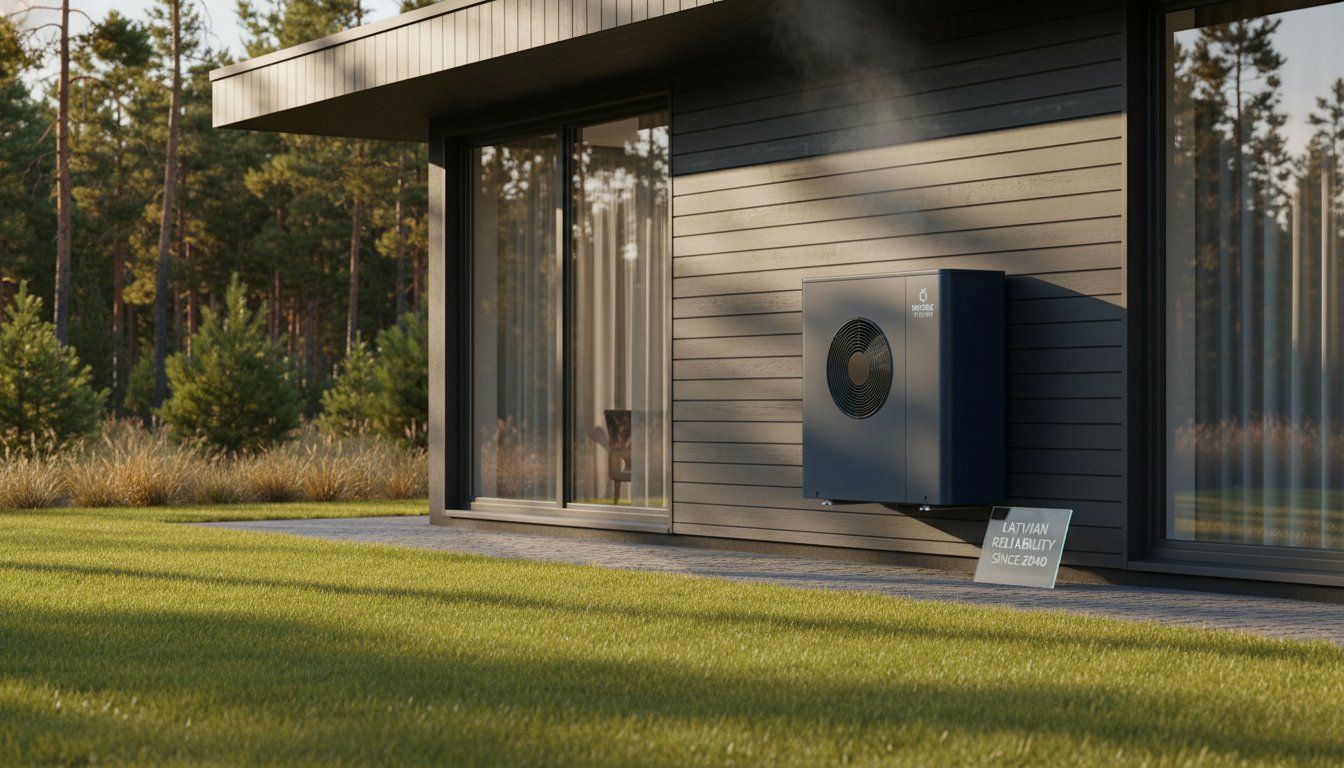
A heat pump's lifetime is not finally decided on the factory conveyor; in reality, it is determined by an accurate capacity calculation and proactive maintenance adapted to Latvia's changeable weather. We know that investing in a modern heating system is a significant step, often accompanied by concerns about expensive spare parts or skepticism about the unit's ability to operate when the thermometer drops well below zero. That is why the question of the real service life of a heat pump is entirely justified and relevant for anyone who wants safe, predictable warmth at home.
In this article, we will dispel myths and provide clear answers about how many years different types of heat pumps actually last. You will learn why some models work reliably for 20 years and longer, while others use up their service life sooner. We have prepared a practical maintenance plan that will help You maximize the return on Your investment and Your peace of mind. Our goal is to give You confidence that the system You choose will be a stable and reliable long-term partner, no matter how harsh the next winter may be.
Average heat pump service life and why it matters
The average service life of a heat pump ranges from 15 to as much as 25 years. This is not just a dry technical parameter, but a decisive factor that determines how profitable Your investment will be in the long term. The longer the system operates without major repairs, the more years You enjoy free energy after the unit has fully paid for itself. Modern technologies, especially 2026 models, have become even more durable thanks to smart control and improved components.
Comparison of heat pump types by longevity
The mechanical durability of different technologies varies because it is affected by the environment in which the unit operates. Ground source heat pumps are often considered the champions of durability. The service life of ground source heat pumps can exceed 25 years because their main assemblies are located indoors, protected from sharp temperature fluctuations and precipitation. Meanwhile, air-to-water systems in Latvia's changeable conditions usually serve reliably for 15 to 20 years. The lifespan of air-to-air heat pumps can be affected by their dual role. If the unit is used intensively for both heating in winter and cooling during hot summers, wear is faster.
Why is service life not just a theoretical number?
Many buyers make the mistake of assessing only the unit's price rather than its working life. Gradual component wear directly affects the system's efficiency, or COP indicator. If the most important parts are not kept in good order, the compressor has to start working harder to produce the same amount of heat. This leads to higher electricity consumption and shortens the unit's life.
The operating life of a heat pump is also closely linked to the energy efficiency of the whole building. If the house has large heat losses, the unit works almost continuously at the limit of its maximum output. 2026 models are equipped with smart software that monitors these loads and prevents the system from "burning out". These innovations ensure that a heat pump installed today will be a reliable heat source for much longer than the technologies available on the market ten years ago.
Factors that affect heat pump longevity in Latvia
Choosing a heat pump is only half the victory. The real lifetime of the unit is determined by how skillfully it is integrated into Your home's engineering systems. Latvia's changeable weather and humid air create specific challenges that require a considered approach already at the design stage. Quality installation and correct settings are the main prerequisites for the system to operate flawlessly for decades.
One of the most dangerous factors, often unnoticed, is so-called short cycling, or the compressor switching on and off too frequently. Every start creates mechanical stress and increases friction between parts. If the system is configured incorrectly, it may start dozens of times per hour, which dramatically shortens the compressor's life cycle. To extend a heat pump's working life, it is critically important to achieve a smooth and long operating cycle, avoiding unnecessary starts.
Consequences of choosing the wrong capacity
An oversized heat pump heats rooms extremely quickly and then immediately shuts down, provoking the short cycling mentioned above. Insufficient capacity, in turn, forces the unit to work at the limit of maximum load without respite, which is especially dangerous in severe frost. Our engineers at Commodus perform precise heat loss calculations for every building individually. This helps find the golden mean, ensuring that the service life of the heat pump is not sacrificed because of incorrect planning.
Specifics of Latvia's climate
The high air humidity typical of our region at temperatures around zero forces the outdoor unit to perform defrost cycles more often. This is a natural process, but incorrect placement of the unit in relation to prevailing winds or snowdrifts can make the process more difficult and overload the fan. In coastal regions, the risk of salt corrosion must also be considered, so there we recommend units with a special protective coating.
Grid stability is no less important. Voltage fluctuations are not uncommon in Latvia's rural regions, so surge protection is mandatory for the safety of the investment. If You want to make sure that the solution chosen for Your home will be technically sound and sustainable, we invite You to consult with our specialists, who will help assess all the specific risks of Your property.
Practical tips: How to extend a heat pump's working life?
The service life of a heat pump depends greatly on how carefully we treat it day to day. You do not have to be an engineer to understand that clean and well-maintained equipment works more efficiently and lasts longer. Prevention is always much cheaper than emergency repairs in the middle of winter. The main task is to ensure that nothing prevents the unit from "breathing" and that the heat carrier circulates without unnecessary resistance.
Regular cleaning of the filters in the indoor unit and free airflow around the outdoor unit are the absolute basics. According to the U.S. Department of Energy heat pump maintenance guidelines, even minor neglect in maintenance can significantly increase energy consumption and accelerate component wear. In Latvia, where air humidity is high, special attention should be paid to ensuring that the outdoor unit's heat exchanger does not become clogged with dust or dirt. Combined with moisture, these deposits form a dense layer that impedes heat exchange and forces the system to work under increased load.
Annual professional maintenance
Although You can do many tasks Yourself, a certified technician's visit once a year is mandatory to protect the investment. The specialist will check the refrigerant, or freon, level; even a small leak forces the compressor to work with excessive output to reach the desired indicators. Professional maintenance also includes calibration of the internal automation and sensors, ensuring that the system responds to temperature changes accurately and without wasting energy.
User's daily checklist
We recommend creating a simple habit of periodically reviewing the system's operating indicators in the mobile app. This helps notice deviations from the norm before noises or vibrations appear, which may signal a more serious problem. The outdoor unit should regularly be cleared of leaves, snowdrifts, and ice buildup that can block fan operation. If You notice anything unusual, it is better to consult experts immediately. We invite You to use Commodus technical maintenance services so Your heating system is always ready for operation.
A small fault diagnosed in time protects You from major expenses in the future. If You want complete peace of mind about Your system's condition, book a maintenance visit with our knowledgeable technicians today.

When is it time to replace a heat pump with a new one?
The service life of a heat pump is not infinite, and a point comes when even the most reliable unit starts requiring more money than it provides value. If You notice that electricity bills are rising for no visible reason or repair costs after the warranty period begin to regularly "empty" the budget, that is a clear sign. Older-generation models gradually lose their efficiency because their mechanical assemblies are worn, and they can no longer deliver the original COP indicator.
Technological progress has been enormous in recent years. New-generation air-to-water heat pumps using R290 or R32 refrigerant operate significantly more quietly and efficiently even in harsh frost. This transition to more environmentally friendly and energy-efficient solutions is not just a fashion statement, but a way to substantially reduce heating costs in the long term. New units are smarter and can better adapt to the building's real heat demand.
Economic justification for a new unit
When comparing a ten-year-old model with 2026 technologies, the difference in efficiency is obvious. An older heat pump may consume considerably more electricity to produce the same amount of heat. In addition, 2026 is especially favorable for modernization because state support is available. The EKII programme for households is planned to run until December 31, 2029, providing an opportunity to recover part of the investment. The ALTUM programme for apartment buildings is also active until June 30, 2026, helping cover the cost of energy efficiency improvements.
How Commodus helps modernize the heating system
Our team understands that the decision to install a new unit requires careful consideration. That is why we offer a professional assessment of the existing system's condition, so You know whether replacement is truly economically justified. We provide the full cycle: from dismantling the old heat pump to installing and precisely configuring a new, modern unit. Our technicians are available throughout Latvia, providing a long-term warranty and human support on every question. The goal is one: Your comfort and peace of mind about the safety of the heating system for the next decade.
Ensure warmth and peace of mind in Your home for decades
The service life of a heat pump is not a coincidence; it is the result of purposeful care and correct technical decisions. The main prerequisites for longevity are an accurate capacity calculation and regular, professional maintenance that protects the system from excessive wear. Modern technologies combined with 2026 state support programmes allow every homeowner to switch to a more efficient heating method that will be a reliable partner for many years.
With more than 15 years of experience in the Latvian market, the Commodus team is Your trusted partner on the path to an energy-efficient and safe home. Our certified installation and service specialists will take care of quality installation, while the wide range of heat pumps and availability of spare parts will give You confidence in the system's stability. Applying for heat pump maintenance or consultation with Commodus is the first step toward ensuring maximum return on Your investment.
Let us create a warm and cozy atmosphere in Your home together by choosing solutions that will serve reliably and steadily for many years. We are here to help You make the best decision for Your comfort.
Frequently asked questions about heat pump longevity
How many years does an air-to-water heat pump last on average in Latvian conditions?
An air-to-water heat pump in Latvia's changeable weather reliably serves for an average of 15 to 20 years. This indicator is directly related to how precisely the unit is matched to the building's heat losses and how regularly its maintenance is performed. Quality installation and correct settings help achieve the maximum working life, while neglecting service can significantly shorten this period.
How can I know that my heat pump is starting to wear out?
The main signs of wear are an unexplained increase in electricity consumption and unusual noises or vibrations during operation. If You notice that the system can no longer maintain the desired indoor temperature even in moderate frost, it is possible that the service life of the heat pump is nearing its end. Frequent error messages on the control panel or visible oil traces at connection points also indicate problems.
Does frequent heat pump switching shorten its service life?
Yes, frequent switching on and off, or short cycling, is one of the main reasons why a compressor wears out prematurely. Every start creates a mechanical shock and increases friction between parts, so it is important to achieve smooth system operation. Correctly configured automation and the use of a buffer tank help reduce the number of starts, significantly protecting the unit's most important assemblies.
Is it worth repairing a 15-year-old heat pump?
The decision to repair depends on the scale of the fault, but for a 15-year-old unit it is usually not economically justified. If the compressor or main electronics board has to be replaced, the costs may reach half the price of a new unit. In addition, modern models are much more efficient and quieter, so investment in a new system will pay back faster through lower electricity bills and state support programmes.
How does outdoor unit placement affect the unit's longevity?
The placement of the outdoor unit directly affects the workload of the fan and heat exchanger, which determines how long the service life of the heat pump will be. The unit must be installed in a place with free air circulation, protected from direct winds and snowdrifts. In coastal regions, protection against salt corrosion is important, while throughout Latvia free condensate drainage must be ensured to prevent the unit from freezing in winter.
Comments