Air Conditioner with Heating Function: Reviews and Real Efficiency in a Latvian Winter in 2026
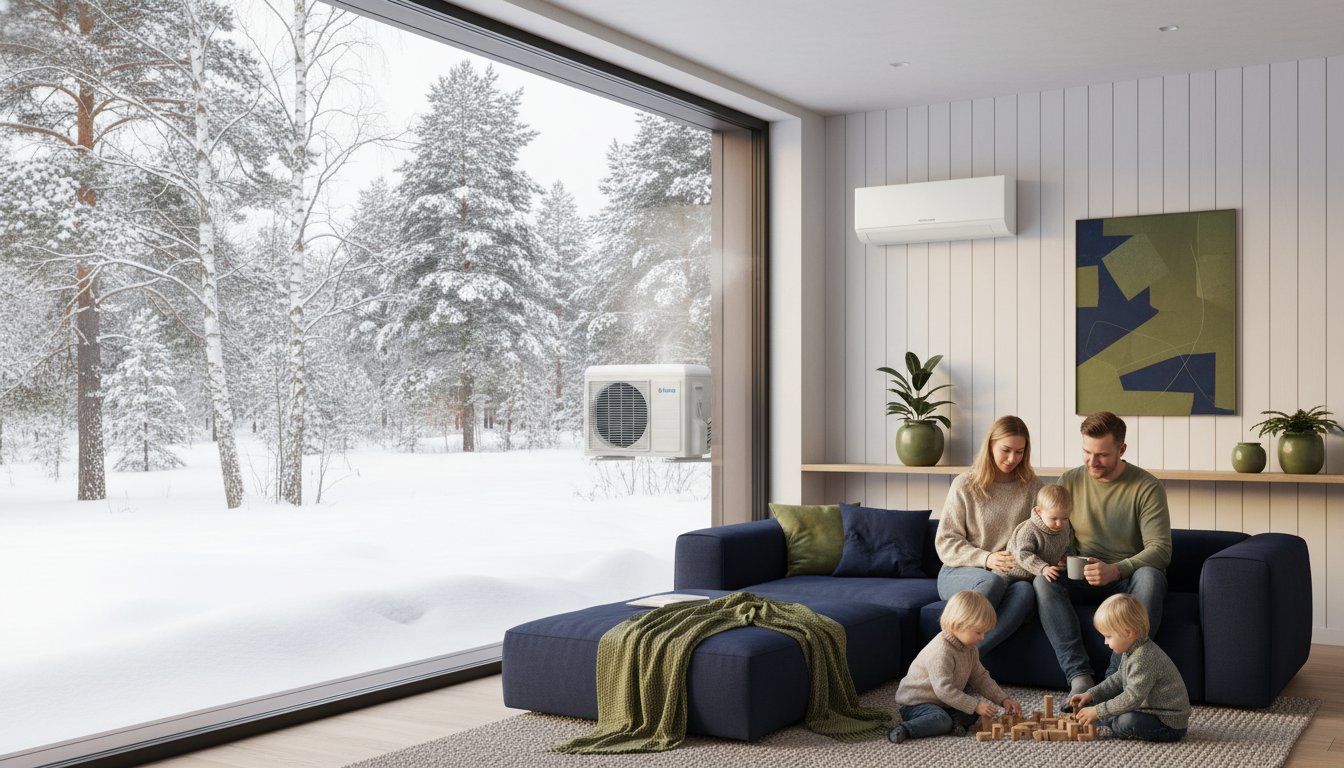
Can an ordinary air conditioner really become the main heat source during Latvia's harsh winter, or is it only a myth that ends with huge electricity bills? We fully understand your concerns, because the beginning of 2026, with a sharp 15% rise in electricity consumption and the end of state support for connection-capacity payments, has made every homeowner look more carefully at expenses. It is no surprise that people are increasingly searching online for reviews of air conditioners with heating functions, because they want a reliable way to stay warm in the shoulder season and avoid overpaying for heat during January frost.
In this article, we will look honestly at whether modern technology can truly replace traditional heating and why some users have an excellent experience while others are left disappointed. We will help you finally understand the complex SCOP figures and explain why Latvia's climate needs a unit with the soul of an air-source heat pump. Learn how to choose the most efficient model and what other users say about real-world operation, so you can enjoy cozy warmth at home all year while keeping full control over your finances.
Air Conditioner with Heating Function: Why are reviews so different?
When reading different forums, you can get the impression that people are talking about two completely different worlds. Some praise the comfort and low bills, while others complain about frozen outdoor units and cold rooms. In reality, reviews of air conditioners with heating functions differ so much because not all units are designed for the same purpose. Technically, this kind of device is an air-to-air heat pump that can reverse the cooling cycle. To understand the fundamental principles of this technology, it is worth exploring how an air-to-air heat pump works and why its efficiency depends directly on the outdoor temperature.
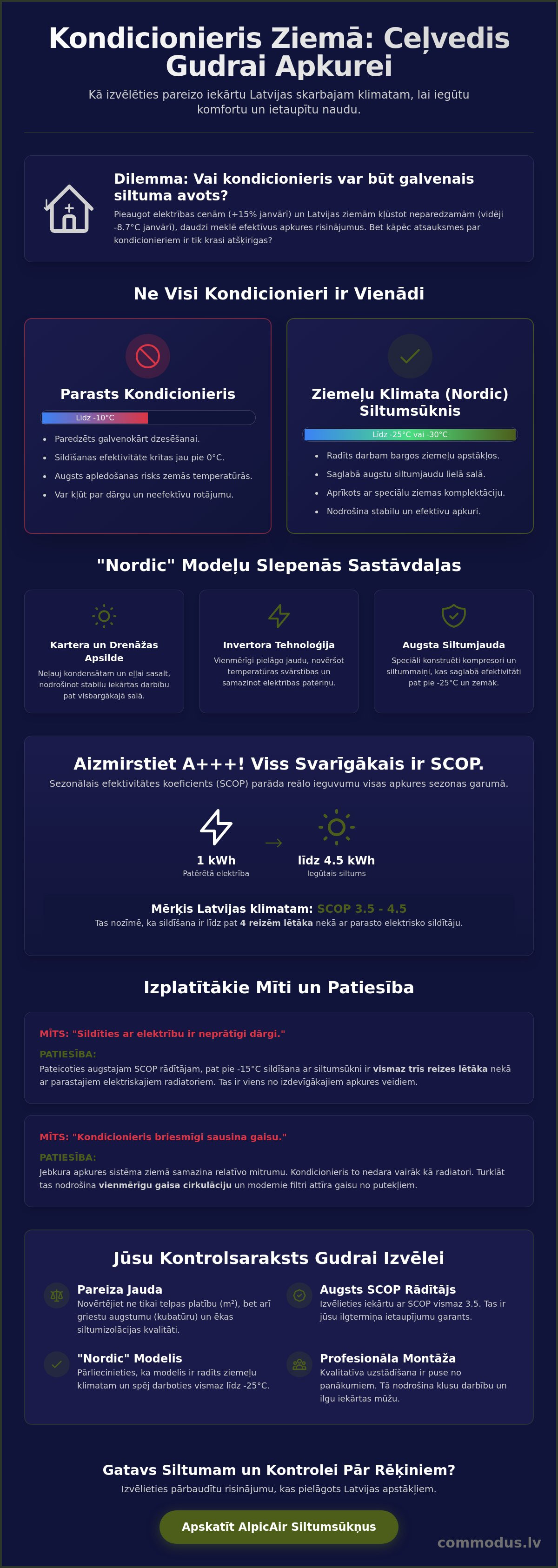
The biggest mistake is choosing a device intended only for cooling or light heating during the shoulder season. In Latvia's winter, where the average air temperature in January 2026 fell as low as -8.7°C, ordinary models simply give up. High-quality units, such as Alpicair air-source heat pumps, are equipped with a special northern configuration. It includes crankcase and drain heating, which prevents condensate from freezing and ensures stable operation even when there is severe frost outside. Without these elements, an air conditioner in winter can become an expensive and inefficient decoration on the wall of your home.
Northern-climate (Nordic) models versus standard air conditioners
The difference between these two categories is substantial. A standard air conditioner often stops working or becomes critically inefficient already around -10°C. By contrast, specialized Nordic series models are engineered to maintain high heating capacity down to -25°C or even -30°C. Inverter technology plays the main role here. Instead of constantly switching on and off, it smoothly adapts output to current conditions. This not only extends the unit's service life but also prevents unpleasant temperature swings indoors, creating a cozy atmosphere.
Common myths disproved by user experience
The myth that heating with electricity is unreasonably expensive is still alive. However, real statistics and user experience show something different. If the unit's SCOP, or seasonal efficiency coefficient, is between 3.5 and 4.5, it means that from one kilowatt of electricity consumed you receive, on average, four kilowatts of heat. That is significantly cheaper than direct electric heating and even some fossil fuels. The second myth is about dry air. In reality, any heating in winter reduces relative humidity. In heating mode, an air conditioner does not dry the air more than an ordinary radiator; it simply provides air circulation, which helps heat spread more evenly throughout the room.
What real experience shows: Efficiency and electricity consumption in Latvia
Many buyers make the mistake of relying only on the A+++ class shown in advertising brochures. Real efficiency in Latvia's changeable conditions is found in the SCOP (seasonal efficiency coefficient) figure. When reviews of air conditioners with heating functions are analyzed, it becomes clear that SCOP is the most accurate predictor of long-term costs. As official efficiency data shows, modern heat pumps maintain high efficiency even below freezing, but you should expect consumption to rise at -20°C. At such moments, the importance of the brand becomes clear. For example, AlpicAir air-source heat pumps are highly rated precisely for their ability to maintain stable heating capacity despite fluctuations in outdoor air temperature.
Noise level is another important aspect that affects everyday comfort. Today's indoor units operate so quietly that they are barely heard at night. However, the outdoor unit, especially during the defrost cycle, can produce a low hum. That is why we always recommend choosing the installation location carefully so that vibrations do not disturb sleep. High-quality installation is half the success when you want the unit to serve for a long time and operate quietly.
Electricity bill analysis: How much does heat from the air cost?
In January 2026, the average electricity exchange price was €153.43 per MWh. Compared with pellets or gas, an air-to-air heat pump is still one of the most cost-effective solutions. User reviews of air conditioners with heating functions confirm that during the January cold wave, when total electricity consumption in Latvia rose by 15%, a correctly selected unit helped avoid bill shock. Even at -15°C, heating with a heat pump is at least three times cheaper than using ordinary electric radiators. The overall seasonal balance usually remains positive, even if consumption briefly increases during extreme sub-zero temperatures.
Comfort level and air quality
Heating with air provides a quick result because the room warms up within a few minutes. Modern filters effectively clean the air of dust and allergens, which is a major advantage compared with ordinary radiators. To ensure maximum effect and even air exchange, we also recommend evaluating the role of ventilation with heat recovery systems in the home microclimate. If you are looking for a reliable solution for your home, view our offered Alpicair models, which are adapted specifically for our latitude.
Criteria that determine good reviews: How to avoid a mistake?
A large share of negative online ratings comes not from poor equipment but from choosing the wrong unit. To make sure the reviews of air conditioners with heating functions you write after the first winter are only positive, the first step is an objective assessment of the room. In our experience, we often see clients calculating only square meters, but in heating mode the decisive factors are room volume and insulation quality. If a house has high ceilings or poor heat retention, a unit with a larger power reserve will be needed.
The next critical point is the SCOP coefficient. While the SEER figure reflects cooling efficiency in summer, SCOP shows the real benefit in heating mode across the whole season. As the U.S. Department of Energy explains in its overview of heat pump technology, a properly selected system can significantly reduce heating costs, provided that its performance specifically at low temperatures is taken into account. Finally, always make sure service is available in Latvia; in a cold winter, you cannot afford to wait weeks for spare parts.
Why does the installation location affect 70% of reviews?
Even the most expensive model can disappoint if it is installed incorrectly. The placement of the indoor unit determines whether the warm airflow creates comfort or an unpleasant draft sensation during heating. The outdoor unit, in turn, needs protection from snow and free space for condensate drainage. If the drain freezes, the unit will stop on the coldest night. These are exactly the nuances that ordinary online stores often miss, and they determine whether the user will be satisfied with the purchase in the long term.
Smart functions that make everyday life easier
Today, Wi-Fi control is no longer just a luxury but a practical tool for saving energy. It allows you to switch on heating remotely in a summer house or country home before you arrive. The +8°C temperature maintenance mode is also very useful, preventing the building from freezing during your absence while consuming minimal electricity. If you want a unit that combines all these smart functions with reliable operation in our climate, explore our Alpicair air-source heat pump offer and choose the solution best suited to your home.
Commodus expert recommendations: The best solutions for heating and cooling
Our more than 15 years of experience in Latvia's energy-efficiency market show that the best reviews of air conditioners with heating functions come from clients who choose a full-service solution. This is not only about buying equipment, but about thoughtful design, precise capacity calculation, and regular maintenance. We believe every home is unique, so our team always looks for an individual approach so that heat is not only efficient but also economically justified in the long term.
Today, synergy between different systems is especially relevant. For example, air-to-air heat pumps pair excellently with solar panel systems, which are still supported by state programs in 2026. If your building is large and the capacity of an air-source heat pump may be insufficient for main heating, we recommend evaluating alternatives. In such cases, boreholes for ground-source heat pump systems provide consistently high efficiency even in the harshest winter, without relying on outdoor air temperature fluctuations.
Why choose professional installation?
Many buyers do not realize that even a small mistake during installation can lead to significant energy losses. System adjustment performed by certified technicians can save up to 15% of electricity compared with non-professional installation. In addition, only professional installation guarantees that the manufacturer's warranty remains valid, which is your long-term peace of mind. Our specialists not only install the unit but also teach you how to use it in the most efficient mode, so every cent spent delivers maximum warmth.
Next steps toward comfort
If you feel it is time to reduce heating bills and increase comfort in your home, do not wait for the next cold wave. We offer a free consultation and site survey to prepare an offer tailored precisely to your budget and needs. Our goal is to create a cozy and safe atmosphere in your home using modern technologies and the experience our team has accumulated. Contact the Commodus team today and let us help you make a balanced decision!
Create cozy warmth and peace of mind in your home
A modern air-to-air heat pump is not just a device for cooling; it is a smart investment in your home's energy efficiency. When real reviews of air conditioners with heating functions are analyzed, one conclusion becomes clear: the key to success is choosing a Nordic model suited to Latvia's climate and ensuring precise, professional installation. By understanding SCOP figures and the unit's specifications, you can significantly reduce heating bills without losing comfort, even in the changing energy-price conditions of 2026.
The Commodus team, with more than 15 years of experience in energy-efficient solutions, is your reliable partner on this journey. We provide a full service cycle from the first consultation and design through to regular maintenance, so your chosen system works flawlessly for years. We look forward to welcoming you at our branches in Riga, Jelgava, and Saldus, where our responsive technicians will help find the solution best suited to your home and budget, bringing peace of mind and warmth to every room.
Choose your ideal air conditioner in the Commodus catalog!
May your home always have a pleasant climate and coziness, no matter how low the thermometer drops outside the window!
Frequently asked questions about air conditioners with heating functions
Can an air conditioner with a heating function really serve as the only heating source?
Yes, a modern air conditioner with a heating function can serve as the only heat source in energy-efficient and smaller rooms or apartments. In Latvian winter conditions, when the temperature can fall below minus 20 degrees, for larger buildings we recommend using it as primary heating in combination with another solution. Nordic series models are specially designed to operate in severe frost, ensuring a stable temperature, but before choosing one it is essential to assess the building's insulation and volume.
How much of an increase in the electricity bill can be expected during winter months?
The increase in the electricity bill depends directly on the unit's efficiency and outdoor temperature fluctuations. On average, a high-quality heat pump consumes four times less energy than ordinary electric heaters. Considering the average electricity price in January 2026 and changes in state support for capacity payments, users report a favorable balance compared with other fuel types. Real reviews of air conditioners with heating functions show that costs remain reasonable even with a significant increase in electricity consumption in the country as a whole.
What is the difference between an air conditioner and an air-to-air heat pump?
The main difference lies in the construction and operating range at low temperatures. An ordinary air conditioner is optimized for cooling and will heat only in light frost, whereas an air-to-air heat pump is equipped with a special winter kit. It includes crankcase and drain heating as well as a more powerful compressor, allowing it to produce heat efficiently even at minus 25 degrees. When choosing a unit for heating, always look for the Nordic or Heat Pump designation in the technical data sheet.
Can the outdoor unit freeze in winter, and what should be done in that case?
A small amount of frost is a normal operating process that the unit resolves itself with an automatic defrost cycle. Problems arise only if the drainage system is built incorrectly or the outdoor unit is physically blocked by snow. In such cases, ice can accumulate and must be carefully removed so the fins are not damaged. Professional installation and correct placement usually prevent such situations completely and ensure uninterrupted operation of the unit.
How often does an air conditioner used for heating need maintenance?
Units that are actively used both for cooling in summer and for heating in winter need maintenance twice a year. Before the heating season begins in autumn and before the cooling season in spring, it is important to clean the filters and check the tightness of the system. A regular service visit not only extends the unit's service life but also helps maintain maximum energy efficiency by preventing unnecessary electricity consumption and ensuring clean air in your home.
Comments