How to Sell Surplus Electricity to the Grid in 2026: Complete Guide
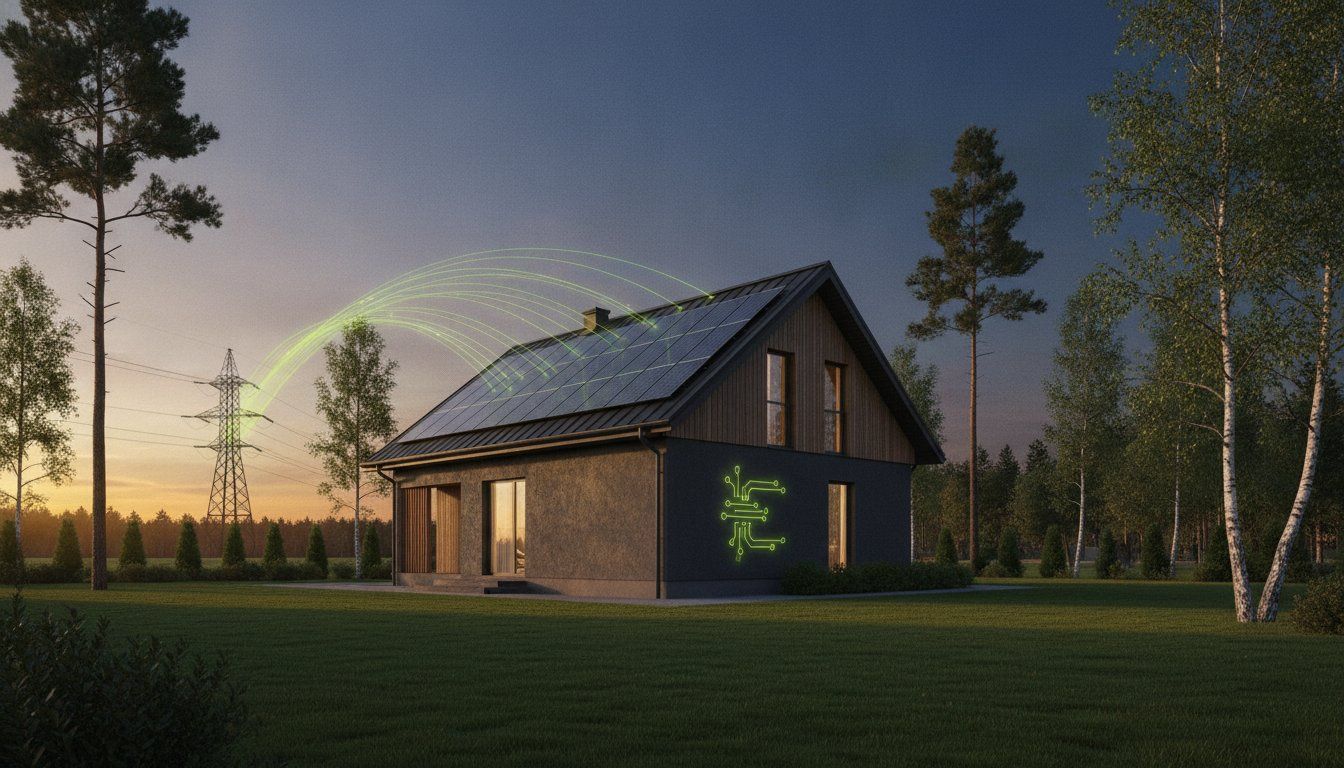
Are your solar panels currently working at full capacity, or is part of that valuable energy simply "evaporating" because you are not sure what to do with it? Many homeowners feel understandably confused when trying to understand, how to sell surplus electricity to the grid, and are afraid of getting lost in complicated bureaucracy or accidentally choosing unfavourable tariffs. We fully understand these concerns, because the difference between the old net metering system and the current net billing system can feel like a difficult maze in which it is easy to lose your way.
Our team is here to help you navigate this maze with confidence. In this article, we will provide a clear and honest guide to turning surplus solar energy into real profit or a meaningful reduction in bills in 2026. Learn why the full transition to smart meters and stable distribution tariffs is exactly the moment to start acting more intelligently. We will cover everything from microgenerator capacity thresholds to the nuances of the "Special" tariff plan that comes into force this year. You will receive a concrete action plan that will help you understand the latest rules and maximise the profitability of your system, creating peace of mind about your long-term investment.
What is the net billing system and how does it work in 2026?
The year 2026 marks a new stage in Latvia's energy sector, where smart technologies and market dynamics work in your favour. By this year, AS "Sadales tīkls" has completed the introduction of smart meters for more than 1.1 million customers. These devices are the foundation that makes understanding how to sell surplus electricity to the grid, a part of everyday life for every household. Unlike the old system, the new model no longer focuses on storing physical kilowatt-hours in the "cloud", but on their monetary value.
To understand, what the net billing system is and why it has become the standard, imagine it as a digital wallet. When your panels generate more than you consume, the surplus is automatically sold to the grid at the current exchange price. This money accumulates in your user account and is used to cover future bills. Our team often sees that this transparency helps customers feel more secure about their investment, because every generated cent is accounted for precisely.
In 2026, the status of an "active user" has become especially relevant. This means you are no longer tied to just one property. Energy generated at a summer house can be used to cover the bill for an apartment in the city. This flexibility is an important benefit that allows you to make maximum use of the system's potential regardless of where you are.
Money balance vs. kWh balance
Why is the transition to monetary value important? The main reason is electricity exchange price volatility. By selling energy at times when demand and prices are high, you accumulate a larger amount in your digital wallet. You can use this balance during winter months, when there is less sun and electricity prices tend to rise. This helps you understand how to sell surplus electricity to the grid more effectively, instead of simply giving it away without a clear plan.
Who can become an electricity seller?
Any household whose microgeneration equipment does not exceed 11.1 kW can become an energy seller. This threshold is optimal for most private homes. That is why well-planned solar panel kits have become the most popular choice for starting this process. Our technicians emphasise that correctly selected capacity is the key to a faster payback period and to actually seeing a balance in your account at the end of each month.
5 steps to start selling the electricity you generate to a supplier
Moving from a passive electricity user to an active market participant is a logical step if you want to maximise the return on your investment. The process of how to sell surplus electricity to the grid, begins with arranging documents and technical approvals. First, the connection of the microgenerator must be coordinated with AS "Sadales tīkls"; for capacity up to 11.1 kW, a simplified procedure applies. Since the smart meter programme in Latvia has been successfully completed, data accounting takes place automatically, which significantly simplifies the entire subsequent process.
Once the permit is in place and the equipment has been installed, the next step is choosing an electricity supplier. The Latvian electricity market offers several players, each with its own approach to purchasing electricity. The next step is signing an agreement for electricity purchase. It is important to understand that you are not signing an agreement about physically handing over kilowatt-hours, but about crediting their value to your virtual balance. Finally, ongoing monitoring through the supplier's self-service portal or inverter app is needed to see actual sales data and track system efficiency.
How to choose the most profitable electricity supplier?
When choosing a partner for selling energy, carefully compare purchase price models. Some suppliers offer a fixed price, which provides stability but prevents you from earning more at times when exchange prices "shoot through the clouds". Others offer a model linked to the exchange price, which is riskier but potentially more profitable during summer months. Also pay attention to administrative costs; sometimes an apparently high purchase price is "eaten up" by monthly service fees for energy management.
Technical readiness check
Your inverter is the heart of the system, so its settings must be precisely adapted to grid requirements. Incorrectly configured equipment can cause frequent shutdowns during voltage fluctuations, which means lost profit. This is exactly why professional solar panel installation is critical for a successful process. Our technicians always make sure that the system is ready not only for production, but also for stable energy export to the grid. If you also plan to modernise your heating system to use the generated energy more efficiently, take a look at our CTC air-to-water heat pumps, which integrate exceptionally well with smart home systems.
Why is self-consumption often more profitable than selling to the grid?
Although knowing how to sell surplus electricity to the grid, provides peace of mind, the most financially beneficial scenario is usually to use the generated energy on site. The reason is very simple: when you buy electricity from the grid, you pay not only for the resource itself, but also for its delivery. Even though transmission service costs have decreased by around 1% in 2026, distribution tariffs still make up a significant part of the bill. By consuming your own green energy immediately, you literally save on these delivery costs, which is often more valuable than selling energy at the exchange price.
Smart home solutions now allow this process to be fully automated. A dishwasher or electric vehicle charger can switch on exactly when the sun is highest in the sky. This is the smartest way to outplay market fluctuations without worrying about whether the exchange price is generous enough at that moment. In our experience, customers who focus on self-consumption see their systems pay back much faster.
A heat pump as an energy battery
One of the most effective ways to "sell" energy to yourself is to convert it into heat. Modern air-to-water heat pumps can receive a signal from the solar panel inverter and heat water in a boiler or buffer tank to a higher temperature exactly during peak production hours. In this way, you store energy in the form of heat, which you will use in the evening after the sun has set. If you want to understand this process in more depth, read our prepared heat pump guide.
The role of batteries in the 2026 energy market
Battery systems, or BESS, are no longer exotic in 2026; they are a necessity for smart household energy management. They allow you to avoid situations where the exchange price is low in the middle of the day, when the sun generates the most. Instead of thinking about how to sell surplus electricity to the grid for little money, you store it in a battery. In the evening, when demand in the grid rises and prices increase, you can choose either to consume this cheap energy yourself or export it to the grid for a significantly higher payment. This strategy turns your household into a small, independent power station.
If you are considering improving your home's energy efficiency, our specialists will help you choose the most suitable CTC heat pumps, which will work best with your solar panel system. 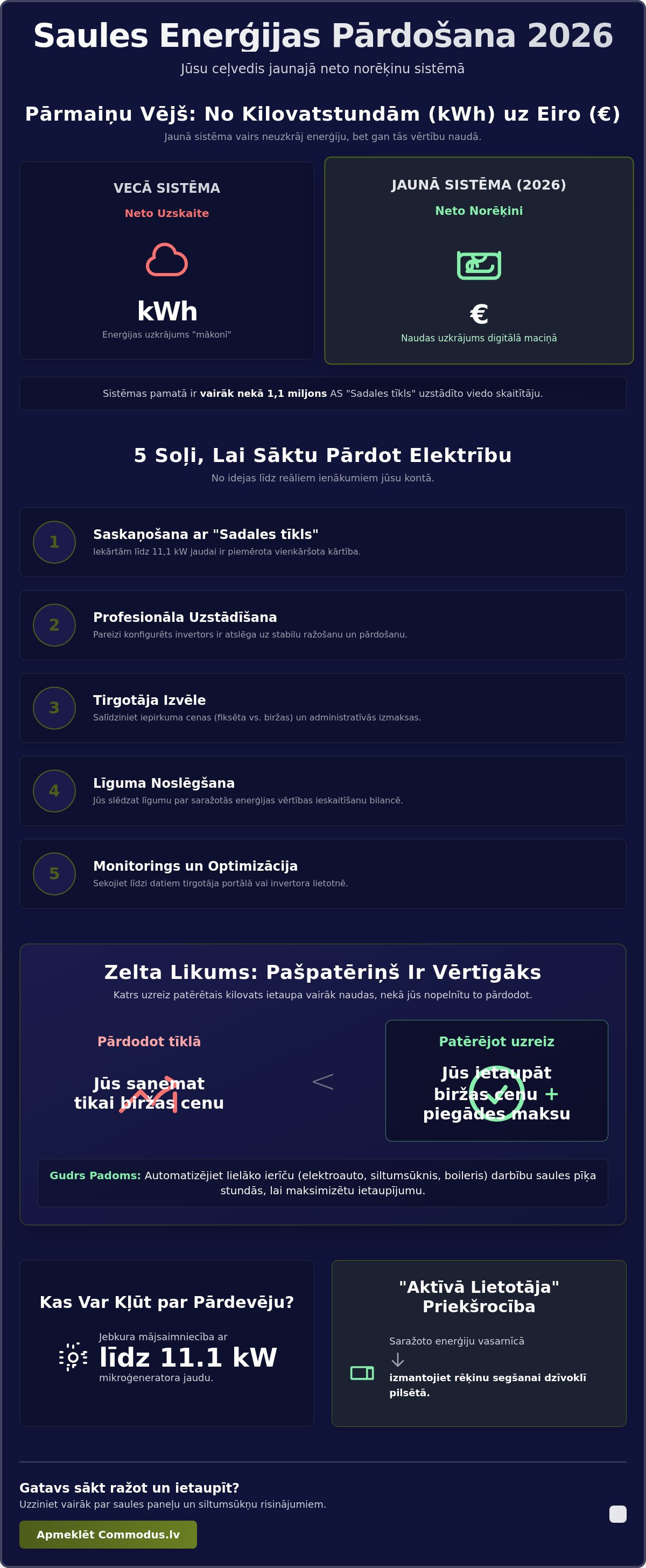
Commodus solutions for maximum energy efficiency
Commodus is not just an equipment supplier; we are your partner on the path to energy independence. Our approach begins with careful planning, taking into account the specifics of your home and your consumption habits. By understanding how to sell surplus electricity to the grid in the most efficient way, we help create a system that does not merely work, but earns. This means precise capacity calculations to avoid unnecessary investment or insufficient production that could remain unused.
We believe in a unified ecosystem where each device complements the others. Solar panels work best together with a modern heating system and smart ventilation. When all these components are integrated, your benefit is maximum self-consumption and minimal bills. Our team will take care of the entire process, from the first consultation and evaluation of state support programmes to installation and system commissioning. You do not have to worry about bureaucracy; we know all the required steps to make the paperwork smooth and stress-free.
Why choose Commodus experts?
With more than 15 years of experience in the energy-efficient solutions market, we have seen how technologies and legislation change. This experience allows us to provide advice based on real projects, not only theory. We not only install equipment, but also help arrange all the necessary documentation so that the process of how to sell surplus electricity to the grid, is clear and understandable for you from day one. In addition, our service team provides warranty and post-warranty maintenance throughout Latvia, giving you long-term security and peace of mind.
Start your path to energy independence today
Smart household management starts with the first step — a precise assessment of the situation. Book a consultation with our specialists so we can calculate your home's potential profit together and choose the most suitable technical solution. Explore our solar panel kits and take the first step towards a home that takes care of its own energy. Our technicians, for whom this work is a matter of genuine commitment, will help you become the true owner of your own energy.
Take the next step towards your energy independence
The year 2026 has marked a clear direction in Latvia's energy sector. Smart metering and the net billing system are no longer just a vision of the future, but a practical tool for every homeowner. The main conclusion is simple: the greatest return comes from an integrated approach. By combining solar panels with smart heat pumps and battery systems, you not only save money, but also create stable value for your property. By understanding how to sell surplus electricity to the grid and planning self-consumption intelligently, you gain full control over your energy resources.
Our team is ready to be your guide in this process. With more than 1,000 successfully installed systems throughout Latvia and experienced, certified engineers, we provide a full service. We will help you arrange everything from developing the technical project to signing the most profitable sales agreement. Contact Commodus experts and learn how to start earning with solar panels!
Your home can generate more than just electricity; it can provide peace of mind and long-term financial stability. We will be happy to help you make this happen by creating a safe and modern environment for your family and turning every ray of sunshine into real benefit.
Frequently asked questions about selling electricity
Can I sell electricity if I have the net metering system?
No, the historical net metering system does not provide for selling electricity for money, because it works as a physical kilowatt-hour balance. If you want to receive financial compensation or accumulate monetary value in your account, you must switch to the new net billing system. This transition allows you to become an active user and use all the advantages offered by a modern and flexible market model.
How much does it cost to export surplus electricity to the grid?
You do not have to pay for exporting the electricity itself to the grid, but you must take system service tariffs into account when you receive energy back. Some suppliers may apply a small monthly administration fee for energy management and accurate accounting. It is important to evaluate the contract terms carefully to understand how to sell surplus electricity to the grid without unnecessary additional costs that could reduce your system's overall profitability.
Why does the exchange price affect my profit from solar panels?
The exchange price determines how valuable each exported kilowatt is in a specific hour, because in the net billing system the surplus is converted into monetary value according to the Nord Pool price. If the exchange price is low during peak production hours, your virtual balance will grow more slowly. That is why it is worth considering battery solutions, which allow you to export energy to the grid at times when demand and prices are significantly higher.
Do I have to pay taxes on the electricity I sell?
Private individuals who export electricity to the grid for their household needs usually do not have to pay personal income tax on the accumulated balance. This balance is used to cover future bills rather than being paid out in cash as direct profit. However, if generation becomes systematic economic activity with very large capacity, an obligation to register as a taxpayer may arise, so we always recommend consulting our specialists about your specific situation.
Can I sell electricity to my neighbour or to another property of my own?
Direct electricity sales to a neighbour as a private individual are not permitted, but you can use your balance at your other properties as an active user. This means that the value generated by solar panels at one site can be directed towards covering bills at another address if both connections are registered in your name. This model is an excellent way how to sell surplus electricity to the grid and at the same time effectively reduce the total costs of all your properties.
Comments