Solar Panel Installation on a Tile Roof: A Complete Guide to Safe Mounting in 2026
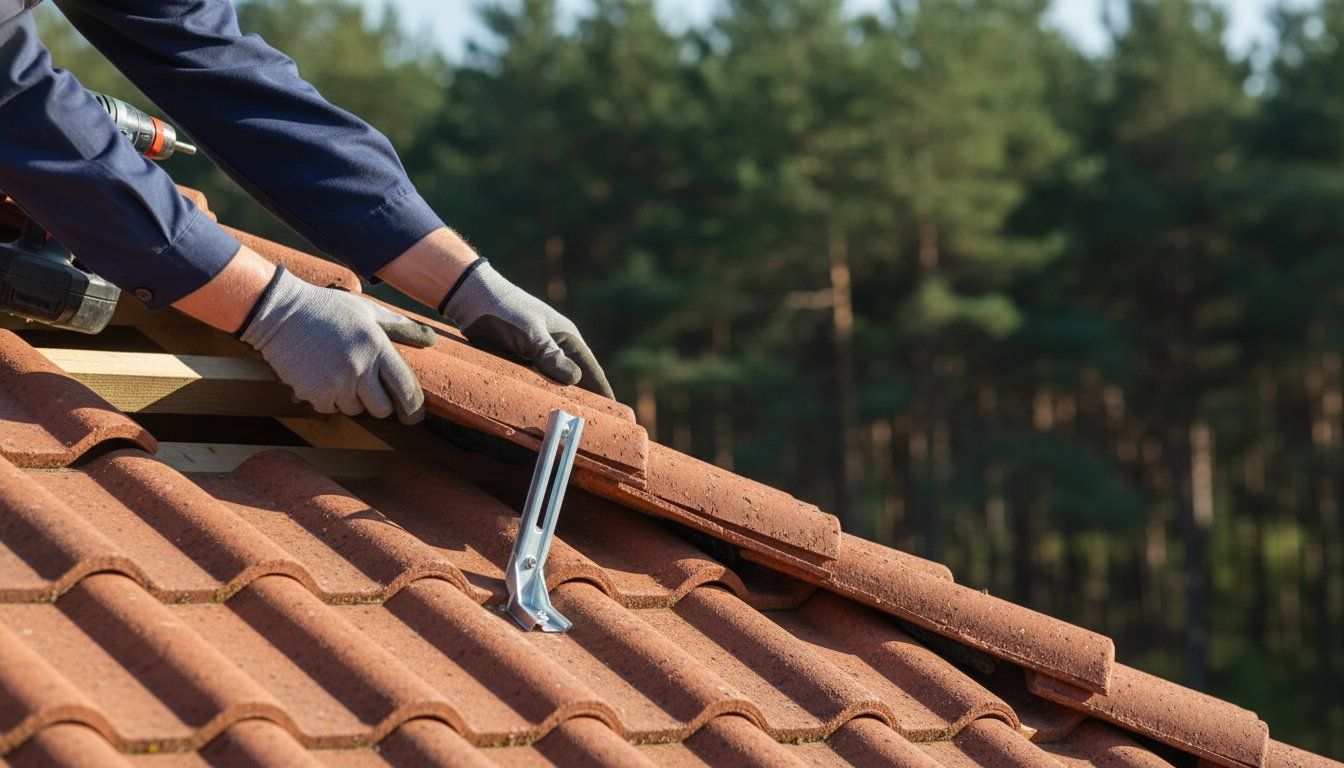
Did you know that incorrectly chosen mounting hardware on a tile roof can turn your investment in green energy into an expensive roof repair after the first proper Latvian winter? We often hear concerns about whether the fragile covering will crack and whether water will start leaking into the house after the work is finished. These fears are justified, because solar panel installation on a tile roof requires not only precision, but also specific knowledge of how to anchor the mounting system safely to the building structure rather than simply screwing it into the tile itself.
We fully agree that home safety and peace of mind come first, so in this guide you will learn how to plan the installation correctly in order to preserve roof watertightness and ensure maximum system efficiency. We will look at current state support programs, which in 2026 allow you to receive co-financing of up to 6500 euros for panels and batteries, and we will explain why checking the load-bearing structures is a critical first step before any work begins. You will get a clear action plan and confidence that switching to self-generated electricity can be both technically safe and financially worthwhile, no matter how snowy the next winter may be.
Solar panel installation on a tile roof: Specifics and prerequisites
A tile roof is an excellent choice for energy production, because it is stable and provides natural air circulation beneath the panels. This ventilation is critically important so that the system does not overheat on hot summer days and its efficiency does not decrease. However, solar panel installation on a tile roof is not a simple task. Tiles are heavy, so the first step is always to inspect the roof's load-bearing structures, or rafters. In Latvia's climate, where the winters of 2026 can still surprise us with a substantial snow cover, the rafters must withstand not only the weight of the covering and the panels themselves, but also the additional pressure created by snow and wind.
To understand how different Rooftop PV system components affect roof longevity, it is important to assess the type of tile itself. Each material has its own character details that must be taken into account during installation. In our experience, we have seen that thoughtful planning before work begins is the only way to guarantee a result that will serve for decades.
Ceramic vs concrete tiles: Installation nuances
Ceramic tiles are a classic choice, but they are very fragile. The installer must be especially careful, because even slight inaccurate pressure can cause cracks that later lead to leaks. Often, precise grinding of the lower edge of the tile is needed so that the mounting hook sits perfectly and does not lift the next row of tiles. Concrete tiles, by contrast, are mechanically stronger and work better with standard mounting systems. Since they are heavier, this again emphasizes the need for strong rafters so that the overall structure remains safe.
The impact of roof pitch on system efficiency
In Latvia's geographical location, the optimal panel angle is between 35 and 40 degrees. Most tile roofs already naturally match this parameter. The tile profile must also be considered. High-profile wavy tiles determine how high above the covering the mounting rails will sit. The higher the profile, the more carefully the rail layout must be planned to ensure even load distribution and an aesthetic appearance that will please you every time you drive into your home's yard.
The technical process: How panels are secured without damaging the roof
Precision is the key word when solar panel installation on a tile roof is being planned. Unlike metal roofs, where fasteners are often screwed through the material, with tiles we work beneath the covering. The main element here is a special mounting hook. It is fixed directly to the roof rafters using strong stainless steel screws. This approach guarantees that the entire panel and snow load rests on the home's load-bearing frame, not on fragile tiles. It is important to choose a hook model that precisely matches your tile profile and rafter spacing.
One of the most critical moments, and one that is often forgotten, is tile trimming. So that the hook does not lift the upper row of tiles and create gaps, a small groove is made in the lower edge of the tile with a diamond disc. This allows the tile to sit perfectly back in place, preserving the original roof line and watertightness. A gap of at least 5 mm must always be left between the hook and the lower tile. Why? It is a safety buffer. When a heavy layer of snow lands on the panels in winter, the metal structure will bend slightly, but it will not compress or break the tile beneath it.
Sealing and waterproofing at mounting points
We make sure that every hook outlet is protected against moisture. In places where the hook passes through the covering, special seals or high-quality mastics are used that do not lose their properties under temperature fluctuations. This is essential in Latvia's changeable weather, where frost often alternates with thaw. If you want to make sure your roof is suitable, our solar panel kits are designed so that installation is as gentle as possible on any roof covering.
Cable outlets and system safety
Cable routing must not be careless. Cables are placed in UV-resistant corrugated conduits and led out through special ventilation tiles or sealed outlets. Safety is the priority, so grounding and integration with lightning protection must not be forgotten. International standards as well, such as the permitting and inspection process, emphasize that only professionally completed electrical installation guarantees system longevity. Once the rails are levelled and the cables are organized, the panels are fixed with clamps, creating a stable and safe energy source on your roof.
Critical factors for a safe and long-lasting system
When solar panel installation on a tile roof is carried out, system longevity is determined not by the panels themselves, but by the details that hold them in place. We always emphasize that in Latvia's changeable weather only stainless steel and aluminum fasteners should be used. These materials are not afraid of corrosion and retain structural integrity even after 25 years. The correct ventilation gap between the covering and the panels is just as important. It acts as a natural cooling system. If air cannot circulate freely, the panels overheat, and on hot summer days their efficiency can drop by 10 or even 15 percent.
We encourage homeowners not to forget regular inspections, especially after strong storms or extreme blizzard days. Although the systems are durable, a visual inspection helps identify small shifts in time. Remember that DIY work on a tile roof is risky. Most insurance companies require a professional installation certificate. If the work has been done on your own without proper certification, compensation may be refused in the event of roof damage. Safety and legal peace of mind are the main reasons to choose proven solutions.
Managing snow loads on a tile roof
The smooth panel surface causes snow to slide off much faster than it does from a rough tile. This can create a sudden and heavy snow avalanche that damages gutters or endangers pedestrians. The solution is to install snow barriers directly below the panel row. Properly placed barriers distribute the snow's weight and ensure controlled melting. This protects both your home's facade and the garden plantings next to the building.
Common mistakes made by inexperienced installers
One of the most expensive mistakes is too great a distance between mounting hooks. If the hooks are too sparse, each one receives too much load. Sooner or later, this leads to the metal bending and starting to press on the tile, causing it to crack. We also often see cheap fittings being used, which begin to rust after only five years. Rust not only spoils the appearance of the roof, but can also irreversibly damage the tile covering itself. If you want to avoid these risks, our high-quality solar panel kits and professional installation will provide peace of mind for decades.

Professional installation with Commodus: For your peace of mind and safety
At Commodus, we believe that your home should be a place where you feel completely safe. That is why solar panel installation on a tile roof performed by us is not just a technical task, but a carefully planned engineering project. Our experience throughout Latvia shows that every tile roof is unique, so we provide a full service cycle. It starts with a precise technical inspection and ends with assistance in receiving state support. In 2026, households can receive support of up to 6500 euros under the EKII program if both panels and batteries are installed; we will help you arrange this process without unnecessary stress.
To achieve maximum energy independence, it matters how the system elements work together. The solar panel kits we offer are carefully selected to serve for decades and to be compatible with specific roof fasteners. A client gets the highest efficiency when the generated energy is used immediately. An engineering-correctly integrated air-to-water heat pump allows sunlight to be converted into heat in your floors and hot water, significantly reducing monthly bills and increasing the system's self-consumption.
Warranty and after-sales service
We do not disappear after the last panel is fastened. Commodus provides a solid warranty for all equipment and for the work performed by our installers. Regular system maintenance and inspection are the foundation of peace of mind, so you can be sure that even after the strongest storms or snowy winters, the roof remains watertight and the system produces at full capacity. Our service team is only one call away, ready to provide support and answer any questions that may arise during operation.
Next steps: From consultation to the first generated kW
The path to energy freedom starts with a simple conversation. We offer a site inspection and a precise estimate with no hidden costs or unexpected surprises. It is an honest and transparent process during which we assess the condition of your roof and offer the most suitable solution. Contact our experts today. Together, we will find the best solution specifically for your home, so that soon you can start producing your own green electricity.
Your home's energy independence starts with a safe foundation
Choosing solar energy is a smart investment in your home's future, but tile roofing requires special care and knowledge. The main thing to remember is that longevity begins with the right choice of fasteners and precise workmanship, avoiding direct pressure on the fragile material. Professionally completed solar panel installation on a tile roof guarantees not only maximum system output, but also your peace of mind about roof watertightness for many years, regardless of the whims of Latvian winters.
At Commodus, we have accumulated more than 15 years of experience in creating complex engineering systems throughout Latvia. Our certified installers understand every nuance of tile roofing and provide full project management, including assistance in receiving state support. You do not have to worry about bureaucracy or technical risks; we will take care of the entire process from the first sketch to the final submitted document.
Take the first step toward lower bills and a safe system today. Apply for a free Commodus solar panel installation consultation! Together, we will find the best solution for your home, so you can enjoy the benefits of the sun without unnecessary worries.
Frequently asked questions about panel mounting on tiles
Can solar panels damage my roof tiles?
If the installation is done professionally, the tiles are not damaged, because the entire panel load is supported by the roof rafters rather than by the covering itself. Special mounting hooks are passed through the covering so that a safety gap remains between the metal and the tile. This prevents the risk of cracking even under a heavy snow load, because the panel weight is not transferred to the fragile material.
How much does solar panel installation on a tile roof cost compared with a metal roof?
Labor costs for a tile roof are usually higher because the installation process is more time-consuming and requires greater precision. Each fastening point requires individual tile processing and trimming to preserve roof watertightness. The fittings and hooks designed for tiles are also more complex from an engineering perspective and more expensive than simple screws for metal coverings.
Do I need to reinforce the roof structure before panel installation?
This can only be determined precisely after the technical inspection that we carry out before every project begins. Since a tile roof is one of the heaviest coverings in itself, rafter systems are usually designed with a large strength reserve. However, an engineer must make sure that the structure can withstand the additional weight of the panels together with possible snow cover during the winter months.
What happens if a tile beneath a panel breaks after several years?
A broken tile can be replaced, but this will require temporary removal of the relevant panel and mounting rail. For this reason, we always recommend that clients keep a small reserve of original tiles. Professional solar panel installation on a tile roof is planned so that the system can be serviced and repairs, if needed, can be carried out as efficiently as possible.
Does state support also cover roof fasteners and installation costs?
Yes, state support programs such as EKII apply to the total system costs, which include equipment, mounting materials, and labor. Support is granted for a fully installed and operational system. This means that all the specific fasteners required specifically for your tile roof are included in the estimate you submit to receive co-financing.
Comments